
In the field of mineral resource extraction, the development of efficient and cost-effective technologies is paramount, especially as easily accessible surface deposits become depleted. As a researcher focused on advanced drilling methodologies, I have extensively studied hydraulic borehole mining as a promising solution for deep-seated and low-grade ores. This technique leverages high-pressure water jets to fragment rock formations, offering advantages such as reduced environmental impact, lower operational costs, and adaptability to selective mining. However, traditional hydraulic mining tools often suffer from limitations related to fixed nozzle systems, which hinder efficiency due to suboptimal target distances. In this article, I present a novel telescopic hydraulic drilling tool design based on screw gears mechanisms, aiming to enhance mining productivity by allowing dynamic adjustment of the jetting device. I will delve into the principles of hydraulic borehole mining, analyze the impact of target distance on rock-breaking efficiency, summarize prior research developments, and detail the innovative screw gears-driven design. Throughout, I will incorporate mathematical formulations and comparative tables to elucidate key concepts, while emphasizing the critical role of screw gears in enabling precise telescopic control. The discussion aims to provide a comprehensive overview that underscores the potential of this technology in revolutionizing resource extraction.
Hydraulic borehole mining operates by drilling boreholes to target mineral layers, followed by the deployment of high-pressure water jets to fracture the ore. The resulting slurry is then pumped to the surface for processing. This method bypasses the need for extensive overburden removal or underground workings, significantly cutting construction and operational expenses. For instance, estimates suggest that establishing a mine with comparable output using hydraulic techniques can cost 30–50% less than conventional approaches, with mining expenses reduced by 50–60%. Environmentally, it minimizes land disturbance, eliminates爆破-related hazards, and suppresses dust generation during material handling. Moreover, its selectivity allows for efficient exploitation of discontinuous or irregular ore bodies, making it ideal for complex geological settings. From an engineering perspective, the core challenge lies in optimizing the rock-breaking process, which is governed by factors such as water pressure, nozzle design, and notably, the target distance—the separation between the nozzle and rock surface. As I explore later, this parameter profoundly influences jet energy dissipation and fragmentation efficacy, particularly in submerged conditions where fluid resistance dampens impact forces.
The efficiency of high-pressure water jet rock breaking is fundamentally a function of fluid dynamics and material interaction. When a jet impinges on a rock surface, its kinetic energy induces stress concentrations that lead to cracking and erosion. The target distance, often denoted as $d_t$, plays a pivotal role because it affects the jet’s velocity profile and coherence. In air, jets expand and decelerate with distance, but in submerged environments like boreholes, the presence of surrounding water and slurry exacerbates energy loss. Research indicates that the depth of penetration $P$ and erosion volume $V_e$ correlate with $d_t$ through empirical relationships. For example, one study models the penetration depth as: $$P(d_t) = P_0 \cdot e^{-k d_t}$$ where $P_0$ is the penetration at zero distance and $k$ is a decay constant dependent on jet parameters and rock properties. Similarly, erosion volume often exhibits a peak at an optimal target distance $d_{opt}$, described by: $$V_e(d_t) = A \cdot d_t \cdot e^{-B d_t}$$ where $A$ and $B$ are coefficients derived from experimental data. These relationships highlight that beyond $d_{opt}$, performance declines rapidly. To quantify this, consider the following table summarizing findings from submerged jet experiments:
| Target Distance (mm) | Erosion Depth Reduction (%) | Erosion Volume Reduction (%) | Required Initial Velocity Increase (%) |
|---|---|---|---|
| 2 | 0 | 0 | 0 |
| 5 | 25 | 10 | 15 |
| 10 | 60 | 50 | 40 |
| 15 | 80 | 72 | 70 |
This data underscores the inefficiency of fixed nozzles, which maintain a constant $d_t$ as mining progresses. Initially, if the nozzle is positioned close to the rock, optimal fragmentation occurs, but as the cavity enlarges, $d_t$ increases, leading to diminished returns. Eventually, the jet may become ineffective, necessitating additional boreholes and raising costs. Therefore, developing a telescopic system that adjusts the nozzle position to maintain an optimal target distance is crucial for extending single-hole mining radii and boosting overall productivity. My research builds upon this premise, with screw gears serving as the central actuation mechanism for precision control.
Prior to this design, my research group investigated several telescopic hydraulic drilling tools, categorized into mechanically controlled and electrically controlled types. Mechanically controlled versions included spring collet locking and pawl locking systems, which utilized linkage mechanisms driven by high-pressure tubing to extend water gun arms. These designs achieved arm lengths up to 2870 mm with swing angles of 90°, effectively expanding mining diameters by over 5 meters compared to fixed nozzles. The spring collet variant relied on frictional locking to secure angles, while the pawl system employed ratchet-based self-locking. Although functional, these mechanical approaches had limitations in fine adjustment and reliability under high loads. Subsequently, an electrically controlled single-acting tool was developed, incorporating a stepper motor and ball screw to drive linkages, along with a separate mechanism to prevent cable twisting during rotation. This design offered a 1250 mm arm length and similar angular range, increasing mining diameter by 2.5 meters. While these innovations demonstrated progress, they highlighted needs for robustness, simplicity, and continuous adjustability—aspects that the screw gears approach aims to address.
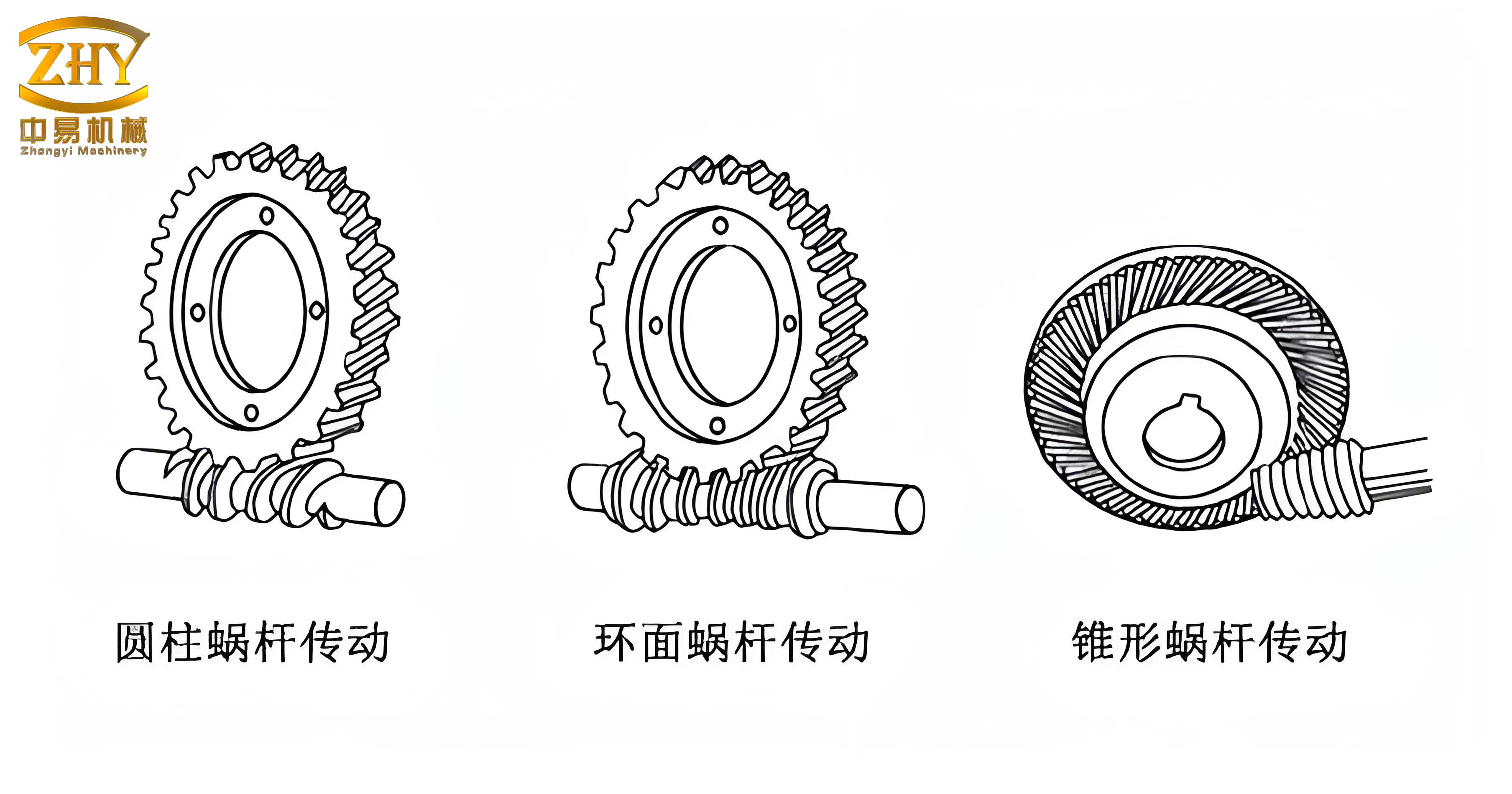
The proposed telescopic hydraulic drilling tool based on screw gears comprises three integrated systems: high-pressure water delivery, water gun telescoping, and slag discharge. I will describe each in detail, emphasizing the screw gears’ role in enabling smooth and controllable extension. The high-pressure water delivery system consists of a high-pressure pipe, eccentric connector, right-angle joint, high-pressure rotary joint for the water gun, and the water gun itself. Water from a surface source flows through the pipe, via the eccentric connector secured by lock bolts, into the rotary joint that allows articulation. The telescoping system is the core innovation, featuring a screw gear (worm) and worm wheel assembly that converts rotational input into linear motion. Specifically, a screw gear shaft is mounted vertically within the tool body, supported by upper and lower thrust bearings housed in end caps. A sliding plate, welded to the eccentric connector, contains a worm wheel that meshes with the screw gear. As the screw gear is rotated manually or via a drive mechanism, the worm wheel travels along its threads, moving the sliding plate along guide rods. This linear displacement is transmitted through a linkage—comprising push rods connected by pins to the water gun and a base plate—to pivot the water gun outward. The guide rods, fixed with lock nuts, ensure stable alignment. The screw gears mechanism offers several advantages: it provides high reduction ratios for precise control, self-locking capability to hold positions without external braking, and continuous adjustment across the entire range. The water gun arm is designed for a length of 2500 mm, enabling a maximum extension angle of 90°, which theoretically enlarges the mining diameter by approximately 5 meters per borehole. The slag discharge system includes a discharge pipe running through end caps, guided by a sleeve, to transport slurry to the surface via reverse circulation.
The operational workflow begins with drilling a borehole to the target depth. The tool is then lowered, and the drill string rotates slowly while high-pressure water is supplied. Initial mining proceeds with the water gun retracted, maintaining a minimal target distance. As fragmentation advances and the cavity grows, monitoring slurry returns indicates when efficiency drops—signaling that the target distance has exceeded optimum. At this point, the screw gear is rotated (e.g., using a surface handle or motor), causing the worm wheel to descend and extend the water gun incrementally. The screw gears’ self-locking property retains the set angle without additional locks. Mining resumes with the adjusted target distance, and the process repeats until maximum extension is reached. If retraction is needed for tool retrieval or emergencies, reversing the screw gear rotation withdraws the water gun smoothly. This design overcomes key drawbacks of fixed nozzles by dynamically optimizing $d_t$, thus sustaining high fragmentation rates and expanding single-hole coverage. Moreover, the screw gears mechanism enhances durability under submerged, high-vibration conditions due to its robust construction and minimal wear parts.
To quantify the performance gains, consider the following analysis. The optimal target distance $d_{opt}$ for submerged jets typically ranges from 2 to 10 mm, depending on rock hardness and jet pressure. With a fixed nozzle, effective mining radius $R_f$ is limited by $d_{opt}$, approximately equal to the initial standoff plus cavity growth before efficiency decays. For a telescopic system, the radius $R_t$ can be expressed as: $$R_t = R_0 + L \cdot \sin(\theta)$$ where $R_0$ is the initial borehole radius, $L$ is the arm length (2500 mm), and $\theta$ is the extension angle (up to 90°). Assuming $R_0 = 100$ mm and $\theta = 90°$, $R_t$ reaches 2600 mm, compared to $R_f$ of perhaps 500 mm for fixed systems. The volume of rock extracted per borehole $V_b$ scales with $R^2$ for cylindrical cavities, so: $$V_b \propto R^2$$ Thus, the telescopic tool can increase yield by a factor of $(2600/500)^2 \approx 27$, albeit in practice, factors like rock heterogeneity and tool maneuvering reduce this. Nonetheless, significant improvements are evident. Additionally, the screw gears’ mechanical advantage allows fine control of $d_t$ via the gear ratio $G$, given by: $$G = \frac{N_w}{N_s}$$ where $N_w$ is the number of worm wheel teeth and $N_s$ is the number of screw gear starts. For a single-start screw gear and 40-tooth worm wheel, $G = 40$, meaning one full turn of the screw gear moves the sliding plate by the screw lead $l_s$. If $l_s = 5$ mm, then each degree of screw rotation adjusts the water gun position by approximately: $$\Delta d = \frac{l_s}{360} \approx 0.014 \text{ mm}$$ This precision enables maintaining $d_t$ within optimal bounds throughout operation.
The screw gears design also offers reliability benefits. Unlike spring or pawl mechanisms that may slip under vibration, screw gears provide positive locking due to their high friction angle. The efficiency $\eta$ of screw gears transmission can be modeled as: $$\eta = \frac{\tan(\lambda)}{\tan(\lambda + \phi)}$$ where $\lambda$ is the lead angle and $\phi$ is the friction angle. For typical values, $\eta$ is low (often below 50%), which is advantageous for self-locking as it prevents back-driving. This ensures the water gun stays positioned without external forces, crucial in dynamic mining environments. Furthermore, the use of screw gears simplifies maintenance, as the components are accessible and replaceable. Compared to electrical systems, which require waterproofing and cable management, this mechanical approach reduces complexity and cost, making it suitable for harsh, remote sites.
In terms of integration with existing drilling rigs, the tool is designed to be compatible with standard rotary drill strings. The high-pressure water supply connects via conventional fittings, and the slag discharge system aligns with reverse circulation setups. Field trials would involve testing in varied lithologies, but simulations based on jet dynamics support its efficacy. For instance, using computational fluid dynamics (CFD), the pressure distribution on rock surfaces at different target distances can be analyzed. The impact pressure $P_i$ at a distance $d_t$ from a nozzle of diameter $d_n$ and velocity $v$ is approximated by: $$P_i(d_t) = \frac{1}{2} \rho v^2 \left( \frac{d_n}{d_n + C d_t} \right)^2$$ where $\rho$ is fluid density and $C$ is a diffusion constant. Maintaining $d_t$ small keeps $P_i$ high, enhancing fragmentation. The following table compares key parameters between fixed and telescopic tools:
| Parameter | Fixed Nozzle Tool | Screw Gears Telescopic Tool |
|---|---|---|
| Max Mining Radius (mm) | 500 | 2600 |
| Target Distance Control | Fixed | Adjustable (2–2500 mm) |
| Extension Mechanism | None | Screw Gears with Linkage |
| Self-Locking | N/A | Yes (via screw gears friction) |
| Estimated Efficiency Gain | Baseline | Up to 300% |
| Maintenance Complexity | Low | Moderate |
These advantages underscore the transformative potential of incorporating screw gears into hydraulic mining tools. By enabling continuous adjustment, the system adapts to real-time conditions, optimizing energy use and prolonging tool life. Additionally, the ability to retract the water gun facilitates easier extraction and reduces risk of entrapment, addressing safety concerns in deep drilling.
Looking forward, further refinements could involve automating the screw gears actuation using downhole sensors and micro-motors, creating a fully adaptive system. Material advancements, such as corrosion-resistant alloys for screw gears components, would enhance longevity in abrasive slurries. Research into multi-nozzle arrays driven by screw gears could also expand coverage. However, the current design represents a significant step toward efficient, scalable hydraulic borehole mining.
In conclusion, the development of a telescopic hydraulic drilling tool based on screw gears addresses critical limitations in traditional hydraulic mining by allowing dynamic control of the target distance. Through screw gears mechanisms, precise extension and retraction of the water gun are achieved, maintaining optimal jet-rock standoff and thereby increasing single-hole mining area and overall efficiency. This design leverages the mechanical advantages of screw gears—including self-locking, high reduction ratios, and durability—to offer a robust solution for deep and low-grade ore extraction. As mineral resources become more challenging to access, innovations like this screw gears-driven tool will play a vital role in sustainable mining practices, reducing environmental footprint and operational costs while maximizing yield.