
In the realm of mechanical engineering, the concept of self-locking in drive systems is a critical consideration, particularly when designing equipment where safety and reliability are paramount. From my perspective, the use of screw gears—often referred to in contexts like worm gear systems—represents a fascinating intersection of theory and practice. These components are essential in applications such as cranes, hoists, and lifting devices, where the ability to hold loads without external braking mechanisms can simplify design and reduce costs. However, this approach comes with stringent conditions that must be meticulously addressed. In this article, I will delve into the self-locking behavior of screw gears, exploring the underlying principles, mathematical foundations, and practical requirements for their safe implementation. My goal is to provide a comprehensive analysis that underscores why screw gears are both a powerful tool and a potential risk if not properly engineered.
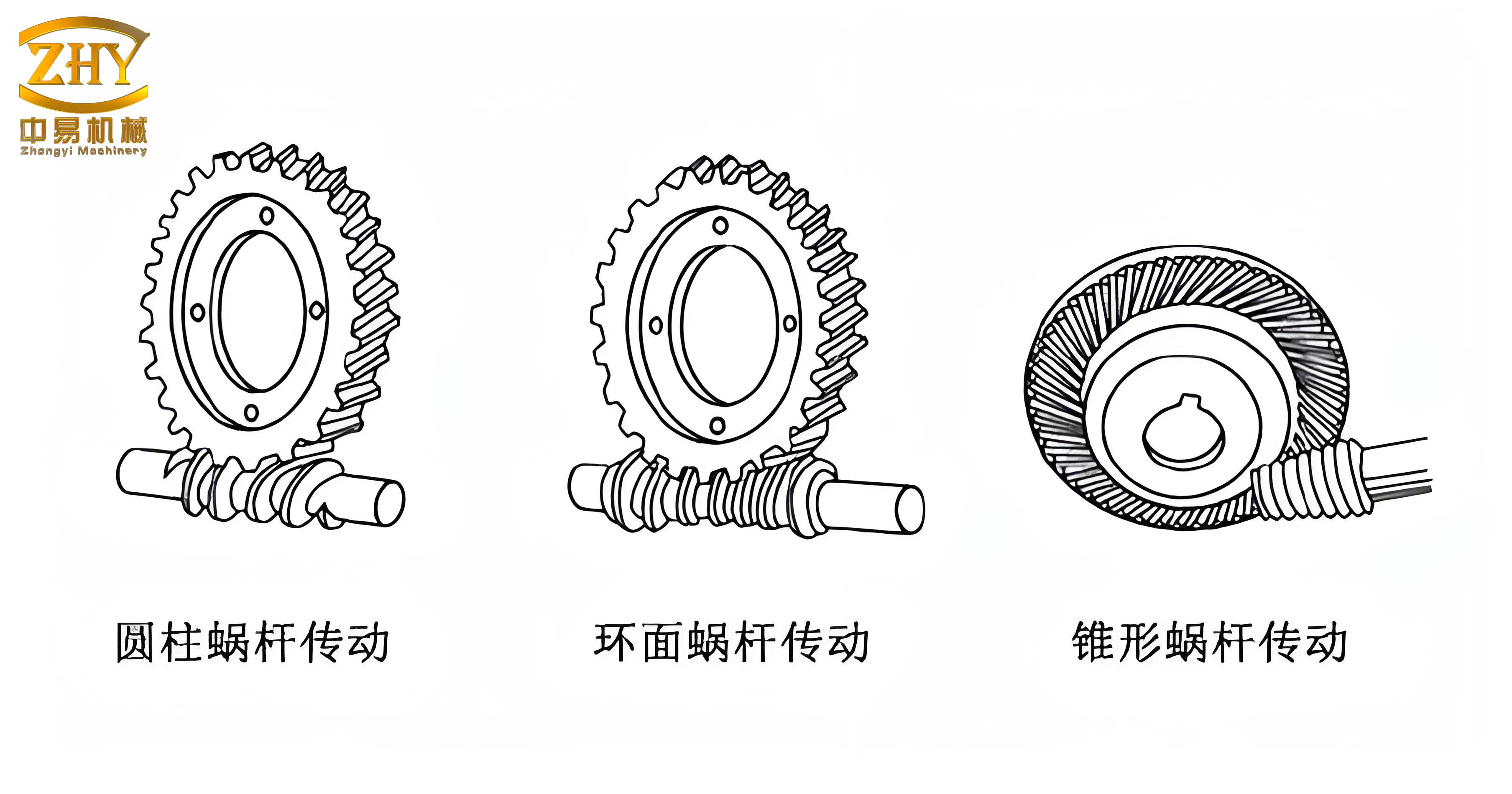
The fundamental idea behind self-locking revolves around the concept of friction and its role in preventing unintended motion. When a mechanical system, such as a screw gear assembly, is subjected to a load, the interaction between surfaces can generate sufficient frictional resistance to halt movement, even in the absence of active braking. This phenomenon is not merely anecdotal; it is rooted in well-established physical laws that govern static and dynamic friction. In screw gears, the geometry of the threads—specifically the lead angle of the worm—plays a pivotal role in determining whether self-locking occurs. As I explore this topic, I will emphasize the importance of screw gears in various industrial settings, highlighting how their design parameters influence performance. The keyword “screw gears” will recur throughout this discussion, as these components are central to understanding self-locking mechanisms. To visualize a typical screw gear setup, consider the following image, which illustrates the intricate meshing of worm and wheel elements in such systems.
At the heart of self-locking lies the concept of the friction angle, a parameter that defines the maximum angle at which an object can rest on an inclined plane without sliding. For screw gears, this translates to the relationship between the worm’s lead angle and the friction angle between mating surfaces. Mathematically, the friction angle $\phi$ is derived from the coefficient of static friction $\mu_s$, as shown in the formula: $$ \tan(\phi) = \mu_s $$ This equation indicates that as the friction coefficient increases, the friction angle expands, enhancing the potential for self-locking. In screw gears, the lead angle $\lambda$ of the worm must satisfy the condition $\lambda \leq \phi$ for self-locking to occur. If $\lambda > \phi$, the system may back-drive under load, leading to uncontrolled motion. This principle is analogous to that seen in simple mechanical devices like screw jacks, where the screw’s thread angle determines whether the load can be held securely. I will elaborate on this with detailed derivations and examples, underscoring how screw gears leverage this behavior to function without additional brakes.
To better understand the factors influencing self-locking in screw gears, it is essential to examine the materials and surface conditions involved. The coefficient of friction is not a fixed value; it varies based on material pairs, roughness, temperature, and lubrication. For instance, in screw gears, the worm is typically made from hardened steel to improve wear resistance, while the wheel is often crafted from bronze to reduce friction and enhance durability. This combination affects $\mu_s$ and, consequently, the friction angle. Below is a table summarizing common material pairs used in screw gears and their approximate static friction coefficients under dry conditions.
| Worm Material | Wheel Material | Coefficient of Static Friction ($\mu_s$) | Typical Friction Angle ($\phi$) |
|---|---|---|---|
| Hardened Steel | Bronze | 0.15 – 0.25 | 8.5° – 14.0° |
| Stainless Steel | Cast Iron | 0.20 – 0.30 | 11.3° – 16.7° |
| Carbon Steel | Aluminum Alloy | 0.10 – 0.20 | 5.7° – 11.3° |
From this table, it is evident that the choice of materials directly impacts the self-locking capability of screw gears. For example, with a steel-bronze pair, $\mu_s$ might average around 0.20, yielding a friction angle of approximately 11.3°. Therefore, to ensure self-locking, the worm’s lead angle $\lambda$ should be designed below this threshold, say at 10° or less. This design consideration is crucial in applications like cranes, where screw gears are employed in hoisting mechanisms to suspend loads. However, relying solely on self-locking requires rigorous validation, as factors such as wear over time can alter $\mu_s$ and $\phi$, potentially compromising safety. In my analysis, I stress that screw gears must be designed with a safety margin, often reducing $\lambda$ further to account for real-world variability.
Beyond the basic self-locking condition, the design of screw gears must address structural integrity to prevent failure under load. This involves calculating stresses within the gear teeth and shafts to ensure they remain within allowable limits. Two key aspects are the bending fatigue strength at the root of the wheel teeth and the contact fatigue strength at the mating surfaces. For screw gears, these calculations are complex due to the sliding contact and high stress concentrations. The bending stress $\sigma_b$ can be estimated using the Lewis formula modified for screw gears: $$ \sigma_b = \frac{W_t}{b m_n Y} K_a K_v K_m $$ where $W_t$ is the tangential load, $b$ is the face width, $m_n$ is the normal module, $Y$ is the Lewis form factor, and $K_a$, $K_v$, $K_m$ are application, velocity, and mounting factors, respectively. Similarly, the contact stress $\sigma_c$ for screw gears is given by: $$ \sigma_c = C_p \sqrt{\frac{W_t}{d_w b} \cdot \frac{E_1 E_2}{E_1 + E_2}} $$ where $C_p$ is an elastic coefficient, $d_w$ is the worm pitch diameter, and $E_1$, $E_2$ are the moduli of elasticity for the worm and wheel. These equations highlight the intricate balance required in screw gear design to avoid overstress that could lead to catastrophic failure.
To illustrate the design parameters for screw gears in crane applications, I have compiled a table outlining typical values and considerations. This table emphasizes how screw gears must be tailored to meet both self-locking and strength requirements.
| Parameter | Symbol | Typical Range for Screw Gears | Importance for Self-Locking |
|---|---|---|---|
| Worm Lead Angle | $\lambda$ | 5° – 15° | Must be ≤ friction angle $\phi$ for self-locking |
| Coefficient of Friction | $\mu_s$ | 0.1 – 0.3 (material-dependent) | Directly determines $\phi$ via $\tan(\phi) = \mu_s$ |
| Module (Normal) | $m_n$ | 2 mm – 10 mm | Affects tooth strength and load capacity |
| Pressure Angle | $\alpha_n$ | 20° – 30° | Influences contact stress and efficiency |
| Efficiency | $\eta$ | 30% – 90% | Lower efficiency often correlates with better self-locking |
From this table, it is clear that screw gears involve trade-offs; for instance, a lower lead angle enhances self-locking but may reduce efficiency. In crane design, where safety is critical, efficiency might be sacrificed to ensure reliable load holding. However, this necessitates careful analysis to avoid excessive heat generation or wear. I recall instances in my experience where screw gears were used in older crane models, and their performance degraded over time due to wear increasing the lead angle effectively. This underscores the need for regular maintenance and inspection when relying on screw gears for self-locking.
Another critical aspect is the dynamic behavior of screw gears under varying loads. Self-locking is primarily a static phenomenon, but in real-world applications, vibrations, shock loads, and thermal expansions can affect the system. For screw gears to maintain self-locking, the worm shaft must possess sufficient stiffness to prevent deflection that could alter the mesh geometry. The deflection $\delta$ of a worm shaft under a torsional load $T$ can be approximated by: $$ \delta = \frac{T L}{G J} $$ where $L$ is the shaft length, $G$ is the shear modulus, and $J$ is the polar moment of inertia. Excessive deflection can lead to misalignment in screw gears, reducing contact area and potentially breaking the self-locking condition. Therefore, designers often incorporate safety factors, such as keeping $\lambda$ at least 2° below $\phi$, to account for these dynamic effects. This practice is especially important in screw gears used in hazardous environments like construction sites.
In the context of crane design standards, such as those referenced in the Chinese specification for crane design, the use of screw gears without brakes is permitted only under specific conditions. These include ensuring that the self-locking capability is robust and that no overstress or unintended movement occurs. From my viewpoint, this allowance is a double-edged sword: while it can simplify machinery by eliminating brake components, it places a heavy burden on the screw gear design. For example, in tower crane slewing mechanisms, screw gears were historically used for their self-locking properties, but modern designs often incorporate additional brakes due to safety concerns. This evolution reflects a broader trend in engineering where redundancy is valued over simplicity in safety-critical systems. Nonetheless, screw gears remain relevant in niche applications where their unique attributes are advantageous.
To further explore the mathematical modeling of self-locking in screw gears, consider the efficiency $\eta$ of a worm gear set, which is given by: $$ \eta = \frac{\tan(\lambda)}{\tan(\lambda + \phi’)} $$ where $\phi’$ is the effective friction angle considering dynamic effects. For self-locking to occur, the efficiency must be less than 50%, implying that more force is required to back-drive the system than to drive it forward. This condition is met when $\lambda < \phi’$, aligning with the earlier inequality. Using this formula, I can derive the relationship between lead angle and friction for various screw gear configurations. For instance, if $\phi’ = 12°$, then for $\lambda = 10°$, efficiency calculates to approximately 45%, indicating self-locking. However, if wear increases $\lambda$ to 13°, efficiency rises above 50%, and self-locking may be lost. This sensitivity highlights why screw gears require precise manufacturing and monitoring.
The risks associated with using screw gears without brakes cannot be overstated. Over time, factors like surface wear, contamination, or thermal cycling can alter the friction coefficient and geometry. In screw gears, even minor changes in the worm lead angle due to wear can push $\lambda$ above $\phi$, leading to catastrophic failure where loads descend uncontrollably. To mitigate this, designers must incorporate factors of safety and consider worst-case scenarios. Below is a table summarizing potential failure modes for screw gears in self-locking applications and recommended preventive measures.
| Failure Mode | Causes in Screw Gears | Preventive Measures |
|---|---|---|
| Loss of Self-Locking | Wear increasing $\lambda$, reduced $\mu_s$ from lubrication | Use hard materials, regular inspection, limit $\lambda$ design |
| Tooth Breakage | Overstress from shock loads, poor alignment | Calculate stresses with safety factors, ensure precise mounting |
| Shaft Deformation | Insufficient stiffness, excessive torque | Increase shaft diameter, use supportive bearings |
| Back-Driving | $\lambda > \phi$ due to thermal expansion | Account for thermal effects in design, use cooling systems |
This table reinforces the idea that screw gears are not a “set-and-forget” solution; they demand ongoing attention. In my experience, when screw gears are employed in cranes, rigorous testing under load conditions is essential to verify self-locking. This includes testing at rated loads and overloads to ensure no movement occurs. Additionally, environmental factors like humidity can affect friction in screw gears, as moisture may alter surface properties. Therefore, for outdoor crane applications, screw gears might be less reliable than enclosed brake systems, underscoring the need for context-specific design choices.
From a broader perspective, the application of screw gears extends beyond cranes to include machinery like conveyor systems, valves, and positioning devices. In each case, the self-locking principle is exploited to hold positions without continuous power input. However, the lessons learned from crane design—such as the importance of material selection and geometric precision—apply universally. For screw gears to function safely, engineers must adopt a holistic approach that integrates mechanical design, materials science, and operational practices. I advocate for the use of computational tools, such as finite element analysis (FEA), to simulate the behavior of screw gears under various loads, identifying potential weak points before physical prototyping.
In conclusion, screw gears offer a compelling solution for self-locking in mechanical systems, but their implementation requires deep understanding and careful execution. The key conditions—namely, maintaining a worm lead angle below the friction angle, ensuring structural integrity, and accounting for dynamic factors—are interdependent and must be addressed collectively. As I reflect on the evolution of crane design, where screw gears were once common for their simplicity but are now often supplemented with brakes, it is evident that safety standards have rightfully become more stringent. Nonetheless, screw gears continue to play a vital role in engineering, and with advances in materials and manufacturing, their reliability can be enhanced. For designers considering screw gears in self-locking applications, I recommend a conservative approach: design with ample margins, conduct thorough testing, and implement regular maintenance schedules. By doing so, the benefits of screw gears can be harnessed while minimizing risks, ensuring that these components contribute to safe and efficient machinery operations.
To further elaborate on the technical nuances, let’s delve into the derivation of self-locking conditions for screw gears using virtual work principles. The work done by the driving force must be less than or equal to the work required to overcome friction. For a screw gear system, this can be expressed as: $$ W_{\text{input}} \leq W_{\text{friction}} $$ In terms of torque, if $T_{\text{in}}$ is the input torque to drive the load, and $T_{\text{fric}}$ is the frictional torque resisting motion, then self-locking implies that for any load torque $T_{\text{load}}$, the system remains stationary unless $T_{\text{in}}$ is applied. For screw gears, this translates to: $$ T_{\text{load}} \cdot \tan(\lambda) \leq T_{\text{load}} \cdot \mu_s \cdot \sec(\alpha) $$ where $\alpha$ is the pressure angle. Simplifying, we get the familiar condition $\tan(\lambda) \leq \mu_s$, or $\lambda \leq \phi$. This derivation underscores the universality of the self-locking principle across different screw-based mechanisms, all hinging on the behavior of screw gears.
Additionally, the role of lubrication in screw gears cannot be ignored. While lubrication reduces friction and wear, it may also lower the coefficient of friction, potentially affecting self-locking. For screw gears operating in lubricated conditions, the effective friction coefficient $\mu_{\text{eff}}$ might be lower than in dry conditions, necessitating a smaller lead angle $\lambda$ to maintain self-locking. This presents a design challenge: balancing wear reduction with self-locking reliability. In practice, screw gears in crane applications often use specialized lubricants that provide a stable friction coefficient over time. Research into surface coatings, such as titanium nitride or diamond-like carbon, has shown promise in enhancing the durability and consistent friction properties of screw gears.
Finally, I want to emphasize the importance of interdisciplinary knowledge in designing screw gears. Mechanical engineers must collaborate with materials scientists, tribologists, and safety experts to optimize screw gear systems. For instance, advancements in composite materials could lead to screw gears with tailored friction characteristics, improving self-locking performance. As we move towards smarter machinery with IoT integration, screw gears could be equipped with sensors to monitor wear and friction in real-time, alerting operators to potential issues before failure occurs. This proactive approach could revolutionize the use of screw gears in critical applications, making them safer and more reliable than ever before.
In summary, through this extensive discussion, I have explored the multifaceted nature of screw gears in self-locking contexts. From theoretical foundations to practical considerations, it is clear that screw gears are a powerful yet demanding technology. By adhering to the conditions outlined—primarily the lead angle-friction angle relationship and strength requirements—engineers can leverage screw gears effectively. However, continuous innovation and vigilance are essential to overcome the inherent risks. As the field evolves, screw gears will undoubtedly remain a key topic in mechanical design, driving progress in safety and efficiency across industries.