
The reliable transmission of motion and power between non-parallel, non-intersecting shafts is a fundamental requirement in numerous mechanical systems. Among the various solutions, screw gears, comprising a worm and a worm wheel, represent a pivotal mechanism specifically designed for this purpose. Their unique ability to provide high reduction ratios and substantial torque multiplication in a compact envelope makes them indispensable in applications ranging from automotive steering systems to heavy industrial machinery. The core principle involves the meshing of a threaded screw (the worm) with a toothed gear (the worm wheel), where the primary motion transfer occurs through a combination of rolling and significant sliding action at the contact interface.
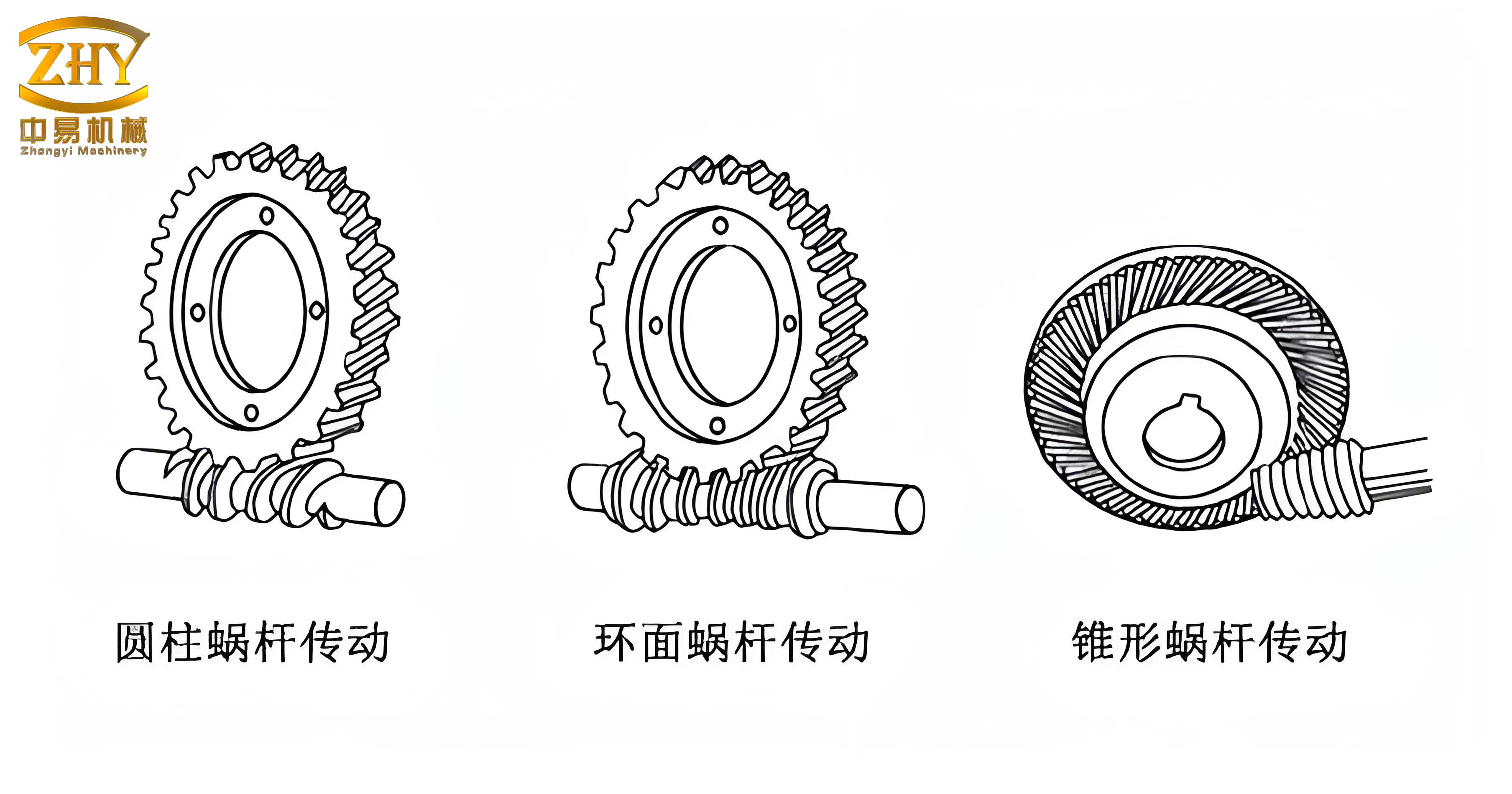
However, this very sliding action, coupled with dynamic load fluctuations and potential manufacturing imperfections, introduces complex vibrational excitations within the screw gear system. These vibrations are not merely a source of noise; they can induce dynamic stresses, accelerate wear, contribute to fatigue failure, and ultimately compromise the transmission performance and operational lifespan of the screw gears. Therefore, a profound understanding of the dynamic characteristics, specifically the inherent vibration modes and natural frequencies, is paramount for predicting resonant conditions, optimizing design, and ensuring reliability. Modal analysis serves as the cornerstone technique for extracting these dynamic properties. This article presents a comprehensive investigation into the transmission performance of screw gears through an integrated approach of finite element simulation and experimental modal analysis, focusing on the dynamic behavior under free and simulated working conditions.
Theoretical Foundation of Modal Analysis for Screw Gears
The dynamic behavior of a screw gear assembly, considered as a continuous elastic system, can be described by its equations of motion. For an undamped, free-vibrating system, this is represented by:
$$
\mathbf{M}\{\ddot{x}(t)\} + \mathbf{K}\{x(t)\} = \{0\}
$$
where \(\mathbf{M}\) is the global mass matrix, \(\mathbf{K}\) is the global stiffness matrix, \(\{x(t)\}\) is the displacement vector, and \(\{\ddot{x}(t)\}\) is the acceleration vector. The solution to this eigenvalue problem yields the system’s natural frequencies (eigenvalues) and corresponding mode shapes (eigenvectors). For a multi-degree-of-freedom system like a screw gear reducer, there exists a set of ‘n’ natural frequencies and mode shapes, where ‘n’ is the number of degrees of freedom. The natural frequencies, \(\omega_n\), are related to the eigenvalues, \(\lambda\), by \(\omega_n = \sqrt{\lambda}\). In practical engineering analysis, the lower-order modes are of primary interest as they are most easily excited by operational forces and have the greatest influence on the overall dynamic response and transmission performance of the screw gears.
The core objective of the modal analysis performed here is to solve this eigenvalue problem for a detailed 3D model of the screw gear system. The natural frequencies indicate at which excitation frequencies the system will exhibit large-amplitude vibrations (resonance). The mode shapes visually describe the relative deformation pattern of the worm, worm wheel, shafts, and housing at each resonant frequency. Identifying these parameters allows engineers to ensure that the operational speeds and meshing frequencies of the screw gears do not coincide with these critical natural frequencies, thereby avoiding resonant conditions that could lead to premature failure.
Finite Element Modeling and Preprocessing
Accurate finite element modeling is the critical first step in simulating the dynamic behavior of screw gears. A detailed 3D model of a WPA40-type worm gear reducer was created, encompassing all major components: the worm shaft, the worm wheel, supporting bearings, input/output shafts, and the housing with its end caps. The geometry was simplified judiciously by removing minor features like small fillets, chamfers, and lubrication holes that have negligible impact on global stiffness and mass distribution but would unnecessarily increase computational cost. This model forms the basis for all subsequent finite element analysis.
The assignment of correct material properties is essential for realistic results. The components of the screw gears are manufactured from different materials, each with distinct elastic properties. The materials were defined as linear-elastic and isotropic for the modal analysis. The key properties are summarized in the table below:
| Component | Material | Density (kg/m³) | Young’s Modulus (GPa) | Poisson’s Ratio |
|---|---|---|---|---|
| Worm Wheel | ZCuAl10Fe3 | 7500 | 109.8 | 0.335 |
| Worm Shaft | 40# Steel | 7850 | 213.5 | 0.30 |
| Bearings | GCr15 | 7830 | 219.0 | 0.30 |
| Shafts | 45# Steel | 7850 | 210.0 | 0.31 |
| Housing & Caps | HT200 | 7330 | 148.0 | 0.31 |
The interaction between components, which defines the load paths and overall system stiffness, was modeled using contact definitions. Different contact types were applied based on the physical connections within the screw gear assembly:
| Contact Pair | Contact Type | Description |
|---|---|---|
| Worm & Worm Wheel Teeth | Frictional | Simulates the meshing interface with sliding friction. |
| Shafts & Bearings (Inner Race) | Bonded | Assumes a perfect connection (press-fit). |
| Bearings (Outer Race) & Housing | No Separation | Allows gap closure but not opening; simulates housing support. |
| Housing & End Caps | Bonded | Assumes a bolted, rigid connection. |
A critical aspect of meshing for screw gears is the refinement of the grid in regions of high stress gradient and contact. The tooth contact zone between the worm and the worm wheel is particularly important. A local mesh sizing control was applied to this region to ensure a sufficient number of elements across the contact area, capturing the deformation accurately. The rest of the model was meshed with a balanced element size to maintain accuracy while managing computational expense. The final mesh consisted primarily of tetrahedral elements, achieving a good balance between model fidelity and solution time for the modal analysis of the screw gears.
Modal Analysis Methodology and Setup
The modal analysis was conducted using the ANSYS Workbench simulation environment. The preprocessing steps of geometry import, material assignment, contact definition, and meshing, as described, were completed within this framework. For the solution phase, the Block Lanczos eigenvalue extraction algorithm was selected. This method is highly efficient and robust for large-scale models, making it ideal for extracting multiple modes from the complex screw gear assembly. It is particularly suited for finding eigenvalues in a specified frequency range.
The analysis was configured to extract the first ten (10) mode shapes and their corresponding natural frequencies. This focus on the lower-frequency range is standard practice in structural dynamics, as these modes are typically the most significant for forced vibration response. The boundary conditions for this “free-free” modal analysis were set to simulate the experimental condition: no external constraints were applied to the housing. In reality, the housing would be mounted, but a free-free analysis provides the fundamental dynamic characteristics of the screw gear structure itself, which can then be used to understand its behavior under various mounting conditions.
The solution outputs of primary interest are the natural frequencies (in Hz) and the animated mode shapes. Each mode shape represents a unique pattern of relative displacement (vibration) that the screw gear system will assume if excited at that specific natural frequency. The analysis assumes linear behavior and no damping, which is a standard and valid approach for identifying natural frequencies and mode shapes.
Experimental Modal Analysis for Validation
To validate the finite element model and the simulated dynamic characteristics of the screw gears, an experimental modal analysis (EMA) was performed. A dedicated test rig was constructed, featuring a complete WPA40 screw gear reducer suspended by soft elastic cords to approximate a free-free boundary condition, mirroring the simulation setup. The coordinate system was defined with the X-axis parallel to the worm shaft axis, the Y-axis parallel to the worm wheel shaft axis, and the Z-axis vertical.
The experimental procedure followed the standard multiple-input, single-output (MISO) approach. Eighteen (18) representative points were selected on the housing of the screw gear reducer to capture its global dynamic deformation. A single tri-axial accelerometer was fixed at a chosen reference point (the “response” point). An instrumented impact hammer was then used to impart a known impulsive force at each of the 18 points sequentially (the “input” points). For each impact, the force signal from the hammer and the acceleration response signals in X, Y, and Z directions from the fixed accelerometer were simultaneously acquired using a high-resolution data acquisition system.
The collected time-domain data was processed in specialized modal analysis software. The Frequency Response Functions (FRFs) between each input point and the response point were estimated. These FRFs, which describe the system’s output response per unit input force across a frequency spectrum, were then used to perform a curve-fitting procedure. This algorithm identifies the system’s poles (natural frequencies and damping ratios) and residues (related to mode shapes) from the measured FRF data. The first ten experimental natural frequencies and mode shapes were thus extracted for direct comparison with the finite element results, providing a crucial check on the accuracy of the screw gear model.
Results: Comparison of Simulation and Experiment
The comparative analysis between the finite element simulation and the experimental modal test forms the core of validating the dynamic model of the screw gears. The table below presents the first ten natural frequencies obtained from both methods.
| Mode Order | Simulated Freq. (Hz) | Experimental Freq. (Hz) | Relative Error (%) |
|---|---|---|---|
| 1 | 876.4 | 868.6 | 0.89 |
| 2 | 914.6 | 902.4 | 1.33 |
| 3 | 1056.2 | 1031.0 | 2.39 |
| 4 | 1081.4 | 1071.0 | 0.96 |
| 5 | 1105.1 | 1091.0 | 1.28 |
| 6 | 1202.3 | 1190.0 | 1.02 |
| 7 | 1365.0 | 1203.0 | 11.87 |
| 8 | 1428.6 | 1376.0 | 3.68 |
| 9 | 1606.1 | 1585.0 | 1.31 |
| 10 | 1698.2 | 1625.0 | 4.31 |
The correlation between the simulated and experimental natural frequencies for the screw gears is generally excellent for the first six modes, with errors consistently below 2.4%. This high level of agreement validates the accuracy of the finite element model in capturing the global mass and stiffness distribution of the assembly. The larger discrepancy observed for the 7th mode (11.87%) can often be attributed to modeling simplifications, such as the idealized representation of bearing stiffness (modeled as bonded/No Separation contacts) or housing joint stiffness, which may have a more pronounced effect on higher-order modes. Furthermore, small variations in material properties and geometric tolerances in the physical screw gears can contribute to these differences.
Qualitatively, the mode shapes also showed good agreement. The animated results from the simulation and the operational deflection shapes reconstructed from the experimental data depicted consistent deformation patterns. Common characteristics observed across several lower-order modes included bending of the worm shaft and the worm wheel shaft, often accompanied by rocking or bending of the housing. The ends of the shafts, behaving as cantilevers beyond the bearing supports, typically exhibited the largest displacements, confirming their sensitivity to dynamic excitations in the screw gear system.
Transmission Performance Under Simulated Working Conditions
While the free-free modal analysis provides the fundamental dynamic signature, the true assessment of transmission performance for screw gears requires consideration of operational conditions. To investigate this, additional tests were conducted on the screw gear reducer under simulated working states. The reducer was mounted in a power circulation test rig. The input worm shaft was driven at a constant speed of 1500 RPM (corresponding to a meshing frequency of 25 Hz for a single-start worm), and different load torques were applied to the output worm wheel shaft via a magnetic powder brake.
Vibration data was acquired under these loaded, rotating conditions. Although a classical experimental modal analysis is not feasible during rotation, the vibration spectrum can be analyzed to identify dominant frequency components. The natural frequencies of the system can shift under load due to the phenomenon of “spin softening” (centrifugal effects on rotating parts are negligible here) and, more significantly, due to changes in the meshing stiffness and load-dependent bearing stiffness. The dominant vibration peaks observed in the spectrum under different loads were recorded and are compared below with the free-state natural frequencies of the screw gears.
| Mode Order | Free State (Hz) | 6 N·m Load (Hz) | 9 N·m Load (Hz) | 15 N·m Load (Hz) |
|---|---|---|---|---|
| 1 | 868.6 | 209.0 | 425.0 | 828.1 |
| 2 | 902.4 | 319.9 | 671.2 | 899.2 |
| 3 | 1031.0 | 627.5 | 723.1 | 1000.2 |
| 4 | 1071.0 | 889.2 | 923.0 | 1021.1 |
| 5 | 1091.0 | 1044.0 | 1066.0 | 1073.0 |
| 6 | 1190.0 | 1087.0 | 1092.0 | 1124.0 |
| 7 | 1203.0 | 1124.0 | 1102.0 | 1185.0 |
| 8 | 1376.0 | 1310.0 | 1325.0 | 1340.0 |
| 9 | 1585.0 | 1453.0 | 1466.0 | 1523.0 |
| 10 | 1625.0 | 1605.0 | 1614.0 | 1620.0 |
The results reveal a significant and non-linear relationship between applied load and the observed dominant vibration frequencies in the screw gears. Under lower loads (6 N·m and 9 N·m), the identified frequencies are generally lower than the corresponding free-state natural frequencies. This is likely due to the change in the effective meshing stiffness of the worm and worm wheel teeth under light load, potentially allowing more compliance. As the load increases to 15 N·m, the dominant frequencies approach and, in some cases, slightly exceed the free-state values. This suggests a stiffening effect, possibly from bearing preload or fully engaged tooth contact under higher load.
The most critical observation for the transmission performance of these screw gears pertains to the first mode. Under a 15 N·m load, the dominant frequency associated with the first mode is 828.1 Hz. The input rotational speed of 1500 RPM (25 Hz) generates meshing frequencies at harmonics (multiples) of this fundamental. The 33rd harmonic of the meshing frequency is \(33 \times 25 = 825\) Hz. This value is alarmingly close to the loaded first natural frequency of 828.1 Hz. This near-coincidence creates a high risk of resonance if the system operates at this load condition for a prolonged period. Resonance would lead to dramatically amplified vibration amplitudes, drastically increased dynamic stresses at the root of the worm wheel teeth and the worm shaft, accelerated wear, and a high probability of premature fatigue failure. This finding is crucial for defining the safe operating envelope and duty cycles for this specific design of screw gears.
Conclusion
This integrated study successfully demonstrates the application of finite element-based modal analysis, complemented by experimental validation, for a thorough evaluation of the dynamic transmission performance of screw gears. The high correlation between simulated and experimental natural frequencies for the free-state condition validates the developed finite element model as a reliable digital twin of the physical screw gear reducer. This model can now be confidently used for further dynamic simulations, such as harmonic response or transient dynamic analysis under various loading spectra.
The investigation under simulated working conditions yielded particularly valuable insights. It demonstrated that the dynamic characteristics of screw gears are not static properties but are influenced by the operational load. The identified risk of resonance near a specific load level (15 N·m) for the given input speed highlights a critical vulnerability in the transmission performance. This underscores the necessity of conducting dynamic analysis across the entire expected load range during the design phase of screw gears.
In conclusion, modal analysis serves as a powerful tool for probing the inherent vibrational behavior of screw gear systems. By extracting accurate natural frequencies and mode shapes, engineers can predict and avoid resonant conditions, optimize structural design for stiffness and weight, and ultimately enhance the reliability, longevity, and noise-vibration-harshness (NVH) performance of screw gear drives. The methodology presented, combining advanced simulation with empirical testing, provides a robust framework for ensuring the dependable transmission performance of screw gears in demanding mechanical applications.