
With the advancement of industry, the application of high-performance gear equipment has become increasingly widespread. Screw gear drives, also known as worm gear drives, are a unique type of gear transmission evolved from crossed helical gears. The pinion, or worm, has teeth that appear to be wrapped around a cylinder, resembling a screw, while the larger gear is termed the worm wheel or simply the gear. To enhance meshing conditions, the worm wheel is often made with a throat to partially envelop the worm. The primary motion in screw gears is characterized by sliding friction, which generates significant heat and poses considerable lubrication challenges.
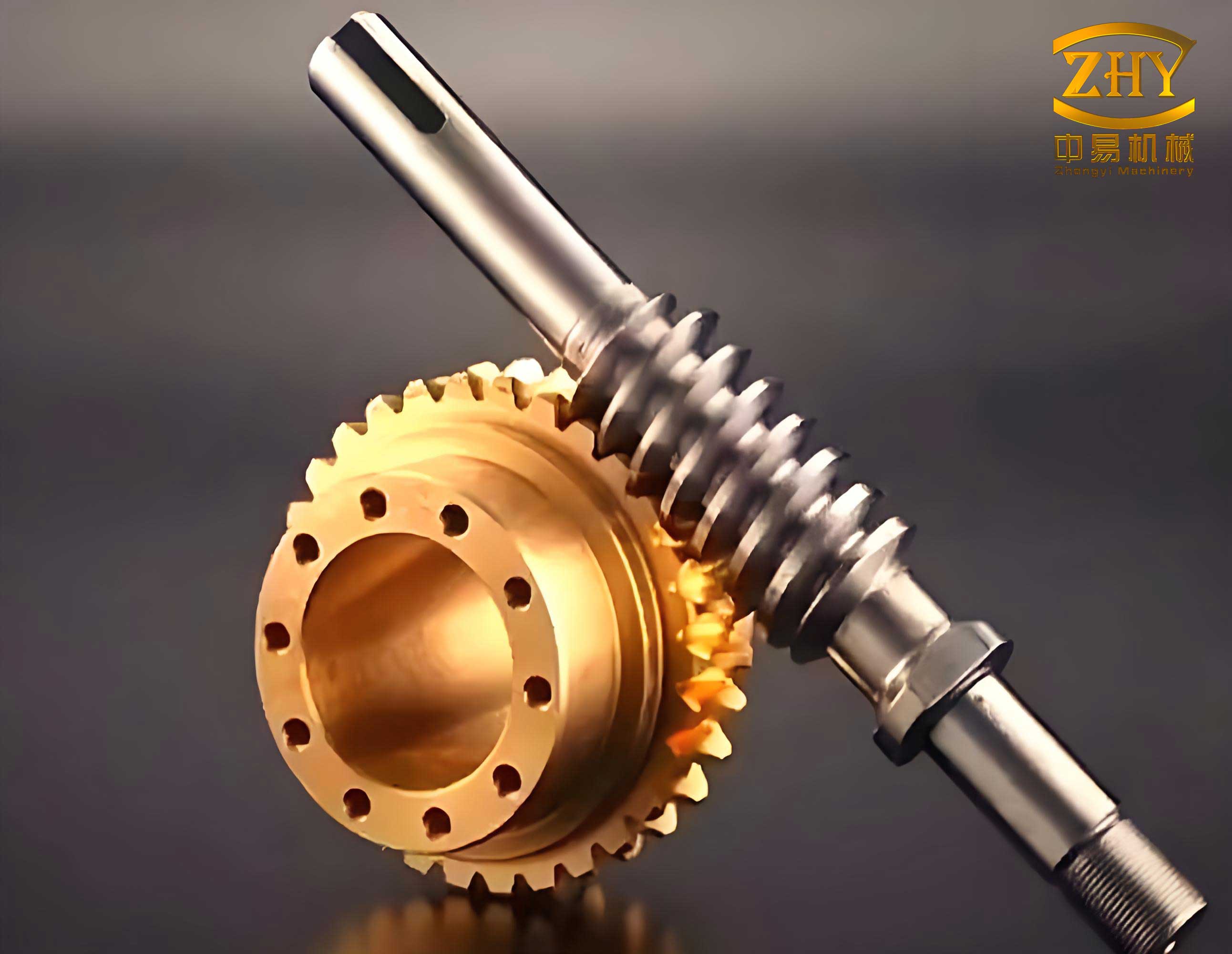
The friction pair in screw gears is typically steel (worm) against copper alloy (worm wheel). The high sliding velocities and the sensitivity of copper components to certain chemical agents, particularly active sulfur compounds commonly found in industrial gear oils, necessitate the use of dedicated lubricants. Therefore, equipment manufacturers often recommend specialized screw gear oils. These oils must possess excellent lubricity, anti-scuffing capability, rust and corrosion protection, and strong oxidation resistance to handle the severe sliding conditions. This article details the development and field application of an L-CKE/P 320 extreme pressure screw gear oil.
Technical Specifications and Performance Targets
The development target for the L-CKE/P 320 extreme pressure screw gear oil was to meet and exceed the requirements specified in the Chinese petroleum industry standard SH/T 0094—91, specifically for the L-CKE/P 320 first-grade quality. The key technical indicators are summarized in Table 1.
| Property | Test Method | Specification Requirement |
|---|---|---|
| Kinematic Viscosity @ 40°C, mm²/s | GB/T 265 | 288 – 352 |
| Viscosity Index | GB/T 1995 | ≥ 90 |
| Flash Point (COC), °C | GB/T 3536 | ≥ 220 |
| Pour Point, °C | GB/T 3535 | ≤ -8 |
| Copper Strip Corrosion (100°C, 3h) | GB/T 5096 | ≤ 1b |
| Foaming Tendency/Stability (24°C), mL/mL | GB/T 12579 | ≤ 75/10 |
| Demulsibility (40-37-3 mL), min | GB/T 7305 | ≤ 60 |
| Timken OK Load, lb (or N) | GB/T 11144 | ≥ 45 (≥ 2000 N) |
| Four-Ball Wear Scar Diameter (392 N, 60 min, 75°C, 1200 rpm), mm | SH/T 0189 | ≤ 0.5 |
| Rust Prevention (Distilled Water) | GB/T 11143 | Pass |
| Oxidation Stability (95°C, 312h), 100°C Viscosity Increase % | SH/T 0123 | ≤ 10 |
Product Development Process
1. Base Oil Selection
The base oil constitutes the major component of the finished lubricant and fundamentally determines its performance characteristics. For the screw gear oil, two highly refined base oils were evaluated: 500SN and 150BS. Their typical properties are listed in Table 2.
| Property | Test Method | 500SN | 150BS |
|---|---|---|---|
| Kinematic Viscosity @ 40°C, mm²/s | GB/T 265 | 95 – 105 | 500 – 550 |
| Viscosity Index | GB/T 1995 | > 95 | > 95 |
| Pour Point, °C | GB/T 3535 | -12 | -9 |
| Total Acid Number, mg KOH/g | GB/T 4945 | < 0.05 | < 0.05 |
The data shows that both base oils exhibit excellent low-temperature fluidity, high viscosity index, and low acid content, making them suitable for formulating a high-performance screw gear oil. A blend of 500SN and 150BS was selected to achieve the target viscosity of 320 mm²/s at 40°C while providing an optimal balance of film strength and low-temperature performance. The blending ratio can be determined using the logarithmic mixing rule:
$$ \log(\eta_{blend}) = x \log(\eta_{500SN}) + (1-x) \log(\eta_{150BS}) $$
where $\eta$ is the kinematic viscosity and $x$ is the mass fraction of 500SN.
2. Additive System Development
The severe sliding friction inherent in screw gear operation requires additives to impart extreme pressure (EP), anti-wear (AW), rust inhibition, oxidation resistance, and demulsibility properties. The copper-containing components impose a critical constraint: the EP/AW additives must not be chemically aggressive towards copper.
2.1 Extreme Pressure/Anti-Wear Agent Screening
Conventional sulfur-phosphorus EP agents used in industrial gear oils often contain highly active sulfur species that can corrode copper. Therefore, the selection focused on mild, sulfur-based EP additives with controlled activity. Three candidate additives (A1, A2, A10) with sulfur content around 10 wt.% were evaluated in the selected base blend. Key performance test results are presented in Table 4.
| Sample | EP Additive | Demulsibility (Time to 40-37-3), min | Copper Strip Corrosion (100°C, 3h) | Timken OK Load, lb | 4-Ball Wear Scar Dia., mm |
|---|---|---|---|---|---|
| 1 | A1 | 25 | 2a | 50 | 0.42 |
| 2 | A2 | 40 | 1b | 45 | 0.48 |
| 3 | A10 | 15 | 1a | 55 | 0.38 |
Sample 3, containing additive A10, demonstrated superior overall performance: excellent demulsibility, minimal copper corrosion (1a), high load-carrying capacity (55 lb Timken OK Load), and low wear scar diameter. Therefore, A10 was selected as the primary EP/AW agent. The mechanism of such additives involves forming a protective tribofilm on the metal surfaces under high pressure and temperature, which is governed by reactions of the form:
$$ Fe + R-S_x-R’ \rightarrow FeS + \text{other products} $$
The reactivity must be carefully tuned to protect the steel worm without attacking the copper alloy gear.
2.2 Rust Inhibitor Selection
The base oil with A10 additive (Sample 3) failed the rust prevention test. Three common rust inhibitors (RI-1, RI-2, RI-3) were evaluated at various treat rates. The results in Table 5 show that RI-3 at a treat rate of 0.03 wt.% effectively passed the rust test without adversely affecting other properties.
| Formulation | Rust Inhibitor (Treat Rate) | Rust Test Result (GB/T 11143) |
|---|---|---|
| Base + A10 | None | Fail (Heavy Rust) |
| Base + A10 + RI-1 | RI-1 (0.05%) | Pass |
| Base + A10 + RI-2 | RI-2 (0.04%) | Marginal Pass |
| Base + A10 + RI-3 | RI-3 (0.03%) | Pass |
2.3 Antioxidant System Optimization
The high sliding speeds and associated frictional heating in screw gears accelerate oil oxidation. Three antioxidant (AO) packages were evaluated using the Rotary Bomb Oxidation Test (RBOT, ASTM D2272), which measures the induction time to a specific pressure drop. Results are in Table 6.
| Formulation (Base + A10 + RI-3) | Antioxidant Package | RBOT Induction Time, min |
|---|---|---|
| AO Sample 1 | AO Combo 1 | 280 |
| AO Sample 2 | AO Combo 2 | 195 |
| AO Sample 3 | AO Combo 3 | 220 |
Antioxidant Combination 1 provided the longest induction time, indicating superior oxidation stability, and was selected for the final formulation. Oxidation follows a free-radical chain mechanism. Antioxidants (AH) act as radical scavengers:
$$ R• + AH \rightarrow RH + A• $$
$$ ROO• + AH \rightarrow ROOH + A• $$
The selected AO package effectively terminates these chains, prolonging the oil’s service life in the demanding screw gear environment.
2.4 Demulsifier Synergy Study
Screw gear systems in industrial settings can be contaminated with water from cooling systems or condensation. Efficient water separation is crucial. Two demulsifiers (D1, D2) were tested individually and in combination in the baseline formulation (Base + A10 + RI-3 + AO Combo 1). Performance was assessed by the volume of water separated in the first 5 minutes and the total time to reach the (40-37-3) condition. Results are summarized in Table 7.
| Demulsifier System | Treat Rate, mg/kg | Water Separated in 5 min, mL | Time to (40-37-3), min | Water Layer Appearance |
|---|---|---|---|---|
| D1 only | 100 | 32 | 18 | Clear |
| D2 only | 100 | 28 | 25 | Clear |
| D1 + D2 (1:1) | 100 total | 38 | 12 | Clear |
| D1 + D2 (2:1) | 150 total | 39 | 10 | Clear |
The combination of D1 and D2 in a 2:1 ratio showed a synergistic effect, delivering faster and more complete water separation. This rapid initial dehydration is vital for protecting screw gears from the adverse effects of emulsified water, such as reduced film strength and accelerated corrosion. The final formulation incorporated this demulsifier combination.
Comprehensive Performance Evaluation of Final Formulation
Based on the systematic screening above, the final L-CKE/P 320 screw gear oil formulation was established: a blend of 500SN and 150BS base oils, fortified with the selected EP agent A10, rust inhibitor RI-3, antioxidant package Combo 1, and the synergistic demulsifier system D1+D2. A batch was produced, and its properties were evaluated against the target specification. The results are compiled in Table 8.
| Test Property | Test Method | Specification Limit | Developed Oil Result |
|---|---|---|---|
| Kinematic Viscosity @ 40°C, mm²/s | GB/T 265 | 288 – 352 | 320 |
| Viscosity Index | GB/T 1995 | ≥ 90 | 102 |
| Flash Point (COC), °C | GB/T 3536 | ≥ 220 | 242 |
| Pour Point, °C | GB/T 3535 | ≤ -8 | -12 |
| Copper Strip Corrosion (100°C, 3h) | GB/T 5096 | ≤ 1b | 1a |
| Foam Tendency/Stability (24°C), mL/mL | GB/T 12579 | ≤ 75/10 | 20/0 |
| Demulsibility (40-37-3), min | GB/T 7305 | ≤ 60 | 10 |
| Timken OK Load, lb | GB/T 11144 | ≥ 45 | 60 |
| Four-Ball Wear Scar Diameter, mm | SH/T 0189 | ≤ 0.5 | 0.38 |
| Rust Prevention | GB/T 11143 | Pass | Pass |
| Oxidation Stability (Visc. Increase %) | SH/T 0123 | ≤ 10 | 5.2 |
The developed oil not only met all first-grade specification requirements but significantly exceeded them in key areas such as load-carrying capacity (60 lb vs. 45 lb minimum), wear protection (0.38 mm vs. 0.5 mm max), demulsibility (10 min vs. 60 min max), and copper corrosion (1a vs. 1b max). This confirms the success of the additive selection process in balancing the conflicting demands of extreme pressure performance and copper compatibility for screw gears.
Field Application and Performance Monitoring
The developed L-CKE/P 320 screw gear oil was subjected to field trials in demanding industrial environments: the worm gear speed reducers of the screw-down systems in a steel mill and a medium plate mill. Key parameters of the application equipment are listed in Table 9.
| Parameter | Steel Mill Reducer | Plate Mill Reducer |
|---|---|---|
| Reducer Type | Worm Gear Reducer | Worm Gear Reducer |
| Ratio | 40:1 | 50:1 |
| Input Power, kW | 55 | 75 |
| Input Speed, rpm | 1500 | 1450 |
| Operating Temperature | 55 – 70°C | 60 – 75°C |
Prior to filling, a compatibility test was conducted by mixing the new oil with the incumbent oil in a 1:1 ratio. The results, shown in Table 10, indicated a slight increase in copper strip corrosion rating.
| Property | Incumbent Oil | Developed Oil | 1:1 Mixture |
|---|---|---|---|
| Copper Strip Corrosion | 1b | 1a | 2a |
| Demulsibility, min | 45 | 10 | 28 |
To ensure safe operation, a complete system flush was recommended and performed during scheduled maintenance before charging with the new screw gear oil.
Oil condition was monitored periodically over six months of continuous operation. Key analytical data from the steel mill application is presented in Table 11. The analysis tracks viscosity, acid number, elemental wear metals (Iron Fe, Copper Cu), and contamination (Silicon Si).
| Monitoring Interval | Kin. Visc. @ 40°C, mm²/s | Acid Number, mg KOH/g | Elemental Analysis (ppm) | Observation | ||
|---|---|---|---|---|---|---|
| Fe | Cu | Si | ||||
| Initial (Fresh Oil) | 320 | 0.8 | < 5 | < 2 | < 5 | Baseline |
| 1 Month | 318 | 0.9 | 12 | 5 | 8 | Normal break-in wear |
| 3 Months | 315 | 1.1 | 18 | 8 | 12 | Stable operation |
| 6 Months | 322 | 1.4 | 22 | 10 | 15 | Excellent condition; low wear metals |
The monitoring data confirms the outstanding performance stability of the developed screw gear oil. Viscosity remained stable within ±2% of its initial value, indicating minimal shear degradation or oxidative thickening. The slow, linear increase in acid number is normal and well within acceptable limits. Most importantly, the wear metal levels (Fe from steel worms, Cu from bronze gears) are very low and show no alarming increases, signifying effective lubrication and protection of the screw gear components. The low silicon levels indicate good sealing integrity and minimal airborne contamination.
Conclusion
The development of a high-performance L-CKE/P 320 extreme pressure screw gear oil was successfully completed through a systematic approach. The formulation is based on a blend of highly refined 500SN and 150BS base oils, synergized with a carefully selected additive system: a mild sulfur-based EP/AW agent (A10) for high load capacity without attacking copper, an effective rust inhibitor (RI-3), a robust antioxidant package (Combo 1), and a synergistic demulsifier combination (D1+D2) for rapid water separation.
The finished product comprehensively meets and exceeds the requirements of the SH/T 0094—91 standard for L-CKE/P 320 first-grade quality. It demonstrates exceptional load-carrying capability (Timken OK Load of 60 lb), excellent anti-wear performance (Four-Ball WSD of 0.38 mm), outstanding demulsibility, and excellent oxidation stability, all while maintaining superior copper compatibility (1a corrosion rating).
Field application trials in heavy-duty steel industry screw gear reducers validated the laboratory findings. The oil exhibited remarkable stability over a six-month monitoring period, with minimal changes in key physicochemical properties and very low levels of wear metals, confirming its ability to provide reliable and long-lasting protection for sensitive and heavily loaded screw gear drives. The successful development and application of this oil provide a robust lubrication solution for the demanding requirements of modern industrial screw gear systems.