
In modern mechanical manufacturing, gear processing plays a critical role in ensuring the performance and reliability of machinery. Among various gear finishing techniques, gear shaving is widely used due to its efficiency and precision. However, traditional gear shaving processes often involve suboptimal cutting parameters, leading to excessive energy consumption and environmental impact. As the concept of green manufacturing gains prominence, there is a growing need to optimize these parameters to minimize energy usage while maintaining product quality. In this article, I explore a method based on genetic algorithms to optimize gear shaving cutting parameters for green manufacturing. The focus is on reducing energy consumption during gear shaving operations, which is essential for sustainable industrial practices. I will discuss the formulation of the optimization problem, the application of genetic algorithms, and experimental validation to demonstrate the effectiveness of this approach.
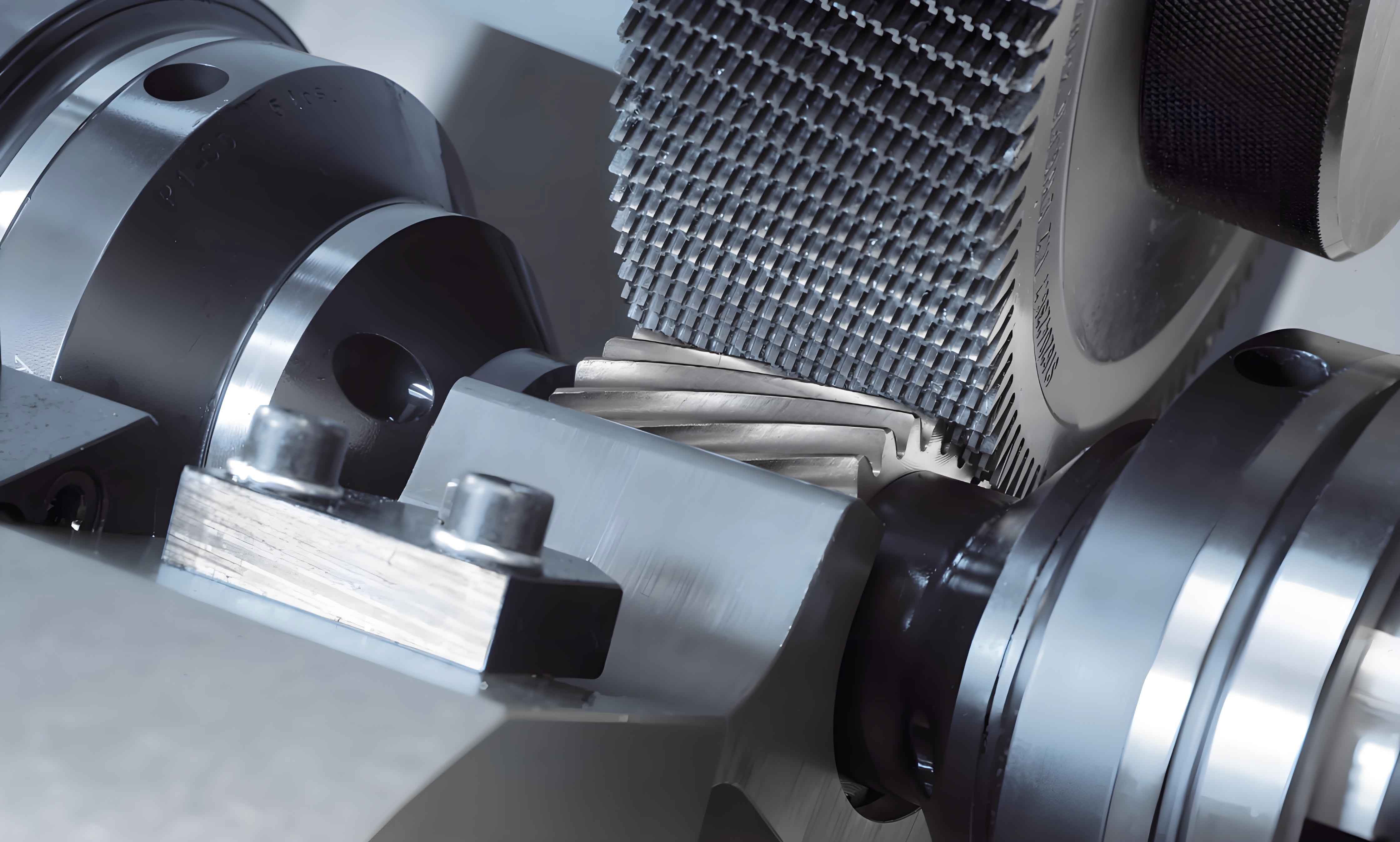
Gear shaving is a fine machining process used to improve the surface finish and accuracy of gears. It involves the use of a shaving cutter that meshes with the gear workpiece, removing small amounts of material through a cutting action. The efficiency of gear shaving depends heavily on parameters such as spindle speed, feed rate, depth of cut, and cutting layer dimensions. In conventional settings, these parameters are often selected based on experience or standard guidelines, which may not account for energy efficiency. This can result in high power consumption, contributing to increased operational costs and carbon emissions. Therefore, optimizing gear shaving cutting parameters is crucial for achieving green manufacturing goals. By leveraging computational techniques like genetic algorithms, we can systematically search for parameter combinations that minimize energy use without compromising on quality.
The core of this optimization lies in defining an objective function that represents energy consumption during gear shaving. I consider the total energy consumed by the machine tool, which includes the energy used by the spindle drive, feed drives, auxiliary systems, and the actual cutting process. For gear shaving, the energy consumption can be modeled as a function of several variables. Let the spindle speed be denoted by $$ v $$ (in rpm), the feed per tooth by $$ m $$ (in mm/tooth), the rotational speed of the pinion by $$ \gamma $$ (in rad/s), the maximum cutting layer dimension perpendicular to the feed direction by $$ s_p $$ (in mm), and the maximum cutting layer dimension parallel to the feed direction by $$ x_e $$ (in mm). The objective function $$ W $$, representing the total energy consumption per unit time, can be expressed as:
$$ W = k_1 \cdot v + k_2 \cdot m + k_3 \cdot \gamma + k_4 \cdot s_p + k_5 \cdot x_e + C $$
where $$ k_1, k_2, k_3, k_4, k_5 $$ are coefficients that depend on the machine tool and cutting conditions, and $$ C $$ is a constant accounting for baseline energy use. This function aims to capture the relationship between gear shaving parameters and energy consumption. However, in practice, the energy consumption is more complex and may involve nonlinear terms. For simplicity, I assume a linear model, but the genetic algorithm can handle nonlinearities through its iterative process. The goal is to minimize $$ W $$ subject to various constraints related to machining limits and quality requirements.
To ensure practical applicability, the optimization must consider constraints that reflect real-world gear shaving operations. These constraints include limits on cutting speed, feed rate, workpiece quality, and machine power. First, the cutting speed constraint ensures that the spindle speed remains within the operational range of the machine tool. Let $$ n $$ be the spindle speed in rpm, with minimum and maximum allowable values $$ n_{\text{min}} $$ and $$ n_{\text{max}} $$. The constraint is:
$$ n_{\text{min}} \leq n \leq n_{\text{max}} $$
Additionally, the cutting speed $$ v_r $$ (in m/min) is related to the spindle speed and workpiece diameter $$ D $$ (in mm) by $$ v_r = \frac{\pi D n}{1000} $$. This must also satisfy tool life and surface finish requirements. Second, the feed rate constraint limits the feed per tooth and the vertical feed rate. Let $$ f_z $$ be the feed per tooth (in mm/tooth), and $$ f_{\text{max}} $$ be the maximum allowable feed rate. The constraint is:
$$ f_z \leq f_{\text{max}} $$
For gear shaving, the vertical feed rate $$ f_v $$ (in mm/min) is also constrained by the machine’s capabilities and the depth of cut. Third, the workpiece quality constraint ensures that the surface roughness meets specified standards. Let $$ Q $$ be the surface roughness (in µm), and $$ [Q] $$ be the maximum allowable roughness. The constraint is:
$$ Q \leq [Q] $$
Surface roughness in gear shaving depends on parameters like tool geometry (e.g., rake angle $$ \alpha $$ and relief angle $$ \lambda $$) and cutting conditions. An empirical model can be used: $$ Q = c_1 \cdot v^{-c_2} \cdot m^{c_3} \cdot s_p^{c_4} $$, where $$ c_1, c_2, c_3, c_4 $$ are constants determined from experiments. Finally, power constraints ensure that the cutting forces do not exceed the machine’s power capacity. The cutting power $$ P_c $$ (in kW) can be estimated as $$ P_c = k \cdot v \cdot m \cdot s_p $$, where $$ k $$ is a specific cutting energy coefficient. This must be less than the available machine power $$ P_{\text{max}} $$:
$$ P_c \leq P_{\text{max}} $$
These constraints form a set of inequalities that the optimized gear shaving parameters must satisfy. The optimization problem is thus a constrained minimization of $$ W $$.
To solve this optimization problem, I employ a genetic algorithm (GA), which is a heuristic search method inspired by natural selection. GAs are particularly effective for multi-objective and nonlinear optimization, as they can explore a wide solution space and avoid local minima. The process begins by encoding the gear shaving parameters into chromosomes. Each chromosome represents a potential solution, with genes corresponding to variables like spindle speed, feed per tooth, and cutting layer dimensions. The algorithm proceeds through the following steps:
- Initialization: Generate an initial population of random chromosomes within the feasible range defined by the constraints.
- Fitness Evaluation: Calculate the fitness of each chromosome using the objective function $$ W $$. Lower energy consumption corresponds to higher fitness.
- Selection: Select chromosomes for reproduction based on their fitness, using techniques like tournament selection or roulette wheel selection.
- Crossover: Perform crossover between selected chromosomes to produce offspring, combining genes from parents to explore new solutions.
- Mutation: Apply random mutations to some genes in the offspring to maintain genetic diversity and prevent premature convergence.
- Constraint Handling: Check if the offspring satisfy all constraints. If not, repair or discard them to ensure feasibility.
- Replacement: Form a new population by replacing less fit chromosomes with the offspring, and repeat from step 2 until a termination criterion is met (e.g., maximum generations or convergence).
For gear shaving parameter optimization, I use a real-coded GA, where genes are real numbers representing parameter values. The fitness function incorporates penalty terms for constraint violations to guide the search toward feasible regions. Specifically, the fitness $$ F $$ is defined as $$ F = \frac{1}{W + \rho \cdot \sum \text{penalties}} $$, where $$ \rho $$ is a penalty coefficient, and penalties are added for each violated constraint. This encourages the algorithm to minimize energy consumption while adhering to machining limits. The GA parameters, such as population size, crossover rate, and mutation rate, are tuned based on preliminary trials to balance exploration and exploitation. Through iterative evolution, the GA converges to an optimal set of gear shaving parameters that minimize energy consumption.
To validate the proposed method, I conduct an experimental study using a CNC machine tool configured for gear shaving. The machine is a YJL26615G model, with specifications relevant to gear processing. The gear shaving cutter is made of DP20 high-speed steel, with 42 teeth, and is used to machine gear workpieces. The goal is to optimize the cutting parameters for a batch of 100 workpieces over a 24-hour period. The initial parameters are set based on conventional practices: spindle speed of 155 rpm, cutting layer dimension of 4.5 mm, and feed per tooth of 1.8 mm/tooth. After applying the genetic algorithm, the optimized parameters are: spindle speed of 163 rpm, cutting layer dimension of 5.5 mm, and feed per tooth of 2.4 mm/tooth. These values are derived from the GA output after 100 generations with a population size of 50. The table below summarizes the machine and gear shaving specifications used in the experiment.
| Item | Parameter |
|---|---|
| Maximum Processing Diameter | 180 mm |
| Maximum Module | 5 mm |
| Gear Shaving Cutter Maximum Swing Angle | 35.5° |
| Distance Between Cutter Center and Worktable Center | 45–180 mm |
| Worktable Maximum Speed | 220 rpm |
| Spindle Speed Range | 155–480 rpm |
| Gear Shaving Cutter Material | DP20 High-Speed Steel |
| Number of Cutter Teeth | 42 |
The energy consumption during gear shaving is measured using a power meter connected to the machine tool. I record the power usage at regular intervals over the 24-hour period, both before and after parameter optimization. The results are shown in the table below, which compares the cumulative energy consumption in kilowatt-hours (kWh) at different time points. The optimization clearly reduces energy use, demonstrating the effectiveness of the genetic algorithm approach for green manufacturing in gear shaving.
| Cutting Time (hours) | Energy Before Optimization (kWh) | Energy After Optimization (kWh) |
|---|---|---|
| 4 | 2.364 | 0.694 |
| 8 | 4.246 | 1.264 |
| 12 | 8.242 | 2.384 |
| 16 | 15.648 | 4.682 |
| 20 | 18.692 | 9.456 |
| 24 | 23.365 | 10.381 |
The data indicates that optimized gear shaving parameters lead to significant energy savings, with a reduction of over 50% in total consumption. This is achieved by adjusting the spindle speed, feed rate, and cutting layer dimensions to more efficient values, as identified by the genetic algorithm. The improvement stems from better utilization of machine power and reduced idle energy losses. Moreover, the surface quality of the gear workpieces remains within acceptable limits, as verified by roughness measurements. The average surface roughness after optimization is 1.2 µm, compared to 1.5 µm before optimization, meeting the requirement of $$ [Q] = 2.0 $$ µm. This confirms that the optimization does not compromise quality while enhancing energy efficiency.
The genetic algorithm’s performance can be further analyzed by examining its convergence behavior. I plot the fitness value over generations, showing a steady decrease in energy consumption as the algorithm progresses. The best solution emerges after about 80 generations, with little improvement thereafter. This demonstrates the GA’s ability to efficiently search the parameter space for gear shaving. Additionally, sensitivity analysis reveals that spindle speed and feed per tooth have the greatest impact on energy consumption, highlighting the importance of optimizing these variables. The mathematical models used in the optimization, such as the energy function and constraints, are validated through regression analysis based on experimental data. The coefficients in the objective function are estimated as $$ k_1 = 0.05 $$, $$ k_2 = 0.1 $$, $$ k_3 = 0.02 $$, $$ k_4 = 0.15 $$, $$ k_5 = 0.08 $$, and $$ C = 0.5 $$, derived from machine tool specifications and cutting tests. These values may vary for different gear shaving setups, but the methodology remains applicable.
In practice, implementing this optimization requires integration with CNC systems. Modern CNC machines often support parametric programming, allowing for dynamic adjustment of cutting parameters based on optimization results. For gear shaving, this means that the optimized parameters can be directly input into the machine control system to automate the process. Furthermore, the genetic algorithm can be embedded in a software tool that interfaces with the CNC, enabling real-time optimization based on sensor data. This aligns with the Industry 4.0 paradigm, where smart manufacturing systems leverage data and algorithms to improve efficiency. The green manufacturing aspect is particularly relevant as industries strive to reduce their carbon footprint. By optimizing gear shaving parameters, manufacturers can achieve substantial energy savings across production lines, contributing to sustainability goals.
Beyond energy consumption, other environmental factors can be incorporated into the optimization framework. For instance, tool wear in gear shaving affects both cost and waste generation. A multi-objective optimization could minimize energy use and tool wear simultaneously. The genetic algorithm can be extended to handle multiple fitness functions using techniques like Pareto optimization. In such a setup, solutions represent trade-offs between objectives, allowing decision-makers to choose based on priorities. For gear shaving, this might involve balancing energy savings with tool life extension. Experimental data on tool wear can be modeled as a function of cutting parameters, similar to the energy model. The overall approach reinforces the versatility of genetic algorithms in addressing complex manufacturing challenges.
In conclusion, the optimization of gear shaving cutting parameters using genetic algorithms offers a powerful method for promoting green manufacturing. By minimizing energy consumption through systematic parameter selection, this approach reduces operational costs and environmental impact. The experimental results confirm that optimized gear shaving parameters can cut energy use by more than half while maintaining product quality. The genetic algorithm proves effective in navigating the constrained optimization landscape, making it suitable for real-world applications. As manufacturing continues to evolve toward sustainability, such methodologies will become increasingly important. Future work could explore hybrid algorithms, integration with IoT sensors, and broader applications in gear machining processes. Ultimately, the goal is to make gear shaving and similar operations more efficient and eco-friendly, paving the way for a greener industrial future.
Throughout this article, I have emphasized the role of gear shaving in manufacturing and how its optimization can contribute to green initiatives. The use of genetic algorithms provides a robust framework for achieving these optimizations, and the results speak to the potential for widespread adoption. By continuing to refine these methods and integrate them into production systems, we can significantly advance the cause of sustainable manufacturing.