
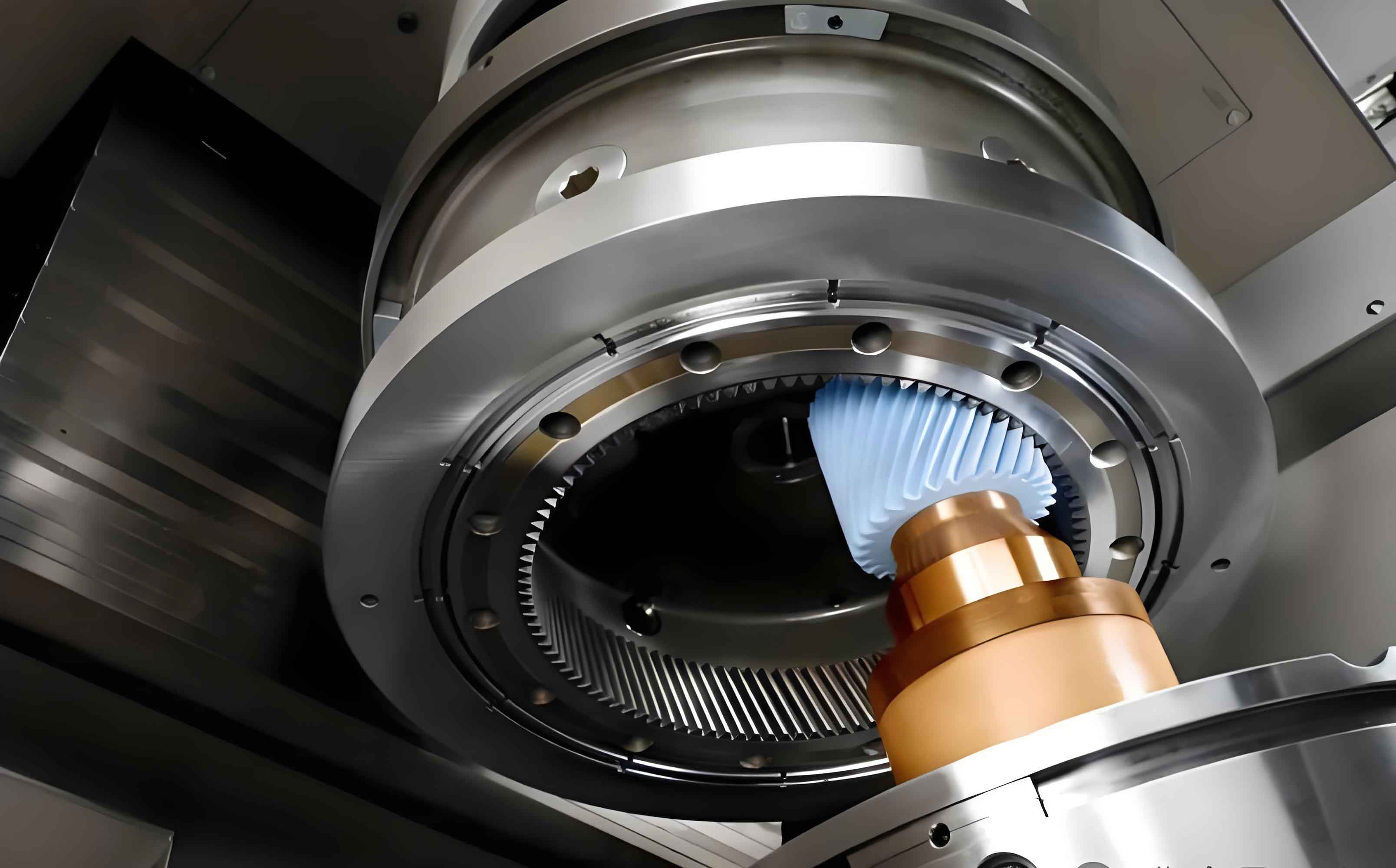
The quest for high-performance mechanical transmissions has placed increasing demands on the quality of their fundamental component: the gear. Precision finishing processes are paramount for achieving the necessary surface integrity, dimensional accuracy, and acoustic performance. Among these, gear honing has emerged as a critical technology, particularly for hardened gears. This process effectively removes heat treatment distortions, improves surface finish, and can generate beneficial residual stress patterns. A specialized and powerful variant is internal gear power honing, where the workpiece (an external helical gear) is processed by an internal helical honing wheel. This configuration offers high contact ratio and generates a favorable, non-parallel surface texture, contributing to reduced gear noise. Understanding and controlling the residual stress state induced by this process is vital, as it directly influences the gear’s fatigue life, resistance to stress corrosion cracking, dimensional stability, and wear performance.
While gear honing technology is well-established in some industrialized nations, its fundamental research, especially concerning residual stress, remains less explored. This article delves into the mechanisms behind residual stress formation during internal gear power honing, analyzes the influence of key process parameters, and presents a methodology for its prediction through finite element simulation, providing a theoretical foundation for optimizing gear surface quality.
Mathematical Modeling of the Internal Honing Wheel
The internal honing wheel is not a standard internal helical gear; its tooth surface is the envelope of the workpiece gear’s tooth surface during their prescribed meshing motion. To accurately model the honing process, deriving the mathematical representation of the honing wheel’s tooth surface is essential. This is based on the spatial meshing theory of crossed helical gears.
The coordinate systems for the workpiece gear and the honing wheel are established. Let \( S(O-x, y, z) \) and \( S_p(O_p-x_p, y_p, z_p) \) be the fixed coordinate systems attached to the workpiece and honing wheel frames, respectively. Their axes of rotation have an angle \(\Sigma\), the shaft crossing angle. The moving coordinate systems \( S_1(O_1-x_1, y_1, z_1) \) and \( S_2(O_2-x_2, y_2, z_2) \) are attached to the workpiece and honing wheel, rotating with angular speeds \(\omega_1\) and \(\omega_2\), and angles \(\varphi_1\) and \(\varphi_2\), respectively. The center distance is \(a\). The relationship between the coordinate systems is defined by transformation matrices \( \mathbf{M}_{op}, \mathbf{M}_{o1}, \mathbf{M}_{p2} \).
The tooth surface of the workpiece gear (an involute helicoid) in its moving coordinate system \( S_1 \) is given by:
$$
\begin{aligned}
x_1 &= r_{b1}[\cos(\sigma_0 + \theta + \lambda) + \lambda \sin(\sigma_0 + \theta + \lambda)] \\
y_1 &= r_{b1}[\sin(\sigma_0 + \theta + \lambda) – \lambda \cos(\sigma_0 + \theta + \lambda)] \\
z_1 &= p \theta
\end{aligned}
$$
where \( r_{b1} \) is the base circle radius, \( \sigma_0 \) is the start angle of the involute, \( \theta \) is the spiral increment angle, \( \lambda \) is the involute increment angle, and \( p \) is the lead (\( p = r_1 / \tan\beta_1 \), with \( r_1 \) as the pitch radius and \( \beta_1 \) as the helix angle).
The condition for conjugate contact, ensuring no separation or interference, is that the relative velocity \( \mathbf{v}^{(12)} \) is perpendicular to the common normal vector \( \mathbf{n} \):
$$
\mathbf{v}^{(12)} \cdot \mathbf{n} = 0
$$
The relative velocity at a contact point \( M \) is \( \mathbf{v}^{(12)} = \mathbf{v}^{(1)} – \mathbf{v}^{(2)} = \boldsymbol{\omega}_1 \times \mathbf{r}_1 – \boldsymbol{\omega}_2 \times \mathbf{r}_2 \). The normal vector \( \mathbf{n} \) is derived from the workpiece surface equation. Substituting these into the conjugate condition yields the meshing equation:
$$
f_1(\theta, \lambda, \varphi_1) = (p^2 – r_{b1}^2)\lambda \sin\Sigma \sin(\sigma_0+\theta+\lambda) + (pr_{b1}\cos\Sigma – a p)\cos(\sigma_0+\theta+\lambda) – p r_{b1} i_{12} (\cos\Sigma – a/r_{b1}) = 0
$$
where \( i_{12} = \omega_1 / \omega_2 = z_2 / z_1 \) is the gear ratio.
The contact line on the workpiece surface for a given rotation angle \( \varphi_1 \) is defined by the system of equations comprising the surface equations and the meshing equation \( f_1=0 \). The corresponding points on the honing wheel surface in its coordinate system \( S_2 \) are obtained by the coordinate transformation:
$$
\begin{bmatrix}
x_2 \\ y_2 \\ z_2 \\ 1
\end{bmatrix}
=
\mathbf{M}_{21}
\begin{bmatrix}
x_1 \\ y_1 \\ z_1 \\ 1
\end{bmatrix}
$$
where \( \mathbf{M}_{21} = \mathbf{M}_{2p} \mathbf{M}_{po} \mathbf{M}_{o1} \). The set of all such contact points, generated as \( \varphi_1 \) varies, defines the honing wheel tooth surface. Using this mathematical model, a parameterized 3D model of the internal honing wheel can be generated in software like MATLAB and SolidWorks for subsequent analysis.
Mechanisms and Influencing Factors of Residual Stress in Gear Honing
The residual stress on a honed gear surface is the net result of complex thermo-mechanical interactions. The primary mechanisms are mechanical plastic deformation, thermal effects, and potential phase transformations. In internal gear power honing, characterized by relatively low cutting speeds (typically below 8 m/s) and the use of oil-based coolant, thermal effects are often secondary. Therefore, the mechanical effect—plastic deformation induced by the honing force—is the dominant mechanism.
Mechanical Effect (Plastic Deformation): As abrasive grains on the honing wheel penetrate the workpiece surface, they apply normal and tangential forces. The tangential force is primarily responsible for material removal (chip formation), while the normal force presses the grain deeper. This action plastically deforms the surface layer. Perpendicular to the scratching direction, the material experiences plastic contraction, leading to residual compressive stress upon unloading. Along the scratching direction, plastic stretching may occur. This phenomenon is often called the “plastic bulging effect.”
Thermal Effect: Friction and plastic work generate heat. If significant, the rapid heating and subsequent cooling of the surface layer can induce thermal stresses. Initially, surface expansion constrained by the cooler core leads to compressive stress. Upon cooling, surface contraction constrained by the core can lead to tensile stress. In low-speed gear honing with effective cooling, this effect is minimized, helping to avoid detrimental tensile stresses.
Phase Transformation: If the local temperature rises sufficiently to cause metallurgical changes (e.g., in hardened steels), volume differences between the new and original phases can induce transformation stresses. For common gear steels like 20CrMnTiH under standard gear honing conditions, this is unlikely.
Key Influencing Factors on Honing Residual Stress
The magnitude and distribution of residual stress are influenced by a multitude of factors:
| Factor Category | Specific Parameters | Typical Effect on Residual Compressive Stress |
|---|---|---|
| Honing Process Parameters | Radial Force (Fr) | Increases with higher radial force. |
| Relative Honing Speed (vs) | Decreases with higher speed (reduced force interaction time). | |
| Shaft Crossing Angle (Σ) | Generally decreases as Σ increases (affects force and speed). | |
| Honing Wheel Condition | Abrasive Type & Hardness | Harder abrasives (CBN) maintain sharpness, influencing stress generation. |
| Grain Size & Dressing | Finer grit/worn wheel may increase heat, reducing compressive stress. | |
| Cooling Condition | Wet (Oil-based) vs. Dry | Wet honing with oil reduces friction/heat, favoring compressive stress. |
| Workpiece Material | Alloy, Hardness, Heat Treat State | Material properties dictate its plastic response to honing forces. |
Among these, the honing force, particularly its radial component \( F_r \), is a primary and directly controllable variable. The honing force system can be decomposed into radial (\(F_r\)), tangential/circumferential (\(F_s\)), and axial (\(F_a\)) components relative to the workpiece. Their relationship depends on the gear’s normal pressure angle \(\alpha_n\) and helix angle \(\beta\):
$$
\begin{aligned}
F_s &= F_r \cdot \cot \alpha_n / \cos \beta \\
F_a &= F_r \cdot \tan \beta / \cos \alpha_n \\
F_n &= F_r / \sin \alpha_n
\end{aligned}
$$
where \(F_n\) is the normal force at the pitch circle. In practice, the radial force \(F_r\) is often monitored as a key indicator of wheel sharpness and process stability.
Finite Element Dynamic Simulation and Analysis
Predicting residual stress analytically for a complex 3D process like internal gear power honing is exceedingly difficult. The Finite Element Method (FEM), particularly explicit dynamic simulation, provides a powerful tool for this purpose. The commercial software ANSYS/LS-DYNA was employed for this study.
Model Setup and Simplification
3D models of the honing wheel and a segment of the workpiece gear (containing a few teeth in mesh) were created and simplified to reduce computational cost. The models were discretized using SOLID164 elements for the bulk material and SHELL163 elements on non-cutting surfaces to facilitate the application of rotational constraints and velocities. A typical mesh is shown below. The material model for the workpiece (20CrMnTiH steel) was defined as bilinear isotropic hardening, while the honing wheel was modeled as a rigid body.
| Parameter | Workpiece Gear | Honing Wheel |
|---|---|---|
| Material | 20CrMnTiH (Plastic Kinematic) | Micro-crystalline Alumina (Rigid) |
| Young’s Modulus | 210 GPa | 70 GPa |
| Poisson’s Ratio | 0.3 | 0.07 |
| Density | 7800 kg/m³ | 3120 kg/m³ |
| Yield Strength | 850 MPa | – |
The contact between the gear teeth was defined using the surface-to-surface automatic contact algorithm in LS-DYNA (based on the symmetric penalty method), with static and dynamic friction coefficients set.
Simulation Procedure and Results
The simulation was conducted in two sequential steps:
- Loading Step: Rotational velocities were applied to both the honing wheel and workpiece to simulate the meshing motion. A radial force \(F_r\) was applied to the honing wheel axis. An initial compressive residual stress field (e.g., from prior shot peening) could also be defined. The simulation ran for a short duration to capture the stress state under load.
- Unloading Step: All external loads (forces, velocities) were removed, while the stress field from the end of Step 1 was imported as the initial condition. The solution of this step represents the final, unloaded residual stress state.
The effects of three key gear honing parameters were investigated: radial force \(F_r\), workpiece rotational speed \(\omega_1\) (affecting honing speed \(v_s\)), and shaft angle \(\Sigma\). Residual stress values were extracted from specific nodes on the tooth flank, root, and tip.
1. Effect of Honing Speed (Workpiece Speed \(\omega_1\)): With constant \(F_r=150N\) and \(\Sigma=8.722^\circ\), increasing \(\omega_1\) led to a clear decrease in residual compressive stress. This is attributed to the reduced time of force interaction per unit area as the relative speed increases.
$$
\text{Residual Stress} \propto – \frac{1}{v_s}
$$
2. Effect of Radial Force \(F_r\): With constant speed and shaft angle, increasing \(F_r\) resulted in a significant increase in residual compressive stress. Higher force causes greater plastic deformation depth and intensity.
$$
\text{Residual Stress} \propto – F_r^{\alpha} \quad (\alpha > 0)
$$
3. Effect of Shaft Crossing Angle \(\Sigma\): Increasing \(\Sigma\) (by changing the honing wheel helix angle) generally decreased the residual compressive stress. A larger \(\Sigma\) alters the contact geometry and increases the sliding component of the relative velocity, effectively reducing the specific normal force and its plastic deformation effect.
Experimental Validation
To validate the finite element model, experimental measurements were conducted. A gear (20CrMnTiH) was processed on an internal gear power honing machine under specified conditions: \(\omega_1 \approx 90.12 \, \text{rad/s}\), \(F_r \approx 150 \, \text{N}\), \(\Sigma = 8.722^\circ\), wet honing with oil coolant.
The residual stress on the honed tooth surface was measured using the X-ray diffraction (XRD) method (Rigaku D/max 2550V). The sin²ψ technique was employed. Measurements were taken at locations corresponding to the simulation extraction points.
The comparison between simulated and measured residual stress values showed good agreement, with a maximum relative error of 13.6%. This discrepancy can be attributed to model simplifications (neglecting thermal effects, idealized material model) and measurement uncertainties inherent to the XRD technique (limited penetration depth, surface preparation). The results confirm the validity of the developed FEM approach for predicting trends and approximate magnitudes of residual stress in gear honing.
| Measurement Location | Simulation Value (MPa) | Experimental Value (MPa) | Relative Error (%) |
|---|---|---|---|
| Node A (Flank) | -550 | -625 | 13.6 |
| Node B (Flank) | -605 | -684 | 13.1 |
| Node C (Root) | -1200 | -1150 | 4.2 |
| Node D (Root) | -950 | -1074 | 13.1 |
| Node E (Tip) | -362 | -367 | 1.4 |
Micro-scale Analysis with Abrasive Grain Modeling
To gain deeper insight into the fundamental mechanics, a micro-scale simulation of multiple abrasive grains interacting with the workpiece was performed. A stochastic model was created to represent the honing wheel’s active surface:
- Single Grain Modeling: Individual abrasive grains (approximated for 120# grit size, ~106-125 μm) were modeled as irregular polyhedrons, generated by randomly cutting a cube with planes tangent to an inscribed sphere. This creates a more realistic geometry with sharp edges than simple spheres or cones.
- Multi-grain Modeling: Multiple grain models were distributed in a virtual grid pattern, respecting an average spacing calculated based on the wheel’s grain concentration (e.g., 54%). The protrusion height of each grain followed a normal distribution (mean ~5 μm, standard deviation ~14 μm), mimicking the stochastic nature of a real wheel topography.
This multi-grain assembly was simulated scratching a workpiece block. The contact was defined as erosive surface-to-surface. The workpiece was fixed, and the grain assembly was given a horizontal velocity \(v_g\). The simulation captured the stages of rubbing, ploughing, and chip formation. By varying the grain velocity \(v_g\) within the typical range for gear honing (3 to 6.2 m/s), the effect on subsurface residual stress was analyzed. The results corroborated the macro-scale finding: increasing the abrasive velocity (equivalent to honing speed) led to a decrease in the induced residual compressive stress in the workpiece subsurface, with the effect diminishing at higher speeds.
Conclusion and Outlook
This research provides a systematic investigation into the residual stress on gear surfaces generated by internal gear power honing. Through mathematical modeling, finite element simulation, and experimental validation, the following key conclusions are drawn:
- The mechanical plastic deformation induced by honing forces is the primary mechanism for residual stress formation under standard oil-cooled, low-speed honing conditions.
- Process parameters have a significant and predictable influence: Residual compressive stress increases with higher radial honing force and decreases with higher relative honing speed or a larger shaft crossing angle.
- A dynamic finite element modeling approach, validated by X-ray diffraction measurements, is an effective tool for analyzing and predicting residual stress trends in the complex 3D gear honing process.
- Micro-scale simulation with stochastic grain modeling offers a fundamental view of the abrasive-workpiece interaction, confirming the macro-scale relationship between speed and residual stress.
Future work should focus on developing fully coupled thermo-mechanical models to account for scenarios with higher thermal loads, creating integrated software for rapid parameterized modeling of honing wheel-workpiece pairs, and employing advanced optimization algorithms to determine the precise process parameter combinations needed to achieve a specific, desirable residual stress profile on the gear tooth flank. Mastering the control of residual stress through gear honing parameters is a crucial step towards manufacturing high-performance, reliable, and quiet gears for advanced mechanical systems.