
In my extensive experience within precision gear manufacturing, gear honing has emerged as a critically important finishing technique, particularly following heat treatment processes. This method has seen rapid development in recent years, primarily due to its effectiveness in addressing grinding defects and its compatibility with distortion-free heat treatment cycles. Gear honing is often employed as a substitute for certain gear grinding operations to achieve the stringent accuracy specifications demanded by modern engineering drawings. The process is exceptionally suitable for hardened gear teeth surfaces post gear hobbing. At its core, gear honing utilizes a honing wheel—an elastic, gear-shaped tool composed of abrasive grains and a bonding agent. During operation, the hard abrasive particles perform the micro-cutting or研磨 action, while the compliant matrix contributes a polishing effect, resulting in superior surface integrity.
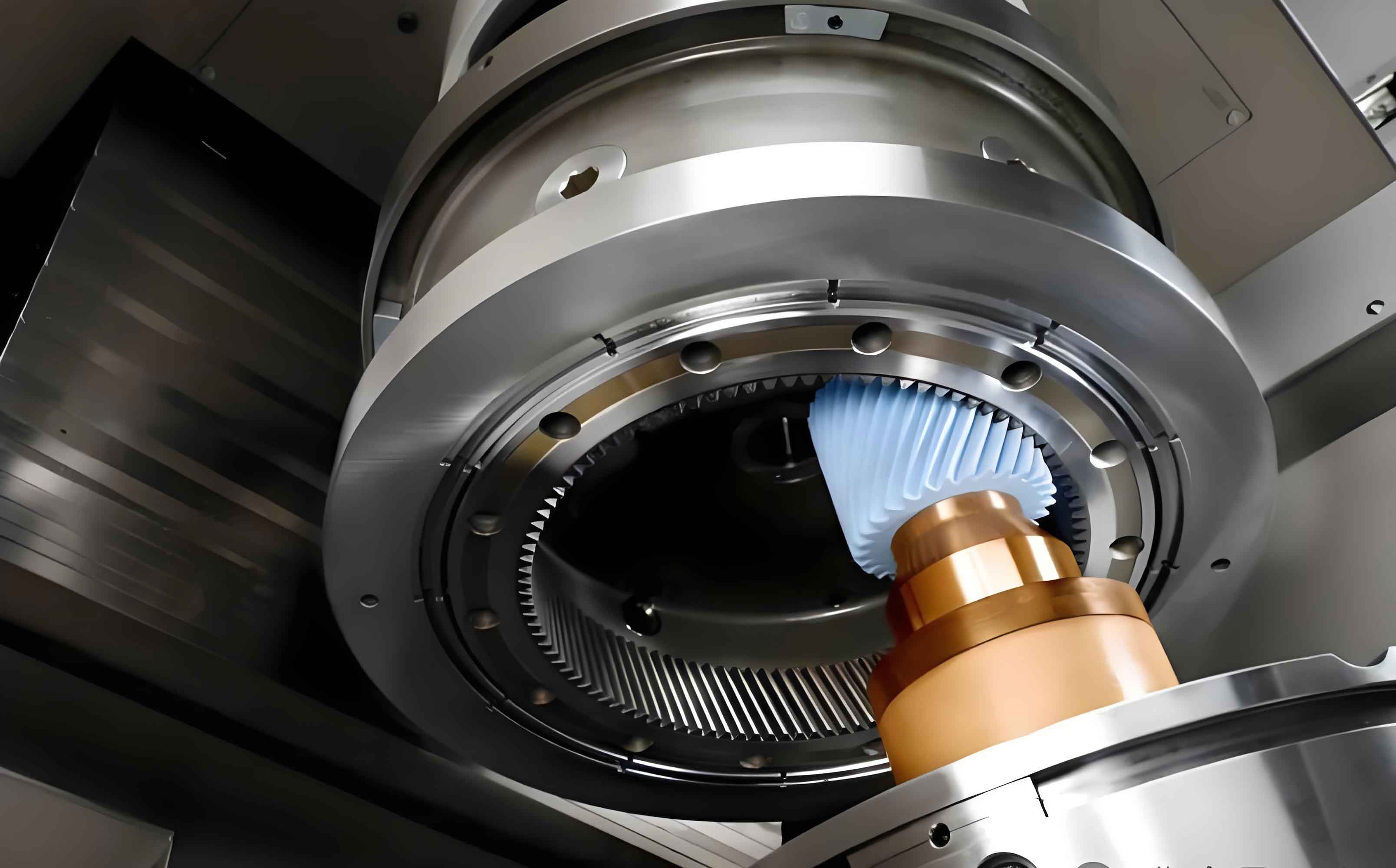
The efficacy of the entire gear honing operation hinges on the adoption of a rational and controlled process methodology. A fundamental characteristic of gear honing is its relatively limited ability to correct pitch errors. Consequently, pre-machining via gear hobbing is highly recommended, as it establishes a favorable foundation for ensuring the consistency of the base pitch and facilitates control over the average base tangent length deviation after honing. The quality of the honed gear is predominantly dictated by the honing wheel itself. This tool must possess a specific balance of hardness and elasticity within its tooth profile. The honing mechanism involves the meshing of the honing wheel and the workpiece gear. As both rotate at defined speeds, relative sliding motion occurs at the meshing points. The abrasive grains, firmly bonded to the honing wheel’s tooth flanks, traverse the workpiece gear’s surface along specific kinematic trajectories. Under the application of an external honing pressure, these grains penetrate the microscopic asperities of the metal surface, removing ultrafine chips to attain the required dimensional and geometrical accuracy. The typical gear honing process involves the honing wheel driving the workpiece gear in rotation while simultaneously executing an axial reciprocating motion along the gear’s face width.
The Gear Honing Process: Parameters and Control
The final quality achieved through gear honing is a direct function of the meticulously selected process parameters. In this process, the errors present on the workpiece gear are theoretically corrected by the honing wheel; however, any inaccuracies inherent to the honing wheel are also imparted onto the gear. Gear honing demonstrates a strong capability for correcting errors related to transmission smoothness, such as profile and lead deviations, and single pitch errors. Its capability for correcting errors associated with motion accuracy, like cumulative pitch error or radial runout, is more constrained. While gear honing can significantly reduce radial runout (Fr), this correction can sometimes adversely affect the base tangent length variation (Fw) and introduce profile asymmetry. Therefore, stringent control of pre-honing radial runout is paramount for achieving optimal honing results. The process does exhibit a definite capacity for correcting helix angle deviations or lead errors. Post-honing, adjacent pitch error and base pitch error are typically substantially reduced.
The honing accuracy is largely dependent on the intrinsic design and quality of the honing wheel. The honing wheel is an elastic abrasive gear, and its tooth count is usually selected to have a prime number relationship with the workpiece gear’s tooth count. This design principle ensures that any localized inaccuracies on a single honing wheel tooth are not systematically replicated on the workpiece gear surface, thereby averaging out errors. Profile form error is influenced by the kinematic conditions of the honing process, particularly the sliding velocities. Empirical studies indicate that profile error is minimized under specific combinations of tangential velocity (vt) and axial feed velocity (va).
We can model the effective cutting speed (ve) at the tooth contact point, which is crucial for material removal rate and surface finish in gear honing, using a vector sum approach. The relative sliding velocity is key:
$$ v_s = \sqrt{v_{t, w}^2 + v_{t, h}^2 – 2 \cdot v_{t, w} \cdot v_{t, h} \cdot \cos(\alpha) } $$
Where \( v_{t, w} \) is the tangential velocity of the workpiece gear, \( v_{t, h} \) is the tangential velocity of the honing wheel, and \( \alpha \) is the operating pressure angle. The axial feed velocity \( v_{a} \) is superimposed on this. Optimal honing conditions often satisfy a relationship where a specific ratio between these velocities minimizes form error. Based on practical observations, one can express a condition for minimal profile error (Δff) as a function of these speeds:
$$ \Delta f_f \propto \frac{1}{{v_s}^k} \cdot f(v_a) $$
where \( k \) is an empirical constant typically between 0.5 and 1.2. The process parameters for a successful gear honing operation can be summarized in the following table:
| Parameter | Symbol | Typical Range / Value | Primary Influence on Gear Quality |
|---|---|---|---|
| Tangential Speed (Workpiece) | \( v_{t, w} \) | 50 – 150 m/min | Material removal rate, surface roughness, heat generation. |
| Tangential Speed (Honing Wheel) | \( v_{t, h} \) | 100 – 300 m/min | Sliding velocity, cutting action efficiency. |
| Axial Feed Rate | \( v_{a} \) | 0.5 – 3.0 m/min | Face width coverage, lead correction, process time. |
| Honing Pressure | \( P_h \) | 0.5 – 3.0 MPa | Cutting force, abrasive penetration, form error correction. |
| Crossed Axis Angle | \( \Sigma \) | 5° – 15° | Generates sliding component, essential for cutting action. |
| Number of Strokes (Passes) | N | 3 – 20 | Total stock removal, final size attainment. |
| Coolant Type & Flow | – | Oil-based emulsions or special honing oils | Cooling, chip evacuation, wheel cleaning, surface finish. |
The gear honing process often employs a variable-pressure, zero-backlash meshing strategy. Initially, the honing wheel and workpiece are engaged under a predetermined pressure. As the gear honing cycle progresses and stock is removed, this pressure is gradually reduced until the final size is reached. This method helps maintain consistent cutting action and improves size control.
Honing Wheel Fabrication: Composition and Manufacturing
The honing wheel is the heart of the gear honing process. Its manufacturing is a precise craft involving specific materials and controlled processes. The main constituents of a typical epoxy-bonded honing wheel are as follows:
| Component | Function | Common Types / Specifications | Typical Proportion (by weight) |
|---|---|---|---|
| Abrasive Grain | Primary cutting agent. Determines cutting aggressiveness and final surface finish. | White Aluminum Oxide (Al2O3), Silicon Carbide (SiC), Cubic Boron Nitride (CBN) for very hard materials. Grit sizes: #280 to #800 for fine finishing. | 60% – 75% |
| Binder (Matrix) | Holds abrasive grains, provides structural integrity and controlled elasticity. | Epoxy Resin (e.g., Epon 828, Araldite). Chosen for high adhesion, low shrinkage, and chemical stability. | 15% – 25% (Resin base) |
| Hardener (Curing Agent) | Triggers polymerization of the epoxy resin, causing it to solidify. | Aliphatic amines (e.g., Triethylenetetramine – TETA), Aromatic amines (e.g., Diethyltoluenediamine – DETDA). | 8% – 15% of resin weight |
| Plasticizer/Flexibilizer | Imparts elasticity and toughness to the cured matrix, reducing brittleness. | Dibutyl phthalate (DBP), Polyurethane flexibilizers. | 5% – 10% of resin weight |
| Fillers & Additives | Reduce cost, modify thermal conductivity, adjust density, or enhance lubricity. | Powdered metals (e.g., iron, aluminum), graphite, molybdenum disulfide. | 0% – 10% |
A representative formulation for a general-purpose honing wheel used in gear honing might be: Epoxy Resin (100 parts), Hardener (DETDA, 25 parts), Plasticizer (DBP, 15 parts), Mixed Abrasive (Al2O3 #400 / #600 blend, 320 parts). The exact formula is adjusted based on the workpiece material, hardness, and desired cutting action.
The manufacturing process for these honing wheels is sequential and requires careful attention to detail:
1. Master Gear and Mold Preparation: A precision master gear (negative of the desired honing wheel tooth form) is meticulously cleaned using solvents like alcohol and acetone. The mold assembly, which houses the master gear and defines the wheel blank’s outer dimensions, is similarly cleaned. All bonding surfaces on the metal wheel core (usually steel or aluminum) are degreased with a solution like carbon tetrachloride to enhance adhesive bond strength. A mold release agent is uniformly applied to all non-bonding surfaces to facilitate demolding.
2. Mixing and Degassing: The liquid epoxy resin is first mixed with the plasticizer and any liquid additives. The abrasive grains and any solid fillers are then gradually added under continuous mechanical stirring to ensure a homogeneous mixture. The highly viscous mixture is subsequently placed in a vacuum chamber to remove entrapped air bubbles, which could create weak spots in the final honing wheel. The vacuum degassing process can be described by the ideal gas law applied to the bubble volume:
$$ P_i V_i = nRT \quad \text{and during vacuum} \quad P_f V_f = nRT $$
where \( P_i \) and \( V_i \) are initial pressure and bubble volume, and \( P_f \) and \( V_f \) are final values. The reduction in external pressure \( (P_f << P_i) \) causes bubble expansion \( (V_f >> V_i) \), promoting their rise and collapse. The mixture is ready for pouring when it appears uniform and bubble-free.
3. Pouring and Curing: The degassed mixture is poured into the pre-assembled mold cavity surrounding the master gear and core. The mold is often subjected to a slight positive pressure or vibration to ensure complete filling of the intricate tooth profiles. The curing schedule is critical for developing the optimal mechanical properties. A typical multi-stage thermal cycle is employed:
- Stage 1 (Gelation): Room temperature to 40-50°C, hold for 2-4 hours. This allows initial slow cross-linking.
- Stage 2 (Post-Cure): Ramp at 20-30°C per hour to 110-130°C. Hold at this temperature for 12-24 hours. This stage develops full mechanical strength and thermal stability.
- Stage 3 (Cooling): Controlled cool-down inside the oven to room temperature to minimize thermal stresses.
The curing kinetics of the epoxy system can be approximated by an Arrhenius-type equation for the degree of cure \( \alpha \):
$$ \frac{d\alpha}{dt} = A e^{(-E_a / RT)} (1-\alpha)^n $$
where \( A \) is the pre-exponential factor, \( E_a \) is the activation energy, \( R \) is the gas constant, \( T \) is absolute temperature, and \( n \) is the reaction order. The designed thermal profile ensures \( \alpha \) approaches 1.0 uniformly.
4. Demolding and Finishing: After cooling, the hardened honing wheel is carefully demolded. The master gear is extracted, leaving a precise abrasive tooth form on the wheel. Any minor flash or imperfections are gently removed. The wheel is then balanced to ensure smooth operation during the gear honing process.
Case Analysis: Gear Honing of Gear Pump Gears
In a practical application, I was involved in the production of gears for a hydraulic gear pump. The specifications were demanding: Module (mn) = 2.5 mm, Number of teeth (z) = 14, Pressure angle (α) = 20°, Face width = 20 mm, required tooth flank roughness Ra ≤ 0.4 μm, and radial runout Fr ≤ 0.04 mm. The material was 20CrMnTi, requiring carburizing to a depth of 0.5-0.8 mm and a surface hardness of 58-62 HRC. The initial process route was: Hobbing → Shaving → Carburizing & Hardening → Gear Honing.
A dedicated gear honing machine was utilized. The initial parameters set were: Honing wheel speed nh = 1500 rpm, Axial feed va = 2 m/min, Honing wheel tooth count zh = 91 (a prime number relative to 14). A straight mineral oil (kerosene) was used as coolant via flood application. The gear honing was performed using the aforementioned zero-backlash, pressure-decay method.
Challenges and Resolutions:
1. Wheel Loading and Reduced Cutting Performance: Initially, the gear honing process produced good chips, but performance degraded rapidly. Analysis revealed that the fine chips generated were not being effectively evacuated and were clogging the pores between abrasive grains on the honing wheel’s surface—a phenomenon known as “loading.” This drastically reduced its cutting capability. The solution was to modify the coolant. A mixture of 90% kerosene and 10% machine oil was adopted. Furthermore, the application method was changed from flood cooling to a directed mist spray. This enhanced lubricity and chip flushing, resolving the loading issue and sustaining consistent gear honing performance.
2. Premature Honing Wheel Failure: The initially fabricated honing wheels failed catastrophically (shattered) after processing only 40-50 gears. Investigation pointed to insufficient mechanical strength of the wheel matrix. The root causes were identified as an impure hardener and an excessive amount of diluent (plasticizer) in the formulation, which overly reduced cross-link density. Additionally, localized overheating during the exothermic curing reaction created internal stresses. Corrective actions included sourcing a higher-purity, consistent hardener (a modified aromatic amine), precisely controlling the plasticizer ratio, and implementing a more gradual curing temperature profile with an extended low-temperature gelation stage to manage exotherm. The improved honing wheels subsequently achieved a service life of over 400 gears per wheel, demonstrating the criticality of wheel fabrication control for reliable gear honing.
Quantitative Analysis of Error Correction in Gear Honing
The corrective capability of gear honing on various gear error types is not uniform. Based on statistical process data from multiple gear honing runs, one can model the expected reduction for different error types. Let \( E_{pre} \) be the pre-honing error magnitude and \( E_{post} \) be the post-honing error magnitude. The correction factor \( C_f \) for an error type can be defined as:
$$ C_f = 1 – \frac{E_{post}}{E_{pre}} $$
A \( C_f \) value closer to 1 indicates strong correction, while a value near 0 indicates limited correction. The following table summarizes typical ranges for \( C_f \) based on process capability studies for a well-tuned gear honing process:
| Gear Error Type (per ISO 1328) | Symbol | Typical Correction Factor Range (Cf) | Notes & Dependencies |
|---|---|---|---|
| Single Pitch Deviation | fpt | 0.6 – 0.9 | Strong correction due to averaging effect of multiple wheel teeth contacts. |
| Profile Form Error | ffα | 0.5 – 0.8 | Dependent on sliding velocity (vs) and wheel elasticity. |
| Helix Form Error | ffβ | 0.4 – 0.7 | Corrected by axial motion and wheel conformity; sensitive to axial feed rate. |
| Total Profile Deviation | Fα | 0.3 – 0.6 | Correction of slope is more effective than form error. |
| Total Helix Deviation | Fβ | 0.3 – 0.6 | Similar dependency as helix form error. |
| Radial Runout | Fr | 0.7 – 0.95 | Can be highly effective, but may trade off with base tangent length variation (Fw). |
| Base Tangent Length Variation | Fw | 0.1 – 0.4 | Very limited direct correction. Controlled primarily via pre-honing accuracy. |
| Cumulative Pitch Error | Fp | 0.2 – 0.5 | Limited due to the averaging nature of gear honing; pre-machining critical. |
The relationship between the correction of radial runout and the potential induction of other errors can be conceptually modeled. If excessive radial runout is corrected by aggressive honing on the “high” spots of the gear, it can effectively change the effective tooth thickness locally, increasing \( F_w \). A simplified relationship for this trade-off, observed in practice, can be expressed as:
$$ \Delta F_w \approx k_{trade} \cdot \Delta F_r^{1.5} $$
where \( \Delta F_w \) is the induced change in base tangent length variation, \( \Delta F_r \) is the amount of radial runout corrected, and \( k_{trade} \) is a process-specific constant dependent on wheel elasticity, pressure, and gear geometry. This underscores the necessity of controlling pre-honing \( F_r \) to a level where minimal correction is needed, thereby preserving \( F_w \).
Advanced Considerations in Gear Honing Technology
Modern advancements in gear honing extend beyond basic process parameters. The development of superabrasive honing wheels, particularly those using Cubic Boron Nitride (CBN) abrasives in a vitrified or metal bond, has revolutionized the gear honing of extremely hard materials like case-hardened steels with hardness exceeding 60 HRC. These wheels offer vastly increased life and consistent performance. Furthermore, the integration of in-process monitoring and adaptive control systems is enhancing gear honing precision. Systems that monitor acoustic emission, spindle power consumption, or even in-situ surface roughness can provide real-time feedback to adjust parameters like honing pressure or cycle time.
The kinematic simulation of the gear honing process has become a valuable tool for predicting tooth contact patterns and optimizing parameters. The complex motion generates a characteristic crossed helical contact pattern on the tooth flank. The theoretical contact trace can be derived from the kinematics of two helical gears with a crossed axis. The equation of the contact line on the workpiece gear surface, parameterized by time \( t \) and a rotation angle \( \phi \), involves solving the meshing equation:
$$ \mathbf{n} \cdot \mathbf{v}_{12} = 0 $$
where \( \mathbf{n} \) is the common normal vector at the contact point and \( \mathbf{v}_{12} \) is the relative velocity vector between the two surfaces. Solving this for the gear honing configuration yields a family of contact lines that sweep across the flank, explaining the uniform material removal pattern.
Another critical aspect is coolant technology in gear honing. The optimal coolant must perform four functions: cooling, lubricating, chip removal, and honing wheel cleaning. The effectiveness of chip evacuation can be modeled by considering the Stokes’ law for small particles in a fluid, where the settling velocity \( v_{settle} \) is:
$$ v_{settle} = \frac{2 (\rho_p – \rho_f) g r^2}{9 \eta} $$
where \( \rho_p \) and \( \rho_f \) are particle and fluid density, \( g \) is gravity, \( r \) is the effective chip radius, and \( \eta \) is the fluid dynamic viscosity. A low \( v_{settle} \) (achieved by high \( \eta \), small \( \rho_p \) difference, or very small \( r \)) promotes chip suspension and removal. This explains why adding a small percentage of heavier oil to kerosene (increasing \( \eta \) and altering \( \rho_f \)) and using a mist spray (creating turbulent flow) significantly improved performance in the case study.
Conclusion
Gear honing stands as a versatile and efficient finishing process for hardened gears. Its primary functions are the removal of heat treatment scale and minor burrs, the achievement of superior surface finishes (typically Ra 0.2 – 0.8 μm), and the corrective improvement of gear quality parameters related to smoothness of operation and noise. Through my practical engagement with this technology, it is evident that the success of gear honing is predicated on a holistic approach encompassing stringent pre-machining standards, precise control over a suite of interactive process parameters, and most importantly, the consistent fabrication of high-quality honing wheels with tailored mechanical and abrasive properties. The process demonstrates strong capabilities in enhancing transmission smoothness and correcting certain positional errors, though its limits regarding the correction of cumulative pitch errors must be respected. As manufacturing trends continue to demand higher quality, lower noise, and more cost-effective production, gear honing will undoubtedly retain and expand its vital role within the gear manufacturing sequence. Continued research into advanced wheel materials, real-time process control, and sophisticated kinematic models will further solidify gear honing as an indispensable precision finishing technology.