
In my extensive experience within the automotive gear manufacturing industry, the pursuit of higher efficiency, superior quality, and cost-effectiveness in gear cutting has been a perpetual focus. The development of advanced cutting tools is paramount, as it directly influences productivity, precision, and overall cost. Based on our practical observations and trials concerning the current state of gear cutting tools, machine tools, gear materials, and heat treatment processes, I recommend prioritizing the following structural advancements in gear cutting tools. These recommendations stem from years of hands-on application and testing in a production environment.
The process of gear cutting is foundational to automotive transmission systems. Enhancing this process requires innovations in tool design, material science, and coating technologies. This article delves into several key tool categories, presenting data, formulas, and comparative analyses to underscore their impact. The integration of advanced hobs and shaving cutters can significantly elevate the gear cutting workflow, reducing cycle times and improving gear integrity.
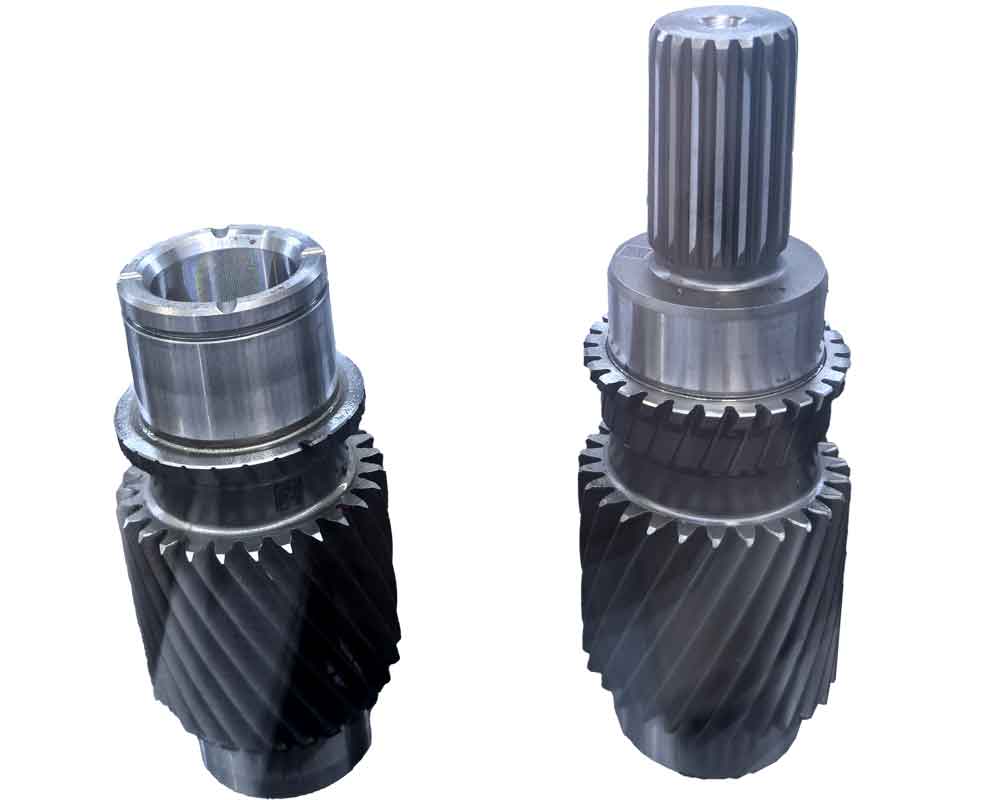
One of the most transformative advancements in our gear cutting operations has been the adoption of assembled circular grinding coated high-speed steel series hobs. Given that hobbing constitutes a substantial portion of gear tooth machining, optimizing this tool is crucial. These hobs, featuring a modular design with coated molybdenum-cobalt high-speed steel (HSS) inserts, have demonstrated remarkable performance. According to documented data, they can achieve cutting speeds exceeding $$ v_c = 150 \text{ m/min} $$ with feed rates of $$ f_z = 3.0 \text{ mm/rev} $$. Compared to solid HSS hobs, the assembled design offers several advantages derived from its manufacturing process.
The forged high-speed steel inserts possess a refined microstructure with low carbide segregation. The tooth profile is ground on large-diameter thread grinding machines, resulting in high profile accuracy and a surface roughness reduction by approximately one grade. The effective regrindable width of the tooth is about 1.5 times that of a solid hob, extending tool life significantly. Furthermore, the circular grinding method imparts a larger relief angle, yielding a sharper cutting edge. The formula for theoretical metal removal rate (MRR) in gear hobbing can be expressed as:
$$ Q = a_p \cdot f_z \cdot v_c \cdot z_c $$
where $$ a_p $$ is the depth of cut, $$ f_z $$ is the feed per tooth, $$ v_c $$ is the cutting speed, and $$ z_c $$ is the number of cutter teeth engaged. The assembled hob’s design allows for higher parameters in this equation.
Our initial trials with domestically produced assembled hobs, albeit made from conventional HSS grades like W18Cr4V, showed promising results. Gear cutting efficiency improved by roughly 30%, and the average tooth profile error was reduced by 0.002-0.004 mm. Surface roughness also showed improvement. However, tool life did not increase substantially, and quality consistency issues led to occasional tool breakage. The higher initial cost (approximately double that of solid hobs) also hindered widespread adoption. The recent introduction of imported production technology for these hobs using molybdenum-cobalt HSS has changed the landscape. Despite a price premium of 30-50%, the superior and consistent quality, higher cutting efficiency, and longer life have made them favorable.
The application of coatings, such as TiN or TiAlN, onto these hobs further enhances performance. The coating, only a few micrometers thick, marries the toughness of HSS with increased wear resistance. This synergy allows for higher cutting speeds and longer tool life without compromising the tool’s dimensional accuracy. Coating also favorably influences chip formation, reducing built-up edge (BUE), which in turn benefits machining accuracy. In our mid-1990s trials, coated solid HSS hobs showed a 20-30% increase in cutting speed, a doubling of tool life, and a 15-25% improvement in cutting efficiency. Notably, the gear tooth profile accuracy improved noticeably. We hypothesize this is due to reduced BUE or lower cutting forces, warranting further study. The improvement in surface roughness, especially in the tooth height direction, was nearly one grade lower, attributed to the coating’s lower friction coefficient and reduced chip adhesion.
The following tables summarize key experimental data from our gear cutting trials with coated and uncoated hobs, illustrating the quantifiable benefits.
| Hob ID | Measurement Location | Profile Error (Uncoated) | Profile Error (Coated) |
|---|---|---|---|
| A | Left Flank | 12 | 8 |
| Right Flank | 10 | 6 | |
| B | Left Flank | 15 | 9 |
| Right Flank | 13 | 7 |
| Gear ID | Hob Condition | Measurement Direction | Surface Roughness Ra (μm) |
|---|---|---|---|
| 01 | Uncoated | Tooth Length | 3.2 |
| Uncoated | Tooth Height | 2.5 | |
| 01 | Coated | Tooth Length | 2.8 |
| Coated | Tooth Height | 1.6 |
| Hob Condition | Number of Gears Cut |
|---|---|
| Coated, coating not removed from rake face, rounded tip | 5800 |
| Coated, coating removed from rake face, rounded tip | 3200 |
| Coated, coating removed from rake face, chamfered tip | 2700 |
| Uncoated, chamfered tip | 2100 |
The data clearly indicates that a coated hob with the coating intact on the rake face and a fully rounded tooth tip offers the longest life. This underscores the importance of tool geometry and coating application strategy in gear cutting. The transition to molybdenum-cobalt HSS for these assembled hobs is essential for high-speed cutting due to its enhanced hot hardness. The addition of cobalt elevates high-temperature stability, while molybdenum improves toughness. The challenges remain its higher cost and more demanding grinding and heat treatment requirements.
Another critical design aspect is increasing hob length, especially for use with hobbing machines featuring automatic axial shift mechanisms. A longer hob increases the available shift length, extending the effective use time between regrinds, reducing tool change frequency, and improving machine utilization. The relationship between shift length (Ls) and total hob length (Lh) can be considered for life extension. For medium module (mn = 2–6 mm) assembled hobs, a total length not exceeding 250 mm is recommended to balance benefits with manufacturing and rigidity constraints. The adoption of an end key connection, as opposed to the traditional radial key, is advantageous for maintaining rigidity when hob diameter is reduced. The end key design allows for a smaller fitting clearance between the hob bore and the arbor, enhancing stability during high-performance gear cutting.
The second major focus area is the development of small diameter, multi-head, extended length end key hobs. This configuration is a potent path for further boosting gear cutting efficiency and tool life. Increasing the number of hob starts (heads) directly raises productivity. The theoretical feed per revolution (f) is multiplied by the number of starts (zh), increasing the material removal rate. However, the kinematics change. The chip thickness per tooth (hm) in hobbing can be approximated by:
$$ h_m \approx f_z \cdot \sin(\kappa) $$
where $$ \kappa $$ is the engagement angle. With more starts, the feed per tooth may be adjusted, but generally, the chip becomes thicker, promoting easier penetration and potentially reducing tool wear. Furthermore, the wear load is distributed among more teeth, mitigating the risk of abnormal wear patterns like deep crater wear. The downside is that fewer teeth are in simultaneous contact, which can increase polygonization error on the gear flank. Also, the increased cutting force per tooth and wider force fluctuations demand higher machine and fixture rigidity. Based on our experience, a hob with 2 to 3 starts is recommended. We successfully used double-start hobs in rough gear cutting in the mid-1980s, achieving a 60-80% efficiency gain, though their use diminished later with process changes.
Concurrently, the trend towards smaller hob diameters offers multiple benefits. A reduction in diameter (d0) can increase cutting efficiency by reducing the cutting path length. The theoretical cutting time (Tc) for a gear with face width (b) and number of teeth (z) is influenced by the hob diameter and number of starts. A simplified expression for the net cutting time (excluding approach and overtravel) is:
$$ T_c \approx \frac{b \cdot z}{f \cdot z_h \cdot n} $$
where n is the hob rotational speed. A smaller diameter hob may allow for a higher rotational speed (n) for the same cutting speed (vc = π d0 n / 1000), potentially reducing Tc. Furthermore, the contact conditions improve; a smaller hob has a larger engagement angle, making entry into the workpiece easier and reducing tool wear. However, an excessively small diameter compromises hob rigidity, limiting the feasibility of multi-head designs, high feeds, and high speeds, and also reduces the effective cutting edge width. Therefore, an optimal diameter must be sought that balances these factors. For instance, reducing hob diameter from 160 mm to 100 mm for cutting a gear with 20 mm tooth depth can shorten the cutting stroke by approximately 25%, directly boosting gear cutting throughput.
The third significant tool category is carbide hobs. Their high hardness enables dramatically higher cutting speeds, but their brittleness and susceptibility to chipping have historically limited adoption. Our plant’s multi-decade experience with carbide hobs for high-speed gear cutting has yielded mixed results. Success has been consistent for specific applications: gears with small module (mn ≤ 2 mm) and short addendum (addendum coefficient ≤ 0.8), such as synchronizer gear hubs made of steel. For these components, carbide hobs have doubled cutting efficiency and increased tool life by 10 to 20 times, essentially solving the chipping problem. One specific test on a synchronizer hub is summarized below.
| Parameter | Solid HSS Hob | Assembled Carbide Hob |
|---|---|---|
| Tool Material & Hardness | W18Cr4V, 64-66 HRC | Carbide Grade (e.g., YG6), 90.0 HRA |
| Hob Speed / Cutting Speed | 150 rpm / 75 m/min | 300 rpm / 150 m/min |
| Feed Rate (mm/rev) | 2.0 | 3.0 |
| Gear Surface Roughness Ra (μm) | 6.3 | 3.2 |
| Single Piece Cutting Time (min) | 4.5 | 1.5 |
| Pieces per Shift | 100 | 300 |
| Pieces per Grind | 500 | 6000 |
| Total Pieces per Hob | 4000 | 48000 |
| Hob Unit Price (Relative) | 1.0x | 4.0x |
The economic calculation for this case was compelling: a saving of 1.5 yuan in machining time and 0.8 yuan in tool cost per piece. For an annual production of 100,000 pieces, this translated to a total saving of 230,000 yuan (based on early 1990s values). Moreover, the superior surface roughness eliminated a subsequent grinding operation previously required when using HSS hobs. Conversely, for gears with module mn = 3 mm and full addendum (addendum coefficient = 2.0), our trials with carbide hobs were persistently plagued by chipping. Even after reducing speeds, the problem persisted, leading to unreliable tool life that was sometimes lower than HSS hobs. Given the 4-5 times higher cost of carbide hobs, their application for modules ≥ 3 mm with standard tooth depth requires careful evaluation and specific process optimization. Thus, carbide hobs present a high-reward but high-risk proposition in gear cutting, best suited for well-defined, favorable geometrical and material conditions.
The fourth tool type is the gear shaper cutter. While many stepped automotive gears are now designed as separable assemblies suitable for hobbing, and small-module stepped gears are increasingly formed by cold rolling or forging, shaper cutters remain necessary for internal gears, certain stepped shapes, and gears with high shoulders. The basic structure of shaper cutters has seen less innovation. However, to keep pace with trends towards higher speeds and feeds in gear shaping, the material must evolve. Powder metallurgy high-speed steel (PM-HSS) is an ideal candidate due to its superior toughness and resistance to chipping—critical for the intermittent cutting action of shaping. Coated PM-HSS shaper cutters show marked improvements in wear resistance and life. A notable requirement in automotive gear cutting is tooth tip chamfering to prevent handling damage and reduce noise. Therefore, the development of shaper cutters with integrated chamfering edges is important. The main advancement here is the gradual replacement of traditional HSS grades like W6Mo5Cr4V2 with PM-HSS or molybdenum-cobalt HSS, though high cost and difficult grinding/heat treatment remain barriers.
The fifth and final key area is radial shaving cutters. While prevalent in automotive gear finishing in industrialized nations, their use in our domestic production is still limited. Radial shaving offers 2-3 times higher efficiency than conventional axial shaving, produces gears with better quality and lower surface roughness, and significantly extends cutter life. It is particularly suitable for finishing stepped gears, gears with small taper lead crowning, and helical gears with helix angles greater than 15°. The design of a radial shaving cutter involves two critical, interrelated aspects: the staggered arrangement of the gashes (cutting edges) on the cutter tooth flank, and the incorporation of an anti-crown along the tooth length.
The gash stagger offset (Δ) is a function of the cutter and workpiece tooth numbers (zc, zw), the feed per stroke (s), and the crossed axes angle (Σ). Its calculation aims to ensure uniform coverage of the gear flank. The direction of the stagger helix is determined by the relative orientation of the cutter and workpiece axes during setup. If, when viewed from the cutter side towards the workpiece at the intersection point of their axes, the cutter axis is rotated clockwise relative to the workpiece axis, then the gash stagger should form a left-hand helix on the cutter circumference.
Since radial shaving lacks axial traverse, the contact pattern must be enlarged along the gear face width. This is achieved by grinding an anti-crown (a slight barrel shape) onto the shaving cutter tooth. The magnitude of this anti-crown (Cr) is another crucial design parameter, determined by workpiece and cutter geometry, module, and desired contact. An empirical relationship can be considered:
$$ C_r \propto \frac{b_w^2}{d_w} \cdot \sin(\Sigma) $$
where bw is the gear face width and dw is its pitch diameter. Precise calculation requires specialized software or extensive empirical data.
The limited adoption of radial shaving cutters in our context stems from several factors: incomplete design methodologies for optimal gash stagger and anti-crown, manufacturing complexities in producing the staggered gashes and the anti-crown profile, a price tag 2-3 times higher than axial shaving cutters, and low universality—they are economical only for high-volume production. Our own recent trials on a stepped helical gear, using a self-designed and manufactured radial shaving cutter (ground on an imported cutter grinder) on a domestic radial shaving machine, showed promising results. It eliminated the collision risks inherent in axial shaving of stepped gears, improved surface roughness by one grade with no visible scratching or burrs, enhanced tooth profile accuracy (especially pressure angle error), and produced symmetrical and regular lead curves. While a full life test is pending, theoretical analysis suggests that the uniform load distribution across the full face width in radial shaving should yield a tool life at least 2-3 times longer than axial shaving cutters, which suffer concentrated loads near the step. Therefore, promoting radial shaving for stepped gears is a logical step to improve finishing quality and surface integrity in gear cutting.
In conclusion, the evolution of gear cutting tools is a multi-faceted endeavor requiring synergy between design innovation, advanced materials like molybdenum-cobalt HSS and PM-HSS, and surface engineering techniques like PVD coatings. The five tool categories discussed—assembled circular grinding coated hobs, small-diameter multi-head hobs, carbide hobs, advanced shaper cutters, and radial shaving cutters—represent significant levers for enhancing the productivity and precision of automotive gear manufacturing. Each comes with its own set of technical challenges and economic considerations. The future of gear cutting will undoubtedly involve further integration of these technologies, coupled with digital process monitoring and adaptive control, to achieve new levels of efficiency and quality in the relentless pursuit of excellence in gear production. The continuous refinement of these tools, grounded in practical shop-floor experience and rigorous testing, remains the cornerstone of advancing the art and science of gear cutting.