
In the automotive industry, the demand for enhanced steering performance in off-road vehicles has led to the development of specialized gear systems. Traditional constant-ratio steering mechanisms often fail to balance the need for lightweight handling during sharp turns and responsive control during high-speed straight-line driving. To address this, variable ratio steering gears have been introduced, which require precise manufacturing techniques. One such technique is gear shaping, a process that enables the production of complex gear profiles like variable ratio adjusted gears. In this article, I will delve into the methodology of using CNC gear shaping machines to fabricate these gears, focusing on the mathematical foundations, programming aspects, and practical implementation. Gear shaping is a critical process in this context, as it allows for the accurate generation of non-standard tooth forms that are essential for achieving variable transmission ratios. Throughout this discussion, the term gear shaping will be emphasized repeatedly to underscore its importance in modern gear manufacturing.
The core component in variable ratio steering systems is the rocker shaft sector gear, which interacts with a rack to convert rotational motion into linear displacement. This sector gear features a modified tooth profile that varies along its width, enabling different angular transmission ratios at different steering angles. The design aims to reduce steering effort at large angles while maintaining stability during straight-line driving. To manufacture such gears, a CNC gear shaping machine, specifically the KD501 model, is employed. This machine utilizes a gear shaping process where a cutting tool, shaped like a gear or rack, reciprocates to generate the tooth profile through a rolling motion. The gear shaping process involves multiple coordinated movements, including the main cutting motion, rolling motion, and additional radial and tangential adjustments to achieve the desired variable ratio. The precision offered by gear shaping is unparalleled, making it ideal for producing the intricate profiles required for variable ratio adjusted gears.
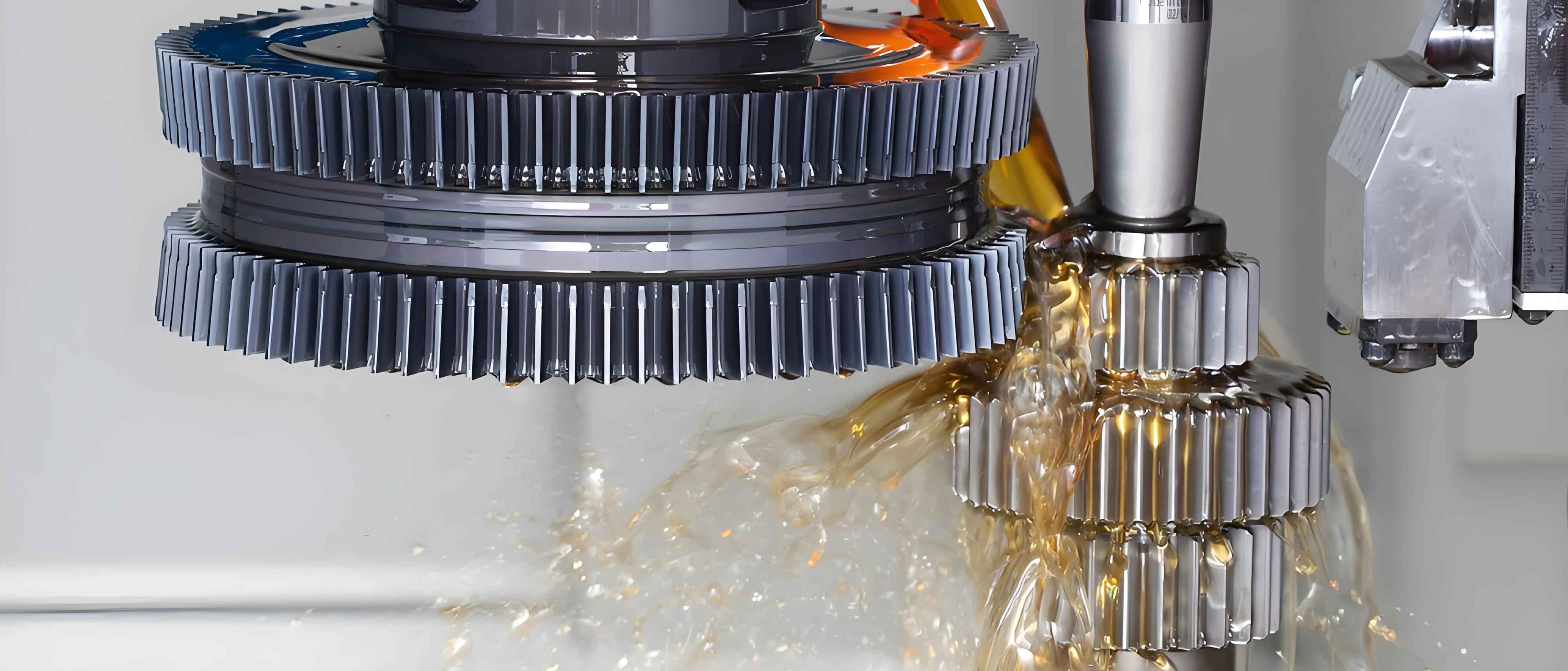
The KD501 CNC gear shaping machine operates on the principle of generating gear teeth through a series of synchronized motions. In gear shaping, the cutter and workpiece engage in a simulated meshing action, where the cutter’s reciprocating motion removes material to form the tooth spaces. The key motions include: the main cutting motion (vertical reciprocation of the cutter), the rolling motion (combination of workpiece rotation and tangential movement), the feed motions (radial and circumferential), and additional motions for variable ratio adjustments. For variable ratio gears, the rolling motion must be dynamically adjusted to account for changes in the transmission ratio across the gear’s angle. This is achieved by modifying the tangential movement of the workpiece relative to the cutter’s position. The gear shaping process thus becomes a complex interpolation task, where the machine’s CNC system calculates real-time coordinates to ensure the correct tooth profile is generated. This adaptability is what makes gear shaping suitable for manufacturing variable ratio adjusted gears, as it can handle non-linear relationships between angle and displacement.
To mathematically model the variable ratio gear shaping process, we start with the definition of angular transmission ratio in a steering system. The ratio \( i \) is given by:
$$ i = \frac{2\pi r}{t} $$
where \( r \) is the pitch radius of the sector gear in millimeters, and \( t \) is the lead of the screw in millimeters. Since \( t \) is constant due to design constraints, varying \( r \) allows for changes in \( i \). In the gear shaping process, the cutter simulates the rack (or nut) motion, and the workpiece (sector gear) rotates accordingly. The relationship between the workpiece rotation angle \( \theta \) (in degrees) and the tangential displacement \( x \) of the workpiece can be derived from the principle that the linear displacement of the rack equals the arc length traveled on the pitch circle of the gear. For a small rotation \( d\theta \), the displacement \( dx \) is:
$$ dx = \frac{2\pi r}{360} d\theta = \frac{i t}{360} d\theta $$
Integrating this over the rotation angle gives the coordinate equation for the gear shaping process. For a variable ratio gear, \( i \) is a function of \( \theta \). In the case studied, the transmission ratio is defined piecewise:
$$ i(\theta) = \begin{cases}
16.4 & \text{for } 0^\circ \leq \theta \leq 2.5^\circ \\
16.4 + \frac{18 – 16.4}{25 – 2.5} (\theta – 2.5) & \text{for } 2.5^\circ \leq \theta \leq 25^\circ \\
18 & \text{for } 25^\circ \leq \theta \leq 50^\circ
\end{cases} $$
Substituting \( t = 10.319 \) mm into the integral, we obtain the tangential coordinate \( x \) as a function of \( \theta \):
$$ x(\theta) = \int_0^\theta \frac{i(\theta) \cdot 10.319}{360} d\theta $$
Solving this integral piecewise yields:
$$ x(\theta) = \begin{cases}
0.470088 \theta & \text{for } 0^\circ \leq \theta \leq 2.5^\circ \\
0.470088 \theta + 0.001019 (\theta – 2.5)^2 & \text{for } 2.5^\circ \leq \theta \leq 25^\circ \\
0.51595 \theta – 0.630681 & \text{for } 25^\circ \leq \theta \leq 50^\circ
\end{cases} $$
This equation provides the basis for generating the interpolation coordinates in the gear shaping process. Additionally, for the modified central tooth, a radial correction \( y \) is applied, which varies with \( \theta \) to adjust the tooth profile and reduce wear. The correction values are determined from design parameters and are implemented as an additional radial motion during gear shaping. This mathematical framework ensures that the CNC gear shaping machine can accurately produce the variable ratio profile by controlling the x, y, and z coordinates synchronously.
The gear shaping process for variable ratio adjusted gears involves several steps, from tool setup to final inspection. First, the cutting tool, typically a rack-shaped cutter, is installed and aligned on the KD501 machine. The workpiece—a pre-machined sector gear blank—is then mounted and oriented correctly. The CNC program is loaded, which contains the interpolation coordinates calculated from the differential equations. The gear shaping cycle begins with the cutter reciprocating at a set speed, while the workpiece rotates and moves tangentially according to the variable ratio curve. The radial feed is adjusted dynamically to incorporate the central tooth modification, which involves varying the depth of cut along the tooth width to create a slightly different profile at the center. This modification helps distribute load more evenly and extends gear life. The table below summarizes the key parameters for the sector gear and the modification values used in gear shaping.
| Parameter | Value | Description |
|---|---|---|
| Pressure Angle (\(\alpha\)) | 25°53′ | Angle between tooth profile and radial line |
| Module (\(m\)) | 5 mm | Ratio of pitch diameter to number of teeth |
| Number of Teeth (Full Circle) | 10.77 to 11.82 | Virtual tooth count for design purposes |
| Number of Sector Teeth | 3 | Actual teeth on the rocker shaft sector |
| Profile Shift Coefficient (O-O Section) | 0 | Standard tooth profile at reference section |
| Addendum (\(h_a\)) | 3.4 mm | Tooth height from pitch circle to tip |
| Dedendum (\(h_f\)) | 5 mm | Tooth depth from pitch circle to root |
| Total Tooth Height (\(h\)) | 8.4 mm | Sum of addendum and dedendum |
| Surface Roughness | Ra 1.6 µm | Required smoothness after gear shaping |
| Gear Accuracy Grade | 8DF per GB T10095-1988 | Precision standard for manufacturing |
During gear shaping, the CNC program controls the machine axes to follow the computed coordinates. For example, at each interpolation point, the x-coordinate (tangential) and y-coordinate (radial) are updated based on \( \theta \), while the z-coordinate (vertical) manages the cutting depth. The program is written in G-code, utilizing functions like linear interpolation (G01) and circular interpolation (G02/G03) to achieve smooth motion. The gear shaping cycle includes roughing and finishing passes, with the finishing pass ensuring high accuracy and surface quality. The table below shows a sample of interpolation coordinates used in the gear shaping process for variable ratio adjusted gears, derived from the equations above.
| Rotation Angle \(\theta\) (degrees) | Tangential Coordinate \(x\) (mm) | Radial Correction \(y\) (mm) | Vertical Coordinate \(z\) (mm) |
|---|---|---|---|
| 0 | 0.000 | 0.2032 | 0.000 |
| 5 | 2.350 | 0.1930 | -0.500 |
| 10 | 4.710 | 0.1753 | -1.000 |
| 15 | 7.085 | 0.1575 | -1.500 |
| 20 | 9.480 | 0.1397 | -2.000 |
| 25 | 11.900 | 0.1245 | -2.500 |
| 30 | 14.345 | 0.1067 | -3.000 |
| 35 | 16.815 | 0.0889 | -3.500 |
| 40 | 19.310 | 0.0734 | -4.000 |
| 45 | 21.830 | 0.0559 | -4.500 |
| 50 | 24.375 | 0.0381 | -5.000 |
After completing the gear shaping process, the manufactured sector gears undergo rigorous inspection to verify their conformance to design specifications. Key metrics include tooth profile error, tooth alignment error, surface roughness, and gear meshing characteristics. The inspection is performed using coordinate measuring machines (CMMs) and gear analyzers. For the variable ratio adjusted gears produced via gear shaping, the results demonstrate high precision and functionality. The table below presents the measurement data from a batch of ten sector gears, highlighting the effectiveness of the gear shaping method.
| Gear Sample | Tooth Alignment Error (mm) | Tooth Profile Error (mm) | Span Measurement (mm) | Surface Roughness (Ra µm) | Tooth Slot Runout (mm) | Meshing Check (Central Mismatch, µm) |
|---|---|---|---|---|---|---|
| 1 | 0.010 | 0.010 | 23.91 / 23.90 | 1.6 | 0.01 | 10 / 15, 0.10 |
| 2 | 0.005 | 0.010 | 23.90 / 23.91 | 1.6 | 0.01 | 20 / 25, 0.10 |
| 3 | 0.006 | 0.010 | 23.91 / 23.90 | 1.6 | 0.01 | 8 / 13, 0.10 |
| 4 | 0.008 | 0.010 | 23.90 / 23.90 | 1.6 | 0.00 | 12 / 20, 0.05 |
| 5 | 0.004 | 0.010 | 23.91 / 23.91 | 1.6 | 0.00 | 15 / 17, 0.05 |
| 6 | 0.010 | 0.010 | 23.90 / 23.90 | 1.6 | 0.00 | 6 / 11, 0.05 |
| 7 | 0.010 | 0.011 | 23.90 / 23.90 | 1.6 | 0.00 | 12 / 13, 0.05 |
| 8 | 0.010 | 0.006 | 23.90 / 23.90 | 1.6 | 0.00 | 9 / 8, 0.05 |
| 9 | 0.010 | 0.007 | 23.91 / 23.90 | 1.6 | 0.00 | 12 / 16, 0.05 |
| 10 | 0.010 | 0.005 | 23.90 / 23.90 | 1.6 | 0.00 | 20 / 14, 0.05 |
The gear shaping process has proven to be a reliable method for manufacturing variable ratio adjusted gears. The mathematical modeling, based on differential equations, ensures accurate interpolation coordinates, while the CNC programming translates these into precise machine movements. The inspection results confirm that the gears meet all design requirements, with minimal errors in tooth profile and alignment. This success underscores the versatility of gear shaping in handling complex gear geometries. Moreover, the ability to integrate central tooth modifications during gear shaping further enhances the performance and durability of the gears. The gear shaping technique, therefore, offers a robust solution for producing advanced steering components that require variable transmission ratios.
In conclusion, the use of CNC gear shaping machines for fabricating variable ratio adjusted gears is a highly effective approach. The process involves detailed mathematical analysis to derive coordinate equations, careful programming to control machine motions, and thorough inspection to validate quality. Gear shaping enables the creation of intricate tooth profiles that are essential for modern automotive applications, particularly in off-road vehicles where steering performance is critical. By leveraging gear shaping technology, manufacturers can achieve the delicate balance between lightweight steering and stable handling. Future developments in gear shaping may include more advanced algorithms for real-time adjustment and integration with additive manufacturing for hybrid gear production. Nonetheless, the fundamentals discussed here provide a solid foundation for understanding and implementing gear shaping in the context of variable ratio gear manufacturing.