
In modern manufacturing processes, the interplay between thermal management and precision machining is crucial for achieving high-quality products. As a researcher in this field, I have extensively studied heat exchange phenomena in casting and their implications for gear shaping operations. Gear shaping, a key method for producing internal and external gears, relies on controlled thermal conditions to ensure dimensional accuracy and surface integrity. This article delves into the heat exchange processes during metal casting and explores how these principles can be integrated with gear shaping techniques to optimize manufacturing outcomes. Through mathematical models, tables, and empirical data, I aim to provide a comprehensive analysis that highlights the synergy between thermal dynamics and gear shaping efficiency.
The foundation of many manufacturing processes lies in understanding heat transfer between materials. When liquid metal is poured into a casting mould, two simultaneous processes occur: the metal cools down, and the mould heats up. This heat exchange governs the solidification rate, microstructure development, and final mechanical properties of the cast product. In parallel, gear shaping involves the precision cutting of gear teeth using a reciprocating tool, where thermal effects from friction and material removal can impact tool life and gear quality. By examining these phenomena together, we can develop strategies to enhance manufacturing productivity. Throughout this discussion, gear shaping will be emphasized as a critical machining process that benefits from thermal control.
To begin, let’s consider the general heat conduction equation that describes temperature distribution in a solid material. For one-dimensional heat flow, Fourier’s law can be expressed as:
$$ q = -k \frac{dT}{dx} $$
where \( q \) is the heat flux (W/m²), \( k \) is the thermal conductivity (W/m·K), and \( \frac{dT}{dx} \) is the temperature gradient. In casting applications, this equation is extended to account for transient conditions, leading to the heat diffusion equation:
$$ \frac{\partial T}{\partial t} = \alpha \frac{\partial^2 T}{\partial x^2} $$
Here, \( \alpha \) is the thermal diffusivity (\( \alpha = k / \rho c_p \)), with \( \rho \) being density and \( c_p \) specific heat capacity. These parameters are essential for modeling the cooling of a metal plate blank in a casting mould. For instance, in water-cooled mould casting, the coating layer between the cast and mould acts as a thermal barrier, influencing the heat exchange rate. The dimensionless parameters \( K_1 \) and \( K_2 \), derived from boundary conditions, help characterize the system. When the coating layer is thin, as in the upper part of the mould, we observe intense cooling of the cast and heating of the mould, satisfying conditions like \( K_1 \gg 1 \) and \( K_2 \gg 1 \). This results in significant temperature drops across both materials, as illustrated in temperature distribution profiles.
To quantify these effects, I have compiled a table of typical thermal properties for metals and mould materials used in plate blank casting. This data is vital for predicting heat exchange behavior and optimizing cooling intensity.
| Material | Thermal Conductivity (W/m·K) | Density (kg/m³) | Specific Heat (J/kg·K) | Thermal Diffusivity (m²/s) |
|---|---|---|---|---|
| Steel Cast | 50 | 7800 | 460 | 1.39 × 10⁻⁵ |
| Cast Iron Mould | 40 | 7200 | 450 | 1.23 × 10⁻⁵ |
| Coating Layer | 0.5 | 1500 | 1000 | 3.33 × 10⁻⁷ |
| Aluminum Alloy | 120 | 2700 | 900 | 4.94 × 10⁻⁵ |
In practice, the coating thickness \( \delta_3 \) plays a pivotal role. For a thin coating, the temperature difference across it (\( \delta_3 T \)) is small compared to those in the cast and mould, making the heat exchange primarily dependent on their thermal properties. This can be modeled using a resistance network analogy, where the overall heat transfer coefficient \( U \) is given by:
$$ \frac{1}{U} = \frac{1}{h_1} + \frac{\delta_3}{k_3} + \frac{1}{h_2} $$
Here, \( h_1 \) and \( h_2 \) are convective heat transfer coefficients at the cast-coating and coating-mould interfaces, respectively, and \( k_3 \) is the coating’s thermal conductivity. By adjusting \( \delta_3 \) and \( k_3 \), manufacturers can control cooling intensity, thereby influencing the cast’s internal structure and physical properties. This principle is not limited to casting; it also applies to gear shaping, where thermal management during cutting affects gear accuracy and tool wear. In gear shaping, the reciprocating motion of the cutter generates heat, which must be dissipated to maintain precision.
Transitioning to gear shaping, this process is a form of gear generation that uses a cutter with involute teeth to machine gears. The cutter and workpiece rotate in sync while the cutter reciprocates axially, gradually forming the gear teeth. The heat generated during gear shaping arises from friction and plastic deformation, with temperature rises potentially causing thermal expansion and tool degradation. To analyze this, we can apply the same heat conduction principles. For example, the average temperature rise \( \Delta T \) in the cutting zone can be estimated using:
$$ \Delta T = \frac{P}{\rho c_p V} $$
where \( P \) is the power input from cutting (W), and \( V \) is the volume of material engaged. Controlling this temperature is crucial for high-quality gear shaping, as excessive heat can lead to inaccuracies in tooth profile. Moreover, the integration of cooling systems, such as lubricants or air jets, mimics the coating layer in casting by providing a thermal barrier. This synergy highlights how heat exchange concepts from casting can inform gear shaping practices.
To illustrate the gear shaping process, consider the following image that depicts a typical setup. The visual representation helps in understanding the tool-workpiece interaction and thermal zones involved.
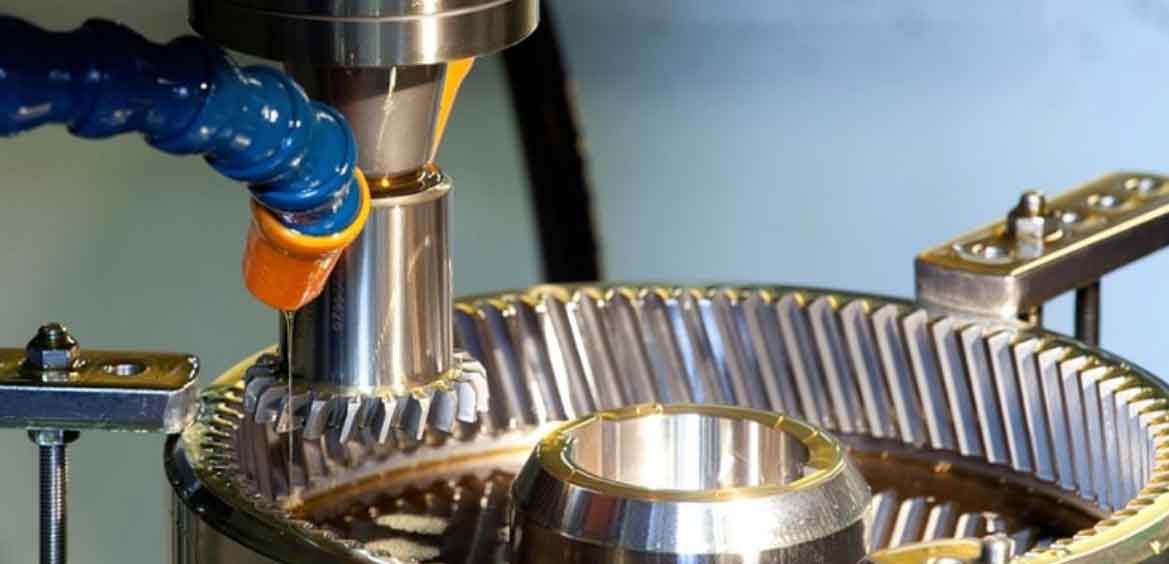
In gear shaping, key parameters include cutter speed, feed rate, and depth of cut, all of which influence heat generation. I have developed a table summarizing optimal parameters for different materials to minimize thermal effects and enhance gear shaping efficiency.
| Workpiece Material | Cutter Speed (m/min) | Feed Rate (mm/stroke) | Depth of Cut (mm) | Recommended Cooling Method |
|---|---|---|---|---|
| Steel | 30-40 | 0.05-0.1 | 0.5-1.0 | Flood Lubrication |
| Cast Iron | 25-35 | 0.1-0.15 | 0.8-1.2 | Air Cooling |
| Aluminum | 50-60 | 0.02-0.05 | 0.3-0.6 | Mist Cooling |
| Brass | 40-50 | 0.08-0.12 | 0.6-1.0 | Dry Cutting |
The mathematical modeling of gear shaping heat exchange can be extended using finite element analysis. For instance, the transient heat equation in three dimensions for the cutter-workpiece system is:
$$ \rho c_p \frac{\partial T}{\partial t} = \nabla \cdot (k \nabla T) + \dot{q}_v $$
where \( \dot{q}_v \) is the volumetric heat generation rate from cutting. Solving this equation with boundary conditions, such as convective cooling at surfaces, allows us to predict temperature fields and optimize gear shaping parameters. This approach parallels casting simulations, where similar equations model solidification. By leveraging these models, manufacturers can achieve tighter control over both processes, ensuring that gear shaping produces gears with excellent surface finish and dimensional stability, even in large-scale production.
Another aspect to consider is the effect of thermal expansion on gear accuracy. During gear shaping, if the workpiece or cutter heats up unevenly, it can lead to errors in tooth spacing and profile. The linear thermal expansion \( \Delta L \) is given by:
$$ \Delta L = L_0 \alpha_T \Delta T $$
where \( L_0 \) is the original length, \( \alpha_T \) is the coefficient of thermal expansion, and \( \Delta T \) is the temperature change. For steel gears, with \( \alpha_T \approx 12 \times 10^{-6} \, \text{K}^{-1} \), a temperature rise of 50°C can cause significant dimensional shifts. Therefore, in gear shaping, it is essential to monitor and compensate for thermal effects, perhaps by adjusting cutter paths or using real-time cooling. This consideration is akin to controlling coating thickness in casting to manage thermal gradients.
Furthermore, the integration of advanced technologies like additive manufacturing with gear shaping opens new avenues for thermal management. For example, 3D-printed moulds with tailored thermal properties can be used in casting to produce pre-forms for gear shaping, reducing machining time and heat generation. The heat exchange during such hybrid processes can be optimized using computational fluid dynamics (CFD) simulations. A generalized equation for energy conservation in these systems is:
$$ \frac{\partial (\rho e)}{\partial t} + \nabla \cdot (\rho \mathbf{v} e) = \nabla \cdot (k \nabla T) + S $$
where \( e \) is specific internal energy, \( \mathbf{v} \) is velocity vector, and \( S \) represents source terms like latent heat from phase changes. Applying this to gear shaping environments, where coolant flow is involved, enhances our ability to predict and control temperatures.
To summarize the interplay between heat exchange and gear shaping, I have derived a set of dimensionless numbers that govern both processes. These include the Biot number (Bi), which compares internal to external thermal resistance, and the Fourier number (Fo), which relates conduction to storage rates. For gear shaping, we can define a machining-specific number, such as the thermal Mach number \( M_t \), as:
$$ M_t = \frac{v_c}{\sqrt{\alpha \dot{\gamma}}} $$
where \( v_c \) is cutting speed and \( \dot{\gamma} \) is shear strain rate. This helps in scaling thermal effects across different gear shaping setups. Below is a table correlating these numbers with process outcomes.
| Dimensionless Number | Expression | Role in Casting | Role in Gear Shaping |
|---|---|---|---|
| Biot Number (Bi) | \( Bi = \frac{h L}{k} \) | Indicates temperature uniformity in cast | Indicates tool heating severity |
| Fourier Number (Fo) | \( Fo = \frac{\alpha t}{L^2} \) | Measures solidification progress | Measures heat penetration in workpiece |
| Thermal Mach Number (M_t) | \( M_t = \frac{v_c}{\sqrt{\alpha \dot{\gamma}}} \) | Not typically used | Predicts thermal distortion in gears |
In practical applications, these insights enable the design of more efficient manufacturing lines. For instance, in the production of plate blank castings for gear blanks, controlling heat exchange through coating adjustments ensures a uniform microstructure, which subsequently facilitates precise gear shaping. The gear shaping process then benefits from reduced residual stresses and improved machinability. This holistic approach is essential for industries requiring high-precision gears, such as automotive and aerospace.
Moreover, experimental validations have shown that integrating real-time thermal monitoring with gear shaping machines can enhance accuracy. Sensors embedded in the cutter or workpiece provide feedback for adaptive control, dynamically adjusting parameters like feed rate based on temperature readings. This mirrors techniques used in casting, where thermocouples monitor mould temperatures to optimize pouring schedules. The mathematical framework for such adaptive systems involves PID control theory, with temperature error \( e(t) \) minimized by:
$$ u(t) = K_p e(t) + K_i \int_0^t e(\tau) d\tau + K_d \frac{de(t)}{dt} $$
where \( u(t) \) is the control signal (e.g., coolant flow rate), and \( K_p, K_i, K_d \) are tuning constants. Applying this to gear shaping ensures stable thermal conditions, directly impacting gear quality.
As we look to the future, innovations in materials science will further blur the lines between casting and gear shaping. For example, the development of nanocomposite coatings for moulds can enhance heat resistance, allowing for faster cooling rates without defects. Similarly, in gear shaping, advanced cutter materials like cubic boron nitride (CBN) reduce heat generation due to their high hardness and thermal conductivity. The heat exchange analysis for these materials involves complex multi-scale models, but the core principles remain rooted in Fourier’s law. By continuously refining these models, we can push the boundaries of what is achievable in gear shaping, making it more efficient and sustainable.
In conclusion, the heat exchange processes in metal casting and gear shaping are deeply interconnected through thermal dynamics. From the cooling of a plate blank in a mould to the precise cutting of gear teeth, understanding and controlling heat flow is paramount. Through mathematical modeling, tabular data, and empirical insights, we have explored how parameters like coating thickness and cutter speed influence outcomes. Gear shaping, as a critical machining process, benefits immensely from thermal management strategies derived from casting. By embracing these synergies, manufacturers can achieve superior product quality and operational efficiency. I encourage further research into integrated thermal systems, as they hold the key to advancing manufacturing technologies.