
The precise manufacturing of spiral bevel gears is a cornerstone of modern power transmission systems, found in everything from automotive differentials to industrial gearboxes. The heart of this manufacturing process is the spiral bevel gear milling machine, a sophisticated piece of equipment that performs complex generating motions. In our facility, a pivotal Gleason 645 spiral bevel gear milling machine suffered a critical failure: its indexing mechanism became inoperative. This failure brought production to a standstill, highlighting our absolute dependence on this machine’s flawless operation. The indexing system, a complex fusion of mechanical, hydraulic, and electrical subsystems, presented a formidable diagnostic challenge. This document details the first-person, systematic journey undertaken by our maintenance team to analyze and ultimately resolve this intricate malfunction, restoring critical gear milling capacity.
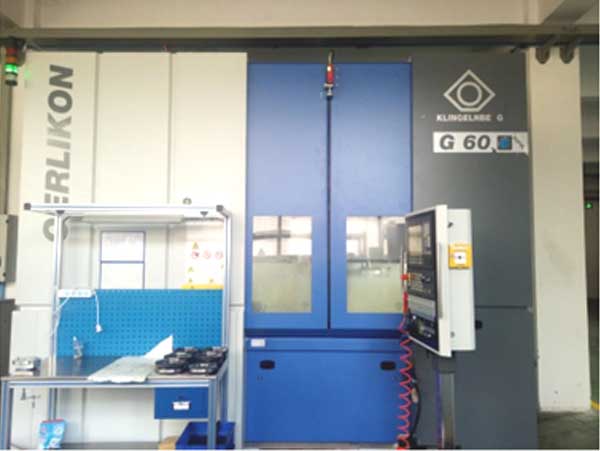
The initial symptom was clear yet disruptive: during the automatic cycle, the machine would fail to complete its index. Instead of rotating the workpiece to the next tooth space accurately, the mechanism would either hesitate, produce an incomplete rotation, or fault out entirely. This failure directly prevented the sequential cutting of all teeth on a gear blank, rendering the machine useless for its primary gear milling function. Our first step was to understand the intended, healthy operation of the Gleason 645’s indexing system.
The indexing process on this gear milling machine is not a simple rotary motion. It is deeply integrated with the machine’s generating mechanism. During the cutting phase, the cradle (or tool spindle) and the workpiece rotate in a precise, timed relationship through a train of change gears to generate the spiral tooth form. Indexing must occur between cutting strokes to position the blank for the next tooth. The core of this function is a planetary gear system. The fundamental components involved are:
- Tool Cradle DC Drive Motor: Provides primary motile power for the cutter head and, via gearing, the workpiece during generation.
- Indexing Hydraulic Motor: Provides the specific motive force for the index rotation.
- Planetary Gear Set: The mechanical heart that translates the indexing motion into precise workpiece rotation while the cradle is held stationary.
- Index Locking Mechanism: A hydraulic clamp that secures the index shaft during cutting.
To diagnose the fault, we had to model the intended behavior. During gear milling (cutting phase), the index lock is engaged, fixing the planetary carrier. The cradle motor drives the system, and motion flows through the gear train and planetary set to rotate the workpiece. For indexing, the sequence reverses:
- The CNC system signals the end of a cut and initiates index.
- The cradle DC drive motor is electrically commanded to a “braking” or “holding” state. Its controller attempts to keep the cradle shaft stationary.
- The index lock hydraulic cylinder releases, freeing the planetary carrier.
- The indexing hydraulic motor activates, driving the index shaft (which is directly coupled to the planetary carrier) through a pre-set angle.
- Because the cradle side of the planetary system is being held by the braked DC motor, the rotation of the carrier forces the planet gears to “walk” around the now-stationary sun gear connected to the cradle. This walking motion drives the other sun gear connected to the workpiece, causing it to rotate a precise angular distance—the index angle.
- Once the target angle is reached, the index lock re-engages, the indexing motor stops, and the cradle motor is released from its hold state to begin the next cutting stroke.
The critical insight from this analysis is the role of the cradle DC drive motor. For a successful index, it must provide a substantial and unwavering holding torque. If the cradle shaft is allowed to rotate freely during the index hydraulic motor’s action, the planetary mechanism will simply back-drive the cradle instead of driving the workpiece. The entire indexing motion would be lost internally, resulting in the observed “index failure.” Therefore, the fault tree logically pointed toward the cradle drive system as the primary suspect, shifting our focus from pure mechanics to the electro-drive system.
With the fault direction identified, we focused on the Gleason 645’s cradle drive. It is a DC servo system from the 1980s, featuring a dual-convertor (anti-parallel thyristor) power stage for four-quadrant operation, enabling both driving and regenerative braking. The control architecture is a classic cascaded loop system: an outer speed loop and an inner current (torque) loop. The system comprises several plug-in cards on a main backplane. The holding torque required for indexing is generated by the current loop. When the index command is given, the speed loop receives a zero-speed reference. Any deviation (like a torque from the indexing mechanism trying to turn the cradle) creates a speed error, which the speed controller converts into a current reference. The current controller then fires the appropriate thyristors to generate a counter-torque in the motor, holding the position. A failure in this chain would result in insufficient holding torque.
We began systematic testing. The machine could still run the cutting cycle, suggesting the power stage and motor were fundamentally operational. However, when we manually triggered an index cycle and monitored the cradle, we could sometimes feel a slight shudder or movement. This was the “instantaneous motion” clue. Furthermore, on several attempts, the drive faulted out with a main power fuse blown. This combination of symptoms—intermittent loss of holding torque followed by catastrophic over-current—was key. We enumerated the possible causes within the DC drive system:
| Symptom | Possible Cause | Investigation Path |
|---|---|---|
| Intermittent loss of holding torque (“cradle creep”) | 1. Zero-point drift in Speed or Current regulator. 2. Interlock signal instability. 3. Direct noise interference on thyristor gate pulses. |
Measure regulator offset voltages; monitor interlock logic states with oscilloscope. |
| Over-current and fuse failure | 1. Loss of current feedback signal. 2. Failure of current limit circuitry. 3. Asymmetric firing of thyristor bridges (one bridge conducting while the other is pulsed). 4. Noise causing simultaneous firing of both converter bridges (creating a short-circuit). |
Check current transducer connections and signal; test current limit setpoints; inspect thyristor modules for damage. |
We methodically checked and eliminated the simpler possibilities. The speed and current regulator offsets were within specification. The interlock logic was stable. The current feedback signal was continuous and accurate. The current limit values were properly set and functional. A visual and electrical inspection of the thyristor power modules revealed no failed components. The evidence was narrowing the cause down to an electrical noise or instability issue, specifically one that could affect the sensitive gate triggering circuits.
We then used an oscilloscope to monitor the trigger pulses to the “forward” and “reverse” thyristor bridges during an attempted index cycle. The revelation was clear: at the moment the fuse blew, the clean, ordered firing pulses to one bridge became chaotic, and we observed pulses erroneously appearing on the opposing bridge. This created the dreaded “cross-conduction” or “shoot-through” condition where both bridges were partially on simultaneously, creating a direct short-circuit across the DC supply, hence the massive over-current and blown fuse. But what was causing this erroneous triggering?
The triggering circuits in this system use transistors to drive pulse transformers, which provide isolation and deliver the gate signal to the thyristors. Our schematic analysis showed a critical vulnerability: the common reference point for these pulse transformers was tied directly to the common of the control voltage power supply. If this reference voltage became unstable or intermittent, the entire triggering logic could be corrupted. We focused on the control voltage power supply module. During operation, the electrical cabinet exhibited noticeable vibration. We removed the power supply card and discovered the root cause: a cold solder joint on the main power transformer’s terminal. This connection was mechanically sound enough to pass low-current tests when stationary but would intermittently disconnect under the thermal cycling and vibration of normal gear milling operation.
When this connection broke, the reference for the trigger circuits was lost. This caused the trigger electronics to behave unpredictably, sending spurious pulses. During the cutting cycle, with the drive actively controlling, the system might tolerate minor glitches. However, during the index hold state, where the drive was in a sensitive balancing act to provide static torque, the loss of reference could cause it to momentarily lose control (cradle creep). A more severe break could cause the random cross-conduction event, destroying the fuses. The mathematical relationship for the motor torque during hold is given by:
$$ T_m = K_t \cdot I_a $$
where $T_m$ is the motor torque, $K_t$ is the motor torque constant, and $I_a$ is the armature current. The controller’s job is to maintain $I_a$ at the precise value needed to counteract the external disturbance torque $T_{dist}$ from the indexing mechanism:
$$ I_a = \frac{T_{dist}}{K_t} $$
The current loop regulates this. If the trigger pulses are corrupted, the actual applied armature voltage $V_a$ becomes erratic:
$$ V_a(t) = f_{erratic}(Trigger_{noise}) $$
This disrupts the basic armature equation:
$$ V_a = I_a R_a + K_e \omega + L_a \frac{dI_a}{dt} $$
With $V_a$ unstable due to noise, regulating $I_a$ to the desired constant value becomes impossible, leading to torque ($T_m$) variation and loss of position hold.
The repair was straightforward in execution but critical in impact. We re-soldered the transformer connection with high-reliability techniques, added mechanical strain relief to the wire, and secured the power supply card more firmly to dampen vibration. After reassembly, we performed a comprehensive test procedure:
- Static Tests: Verified all control voltages were stable, even when manually inducing cabinet vibration.
- Dynamic Cutting Test: Ran the machine through a full gear milling cycle on a test blank. Monitored drive currents and stability.
- Indexing Stress Test: Commanded repeated index cycles without cutting, monitoring the cradle for any movement and the drive for abnormal currents. We used the oscilloscope to confirm clean, stable trigger pulses throughout.
- Full Integration Test: Processed a complete gear from start to finish. The index was consistently accurate, and the machine returned to full, reliable production capacity.
The resolution of this failure on the spiral bevel gear milling machine provided valuable lessons. It underscored that faults on complex, integrated systems often manifest in one subsystem but originate in another. A purely mechanical or hydraulic investigation would have been fruitless. The systematic, principle-based approach—from understanding the kinematic and dynamic model of the index process, to constructing a logical fault tree, to targeted instrumented testing—was essential. The key was recognizing that the gear milling machine’s indexing integrity is not guaranteed by the index mechanism alone but is critically dependent on the holding torque provided by the main cutter drive. This case also highlights the age-related failure modes of electronic systems, such as deteriorating solder joints under thermal-mechanical stress, which must be considered in preventive maintenance programs for high-value manufacturing assets like a spiral bevel gear milling machine.