
In the field of gear milling, the spindle box is a critical component that directly influences the performance, accuracy, and reliability of the entire gear milling machine. As gear milling processes often involve high-power cutting, high-speed operations, and precision machining, the dynamic characteristics of the spindle box must be thoroughly validated. To address this, I developed a comprehensive test bench measurement and control system based on cRIO technology, aiming to simulate real-world conditions and assess the spindle box’s performance according to industry standards such as JB/T 5077-1991 for general gear device type testing. This system integrates energy-closed design, high-frequency signal acquisition, and advanced control algorithms, ensuring efficient and accurate evaluation for gear milling applications.
The need for a robust test bench arises from the complex operational demands in gear milling. The spindle box in a gear milling machine transmits power from the servo motor through multiple gear stages to the cutting tool, and internal excitations like vibration, gear mesh impacts, and thermal effects can lead to detrimental outcomes. Therefore, pre-delivery testing is essential to verify compliance with standards, including load testing, efficiency tests, overload tests, and noise and vibration analysis. My design focuses on creating a system that not only meets these requirements but also enhances automation, data accuracy, and energy efficiency, specifically tailored for gear milling environments.
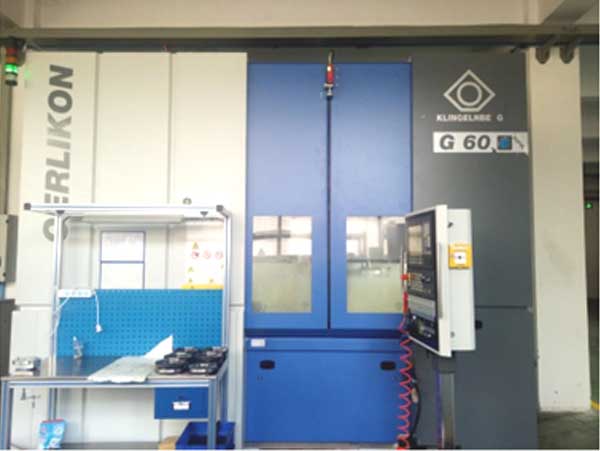
The system requirements were derived from standard specifications for gear milling machines. Key tests include: (1) assembly quality assessment, such as gear axis parallelism and bearing preload; (2) no-load noise testing, with thresholds below 82 dB; (3) impact load spectrum testing to simulate intermittent cutting forces in gear milling; (4) gear fatigue strength evaluation; (5) temperature rise and thermal field analysis; (6) vibration testing using tri-axial accelerometers; and (7) torque and power consumption measurement. These criteria ensure that the spindle box can withstand the rigorous conditions typical in gear milling operations. The test bench must support real-time data acquisition, display, and archiving, with capabilities for online retrieval and analysis.
To fulfill these needs, I designed the overall system architecture around a DC bus-based electric closed-loop power flow approach. This method replaces traditional mechanical closed-loop systems, offering higher energy recovery, simpler structure, and lower cost—critical for efficient gear milling testing. The system comprises mechanical, drive, measurement and control, and auxiliary subsystems. The drive system uses ABB ACS850 multi-drive units with IGBT rectifiers for energy feedback, enabling precise speed and torque control. The measurement and control system leverages cRIO and CDAQ modules from National Instruments, coupled with LabVIEW software, to achieve integrated monitoring and testing. This setup facilitates both low-frequency and high-frequency signal acquisition, essential for capturing dynamic behaviors in gear milling processes.
The hardware configuration is detailed in Table 1, summarizing key components and their functions in the gear milling test bench.
| Component | Type/Model | Function | Signal Type |
|---|---|---|---|
| Temperature Sensor | PT100 | Monitor bearing and gear temperatures | Low-frequency (4-20 mA) |
| Torque/Speed Sensor | Non-contact type | Measure input/output torque and speed | Pulse and low-frequency |
| Tri-axial Accelerometer | ICP type | Capture vibration signals in three axes | High-frequency |
| Noise Sensor | Microphone with C-weighting | Acquire acoustic emissions during gear milling | High-frequency |
| cRIO Controller | NI cRIO-9068 | Execute monitoring and control logic | Digital and analog I/O |
| CDAQ Module | NI CDAQ-9174 with NI-9234 | High-frequency data acquisition for vibration/noise | High-frequency |
| Drive System | ABB ACS850 + QABP Motor | Provide adjustable speed and torque for gear milling simulation | Control signals |
| Auxiliary System | Hydraulic station and cooling fans | Eliminate gear backlash and manage thermal effects | Digital control |
The monitoring system is built on cRIO, enabling real-time control of the drive and auxiliary systems. The principle involves using the DC bus to create a closed power loop: the drive motor supplies energy to the spindle box, and the loading motor regenerates power back to the bus, minimizing external energy consumption. This is particularly beneficial for prolonged gear milling tests. The control software, developed in LabVIEW, includes initialization, manual and automatic test modules, alarm handling, and emergency stop functions. In manual mode, operators can set speed, torque, and test duration via a graphical interface, while automatic mode uses predefined load spectra to simulate gear milling cycles, such as intermittent cutting patterns. The load spectrum defines step changes in parameters over time, represented as:
$$S(t) = \begin{cases}
T_1, \omega_1 & \text{for } t_0 \leq t < t_1 \\
T_2, \omega_2 & \text{for } t_1 \leq t < t_2 \\
\vdots & \vdots \\
T_n, \omega_n & \text{for } t_{n-1} \leq t < t_n
\end{cases}$$
where $S(t)$ is the load profile, $T_i$ and $\omega_i$ are torque and speed at step $i$, and $t_i$ are time intervals. This allows realistic simulation of gear milling operations, including start-stop transitions and load variations. The monitoring interface provides visual feedback through waveforms and indicators, enhancing usability for gear milling technicians.
The testing system handles data acquisition from various sensors, processing both low-frequency and high-frequency signals. For low-frequency signals like temperature and torque, I used cRIO modules (e.g., NI-9205 for analog inputs) with custom scaling configurations. High-frequency signals, such as vibration and noise from gear milling activities, are captured via CDAQ modules at sampling rates up to 50 kHz. The software implements real-time display and storage in TDMS or Excel formats, with features for offline analysis. Key signal processing includes noise evaluation using sound pressure level calculations and octave band analysis. The sound pressure level $L_p$ is computed as:
$$L_p = 20 \log_{10} \left( \frac{p}{p_0} \right)$$
where $p$ is the measured sound pressure and $p_0 = 20 \mu\text{Pa}$ is the reference level. For gear milling noise, C-weighting is applied to approximate human hearing sensitivity, and the octave spectrum is derived using wavelet decomposition to identify frequency components related to gear mesh or bearing defects.
In noise signal processing, I employed discrete wavelet transform (DWT) to separate trends from periodic components. The DWT decomposes a signal $x(t)$ into approximation coefficients $A_j$ and detail coefficients $D_j$ at level $j$:
$$x(t) = A_J(t) + \sum_{j=1}^{J} D_j(t)$$
where $J$ is the decomposition level. For gear milling applications, the low-frequency approximations capture gradual changes like temperature drifts, while details highlight transient events such as impact loads. This aids in diagnosing anomalies during gear milling tests. Table 2 summarizes the test parameters and their acquisition methods.
| Parameter | Sensor/Module | Sampling Rate | Processing Method | Relevance to Gear Milling |
|---|---|---|---|---|
| Temperature | PT100 with NI-9205 | 1 Hz | Mean value calculation | Monitors thermal effects in gears and bearings |
| Torque and Speed | Torque sensor with NI-9411 | 100 Hz | Efficiency computation: $\eta = \frac{T_{\text{out}} \omega_{\text{out}}}{T_{\text{in}} \omega_{\text{in}}}$ | Assesses power transmission in gear milling |
| Vibration | Accelerometer with NI-9234 | 10 kHz | RMS and FFT analysis | Detects gear mesh frequencies and imbalances |
| Noise | Microphone with NI-9234 | 20 kHz | C-weighted SPL and octave bands | Evaluates acoustic emissions from gear milling |
The software interfaces were designed for intuitive operation. The monitoring panel includes manual control sliders for speed and torque adjustment, automatic load spectrum uploads, and status indicators for faults. The testing panel displays real-time waveforms for temperature, torque, vibration, and noise, with options to save data dynamically. For instance, in gear milling noise tests, the interface shows time-domain signals and frequency spectra, allowing quick identification of pattern changes due to load impacts. The system also incorporates alarm logic based on threshold violations, such as overtemperature or excessive vibration, common in gear milling scenarios.
To enhance signal analysis, I implemented feature extraction techniques. For vibration signals in gear milling, statistical features like mean, slope, and root mean square (RMS) are computed to reduce dimensionality for classifier inputs. The slope feature $\alpha$ for a signal sequence $x_i$ of length $N$ is given by:
$$\alpha = \frac{\sum_{i=1}^{N} (i – \bar{i})(x_i – \bar{x})}{\sum_{i=1}^{N} (i – \bar{i})^2}$$
where $\bar{i}$ and $\bar{x}$ are the mean indices and signal values. These features help distinguish between normal and faulty states in gear milling operations, improving diagnostic accuracy. Additionally, wavelet-based denoising is applied to vibration data to isolate gear-related components from background noise.
The system validation involved running various tests on a gear milling spindle box prototype. In no-load tests, noise levels were kept below 80 dB, confirming compliance with standards. Load tests using impact spectra revealed vibration peaks at gear mesh frequencies, calculated as:
$$f_{\text{mesh}} = N \cdot \frac{\omega}{60}$$
where $N$ is the number of teeth and $\omega$ is the shaft speed in RPM. This data correlated with theoretical models, verifying the system’s accuracy. The energy feedback efficiency of the DC bus system achieved over 90% recovery, reducing overall power consumption during prolonged gear milling simulations.
In conclusion, the cRIO-based measurement and control system for gear milling machine spindle box test benches offers a robust solution for performance validation. By integrating electric closed-loop power flow, high-speed data acquisition, and advanced LabVIEW programming, it meets the stringent requirements of gear milling applications. The system supports a wide range of tests, from basic noise checks to complex fatigue analyses, with reliable and precise outcomes. Future work could focus on integrating machine learning algorithms for predictive maintenance in gear milling, further enhancing the system’s applicability. This design not only ensures quality assurance for spindle boxes but also contributes to the advancement of gear milling technology through efficient and intelligent testing methodologies.