
In mechanical engineering, the selection of an appropriate heat treatment process is a cornerstone of gear design, directly influencing the final component’s load-bearing capacity, service life, and reliability. The primary goal is to enhance the tooth’s resistance to failure modes such as pitting, bending fatigue, and wear. This article, from a designer’s perspective, delves into the characteristics, selection criteria, and critical control of common heat treatment methods for heavy-duty gears. A particular focus will be placed on understanding and mitigating potential heat treatment defects, as these imperfections can severely undermine the performance gains sought through processing.
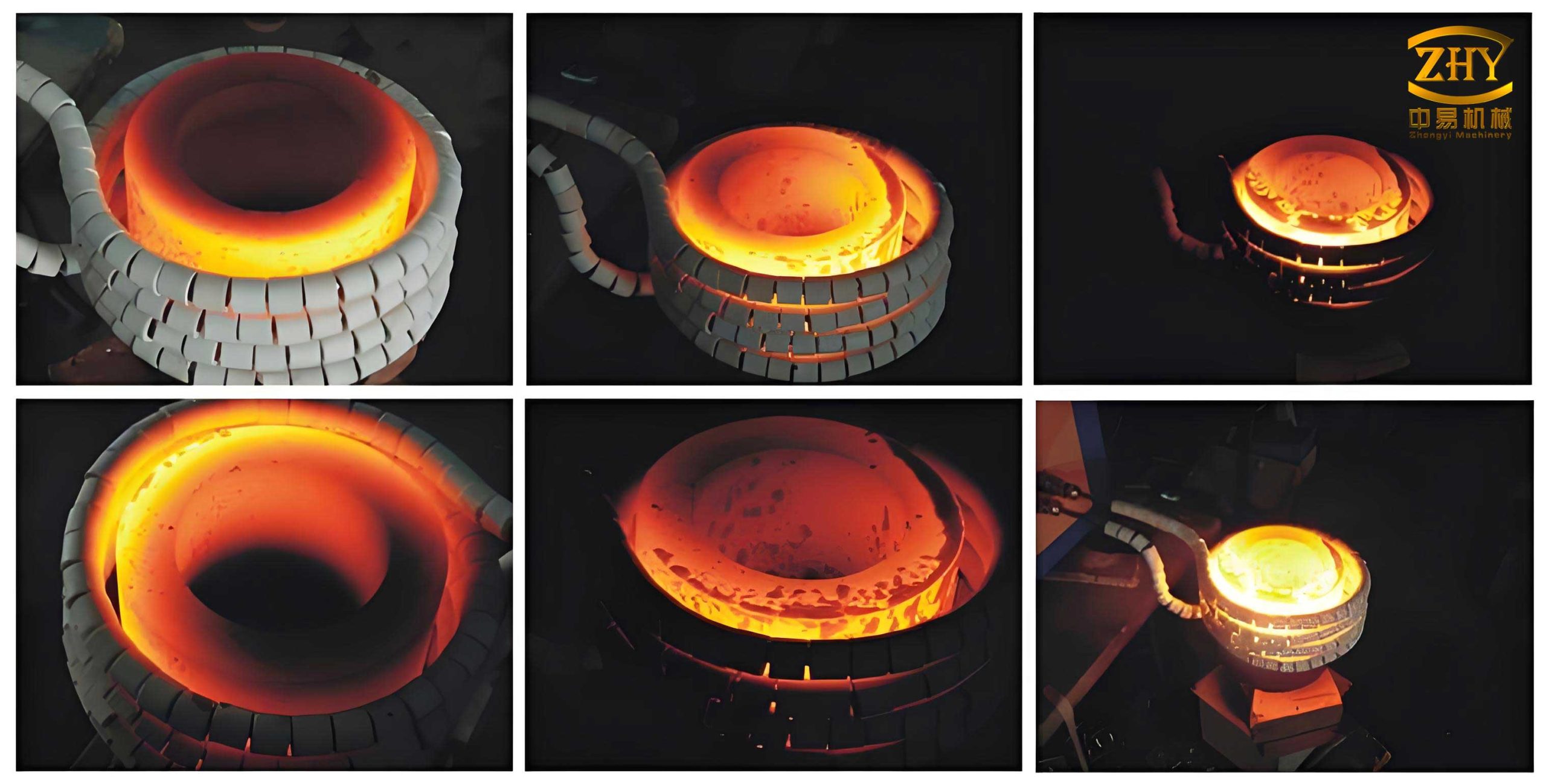
Heat treatment can serve as an intermediate step to refine microstructure (e.g., annealing or normalizing after forging) and improve machinability, or as the final operation to achieve specified mechanical properties (e.g., quenching and tempering). The fundamental classification based on heating and cooling processes is systematic, yet the practical choice for gears narrows down to a few key methods tailored for demanding applications.
Fundamental Heat Treatment Categories for Steel
The underlying science of heat treatment revolves around controlled heating and cooling to alter the microstructure of steel. The broad categories can be summarized as follows:
- Annealing: Involves heating to a suitable temperature, holding, and then slow cooling (often within the furnace). Its purposes include softening for machining, relieving internal stresses, and refining grain structure.
- Normalizing: Similar to annealing but involves air cooling after heating, resulting in a finer pearlitic structure. It is used to homogenize structure and improve machinability of medium-carbon steels.
- Quenching: The process of heating steel above its critical temperature (e.g., Ac3 or Ac1) and then rapidly cooling it (in water, oil, or polymer). The objective is to obtain a hard, metastable martensitic structure.
- Tempering: A mandatory follow-up to quenching, involving reheating the quenched steel to a temperature below the lower critical point (A1). This reduces brittleness, relieves quench stresses, and imparts the desired combination of strength and toughness.
The combination of quenching and high-temperature tempering is known as tempering treatment. Other processes like surface hardening (e.g., induction, flame hardening) and thermochemical treatments (e.g., carburizing, nitriding) are specialized techniques to engineer a hard, wear-resistant surface while maintaining a tough core.
Primary Heat Treatment Methods for Gears
1. Tempering (Quenching and High-Temperature Tempering)
This is a bulk heat treatment process. The gear is first fully austenitized and quenched to form martensite throughout its section. It is then tempered at high temperatures (typically 500-650°C). The resulting microstructure is tempered sorbitte, which offers a superior balance of strength, ductility, and toughness compared to a normalized sorbitte of similar hardness.
Key Characteristics:
- Core & Surface Uniformity: The entire tooth cross-section, from root to flank to core, achieves a uniform hardness and microstructure.
- Hardness Range: The final hardness is controlled by the tempering temperature and the steel’s hardenability, typically ranging from 250 to 350 HBW (approx. 25-38 HRC). Gears in this range are classified as “soft” or “medium-hard”齿面.
- Advantages: Good machinability post-treatment, relatively simple process, low distortion compared to through-hardening, good impact resistance.
- Disadvantages & Potential Heat Treatment Defects: Limited surface hardness and wear resistance. Defects can include insufficient hardness due to under-quenching or over-tempering, excessive distortion or cracking from overly severe quenching, and temper embrittlement in some alloy steels if cooled slowly through a critical temperature range after tempering.
Material Selection: Medium-carbon steels (e.g., AISI 1045, 4140, 4340) and alloy steels with good hardenability.
2. Surface Hardening (Induction or Flame Hardening)
This method employs rapid, localized heating of the gear tooth surface followed by immediate quenching. The heat input is controlled so that the core remains below the transformation temperature, preserving its original (usually tempered) ductile structure. Only the surface layer transforms to martensite upon quenching.
Key Characteristics:
- Hard Case, Ductile Core: Creates a shallow hardened layer (0.5-5 mm) with high hardness (50-60 HRC) over a tough, low-stress core.
- Process Variants:
- Induction Hardening: Uses electromagnetic induction for heating. Frequency selection is critical for case depth control:
- High Frequency (50-500 kHz): Shallow case (0.5-2 mm).
- Medium Frequency (1-10 kHz): Medium case (2-5 mm).
- Line Frequency (50/60 Hz): Deep case (>5 mm).
- Flame Hardening: Uses an oxy-fuel torch for heating. Less precise but flexible for large or complex gears.
- Induction Hardening: Uses electromagnetic induction for heating. Frequency selection is critical for case depth control:
- Material Requirement: Optimal carbon content is 0.40-0.50%. Lower carbon reduces hardness; higher carbon increases risk of heat treatment defects like quench cracking and brittle failure.
- Advantages: Minimal distortion, relatively low cost, high surface hardness, good fatigue strength due to compressive residual stresses.
- Disadvantages & Potential Heat Treatment Defects: Precise control is needed to avoid irregularities. Defects include soft spots from inadequate heating or quenching, overheating/burning leading to coarse martensite and cracking, excessive hardening depth causing root brittleness, and undesirable hardness patterns (e.g., hardening the root when only the flank is intended). The heat-affected zone (HAZ) microstructure transition must be managed.
Hardness and Case Depth Relation:
| Frequency | Hardened Depth (mm) | Suitable Gear Module (mm) |
|---|---|---|
| High | 0.5 – 2.0 | 1.5 – 5 (Optimal) |
| Medium | 2.0 – 5.0 | 5 – 8 (Optimal) |
| Line | > 5.0 | > 8 (Optimal) |
3. Carburizing and Quenching
A thermochemical process where carbon is diffused into the surface of a low-carbon steel at high temperature (900-950°C), creating a high-carbon case. This is followed by quenching and low-temperature tempering. The case has high carbon content (0.7-1.0%) and transforms to hard martensite, while the low-carbon core forms a tough, lean martensite or bainitic structure.
Key Characteristics:
- Deep, Hard Case: Produces the deepest hardened case among common methods (typically 0.5-2 mm+), with very high surface hardness (58-63 HRC).
- Excellent Properties: Superior contact fatigue (pitting) and bending fatigue resistance due to a beneficial compressive stress profile in the case.
- Material Selection: Low-carbon alloy steels (e.g., AISI 8620, 9310, 20MnCr5) with carbon content generally below 0.25% to ensure good core toughness. Alloying elements like Cr, Ni, Mo enhance hardenability and core properties.
- Advantages: Highest load capacity for heavy-duty gears, excellent wear resistance, good resistance to shock loading.
- Disadvantages & Potential Heat Treatment Defects: High distortion requiring subsequent grinding, complex and costly process. Defects are numerous and must be tightly controlled: excessive or insufficient case depth, surface oxidation/decarburization, retained austenite reducing hardness, grain boundary oxidation, intergranular carbide networks (which are severe heat treatment defects leading to spalling), quench cracking, and excessive distortion. The large temperature swings and phase transformations are the root cause of many of these heat treatment defects.
Effective Case Depth (ECD) Recommendation: ECD is measured to a hardness of 550 HV (approx. 52.5 HRC).
| Gear Module (mm) | Recommended ECD (mm) |
|---|---|
| mn ≤ 4 | 0.3 – 0.6 |
| 4 < mn ≤ 6 | 0.5 – 0.9 |
| 6 < mn ≤ 10 | 0.8 – 1.3 |
| mn > 10 | 1.2 – 2.0+ |
4. Nitriding
A low-temperature (500-580°C) thermochemical process where nitrogen is diffused into the surface of special alloy steels containing nitride-forming elements (Al, Cr, Mo, V). It forms a very hard, wear-resistant compound layer and a diffusion zone without a phase change requiring quenching.
Key Characteristics:
- Low Distortion: The low processing temperature minimizes distortion, often eliminating the need for final grinding.
- High Hardness & Stability: Extreme surface hardness (up to 70 HRC equivalent, 1100-1200 HV) with excellent hot hardness (retains properties up to 500°C).
- Pre-Treatment: Gears require tempering (quenching and high-temperature tempering) before nitriding to achieve the desired core strength and microstructure.
- Thin Case: The nitrided layer is relatively thin compared to carburized cases.
- Advantages: Minimal distortion, excellent wear and scuffing resistance, good fatigue strength from high compressive stresses, and improved corrosion resistance.
- Disadvantages & Potential Heat Treatment Defects: Shallow case depth limits load capacity for very high contact stresses. Process is slow and expensive. Defects include brittle “white layer” (compound layer) that is too thick and prone to spalling, soft spots from surface contamination, porosity in the compound layer, and network nitride precipitation along grain boundaries which can be detrimental heat treatment defects.
Nitriding Depth Guidelines:
| Gear Module (mm) | Nominal Nitriding Depth (mm) |
|---|---|
| mn ≤ 3 | 0.15 – 0.30 |
| 3 < mn ≤ 5 | 0.25 – 0.45 |
| mn > 5 | 0.40 – 0.70+ |
In-Depth Analysis of Heat Treatment Defects
Understanding and controlling heat treatment defects is as crucial as selecting the process itself. These defects can originate from material inconsistencies, improper pre-treatment, faulty furnace atmosphere, incorrect temperature/time cycles, or unsuitable quenching media. A summary of common heat treatment defects is provided below:
| Defect Category | Causes | Consequences for Gears | Preventive/Mitigation Measures |
|---|---|---|---|
| Distortion & Warpage | Residual stresses from prior machining, non-uniform heating/cooling, phase transformation stresses. | Inaccurate tooth geometry, increased noise, improper meshing, premature failure. | Stress relieving before final heat treatment; fixturing during treatment; use of press quenching for carburized gears; selecting processes with lower distortion (e.g., nitriding). |
| Cracking (Quench Cracking) | Excessive thermal gradients and transformation stresses during quenching; improper steel grade/quenchant selection; design sharp corners. | Catastrophic failure, often starting at root fillet or keyways. | Use of less severe quenchants (oil instead of water); martempering or austempering; redesign to avoid stress concentrators; proper pre-heating. |
| Soft Spots / Inadequate Hardness | Surface contamination (oil, scale), improper furnace atmosphere (decarburization), insufficient quench severity or time, under-tempering or over-tempering. | Reduced wear resistance, localized pitting, lowered bending strength. | Thorough cleaning before treatment; controlled furnace atmosphere; adequate agitation of quenchant; precise temperature control. |
| Excessive/Insufficient Case Depth | Incorrect time-temperature cycle for carburizing/nitriding; wrong frequency for induction hardening. | Deep case: brittle core, high risk of cracking. Shallow case: insufficient load capacity, case crushing. | Rigorous process control and monitoring (e.g., carbon probes in furnaces); calibration of equipment; use of test coupons. |
| Retained Austenite (RA) | High surface carbon content, low quenching temperature, or inadequate quenchant cooling power, especially in carburizing. | Reduced hardness and wear resistance, dimensional instability over time as RA transforms. | Control of carburizing potential to avoid overly high carbon; deep freezing after quenching; proper tempering. |
| Oxidation & Decarburization | Presence of oxygen or water vapor in the furnace atmosphere during high-temperature processes. | Loss of surface carbon leading to soft surface layers, reduced fatigue strength, poor wear resistance. | Use of protective/controlled atmospheres (endothermic gas, nitrogen-methanol) or vacuum furnaces. |
| Brittle Microstructures (e.g., Grain Boundary Carbides, Network Nitrides) | Excessive carbon or nitrogen potential at the surface, leading to saturation and precipitation along austenite grain boundaries. | Extreme brittleness, spalling or flaking of the hardened case under load. |
A Systematic Method for Selecting Gear Heat Treatment
The selection process is iterative and integrates design calculations with material science knowledge. The following methodology provides a structured approach:
Step 1: Preliminary Design and Stress Calculation
Perform gear design calculations to determine the module, face width, and geometry. Calculate the nominal contact stress (σH) at the pitch line and the bending stress (σF) at the tooth root.
Step 2: Determination of Required Surface Hardness
Based on the calculated contact stress and the desired safety factor (SH), estimate the required minimum surface hardness. A simplified guideline can be expressed as:
$$ \text{Required Minimum Surface Hardness} \geq K \cdot \sigma_{H} \cdot \sqrt{S_{H}} $$
Where K is an empirical coefficient dependent on material and lubrication. Alternatively, use established standards (AGMA, ISO) that provide allowable stress numbers (fatigue limits) for different hardness levels and materials.
Step 3: Process Selection Based on Hardness
This is the key decision point, driven by the required surface hardness (converted to a suitable scale, e.g., HRC).
| Required Surface Hardness | Gear齿面 Classification | Recommended Primary Process | Typical Material Category |
|---|---|---|---|
| ≤ 350 HBW (≈38 HRC) | Soft/Medium-Hard齿面 | Tempering (Quench & Temper) | Medium-Carbon Steel (e.g., 4140, 4340) |
| 45 – 60 HRC | Hard齿面 | Surface Hardening (Induction/Flame) | Medium-Carbon Steel (0.40-0.50% C) |
| 58 – 63+ HRC | Hard齿面 (Heavy-Duty) | Carburizing and Quenching | Low-Carbon Alloy Steel (e.g., 8620, 9310) |
| High Hardness with Minimal Distortion (e.g., 60-70 HRC eq.) | Hard齿面 (Precision/Limited Load) | Nitriding | Nitriding Steel (e.g., Nitralloy 135M, AISI 4140 modified) |
Step 4: Refinement Based on Application Specifics
The initial choice from Step 3 must be validated against other constraints:
- Distortion Tolerance: If post-heat-treatment grinding is extremely difficult or costly, nitriding or selective surface hardening may be favored over carburizing.
- Core Properties: For high impact loads, a carburized gear with a tough, low-carbon core is superior to a through-hardened gear.
- Size and Geometry: Very large gears may be limited to tempering or flame/induction hardening due to furnace size or quench tank limitations for carburizing.
- Cost and Lead Time: Nitriding and carburizing are more expensive and time-consuming than tempering or induction hardening.
Step 5: Specification of Process Parameters
Once the process is selected, key parameters must be specified on the engineering drawing to control quality and prevent heat treatment defects:
- For Tempering: Material grade, required core hardness range (e.g., 300-330 HBW).
- For Surface Hardening: Material grade, surface hardness range (e.g., 55-60 HRC), pattern (flank and root, or flank only), and effective case depth (e.g., 1.0-1.5 mm at 50 HRC min).
- For Carburizing: Material grade, surface hardness (e.g., 58-62 HRC), effective case depth (e.g., 0.8-1.2 mm at 550 HV), and often a maximum limit for retained austenite and non-martensitic phases.
- For Nitriding: Material grade, surface hardness (often in HV), nitriding depth (e.g., 0.4-0.6 mm at a specified load), and frequently a maximum white layer thickness.
Step 6: Prototype and Validation
For critical applications, building and testing prototypes is essential. This validates the design, material, and heat treatment choice, including checking for the presence of any heat treatment defects through non-destructive testing (NDT) and metallurgical analysis.
Conclusion
The selection of a gear heat treatment method is a multidimensional optimization problem balancing performance requirements (hardness, strength, toughness), geometric constraints (distortion), manufacturing capabilities, and cost. There is no universal best choice. Tempering provides a robust and economical solution for moderate loads. Surface hardening offers a good compromise of hardness and minimal distortion for many industrial gears. Carburizing delivers the ultimate performance for the most demanding heavy-duty applications but requires careful management of its associated heat treatment defects and costs. Nitriding is the specialist’s choice where precision and wear resistance must be achieved with near-zero distortion.
A systematic selection process, starting from calculated stresses and leading to a specified hardness requirement, provides a rational foundation for this critical decision. Ultimately, successful implementation hinges on close collaboration between the gear designer and the heat treatment specialist, with a shared focus on rigorous process control to minimize heat treatment defects and achieve the desired, reliable performance in the field.