
In my extensive experience within the automotive transmission component manufacturing sector, I have consistently confronted the formidable challenge posed by heat treatment defects, particularly distortion, in precision gears. Gears, serving as critical power transmission elements in vehicles, demand exceptionally high accuracy. Their performance directly influences overall vehicle quality, noise, vibration, and longevity. Over 90% of automotive gears, including those for transmissions, engines, wheel reducers, and axles, undergo thermochemical treatments such as carburizing, carbonitriding, and nitrocarburizing. Among these, carburizing and carbonitriding are most prevalent for low-carbon alloy steels. However, the high temperatures involved in these processes, coupled with the often complex geometries of gears, make controlling heat treatment distortion a significant industry-wide predicament. This is especially acute for components like thin-walled rings or sleeves with internal teeth, cylindrical gears with internal splines, and straight bevel gears. The unpredictable dimensional and precision changes resulting from distortion severely hinder advancements in vehicle quality. These heat treatment defects manifest as reductions in internal diameter, shrinkage of internal span measurements, excessive cumulative pitch error, ovality, and axial taper. The core of the problem lies in minimizing distortion caused by transformational stresses, which are more severe and less predictable than thermal stresses. Through years of hands-on experimentation and process refinement, I have developed a holistic approach to managing these heat treatment defects, focusing on material properties, preparatory steps, final heat treatment parameters, and corrective measures.
The battle against heat treatment defects begins with a deep understanding and control of the steel’s inherent properties. The hardenability of gear steel is a fundamental factor influencing distortion during carburizing and quenching. Steels with higher hardenability typically possess greater carbon equivalents and alloy content. During phase transformation, the increased alloying leads to more significant lattice distortion, thereby amplifying the magnitude of heat treatment defects. Furthermore, hardenability directly correlates with core strength. My objective has been to strike a balance: ensuring sufficient core strength while achieving a consistent and predictable distortion pattern across production batches. This consistency allows for pre-compensation in machining, thereby safeguarding final gear accuracy. The standard end-quench (Jominy) test is employed to assess hardenability. I advocate for a two-point control method, focusing on the hardness values at J9 and J15, but with a much tighter tolerance band than generic standards specify.
For instance, the national standard for 20CrMnTiH allows a hardenability band as wide as 12 HRC. Such variability is a primary source of erratic heat treatment defects. Based on systematic trials correlating core hardness with distortion metrics for different gear modules and load capacities, I have established a graded hardenability specification. This approach significantly narrows the band, stabilizing the material’s response to heat treatment. The following table summarizes this tailored specification for 20CrMnTiH, a common gear steel.
| Classification | J9 Hardness (HRC) | J15 Hardness (HRC) | Typical Application |
|---|---|---|---|
| 20CrMnTiH1 | 27 – 32 | ≤ 30 | Gear sleeves, synchronizer rings (Module 1-3) |
| 20CrMnTiH2 | 30 – 36 | ≤ 35 | Axle shafts with internal splines, planet gears, internal ring gears for wheel reducers |
| 20CrMnTiH3 | 32 – 38 | 27 – 33 | Cylindrical gears with internal splines (Module 4-7) |
The quantitative impact is clear. In one controlled study on a hypoid axle gear (module 2.0 internal spline, material: 20CrMnTiH), two batches were produced from steels with different hardenability indices. Batch 1 used steel with J9=32 HRC, while Batch 2 used steel with J9=38 HRC. Both underwent identical carburizing and oil quenching. The results, tabulated below, demonstrate the trade-off: higher hardenability provides greater core strength but invariably leads to more pronounced heat treatment defects, such as greater spline shrinkage and taper.
| Batch (J9 Value) | Avg. Core Hardness (HRC) | Avg. Internal Span Change (mm) | Avg. Taper Change (mm) | Avg. Cumulative Pitch Error (mm) | Spline Plug Gauge Pass Rate (%) |
|---|---|---|---|---|---|
| Batch 1: J9=32 HRC | 35 | -0.07 | 0.06 | 0.065 | 91 |
| Batch 2: J9=38 HRC | 42 | -0.12 | 0.12 | 0.110 | 73 |
The relationship between hardenability (J) and the resulting distortion (δ) can be conceptually modeled. While simplified, it highlights that distortion tends to increase with hardenability beyond an optimal point for a given geometry. We can express the trend as:
$$ \delta \propto f(H, J) $$
where $\delta$ represents a distortion metric (e.g., diameter change), $H$ represents hardenability (often a function of alloy content $C_{eq}$), and $J$ represents the Jominy distance parameter. The core hardness $H_{core}$ can be related to hardenability through Grossmann’s concept:
$$ H_{core} = f(J, D, Cooling\ Rate) $$
where $D$ is a characteristic diameter. Excessive $H_{core}$ often correlates with higher transformational stress, a key driver of heat treatment defects.
Moving upstream in the process chain, the foundation for minimizing heat treatment defects is laid during forging and preparatory heat treatment. The uniformity and stability of the microstructure achieved here are paramount. Different initial microstructures have varying specific volumes, solute concentrations, and grain sizes, leading to non-uniform dimensional changes during subsequent phase transformations. I have frequently observed that inconsistent forging and normalizing practices are the root cause of unpredictable, batch-to-batch heat treatment defects.
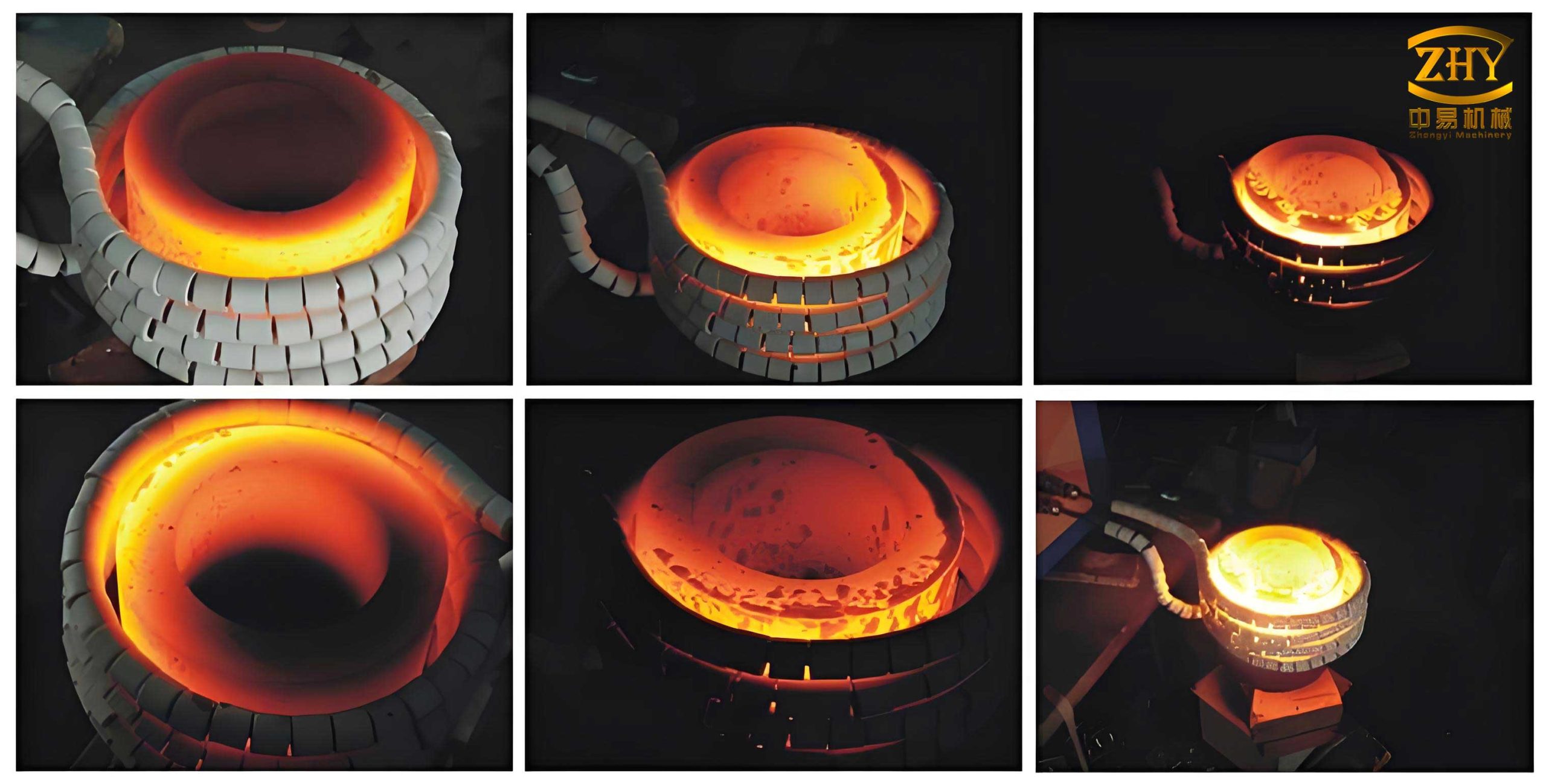
For example, in a wheel reducer internal ring gear made from 20CrMnTiH, improper forging at excessively high start-forging temperatures can cause grain coarsening. If followed by an inadequate normalizing cycle—where cooling is either too fast or too slow—abnormal structures like Widmanstätten ferrite, granular bainite, and coarse, non-uniform pearlite can form. These microstructural anomalies, as seen in many failure analyses, create a heterogeneous starting point. During carburizing and quenching, the phase transformation becomes uneven. Areas with coarse prior austenite grains transform differently than fine-grained areas, generating localized and unbalanced transformational stresses. This directly manifests as irregular and severe heat treatment defects, often beyond salvageable limits. The resultant quenched microstructure from such a flawed pre-condition is often characterized by coarse, untempered martensite, which is highly susceptible to cracking and contributes to poor fatigue performance alongside the dimensional inaccuracies. Therefore, implementing strict controls on forging temperatures, draft rates, and normalizing parameters (temperature, time, and cooling medium/rate) is non-negotiable for suppressing one major class of heat treatment defects.
The crucible where heat treatment defects are ultimately determined is the final thermochemical treatment cycle. Here, innovative process design and tooling are essential. I will discuss two specific cases: axle shafts (straight bevel gears with internal splines) and internal ring gears.
Axle Shaft Gear: Control via Fixturing. The asymmetrical shape of a straight bevel axle shaft gear—a tapered tooth section and a thinner-walled tail section—inevitably leads to non-uniform quenching. The tail section cools faster, causing greater contraction of the internal spline in that region. This results in an axial taper, a common and troublesome heat treatment defect where the spline plug gauge fails to pass through the tail end. To combat this, I designed a dedicated fixturing method. The gear is mounted on a mandrel that specifically fits into and supports the internal spline, particularly the tail section. This mandrel serves a dual purpose: it physically restricts the radial contraction of the spline, and by virtue of its mass, it slows down the cooling rate of the tail’s inner diameter during oil quenching. The optimal clearance between the mandrel and the spline minor diameter has been found to be between 0.10 and 0.20 mm. This clearance is small enough to provide effective restraint against the major heat treatment defects but large enough to allow oil flow and prevent carburizing issues on the spline ID. Implementing this fixturing for a carburize-oil quench-low temper process dramatically improved results: spline plug gauge pass rates exceeded 95%, taper was controlled within 0.08 mm, and other distortion metrics like span variation and pitch error were kept below 0.10 mm.
Internal Ring Gear: Control via Process and Press Quenching. The industry shift from soft nitriding of medium-carbon steels to carburizing of low-carbon alloy steels for internal ring gears aims for higher fatigue strength. However, this introduces severe challenges with heat treatment defects, primarily large and unpredictable bore shrinkage and ovality. The standard carburize-direct quench process is often insufficient. My developed solution involves a multi-step controlled process: Carburize → Slow Cool (or Air Cool) → Reheat → Press Quench. The slow cooling or air cooling step after carburizing is critical. It acts as an intermediate normalizing treatment, refining the austenite grain size and promoting a more uniform distribution of carbides in the case. This reduces the alloy content in solid solution within the austenite prior to the final quench. Consequently, during martensitic transformation, the lattice distortion and associated transformational stress are reduced, leading to inherently lower distortion. This step directly attacks the root cause of certain heat treatment defects.
The subsequent press quenching is where geometry is actively controlled. The ring gear, after reheating to the austenitizing temperature, is transferred to a precision die. The die typically consists of a base, expanding segments for the bore, and a critical component—a limit ring. During the quench, the expanding segments push outward against the contracting bore, counteracting the shrinkage force. The limit ring precisely controls the final expansion position of these segments, thereby dictating the final internal span measurement and minimizing ovality and taper. The schematic involves coordinated action: the part is placed, the upper die closes, the expander actuates, and oil is flooded through the tooling for quenching. The effectiveness of this integrated approach is evident in the data below, comparing different process routes for the same internal ring gear.
| Process Method | Internal Span Variation (mm) | Ovality (mm) | Axial Taper (mm) | Comments on Heat Treatment Defects |
|---|---|---|---|---|
| Soft Nitriding | ≤ 0.12 | ≤ 0.10 | ≤ 0.07 | Low distortion but limited load capacity. |
| Carburize & Direct Quench | ≥ 0.30 | 0.10 – 0.30 | ≥ 0.25 | Exhibits severe and unpredictable heat treatment defects. |
| Carburize, Slow Cool, Reheat & Press Quench | ≤ 0.20 | ≤ 0.10 | ≤ 0.12 | Effectively controls major heat treatment defects while achieving high strength. |
The transformational stress ($\sigma_{tr}$) during quenching can be related to the volume change during the austenite ($\gamma$) to martensite ($\alpha’$) transformation. The strain $\epsilon_{tr}$ is proportional to the volume difference and the transformation kinetics:
$$ \epsilon_{tr} = \beta \cdot (V_{\alpha’} – V_{\gamma}) / V_{\gamma} $$
$$ \sigma_{tr} = E(T) \cdot \epsilon_{tr} \cdot f(M_s, T, Cooling\ Rate) $$
where $\beta$ is a constraint factor, $E(T)$ is the temperature-dependent Young’s modulus, and $f$ is a function describing the martensite fraction based on the martensite start temperature $M_s$ and cooling profile. Processes that refine microstructure and control cooling directly influence $M_s$ and the gradient of $f$, thereby mitigating $\sigma_{tr}$ and the resulting heat treatment defects.
Despite all preventive measures, some level of heat treatment defects may still occur within a salvageable range. Therefore, effective correction techniques are vital components of a comprehensive quality strategy.
Correcting Internal Ring Gear Ovality. For press-quenched ring gears where ovality is within 0.25 mm, cold straightening on a hydraulic press is feasible. The critical timing is immediately after press quenching, before the final tempering operation. At this stage, the microstructure consists of untempered martensite with a higher retained austenite content. The material exhibits better plasticity, and the part may retain some residual heat, lowering its yield strength. This combination allows for plastic deformation under moderate pressure to correct ovality to within 0.10 mm. Attempting straightening after tempering is far more difficult. The transformation of martensite to tempered martensite, with precipitation of epsilon carbides, significantly increases yield strength and elasticity, requiring much higher forces and greatly increasing the risk of cracking—turning a minor heat treatment defect into a catastrophic failure.
Correcting Axle Shaft Gear Taper and Distortion. The predominant heat treatment defect for these gears is axial taper. A highly effective correction method is mandrel-restricted re-austenitizing and quenching. When a gear exhibits excessive taper or pitch error, it is subjected to a localized or full reheat process. The gear is heated to its austenitizing temperature in a controlled atmosphere furnace (e.g., a rotary hearth or pit furnace) to prevent decarburization. Upon heating, the bore expands. It is then quickly placed onto a precision, cold mandrel that matches the target spline geometry. During the subsequent oil quench, the gear contracts onto the mandrel. The mandrel’s accurate form forces the spline to contract uniformly along its length, effectively “re-quenching” it to the correct shape and size. This process can bring out-of-specification gears back within tolerance limits, rescuing components that would otherwise be scrapped due to heat treatment defects.
In reflecting on the journey to control these persistent heat treatment defects, the key insight is the necessity of a systemic, interconnected approach. It is not enough to optimize the final quench alone. One must start with a deep understanding of material hardenability and enforce tight specifications to ensure batch-to-basket consistency, laying a predictable foundation. Rigorous control of forging and normalizing is essential to create a homogeneous and refined starting microstructure, eliminating a major source of erratic transformational behavior. The final heat treatment must then be intelligently designed—leveraging fixturing to counteract asymmetrical cooling, incorporating process steps like slow cooling to reduce transformational stress, and employing active shape control via press quenching for critical components. Finally, having scientifically timed and applied correction methods as a last resort ensures maximum yield. Each of these stages addresses a different facet of the complex phenomenon of heat treatment defects. By integrating material science, metallurgical process engineering, and precision mechanical tooling, we can transform heat treatment from a source of unpredictable variation into a controlled, precision step. This holistic mastery is what ultimately enables the production of high-precision, durable automotive gears capable of meeting the ever-increasing demands for performance, efficiency, and reliability in modern vehicles, while continuously driving down the cost and scrap rate associated with heat treatment defects.