
In my research, I focus on the heat treatment processes for gears, which are critical components in mechanical systems requiring high strength, wear resistance, and fatigue performance. Gears often endure significant impact loads, alternating bending stresses, and contact stresses during operation. To meet these demands, heat treatment, particularly surface hardening, is essential. However, heat treatment defects such as distortion, residual stresses, and uneven hardness are common challenges that affect gear performance and manufacturing costs. In this article, I will explore gear heat treatment processes, analyze associated defects using simulation tools like ANSYS, and discuss strategies to mitigate these issues.
Gears must exhibit high toughness and resistance to wear, especially at the tooth surfaces where contact pressures and friction coefficients are substantial. The general design principle in many industries specifies a safety factor of 2.5 to 3.5 for gears, underscoring the need for robust manufacturing processes. Hard-faced gears, achieved through surface hardening treatments, have become a trend to enhance strength and load capacity. Among various methods, carburizing and quenching is a predominant technique due to its ability to produce gears with minimal volume and weight for a given power transmission. However, this process often leads to heat treatment defects, including inconsistent carburized layer thickness and distortion, which compromise gear performance.
The traditional process involves machining or plastic forming followed by carburizing and heat treatment. A key issue is the uniform carburized layer across the gear tooth, which does not align with functional requirements. For instance, the tooth surface requires a thick carburized layer for wear resistance, while the tooth root benefits from a thinner layer to maintain bending fatigue strength. Ideally, the carburized layer depth-to-module ratio should be around 0.1 for optimal bending fatigue resistance, but this often conflicts with surface hardness needs. This mismatch is a significant heat treatment defect that reduces gear life and reliability.
To illustrate, the carburizing depth typically ranges from 1.0 to 1.5 mm, with surface hardness of HRC 58–62 and core hardness of HRC 33–45. The standard heat treatment sequence includes forging, normalizing, turning, hobbing, carburizing and quenching, grinding of the inner hole, gear grinding, and shot peening. Post-heat treatment measurements reveal distortions in tooth profile, helix, end face, outer diameter, and inner hole, all interacting to exacerbate overall deformation. For example, outer diameter distortion can exceed 2.5 mm, and end face distortion over 3 mm, reducing gear accuracy by at least one grade. These heat treatment defects necessitate excessive grinding allowances, increasing production costs and difficulty.
In my work, I emphasize the importance of understanding and controlling these heat treatment defects through simulation. The quenching and tempering process for cylindrical gears, often made from high-strength alloy steel, involves heating to 780°C–820°C with a tolerance of ±10°C, holding for 8–12 hours, cooling to 180°C–280°C based on hardness requirements, and oil quenching to below 170°C. This process induces complex thermal and mechanical responses, leading to distortions that are hard to predict analytically. Hence, simulation tools like ANSYS are invaluable for predicting temperature fields, stress distributions, and strains during quenching.
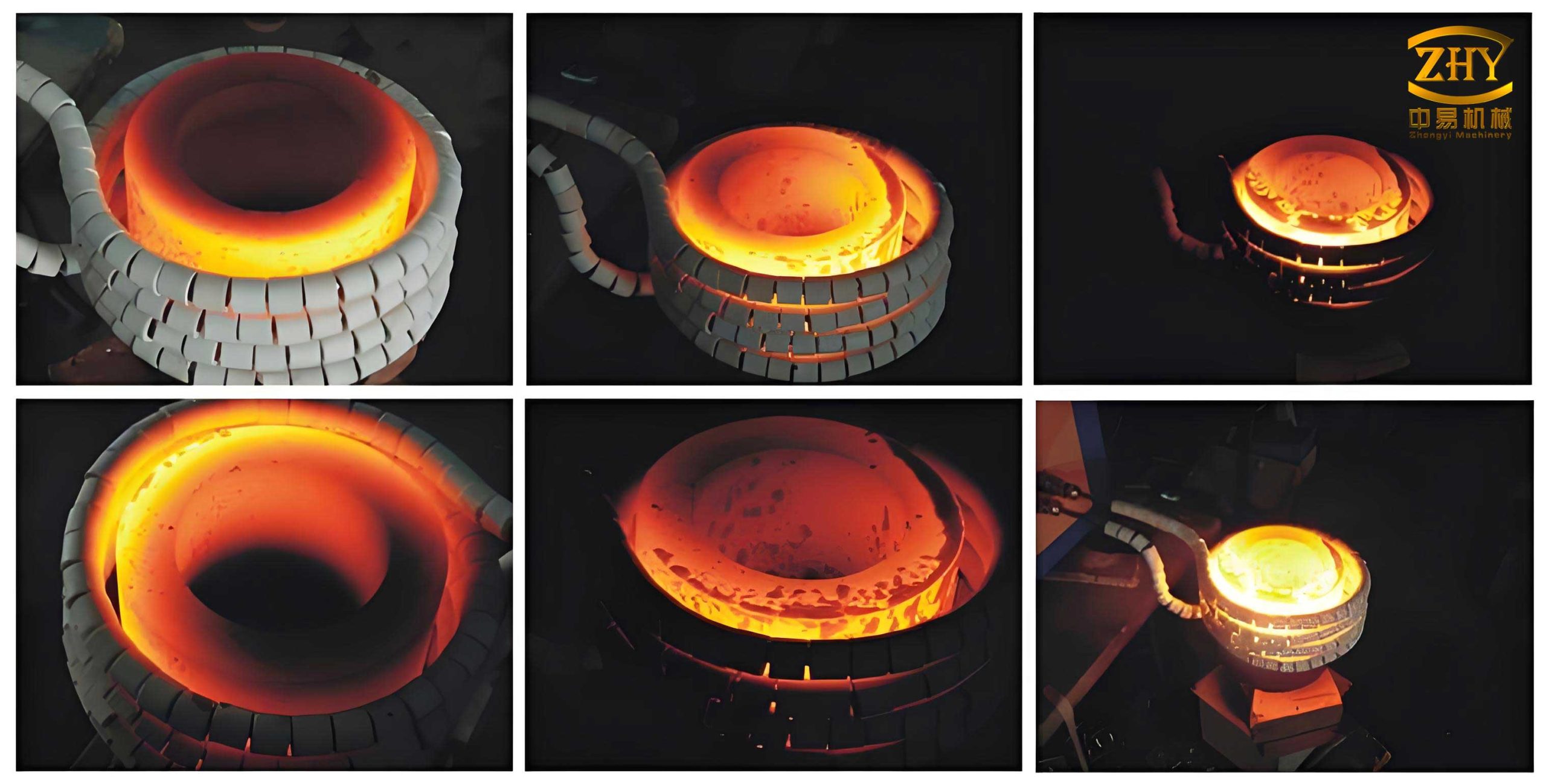
The simulation of gear heat treatment involves transient analysis due to the unstable nature of quenching. We cannot precisely determine instantaneous temperature fields, but we can model trends and ranges. For carburized gears, quenching strengthens the surface within seconds, so I focus on time intervals like 0–5 s, 0–10 s, up to 0–30 s to capture the enhancement phase. Beyond this, temperature changes have lesser effects, primarily following thermal expansion and contraction patterns. Using ANSYS, I simulate temperature fields during quenching, as shown in the image above, which helps visualize heat distribution and identify potential heat treatment defects like uneven cooling.
To quantify process parameters, I summarize key data in Table 1. This table outlines the typical carburizing and quenching parameters for gears, highlighting variables that influence heat treatment defects.
| Process Stage | Temperature Range (°C) | Time Duration | Key Notes |
|---|---|---|---|
| Heating | 780–820 ±10 | 4–8 hours | Gradual heating to avoid thermal shock. |
| Holding | 780–820 | 8–12 hours | Ensures uniform carburizing layer. |
| Cooling | 180–280 | Variable | Depends on hardness requirements; oil quenching used. |
| Quenching | Oil cool to ≤170 | Immediate | Critical for surface hardening; source of defects. |
Heat treatment defects arise from non-uniform stress distributions during quenching. For instance, stress concentrates at the tooth root, as simulated in ANSYS. The stress field can be described using equations from thermoelasticity. The general heat conduction equation during quenching is:
$$ \frac{\partial T}{\partial t} = \alpha \nabla^2 T $$
where \( T \) is temperature, \( t \) is time, and \( \alpha \) is thermal diffusivity. For stress analysis, Hooke’s law for thermal stress applies:
$$ \sigma = E (\epsilon – \alpha_T \Delta T) $$
where \( \sigma \) is stress, \( E \) is Young’s modulus, \( \epsilon \) is strain, \( \alpha_T \) is the coefficient of thermal expansion, and \( \Delta T \) is temperature change. These equations help model the development of heat treatment defects like cracking or distortion.
In my simulations, I analyze stress distributions over time. For example, at 5 seconds of quenching, stress peaks at the tooth root, aligning with practical observations of heat treatment defects. Table 2 summarizes deformation data from heat treatment, illustrating common defects.
| Gear Feature | Typical Deformation (mm) | Impact on Accuracy |
|---|---|---|
| Outer Diameter | Up to 2.5 | Increases runout and affects mating. |
| End Face | Up to 3.0 | Exacerbates helix and profile errors. |
| Tooth Profile | Variable, up to 0.1 | Reduces contact ratio and increases noise. |
| Inner Hole | Significant distortion | Affects assembly and gear alignment. |
Strain analysis further reveals heat treatment defects. Using ANSYS, I compute strains in x and y directions during quenching. For instance, over 15 seconds, the x-direction strain shows tooth thickness variations: root thickness increases by up to 0.085 mm, pitch circle thickness decreases by 0.057 mm, and tip thickness decreases by 0.065 mm. This indicates thickness reduction from root to tip. In the y-direction, radial expansion occurs, with increments from the inner ring to tooth tip ranging from 2.556 mm to 2.756 mm. These strains contribute to overall gear distortion, a major heat treatment defect that complicates subsequent grinding.
The strain behavior can be modeled with equations. For thermal strain, we have:
$$ \epsilon_{thermal} = \alpha_T \Delta T $$
and total strain includes mechanical components. During quenching, the strain rate affects residual stresses, leading to heat treatment defects. I often use the following relation to estimate distortion:
$$ \delta = \int (\beta \sigma + \gamma \epsilon) \, dt $$
where \( \delta \) is distortion, \( \beta \) and \( \gamma \) are material constants. Simulation results show that heat treatment defects like uneven strains are more pronounced in the early quenching phase, emphasizing the need for controlled cooling.
To mitigate heat treatment defects, tempering is employed after quenching to relieve residual stresses. However, tempering can alter gear geometry further due to stress relaxation. The narrow tension zones on tooth surfaces, concentrated from root to tip, cause shape changes such as pitch circle expansion and radial contraction. This adds complexity to predicting final dimensions, as tempering-induced variations differ from quenching simulations. Therefore, a comprehensive approach combining simulation and empirical data is crucial for controlling heat treatment defects.
In my analysis, I emphasize the role of simulation in optimizing heat treatment processes. ANSYS allows for parametric studies to minimize defects. For example, varying cooling rates or preheating temperatures can reduce distortion. I summarize key simulation findings in Table 3, highlighting how different parameters affect heat treatment defects.
| Parameter | Range Studied | Effect on Defects | Recommendation |
|---|---|---|---|
| Quenching Time | 0–30 seconds | Short times reduce strain but may lower hardness; long times increase distortion. | Optimize at 10–15 s for balance. |
| Cooling Medium | Oil, water, polymer | Oil quenching minimizes cracking but can cause uneven cooling defects. | Use agitated oil for uniformity. |
| Carburizing Depth | 0.5–2.0 mm | Deeper layers increase surface hardness but raise risk of root brittleness defects. | Tailor depth to module ratio of 0.1–0.12. |
| Preheating Temperature | 200–500°C | Reduces thermal gradient, lowering distortion defects. | Apply 300°C preheat for large gears. |
Heat treatment defects are not limited to geometric distortions; they also include microstructural issues like retained austenite or carbide networks, which affect hardness and toughness. The formation of carbide networks during carburizing, for instance, can embrittle the gear surface. This is often described by diffusion equations. For carbon concentration \( C \) during carburizing:
$$ \frac{\partial C}{\partial t} = D \nabla^2 C $$
where \( D \) is diffusion coefficient. Improper control leads to non-uniform concentrations, a heat treatment defect that reduces fatigue life. Simulation helps predict carbon profiles to avoid such defects.
In practice, gear manufacturers face challenges in compensating for heat treatment defects. For example, grinding allowances must account for predicted distortions. Based on my simulations, I propose a formula to estimate grinding allowance \( A \):
$$ A = k_1 \Delta D + k_2 \Delta F + k_3 \Delta P $$
where \( \Delta D \), \( \Delta F \), and \( \Delta P \) are deformations in diameter, face, and profile, respectively, and \( k_1 \), \( k_2 \), \( k_3 \) are empirical constants. This approach reduces over-grinding, a common inefficiency caused by heat treatment defects.
Furthermore, advanced techniques like shot peening after heat treatment can alleviate some defects by inducing compressive stresses, but they require careful simulation to avoid over-processing. The interplay between different stages underscores the complexity of managing heat treatment defects.
To enhance simulation accuracy, I incorporate material properties that vary with temperature. For alloy steels used in gears, properties like thermal conductivity \( k \) and specific heat \( c_p \) change during quenching. Using ANSYS, I model these variations with equations such as:
$$ k(T) = k_0 + k_1 T + k_2 T^2 $$
where \( k_0 \), \( k_1 \), \( k_2 \) are coefficients. This improves temperature field predictions, reducing errors in assessing heat treatment defects.
Another critical aspect is the economic impact of heat treatment defects. Excessive distortions lead to higher scrap rates and prolonged machining. By simulating processes, we can identify cost-effective parameters. For instance, optimizing holding times can reduce energy use while maintaining quality, directly addressing heat treatment defects related to process inefficiencies.
In conclusion, heat treatment defects in gears, such as distortion, residual stresses, and uneven hardness, are major concerns in manufacturing. Through simulation with tools like ANSYS, we can predict and mitigate these defects. My research demonstrates that understanding thermal and mechanical responses during quenching and tempering is key to controlling heat treatment defects. By integrating simulation results into process design, we can improve gear performance, reduce costs, and advance toward more reliable mechanical systems. Future work will focus on real-time monitoring and adaptive control to further minimize heat treatment defects in industrial settings.
The continuous evolution of simulation technologies promises better management of heat treatment defects, making gears more durable and efficient. As I refine these methods, the goal remains to transform heat treatment from a source of defects into a precision-controlled step in gear manufacturing.