
In my experience within the field of gear manufacturing, achieving the critical goals of low noise and high service life hinges almost entirely on the mastery of heat treatment processes. The pursuit of excellence leads us directly to the concept of precision heat treatment. This philosophy transcends merely meeting specification limits; it demands minimizing the statistical dispersion of all critical quality attributes. For carburized gears, these attributes include case microstructure, core and surface hardness, effective case depth, residual stress distribution, and—significantly—thermal distortion. The smaller the batch-to-batch and part-to-part variation in these metrics, the higher the quality and consistency of the final product. Precision is not just a target; it is a systematic approach to eliminating the root causes of heat treatment defects.
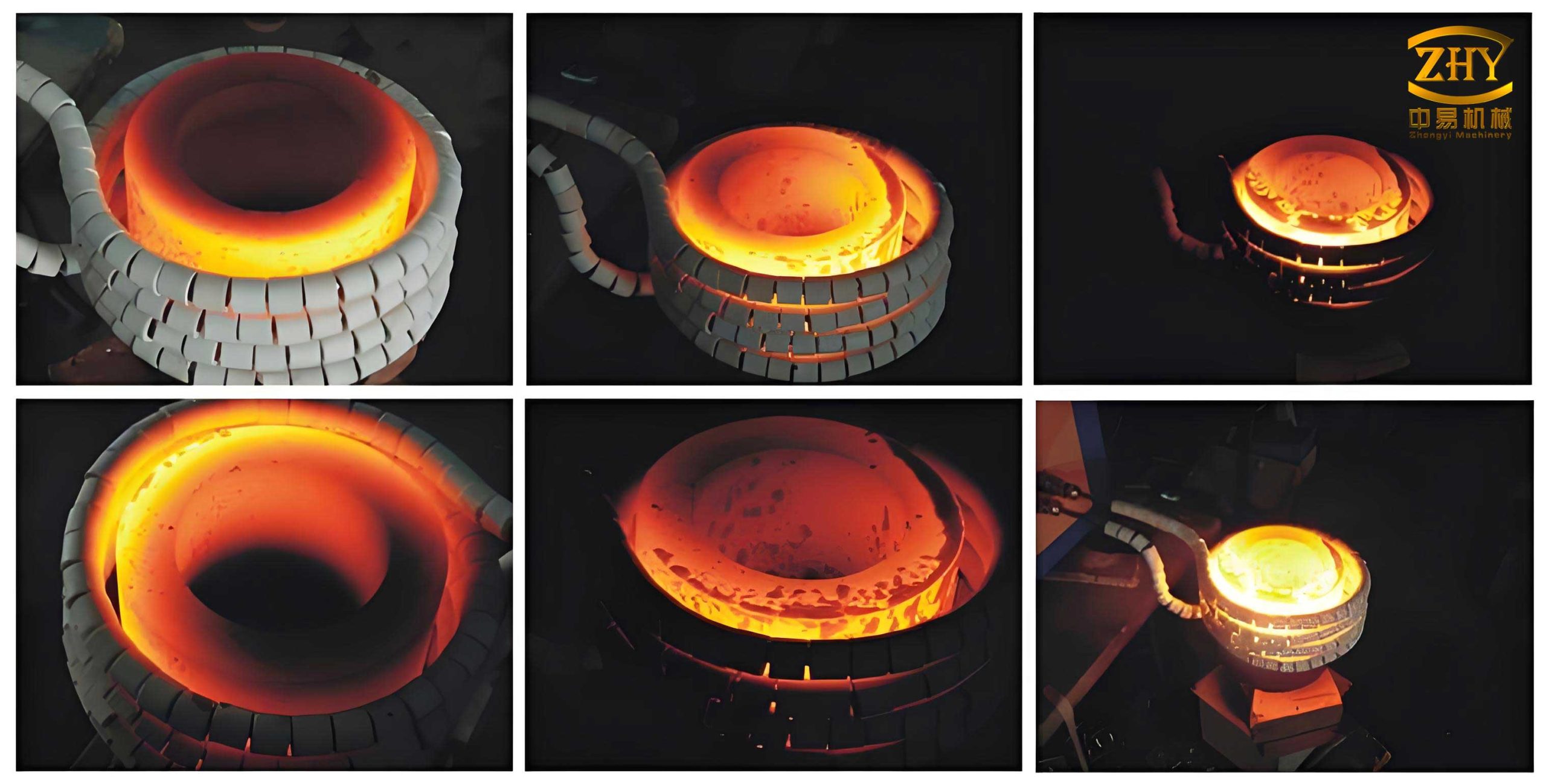
The foundation for such precision is built upon two pillars: first, the inherent uniformity of the gear steel itself, and second, the advanced capabilities of the heat treatment equipment. The furnace must provide an exceptionally uniform temperature field and a consistent fluid flow field (atmosphere circulation) throughout its entire working volume. To realize true precision carburizing, we must exert exacting control over two fundamental process parameters: furnace temperature and atmospheric carbon potential. The benchmarks are stringent: temperature control accuracy should be ≤ ±1.5°C, temperature uniformity within the effective heating zone ≤ ±5°C, carbon potential control ≤ ±0.05%, and the resulting case depth variation ≤ ±0.1mm. Deviations from these tolerances are primary contributors to unpredictable heat treatment defects such as soft spots, excessive retained austenite, or non-uniform case depth.
I. The Foundation: Precise Temperature Control
The consistency of heat treatment outcomes—both within a single batch and across multiple production runs—is directly dependent on the stability and accuracy of the process parameters. For the heating equipment, this translates to two measurable characteristics: the temporal stability of the setpoint temperature (control accuracy) and the spatial variation of temperature within the workload area (furnace uniformity). These factors are paramount, as temperature gradients are a direct source of thermal stress and distortion, leading to dimensional heat treatment defects.
International standards, such as those derived from GB/T 9452, classify furnaces based on their temperature performance. For precision carburizing, we must employ furnaces meeting the highest classes of performance. The requirements are summarized below:
| Class | Furnace Temperature Uniformity (°C) | Temperature Control Accuracy (°C) | Instrument Accuracy Class |
|---|---|---|---|
| I | ±3 | ≤ ±1.0 | 0.25 |
| II | ±5 | ≤ ±1.5 | 0.3 |
Furnace temperature uniformity is typically mapped under no-load (empty) conditions by placing multiple thermocouples at strategic locations within the working zone. To maintain this precision, a rigorous calibration schedule is non-negotiable. I recommend the following periodic verification cycle:
| Class | Furnace Uniformity Survey Cycle (Months) | Temperature Instrument Calibration Cycle (Months) |
|---|---|---|
| I | 1 | 6 |
| II | 6 | 6 |
The technological heart of temperature control lies in the sensing and control system. Modern precision furnaces are equipped with redundant monitoring systems. A “dual-temperature system” uses two independent thermocouples—one for control and one for recording. A more robust “triple-temperature system” adds a third for over-temperature alarm. This redundancy is a critical safeguard against catastrophic heat treatment defects caused by sensor failure.
The choice of components is crucial. Intelligent temperature controllers, like the SR series from Shimadzu, offer high accuracy and reliability through miniaturized and modular designs. The thermocouples themselves must be of exceptional quality. For carburizing atmospheres, specialized heavy-duty mineral-insulated metal-sheathed (MIMS) thermocouples made from high-nickel alloys like 0Cr25Ni20Si2 are essential. They provide excellent sealing against carbon penetration, ensuring long life and stable signals. During production, it is a best practice to install a separate validation thermocouple on the load fixture, positioned at least 50 mm from the furnace’s recording thermocouple tip. The corrected temperature from this validation couple should not differ from the recorder by more than 1°C for Class I and II furnaces.
II. The Core Challenge: Accurate Carbon Potential Control
While temperature sets the stage, carbon potential (Cp) dictates the chemical reaction at the gear’s surface. Precise Cp control is the key to managing surface carbon content, case depth, and the carbon concentration gradient. Failure here results in the most common carburizing heat treatment defects: surface oxidation, carbide networking, or insufficient carbon intake. The goal is to maintain Cp within ±0.05% and achieve a case depth consistency of ±0.1mm.
2.1 Methods of Carbon Potential Measurement
Carbon potential can be assessed directly or indirectly. The direct method, using carbon analysis of thin steel foils exposed to the atmosphere, is accurate but offline and slow. The modern approach relies on continuous indirect measurement via sensors and mathematical models.
The fundamental relationship governing the equilibrium between a gas atmosphere and the carbon content in steel is derived from the reactions:
$$ 2CO \rightleftharpoons [C]_\gamma + CO_2 $$
$$ CO + H_2 \rightleftharpoons [C]_\gamma + H_2O $$
The carbon potential (Cp) can be expressed in terms of partial pressures of the gas constituents and temperature-dependent equilibrium constants (K):
$$ C_p = K_1(T) \cdot \frac{P_{CO}^2}{P_{CO_2}} $$
$$ C_p = K_2(T) \cdot \frac{P_{CO} \cdot P_{H_2}}{P_{H_2O}} $$
Where $P_{CO}$, $P_{CO_2}$, $P_{H_2}$, $P_{H_2O}$ are the partial pressures of the respective gases, and $K_1(T)$, $K_2(T)$ are equilibrium constants that are strong functions of absolute temperature T. In practice, we measure parameters related to these partial pressures. The following table summarizes the prevalent indirect methods:
| Control Method | Measured Parameters | Theoretical Basis | Typical Instruments | Key Assumptions/Limitations |
|---|---|---|---|---|
| Single-Parameter | CO₂ or O₂ | $C_p \propto P_{CO}^2 / P_{CO_2}$ or $C_p \propto P_{CO} / P_{O_2}^{1/2}$ | CO₂ IR Analyzer or Oxygen Probe | CO content is constant; CH₄ is low (<1%). Prone to error if assumptions fail. |
| Two-Parameter | CO₂ + CO | $C_p = K(T) \cdot P_{CO}^2 / P_{CO_2}$ | CO₂ IR Analyzer + CO IR Analyzer | Accounts for CO variation. Assumes CH₄ is low. |
| Two-Parameter | O₂ + CO | $C_p = K'(T) \cdot P_{CO} / P_{O_2}^{1/2}$ | Oxygen Probe + CO IR Analyzer | Accounts for CO variation. More robust than single O₂ control. |
| Three-Parameter | O₂ + CO + CH₄ | Combines O₂/CO relation and CH₄ cracking effect. | O₂ Probe + CO IR Analyzer + CH₄ IR Analyzer | Most comprehensive for variable atmosphere (e.g., endothermic, nitrogen-methanol). |
Methane (CH₄) plays a complicating role, especially in drip-fed or direct-fired (endothermic) atmospheres. It is not in equilibrium at typical carburizing temperatures and acts as a source of nascent carbon. High or fluctuating CH₄ levels can cause significant errors in single-parameter oxygen probe control, leading to incorrect carbon potential readings and potential heat treatment defects like sooting or poor case formation.
2.2 Carbon Potential Control Systems
Building on the measurement methods, control systems have evolved in sophistication to improve accuracy and robustness.
Single-Parameter Systems: These are suitable for stable, continuous furnaces where temperature, base atmosphere composition (CO, H₂), and workload are relatively constant. They control based solely on an oxygen probe mV signal or a CO₂ IR reading, applying a fixed temperature compensation. Their simplicity is a weakness in batch processes where conditions change.
Two-Parameter Systems: These significantly improve control for batch furnaces (e.g., sealed quench furnaces, pit furnaces). The “CO₂-equivalent” system is a notable example. It uses two infrared analyzers to measure both CO₂ and CH₄, calculating a corrected “CO₂-equivalent” value that accounts for the carburizing effect of CH₄. The controller then adjusts enriching gas flow based on this composite signal. Other effective two-parameter pairs are “O₂-Temperature” or “CO₂-CO,” which explicitly account for the major variables.
Three-Parameter Systems: This represents the state-of-the-art for precision, especially in variable atmospheres. A common configuration is “Oxygen Potential-CO-Temperature” control. The system continuously measures the oxygen probe electromotive force (EMF, in mV), the CO concentration via IR, and the furnace temperature. A microprocessor uses a comprehensive carbon potential model like the following to calculate the true Cp:
$$ C_p = f(T, EMF_{O_2}, \%CO, \%CH_4) $$
Or in a more explicit form accounting for methane:
$$ C_p = K_s(T) \cdot \frac{P_{CO}}{P_{O_2}^{1/2}} + \alpha \cdot P_{CH_4} $$
Where $K_s(T)$ is a temperature-dependent constant for the steel grade, and $\alpha$ is an empirical factor for the methane cracking contribution. This real-time calculation compensates for fluctuations in all key parameters. The impact of variations is quantifiable: a ±10°C temperature change can alter Cp by ±0.07%; a ±0.5% change in CO can alter Cp by ±0.03%. A three-parameter system actively corrects for these interactions, pushing control precision to ±0.025% Cp, thereby virtually eliminating carbon-related heat treatment defects.
2.3 Selection of Carbon Control Instruments and Sensors
The choice of hardware is application-specific. For continuous furnaces, carbon controllers from manufacturers like Marathon or Eurotherm are prevalent. For batch integral quench furnaces, systems from Fuji or others are common. Large pit furnaces often utilize robust controllers from Demig or Honeywell.
The oxygen probe is the primary sensor. High-quality probes from leading suppliers feature advanced electrode materials and robust construction for long life in harsh environments. However, all probes drift over time. Therefore, a routine validation protocol is mandatory. This typically involves weekly or monthly shim stock tests: analyzing the carbon content of a thin steel foil exposed in the furnace and comparing it to the controller’s reading. Significant deviations necessitate probe calibration or replacement. For ultimate reliability, some systems employ redundant sensing, such as a secondary “validation” micro-oxygen probe or a compact IR analyzer for CO/CO₂, providing a continuous cross-check to prevent undetected sensor drift from causing batch-wide heat treatment defects.
III. The Pinnacle of Control: Carburizing Expert Systems
The final evolution in precision moves from parameter control to process intelligence. Expert systems integrate material science, kinetics modeling, and real-time control into a closed-loop, automated process that requires minimal operator intervention. These systems don’t just control to a setpoint; they dynamically optimize the entire carburizing profile to achieve a specified carbon gradient and case depth, compensating for real-world disturbances in real-time.
1. FineCarb™ Vacuum Low-Pressure Carburizing System: This expert system for vacuum furnaces uses a mixture of ethylene and acetylene gases. Based on the gear geometry and surface area, it intelligently pulses the gas flow during the boost cycles, precisely controlling the carbon flux to the surface. This results in excellent uniformity, even in blind holes and complex geometries, while minimizing gas consumption and eliminating the risk of intergranular oxidation—a common heat treatment defect in atmospheric processes.
2. KS Carbon Profiler (Danaher): This is a powerful expert system for atmospheric furnaces. Its core is a real-time diffusion model that calculates the carbon concentration profile within the steel throughout the process. It doesn’t rely on fixed boost/diffuse timings. Instead, it continuously calculates the instantaneous carbon gradient and automatically adjusts carbon potential, temperature, and cycle phases to hit the target profile with high precision. Key performance metrics include layer depth accuracy of ±0.05mm and carbon potential control of ±0.02%. It is highly effective for mitigating the variability that leads to inconsistent hardness and case depth heat treatment defects.
3. Intelligent Gas Carburizing Technology: Advanced systems, as developed by institutions like Shanghai Jiao Tong University and implemented by equipment builders, represent a fully autonomous approach. The operator simply inputs the gear material and the required case depth/hardness specification. The system’s software contains a vast database of material properties and uses fundamental diffusion equations (Fick’s second law) to simulate and optimize the process parameters before the cycle even begins. During the cycle, it performs online simulation, constantly comparing the predicted carbon profile with the target and making dynamic corrections. This in-process compensation for unforeseen disturbances (e.g., a slight temperature dip, load density variation) ensures remarkable batch-to-batch repeatability. The successful deployment of such systems in production, with thousands of consistent batches, proves their effectiveness in eradicating the random heat treatment defects that plague conventional methods.
Conclusion: The Path to Zero Defects
In my professional journey, I have observed that the transition from conventional to precision carburizing is a systematic engineering endeavor. It begins with acknowledging that minimizing dispersion is the true objective. We achieve this by layering controls: first, enforcing rigorous standards for furnace temperature uniformity and instrument accuracy. Second, deploying advanced carbon potential control systems that account for the complex, interacting variables of the furnace atmosphere—moving from single-parameter to multi-parameter, model-based control. Finally, we embrace the power of expert systems that integrate physics-based modeling with real-time control, transforming heat treatment from an art into a predictable, reproducible science.
Each layer of control addresses specific failure modes. Precise temperature control minimizes distortion and transformation stresses. Accurate carbon potential control ensures the correct surface chemistry and gradient, preventing soft spots, excessive retained austenite, or brittle carbides. The expert system orchestrates the entire process to hit a precise target profile every time, regardless of minor furnace or load variations. Together, they form a robust defense against the spectrum of heat treatment defects. The result is not just gears that meet a print specification, but gears that perform with exceptional consistency and longevity in the field—the ultimate goal of precision manufacturing.