
In my extensive experience within the gear manufacturing industry, specifically at a company specializing in automotive, motorcycle, power tool, and engineering machinery gears, I have consistently encountered significant challenges related to heat treatment defects. These heat treatment defects primarily manifest as distortion, instability in dimensional parameters like M-values, and unpredictable changes in tooth profile and alignment post carburizing and quenching. This article, presented from my first-hand perspective, delves into the critical factors influencing these heat treatment defects and provides a detailed analysis supported by data, tables, and predictive models. The overarching goal is to elucidate how variations in upstream processes and thermal cycle parameters culminate in these costly heat treatment defects.
The core issue lies in the inherent complexity of carburizing heat treatment. Even with a seemingly stable furnace recipe, the final product geometry can be compromised by a cascade of variables introduced long before the gear enters the furnace. My analysis identifies several interdependent factors: the inherent material characteristics from different steel mills, the consistency of the forging and normalizing processes, the residual stresses imparted by cold machining operations, and the precise execution of the heat treatment cycle itself. Each of these can be a primary contributor to heat treatment defects. The following sections will systematically break down these factors, presenting empirical data and engineering rationale to underscore their impact. A fundamental understanding of these interactions is paramount for any metallurgist or manufacturing engineer aiming to suppress heat treatment defects.
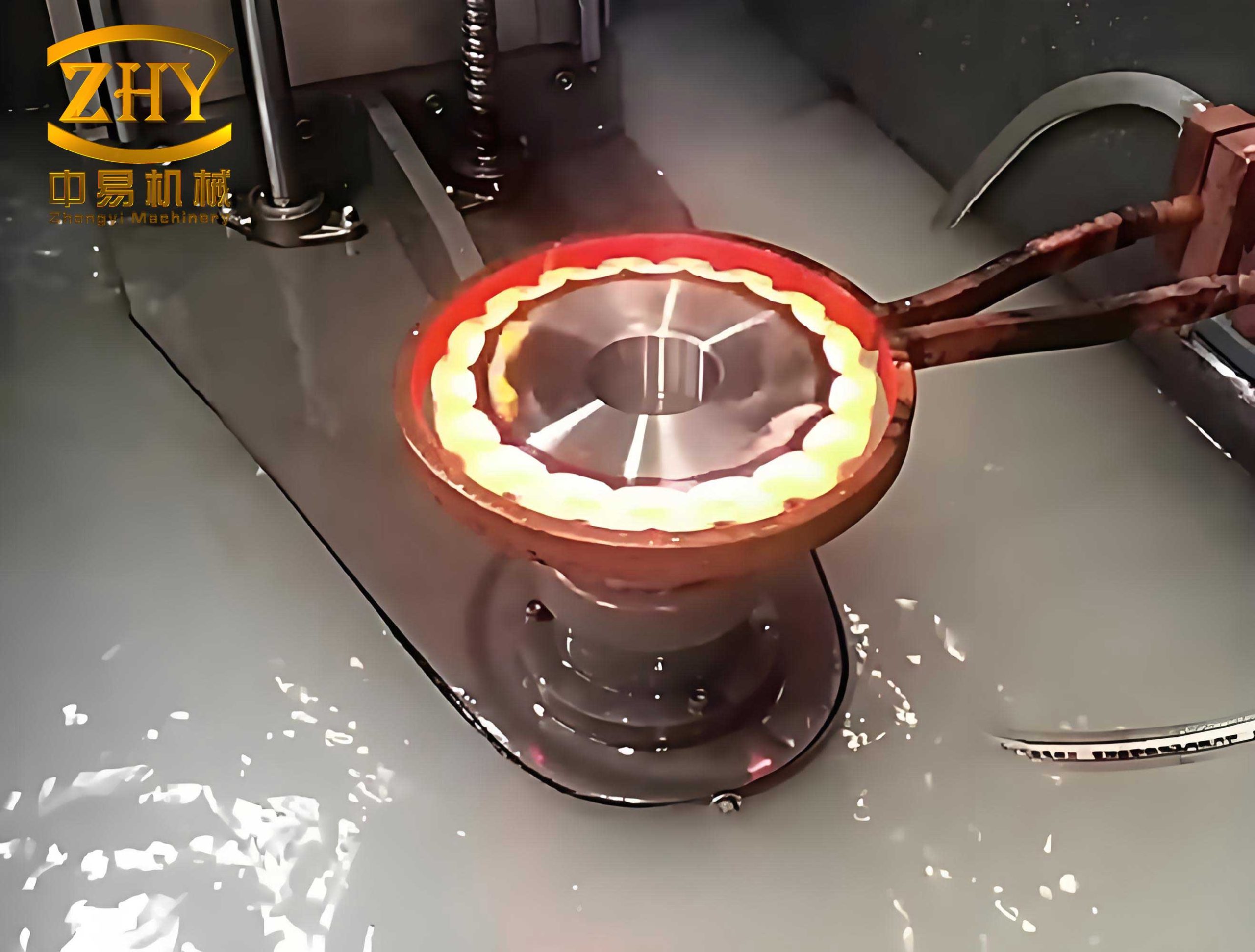
One of the most insidious precursors to heat treatment defects is inconsistency in the initial material conditioning, specifically the normalizing process. Normalizing aims to produce a uniform, fine-grained pearlitic structure to ensure consistent machinability and a predictable response to subsequent carburizing. However, variations in cooling rates across a batch or within a single part can lead to hardness gradients. These gradients represent localized differences in yield strength and transformation behavior, which become activated during the high-temperature carburizing and subsequent quenching phases, leading to asymmetric distortion—a classic heat treatment defect. In one documented case, a gear with a maximum outer diameter of 156 mm suffered a 10% rejection rate due to excessive axial runout post-heat treatment. Investigation traced the root cause back to non-uniform normalizing hardness.
| Sample ID | Location 1 | Location 2 | Location 3 | Location 4 | Remarks | ||||||
|---|---|---|---|---|---|---|---|---|---|---|---|
| 1 | 170 | 172 | 175 | 173 | Within Spec | ||||||
| 2 | 168 | 170 | 172 | 171 | Within Spec | ||||||
| 3 | 173 | 175 | 176 | 175 | Within Spec | 4 | 192 | 187 | 181 | 185 | Out of Spec (Gradient) |
| 5 | 170 | 172 | 173 | 172 | Within Spec | ||||||
| 6 | 175 | 176 | 177 | 176 | Within Spec |
As evidenced in Table 1, Sample 4 shows a significant hardness spread from 192 HBW to 181 HBW. This gradient creates an uneven state of stress after machining. During heating, these regions expand differently, and more critically, during quenching, they transform from austenite to martensite at different times and rates. The resulting volumetric expansion from martensitic transformation is non-uniform, generating internal stresses that pull the part into a distorted shape. This phenomenon can be conceptually modeled by considering the strain contribution from thermal expansion and phase transformation. The total distortion strain ($\varepsilon_{total}$) can be approximated as the sum of thermal strain and transformation-induced strain:
$$ \varepsilon_{total} = \alpha \cdot \Delta T + \beta \cdot \Delta V_{transformation} $$
Where $\alpha$ is the coefficient of thermal expansion, $\Delta T$ is the temperature change, $\beta$ is a constraint factor, and $\Delta V_{transformation}$ is the volumetric change due to phase transformation. When material properties like hardenability (which influences $\Delta V_{transformation}$) vary spatially, $\varepsilon_{total}$ becomes a function of position, directly causing the heat treatment defects observed as warpage or twist.
The second major factor is the cold machining process chain, which includes turning, hobbing, and shaving (shaving). These operations leave behind a layer of residual stress. If the machining sequence or parameters are unstable, or if part orientation is not controlled, the resulting stress pattern can be highly asymmetric. A profound example of this involved a transmission gear where shaving was performed on only one side of the tooth flank due to a non-symmetric chamfer design. The heat treatment process required the gear to be stacked in a specific orientation (large chamfer up or down). When this orientation was inadvertently reversed during furnace loading, the interaction between the machining-induced stress and the thermal cycle produced a severe twist, mirroring the effect of a “reverse-shaved” tooth geometry. This highlights how a seemingly minor process deviation can amplify into a major heat treatment defect. The data below, collected from a designed experiment, quantifies this effect.
| Test # | Pre-HT Lead (LH) | Post-HT Lead (LH) | Pre-HT Lead (RH) | Post-HT Lead (RH) | LH Lead Change | RH Lead Change | Loading Orientation |
|---|---|---|---|---|---|---|---|
| 1 | 12.0 | -15.9 | -6.0 | 18.2 | -27.9 | 24.2 | Large Chamfer Up |
| 2 | 15.0 | 7.8 | 2.1 | 17.8 | -7.2 | 15.7 | Large Chamfer Up |
| 7 | 11.6 | 6.5 | -5.7 | -15.7 | -5.1 | -10.0 | Large Chamfer Down |
| 8 | 14.0 | 16.2 | -4.6 | -4.9 | 2.2 | -0.3 | Large Chamfer Down |
The data in Table 2 clearly shows that the change in tooth lead (alignment) is not merely random but systematically correlates with the loading orientation. Tests 1-6 (only a subset shown) with the large chamfer up showed a different pattern of change compared to tests 7-12 with the chamfer down. This is a direct result of the superposition of non-uniform machining stresses and the thermal gradients during heating and quenching. To mitigate such heat treatment defects, robust error-proofing (poka-yoke) in both machining and heat treatment loading is essential. Furthermore, the stress state from machining can be modeled. The superficial residual stress ($\sigma_{mach}$) interacts with the thermally induced stress ($\sigma_{th}$) during heating. The net stress state prior to transformation can determine the buckling or twisting mode of the thin-walled gear web. A simplified criterion for the onset of distortion can be expressed when the combined stress exceeds a local yield strength ($\sigma_y$):
$$ | \sigma_{mach} + \sigma_{th} | \geq \sigma_y(T) $$
Where $\sigma_y(T)$ is the temperature-dependent yield strength. This equation underscores why controlling pre-existing stresses is crucial to preventing heat treatment defects.
The third pivotal factor is the heat treatment process parameters themselves. Often, a process qualified on a small sample size may not be robust for mass production, especially when material lots change. Two primary levers are carburizing temperature and quenching medium/agitation. A higher carburizing temperature increases productivity and can sometimes improve case depth uniformity, but it also lowers the steel’s yield strength at temperature, making it more susceptible to creep and sagging under its own weight. This was evident in an early trial for a new product where a high-temperature carburizing process (e.g., 920°C) with parts laid flat initially gave good results for bore roundness and hardness. However, during volume production, it led to unacceptable face distortion. The solution was to switch to a lower carburizing temperature (e.g., 880°C) and change the loading method from flat stacking to vertical stringing. This reduced thermal gradients and gravitational effects, slashing the distortion rejection rate from 15% to 0.1%. This case is a textbook example of how process optimization directly addresses specific heat treatment defects.
To generalize, the carburizing process can be described by Fick’s laws of diffusion. The case depth ($d$) is approximately proportional to the square root of the product of the diffusion coefficient ($D$) and time ($t$):
$$ d \propto \sqrt{D \cdot t} $$
The diffusion coefficient $D$ follows an Arrhenius relationship with temperature ($T$):
$$ D = D_0 \cdot \exp\left(-\frac{Q}{RT}\right) $$
Where $D_0$ is a pre-exponential factor, $Q$ is the activation energy for carbon diffusion, and $R$ is the gas constant. Lowering the temperature ($T$) requires a significant increase in time ($t$) to achieve the same case depth ($d$), but it profoundly benefits dimensional stability by reducing thermal stresses and creep. The trade-off between productivity and the risk of heat treatment defects must be carefully managed.
Another common heat treatment defect is the instability of post-quench dimensions like the M-value (measure over pins). This is often linked to the quenching operation. The severity of quenching, dictated by the quenchant’s cooling curve (e.g., oil type, temperature, agitation), affects the martensite start (Ms) temperature and the transformation kinetics. A faster quench generally leads to more martensite and greater volumetric expansion, potentially increasing the M-value. In one instance, gears were consistently at the lower specification limit for M-value after quenching in a standard fast oil. To salvage the batch, the parts were re-processed in a batch furnace using a different, slower-cooling oil. This reduced the quenching intensity, allowed for some slight thermal contraction before transformation, and brought the M-value back into the acceptable range. The key parameters for the two processes are summarized below.
| Process Parameter | Original Process (High M-value risk) | Modified Salvage Process (Stable M-value) |
|---|---|---|
| Carburizing Temperature | 920 ± 10 °C | 870 ± 10 °C |
| Quenchant Type | Fast Agitation Oil (Grade A) | Moderate Speed Oil (Grade B) |
| Oil Temperature | 120 °C | 160 °C |
| Agitation | Strong | Moderate |
| Net Result on M-value | Trending low (Near LSL) | Within specification center |
| Associated Heat Treatment Defect | Unstable Growth, Potential for Undersize | Controlled Growth, Stable Size |
The cooling curve can be analyzed in terms of the three characteristic stages: vapor blanket, boiling, and convective cooling. The duration of the vapor blanket stage and the cooling rate in the martensitic transformation range (typically between 300°C and 150°C) are critical. A simplified model for dimensional change ($\Delta L$) during quenching can relate to the cooling rate ($CR$) at the Ms point:
$$ \Delta L \approx \gamma \cdot (CR_{@M_s})^{\delta} $$
Where $\gamma$ and $\delta$ are material and geometry-dependent constants. A higher $CR_{@M_s}$ generally leads to a larger $\Delta L$ (growth). By switching to a hotter, slower oil, we effectively reduced $CR_{@M_s}$, thereby controlling the growth and mitigating this particular heat treatment defect.
Long-term production stability is another arena where heat treatment defects can suddenly emerge. A process that has run successfully for years can suddenly produce a batch with abnormal tooth profile and lead errors, leading to gearbox noise. Often, this is not a failure of the heat treatment department alone but a consequence of a creeping change in an upstream process. For example, a change in the supplier of the steel bar, a minor adjustment in the forging temperature or cooling rate, or a new lot of cutting tools in the shaving machine can alter the pre-condition of the parts. The heat treatment process, being the final thermal “signature,” amplifies these small variations into measurable and sometimes catastrophic heat treatment defects. Therefore, a holistic control strategy is mandatory. Statistical Process Control (SPC) charts should monitor not only heat treatment outputs (case depth, surface hardness, distortion) but also key inputs: material certificates (hardenability bands), normalized hardness maps, and machining process capability indices (Cpk).
A predictive framework for overall distortion can integrate these multiple factors. We can propose a multi-variable regression model for a critical distortion metric like axial runout ($RO$):
$$ RO = C + \alpha_1(H_{grad}) + \alpha_2(\Delta \sigma_{mach}) + \alpha_3(T_{carb} – T_{ref}) + \alpha_4(\eta_{quench}) + \epsilon $$
Where:
- $C$ is a constant.
- $H_{grad}$ is the normalizing hardness gradient (max – min).
- $\Delta \sigma_{mach}$ is a measure of machining stress asymmetry.
- $(T_{carb} – T_{ref})$ is the deviation of carburizing temperature from a reference optimal value.
- $\eta_{quench}$ is an index representing quenching intensity (a function of oil type, temperature, agitation).
- $\alpha_1, \alpha_2, \alpha_3, \alpha_4$ are coefficients determined from historical data.
- $\epsilon$ is an error term.
Developing such a model requires extensive data collection but can be a powerful tool for predicting and pre-empting heat treatment defects.
In conclusion, heat treatment defects in gears are seldom caused by a single isolated factor. They are the ultimate manifestation of a chain of variabilities originating from material sourcing, forging, normalizing, machining, and the heat treatment process itself. My experience has repeatedly shown that a superficial fix applied only at the furnace is often temporary. A sustainable solution requires a systems engineering approach. This involves: stringent incoming material and forging process audits, implementation of SPC for normalizing hardness, error-proofing in machining and furnace loading, and a robust heat treatment process development protocol that includes Design of Experiments (DOE) to understand interactions. Furthermore, maintaining a library of process adjustments (like alternative quench oils or temperature profiles) provides vital flexibility for correcting unexpected heat treatment defects arising from upstream changes. The financial impact of scrap and warranty claims due to these defects is substantial. Therefore, investing in deep process understanding and integrated quality control is not merely a technical exercise but a core business imperative for any precision gear manufacturer. The battle against heat treatment defects is ongoing, but with diligent analysis and control of the factors detailed here, it is a battle that can be decisively won.