
In the rapidly evolving field of wind energy, the gearbox stands as a critical component, directly impacting the efficiency, reliability, and longevity of wind turbines. As a designer, I must emphasize that material selection and heat treatment processes are paramount in ensuring the gearbox meets stringent performance standards over a design life exceeding 20 years. The harsh operating conditions—variable loads, extreme temperatures, and remote installation—demand gears with exceptional fatigue resistance, surface durability, and core toughness. However, achieving these properties is often compromised by various heat treatment defects, such as distortion, cracking, decarburization, and inadequate case depth, which can severely undermine calculated safety factors and lead to premature failures like pitting, spalling, or tooth breakage. This article delves into the intricate role of material and heat treatment factors in the design calculations for wind turbine gearboxes, providing a comprehensive analysis supported by formulas and tables to guide engineers in mitigating risks associated with these defects.
The design philosophy for wind turbine gearboxes revolves around maximizing power density while ensuring unmatched reliability. Unlike standard industrial gearboxes, these systems operate under highly stochastic loading patterns derived from wind fluctuations, necessitating a design approach that accounts for cumulative damage. Central to this is the accurate prediction of contact and bending fatigue strength, which are profoundly influenced by the material’s metallurgical state post-heat treatment. Common heat treatment defects, including quench distortions in thin-walled ring gears or grinding burns on tooth flanks, can alter stress distributions and reduce fatigue limits, making their consideration essential during the calculation phase. By integrating material science into mechanical design, we can better navigate the trade-offs between performance, cost, and manufacturability, ultimately enhancing gearbox resilience against unforeseen operational stresses.
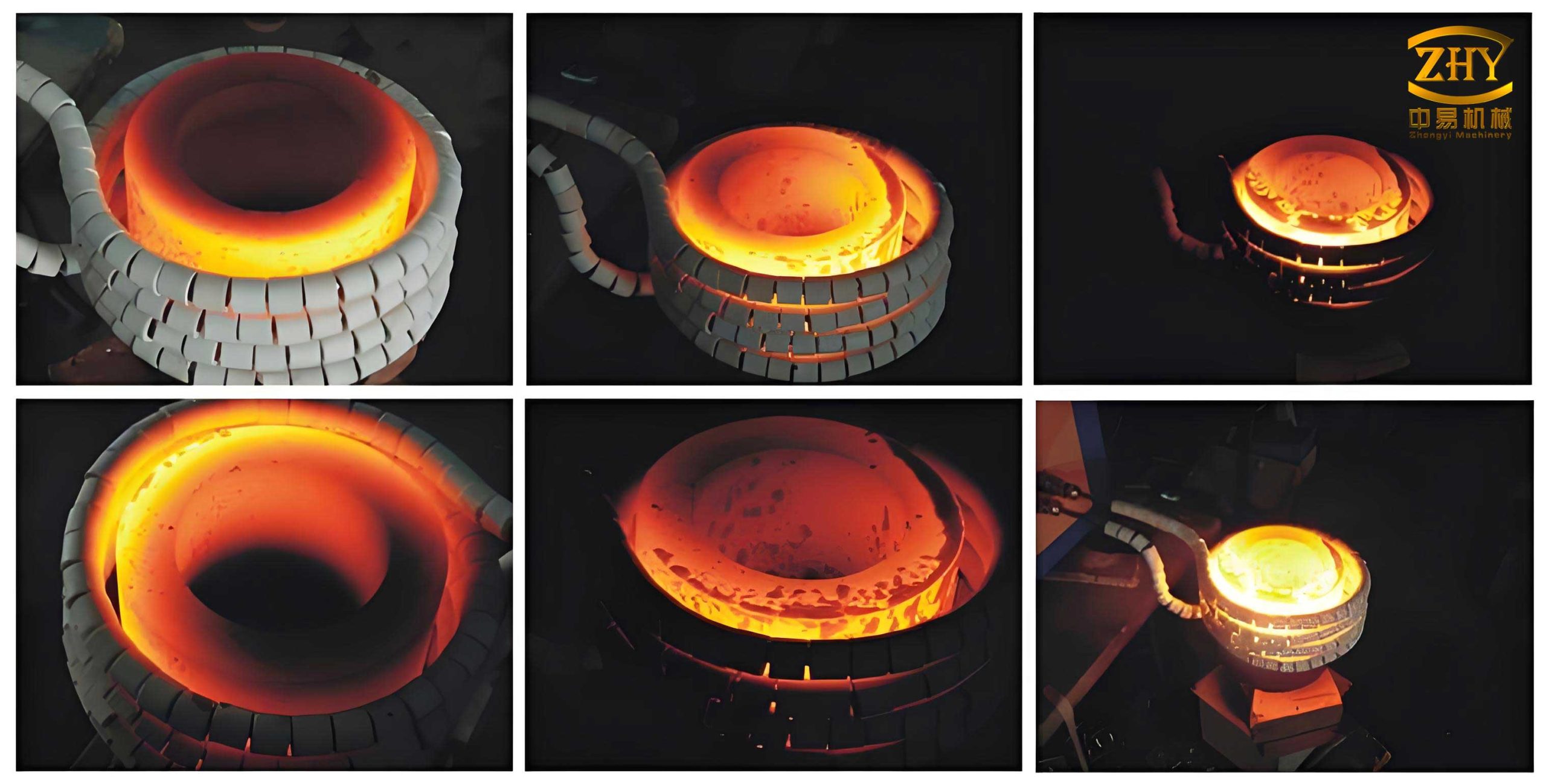
Selecting appropriate materials and heat treatment methods is the first step in mitigating potential heat treatment defects. Wind turbine gearboxes predominantly use alloy steels for their high hardenability and toughness. For gears subjected to high contact stresses, case-hardening processes like carburizing and quenching are preferred, while nitriding or induction hardening may be applied for specific components like internal ring gears where distortion control is critical. The choice directly affects the gear’s ability to withstand subsurface shear stresses and bending moments at the tooth root. For instance, inadequate case depth or non-uniform hardness profiles—common heat treatment defects—can lead to early pitting or tooth fracture under cyclic loading. Below, Table 1 summarizes commonly used materials for key gearbox components, highlighting their typical applications and associated heat treatment processes.
| Component Type | Material Examples | Typical Heat Treatment | Key Considerations to Avoid Defects |
|---|---|---|---|
| Gears (External) | 17CrNiMo6 (18CrNiMo7-6), 20CrNi2Mo, 20Cr2Ni4, 18Cr2Ni4W | Carburizing and Quenching + Grinding | Control of distortion and residual stresses; prevention of grinding burns. |
| Internal Ring Gears | 42CrMo | Nitriding + Grinding or Carburizing | Minimizing distortion in thin sections; ensuring sufficient case depth. |
| Shafts | 42CrMo, 40Cr | Quenching and Tempering (Hardening) | Avoiding cracking during quenching; achieving uniform hardness. |
| Housings (Static) | QT400-18AL (Ductile Iron) | Stress Relief Annealing | Reducing casting stresses to prevent dimensional instability. |
| Planet Carriers (Rotating) | QT700-2A (Ductile Iron) | Quenching and Tempering | Balancing strength and toughness; minimizing porosity. |
The chemical composition of carburizing steels plays a vital role in determining hardenability and resistance to heat treatment defects. Elements like nickel, chromium, and molybdenum enhance core toughness and case hardness, but improper balances can lead to excessive retained austenite or brittle martensite. Table 2 details the compositional ranges for prevalent carburizing steels, underscoring how deviations might precipitate defects such as intergranular oxidation or soft spots.
| Steel Grade | C | Si | Mn | Ni | Cr | Mo | Other |
|---|---|---|---|---|---|---|---|
| 17CrNiMo6 | 0.14–0.19 | 0.15–0.35 | 0.40–0.60 | 1.40–1.70 | 1.50–1.80 | 0.25–0.35 | – |
| 20Cr2Ni4 | 0.17–0.24 | 0.17–0.37 | 0.30–0.60 | 3.25–3.65 | 1.25–1.65 | – | – |
| 18Cr2Ni4W | 0.13–0.19 | 0.17–0.37 | 0.30–0.60 | 4.00–4.50 | 1.35–1.65 | – | W: 0.80–1.20 |
Heat treatment methods each carry distinct advantages and risks of heat treatment defects. Carburizing and quenching offer high surface hardness and deep case depths but are prone to distortion and cracking, especially in complex geometries. Nitriding provides excellent dimensional stability and wear resistance, yet achieving deep, uniform layers beyond 1 mm is challenging and costly. Induction hardening is efficient but can result in inconsistent hardness patterns or quench cracks if not precisely controlled. Table 3 compares these methods, emphasizing how defects like shallow case depth or excessive retained austenite directly impact the fatigue limit stresses used in design calculations.
| Heat Treatment Method | Typical Effective Case Depth (mm) | Surface Hardness | Approx. Contact Fatigue Limit σHlim (MPa) for MQ Grade | Approx. Bending Fatigue Limit σFlim (MPa) for MQ Grade | Common Heat Treatment Defects and Impacts |
|---|---|---|---|---|---|
| Carburizing and Quenching | 0.4 – 8.0 | 57–63 HRC | 1500 | 500 | Distortion, grinding burns, decarburization; reduces fatigue strength. |
| Nitriding | 0.2 – 1.1 | 800–1200 HV | 1250 | 420 | Shallow case depth, porosity; lowers load capacity under high stress. |
| Induction Hardening | 1.0 – 6.0 (depending on frequency) | 600–850 HV | 1150 | 360 (lower if root not hardened) | Inconsistent hardness, quench cracks; leads to stress concentrations. |
In gear strength calculations, material and heat treatment factors are embedded within various coefficients and limit stresses. The fundamental equations for contact fatigue strength and bending fatigue strength, per standards like ISO 6336 or AGMA 2001, are as follows. The contact stress calculation formula is:
$$\sigma_H = Z_{BD} Z_H Z_E Z_\epsilon Z_\beta \sqrt{\frac{K_A K_v K_{H\beta} K_{H\alpha} F_t}{b d_1} \cdot \frac{u \pm 1}{u}}$$
where $\sigma_H$ is the calculated contact stress, $Z$ factors are geometry and elasticity coefficients, $K$ factors account for load dynamics, $F_t$ is the tangential load, $b$ is face width, $d_1$ is pinion reference diameter, and $u$ is gear ratio. The contact fatigue limit stress is given by:
$$\sigma_{HG} = \sigma_{Hlim} Z_{NT} Z_L Z_V Z_R Z_W Z_X$$
Here, $\sigma_{Hlim}$ is the allowable contact stress number for the material, and the $Z$ factors modify it for life, lubrication, roughness, etc. The contact safety factor is $S_H = \sigma_{HG} / \sigma_H$, requiring $S_H \geq S_{Hmin}$. Similarly, for bending strength:
$$\sigma_F = \frac{K_A K_v K_{F\beta} K_{F\alpha} F_t}{b m_n} Y_F Y_S Y_\beta$$
where $\sigma_F$ is the calculated root stress, $m_n$ is normal module, and $Y$ factors are geometry and stress correction coefficients. The bending fatigue limit stress is:
$$\sigma_{FG} = \sigma_{Flim} Y_{ST} Y_{NT} Y_{\delta relT} Y_{R relT} Y_X$$
with $\sigma_{Flim}$ as the allowable bending stress number, and $Y$ factors accounting for life, relative notch sensitivity, etc. The bending safety factor is $S_F = \sigma_{FG} / \sigma_F$, requiring $S_F \geq S_{Fmin}$. Within these equations, numerous coefficients are influenced by material and heat treatment quality, as summarized in Table 4. Notably, heat treatment defects like poor surface integrity or inadequate core hardness can degrade $\sigma_{Hlim}$ and $\sigma_{Flim}$, while also affecting life factors $Z_{NT}$ and $Y_{NT}$ through altered material response to cyclic loading.
| Coefficient Category | Coefficient Symbol | Influence of Material and Heat Treatment | Impact Severity (Scale 1–5) | Relationship to Heat Treatment Defects |
|---|---|---|---|---|
| Load Factors | Application Factor $K_A$ | Material toughness and heat treatment affect impact resistance under variable loads. | 4 | Defects like brittleness reduce overload capacity, increasing effective $K_A$. |
| Dynamic Factor $K_v$ | Material density influences dynamic behavior; minor effect. | 1 | Negligible direct link to defects. | |
| Face Load Distribution Factor $K_\beta$ | Material type affects running-in and alignment under load. | 1 | Distortion from heat treatment can worsen load distribution. | |
| Transverse Load Distribution Factor $K_\alpha$ | Material influences tooth deflection and contact pattern. | 1 | Uneven hardness from defects leads to non-uniform loading. | |
| Stress and Life Factors | Elasticity Coefficient $Z_E$ | Depends on Young’s modulus of material pair. | 2 | Defects do not significantly alter modulus. |
| Fatigue Limit Stresses $\sigma_{Hlim}$, $\sigma_{Flim}$ | Directly determined by material grade, heat treatment method, hardness, and defect presence. | 5 | Defects like decarburization or inclusions drastically reduce these limits. | |
| Life Factors $Z_{NT}$, $Y_{NT}$ | Material and heat treatment define S-N curve slopes and endurance limits. | 4 | Defects accelerate fatigue crack initiation, shortening life. | |
| Size Factors $Z_X$, $Y_X$ | Material hardenability affects strength reduction with larger dimensions. | 3 | Insufficient case depth (a defect) exacerbates size effects. | |
| Relative Notch Sensitivity Factor $Y_{\delta relT}$ | Material microstructure influences stress concentration at tooth root. | 3 | Defects like grinding marks or improper microstructure heighten sensitivity. | |
| Relative Surface Condition Factor $Y_{R relT}$ | Surface finish and integrity, often compromised by heat treatment defects. | 3 | Grinding burns or oxidation from heat treatment worsen surface condition. |
The application factor $K_A$ warrants special attention for wind turbine gearboxes due to their variable load spectra. Traditionally, $K_A$ is selected from tables based on prime mover and driven machine characteristics, but for stochastic wind loads, modern standards like ISO 6336-6 recommend calculating an equivalent torque $T_{eq}$ from a load spectrum. The factor is then $K_A = T_{eq} / T_n$, where $T_n$ is the nominal torque. The equivalent torque is derived using Miner’s rule and material-specific Wöhler curve slopes:
$$T_{eq} = \left( \frac{n_1 T_1^p + n_2 T_2^p + \ldots}{n_1 + n_2 + \ldots} \right)^{1/p}$$
Here, $n_i$ are cycle counts for torque groups $T_i$, and $p$ is the slope exponent of the S-N curve. The exponent $p$ varies with material and heat treatment, as shown in Table 5. For contact fatigue, the life factor relates as $Z_{NT} = (N_{Lref} / N_L)^\epsilon$, with $\epsilon = 1/(2p)$ for contact and $\epsilon = 1/(2p)$ for bending (note: actually, for bending, $\epsilon$ is typically $1/(2p)$ but values differ; precise relationships depend on standard definitions). Importantly, heat treatment defects can alter the actual S-N curve, effectively changing $p$ and leading to non-conservative $K_A$ estimates if not accounted for. For instance, carburized gears with grinding burns may exhibit a steeper S-N slope, reducing fatigue life under spectrum loading.
| Heat Treatment | For Pitting (Contact) | For Tooth Bending | Reference Cycles $N_{Lref}$ | |||
|---|---|---|---|---|---|---|
| Slope $p$ | Exponent $\epsilon$ | Slope $p$ | Exponent $\epsilon$ | Contact | Bending | |
| Carburizing and Quenching | 6.610 | 0.0756 | 8.738 | 0.115 | 5×10⁷ | 3×10⁶ |
| Quenching and Tempering (Hardened) | 6.610 | 0.0756 | 6.225 | 0.160 | 5×10⁷ | 3×10⁶ |
| Nitriding | 5.709 | 0.0875 | 17.035 | 0.050 | 2×10⁶ | 3×10⁶ |
| Nitrocarburizing | 15.715 | 0.0318 | 84.003 | 0.012 | 2×10⁶ | 3×10⁶ |
To illustrate, consider a 1.5 MW wind turbine gearbox with a nominal output torque $T_n = 932.43 \text{ kN·m}$. Using a given load spectrum and the exponents from Table 5, the calculated $K_A$ values differ across components and failure modes, as shown in Table 6. This underscores that a single load spectrum yields multiple $K_A$ values, and heat treatment defects that change material response could shift these values, affecting safety margins. For example, if nitrided gears suffer from shallow case depth—a common defect—their $p$ exponent might effectively increase, leading to a higher $T_{eq}$ and thus a larger $K_A$, demanding more conservative design.
| Component and Failure Mode | Calculated $K_A$ | Equivalent Torque $T_{eq}$ (kN·m) | Remarks on Heat Treatment Influence |
|---|---|---|---|
| Gear Contact Fatigue (Carburized) | 0.78 | 725.26 | Assumes ideal heat treatment; defects could increase $K_A$. |
| Gear Bending Fatigue (Carburized) | 0.81 | 753.98 | Bending often more sensitive to root defects like grinding cracks. |
| Gear Contact Fatigue (Nitrided) | 0.76 | 709.63 | Nitriding defects like porosity may reduce life, requiring higher $K_A$. |
| Gear Bending Fatigue (Nitrided) | 0.89 | 827.37 | Shallow case depth elevates bending stress, increasing $K_A$. |
| Rolling Bearings (Ball Type) | 0.68 | 637.33 | Bearing steel heat treatment defects (e.g., inclusions) similarly affect life. |
| Rolling Bearings (Roller Type) | 0.70 | 649.36 | Consistent hardening is crucial to avoid spalling. |
Case depth and hardness are critical parameters directly tied to heat treatment quality. For carburized gears, insufficient case depth or soft cores—both potential heat treatment defects—can lead to subsurface fatigue cracks or tooth bending failures. Recommended case depths vary by standard and experience, often expressed as functions of module $m_n$. Table 7 consolidates guidelines for carburized gears, highlighting the penalties of falling short due to defects. For nitrided gears, achieving adequate depth is even more challenging; Table 8 provides reference values, where defects like non-uniform diffusion can result in depths below minimum, severely limiting load capacity.
| Source / Criterion | Recommended Depth $t$ (mm) | Notes and Implications of Defects |
|---|---|---|
| Common Experience (Pitting & Bending) | $t = (0.2 \text{ to } 0.3) m_n$ | Defects: Shallow depth reduces bending and contact resistance. |
| DIN 3990 | $t = 0.25 m_n$ | Standard assumption; deviations indicate process issues. |
| AGMA 2001 (General) | $t_{min} = 0.188 m_n^{0.86105}$ | Minimum values; defects causing lower depth risk premature failure. |
| AGMA 2001 (Deep Case) | $t_{min} = 0.177 m_n^{1.12481}$ | For high loads; defects like shallow case nullify benefits. |
| ISO 6336-5 (Pitting Optimum) | $t_{opt} = 0.3 \text{ for } m_n < 2$ $t_{opt} = 0.15 m_n \text{ for } 2 < m_n < 10$ $t_{opt} = 0.083 m_n + 0.67 \text{ for } 10 < m_n \leq 40$ |
Optimal values; defects force use of lower fatigue limits. |
| ISO 6336-5 (Bending Optimum) | $t_{opt} = (0.1 \text{ to } 0.2) m_n$ | Root strength sensitive to case depth; defects cause stress risers. |
| Based on Subsurface Shear (Spalling) | $t_{min} = \frac{\sigma_H d_1 \sin\alpha_t}{U_H \cos\beta_b} \cdot \frac{z_2}{z_1 + z_2}$ where $U_H \approx 66000 \text{ N/mm}^2$ for MQ/ME carburizing |
Defects like soft cores increase shear stress, requiring deeper case. |
| General Range | $t_{min} \geq 0.3 \text{ mm}, \quad t_{max} \leq 0.4 m_n (\leq 6 \text{ mm})$ | Bounds; defects often push depth outside this, compromising gear. |
| Module $m_n$ (mm) | Common Experience Range | ISO 6336-5 Guidance | AGMA 2001 Guidance | Risks from Heat Treatment Defects |
|---|---|---|---|---|
| 2 | 0.25–0.40 | 0.22–0.36 | 0.27–0.43 | Porosity or shallow depth reduces wear resistance. |
| 3 | 0.35–0.50 | 0.17–0.28 | 0.34–0.49 | Non-uniform diffusion leads to stress concentrations. |
| 4 | 0.35–0.50 | 0.27–0.40 | 0.38–0.53 | Insufficient depth increases bending stress at root. |
| 5 | 0.45–0.55 | 0.31–0.43 | 0.44–0.60 | Defects can cause spalling under high contact loads. |
| 6 | 0.45–0.55 | 0.36–0.50 | 0.49–0.68 | Poor case-core interface promotes crack propagation. |
| 8 | >0.60 | 0.42–0.58 | 0.57–0.81 | Deep nitriding challenges; defects like brittleness occur. |
| 10 | 0.50–0.65 | 0.50–0.65* | 0.65–0.93 | *ISO limits to $m_n \leq 12$; defects may limit applicability. |
| 12 | 0.58–0.70 | 0.58–0.70* | 0.70–1.00 | Cost and defect risks often favor carburizing for large modules. |
The selection of fatigue limit stresses $\sigma_{Hlim}$ and $\sigma_{Flim}$ is perhaps the most subjective yet crucial step, as it encapsulates the combined effect of material quality and heat treatment execution. These values are typically sourced from standards like ISO 6336-5 or AGMA 2001 for given material grades and heat treatment quality levels (e.g., MQ for medium quality, ME for high quality). However, actual values can deviate significantly due to heat treatment defects. Engineers must consider factors such as: material purity (inclusions reduce limits), heat treatment consistency (non-uniform hardness), grinding allowances (excessive removal can expose soft core), grinding burns (thermal damage lowers fatigue strength), tooth root geometry (stress raisers from poor machining), and residual stresses (beneficial compressive stresses may be relieved by defects). For wind turbine gearboxes, where reliability is paramount, it is prudent to choose conservative $\sigma_{Hlim}$ and $\sigma_{Flim}$ values or increase minimum safety coefficients $S_{Hmin}$ and $S_{Fmin}$ to account for potential defects. Table 9 outlines recommended minimum safety factors from various standards, emphasizing the need for higher margins when heat treatment defects are suspected.
| Gearbox Type | Safety Factor | Reference Standard / Source | Recommended Minimum Value | Notes Considering Heat Treatment Defects |
|---|---|---|---|---|
| Main Speed-Increasing Gearbox | Contact Safety $S_{Hmin}$ | GB/T 3480 (with measured load spectrum) | ≥1.2 | Defects like pitting precursors may necessitate >1.3. |
| AGMA 6006-A03 / ISO 81400-4 | 1.0 | Assumes high-quality heat treatment; defects require higher. | ||
| Bending Safety $S_{Fmin}$ | GB/T 3480 (with measured load spectrum) | ≥1.5 | Root defects (e.g., grinding cracks) demand ≥1.7. | |
| AGMA 6006-A03 / ISO 81400-4 | 1.0 | Conservative design for wind often uses 1.5+ due to defect risks. | ||
| Yaw and Pitch Drives (Reducers) | Contact Safety $S_{Hmin}$ | Fatigue Strength Criterion | 0.6 (AGMA based) | Lower due to intermittent operation; but defects could push to 1.0. |
| Static Strength Criterion | 1.0 (AGMA based) | Defects like brittleness require higher static margins. | ||
| Bending Safety $S_{Fmin}$ | Fatigue Strength Criterion | 1.0 (AGMA based) | Similar to contact; defects necessitate increase. | |
| Static Strength Criterion | 1.2 (AGMA based) | Overload scenarios exacerbated by heat treatment defects. |
To quantify the impact of heat treatment defects on safety factors, consider a simplified example. Suppose a carburized gear has a calculated contact stress $\sigma_H = 1000 \text{ MPa}$ based on ideal assumptions. For MQ quality, $\sigma_{Hlim}$ might be 1500 MPa, giving $S_H = 1.5$. If grinding burns reduce the effective $\sigma_{Hlim}$ by 15% due to altered microstructure, then $\sigma_{Hlim,defect} = 1275 \text{ MPa}$, and $S_H$ drops to 1.275, potentially below required $S_{Hmin}$. This underscores the need for rigorous quality control. The relationship can be expressed as:
$$S_{H,actual} = \frac{\sigma_{Hlim} \cdot (1 – \delta)}{ \sigma_H}$$
where $\delta$ is the fractional reduction in fatigue limit due to defects (e.g., $\delta = 0.15$ for moderate grinding burns). For bending, similar adjustments apply, often with larger $\delta$ values because root regions are more sensitive to defects like non-metallic inclusions or improper case-core transition. Therefore, design calculations should incorporate safety margins that explicitly account for potential heat treatment defects, perhaps through a derating factor $D_{ht}$ applied to $\sigma_{Hlim}$ and $\sigma_{Flim}$:
$$\sigma_{Hlim,design} = D_{ht} \cdot \sigma_{Hlim,standard}, \quad 0 < D_{ht} \leq 1$$
where $D_{ht}$ depends on the expected heat treatment quality and historical defect rates. For instance, $D_{ht} = 0.9$ for well-controlled processes, but could drop to 0.7 for components prone to distortions or inadequate hardening.
In conclusion, the design of wind turbine gearboxes is a multidisciplinary endeavor where material science and heat treatment engineering are inseparable from mechanical analysis. Heat treatment defects—ranging from distortion and cracks to insufficient case depth and surface degradation—pose significant risks to gearbox reliability and longevity. Through detailed analysis of coefficients like $K_A$, $Z_{NT}$, and $Y_{NT}$, and careful selection of case depths and fatigue limits, designers can mitigate these risks. Tables and formulas provided herein offer a framework for integrating heat treatment considerations into gear calculations. Ultimately, achieving the target 20-year service life necessitates not only advanced design tools but also stringent manufacturing controls to minimize defects, ensuring that the gears perform as calculated under the arduous conditions of wind energy generation. Future advancements in simulation and monitoring may further help predict and prevent heat treatment defects, pushing the boundaries of gearbox performance and durability.