
In my years of experience as an engineering professional specializing in mechanical design, I have consistently observed that the selection of appropriate heat treatment methods for gears is a critical factor in determining their performance, durability, and overall reliability. Gears are fundamental components in power transmission systems, and their failure can lead to catastrophic downtime. Therefore, understanding and choosing the right heat treatment process is not merely a technical step but a strategic decision that impacts the entire lifecycle of a machine. This article delves deeply into the various heat treatment techniques available for gears, with a particular focus on heavy-duty applications. I will explore their characteristics, selection methodologies, and, crucially, the common heat treatment defects associated with each. My goal is to provide a comprehensive resource that integrates theoretical principles with practical insights, using tables and formulas for clarity. The proper management of heat treatment defects is essential for achieving the desired mechanical properties and ensuring gear longevity.
Heat treatment fundamentally alters the microstructure of steel, thereby enhancing its mechanical properties such as hardness, strength, toughness, and wear resistance. For gears, the primary objective is to fortify the tooth surface against modes of failure like pitting, spalling, and bending fatigue while maintaining a tough core to absorb impact loads. The process can be an intermediate step to improve machinability or the final step to achieve specified performance metrics. Based on heating and cooling methodologies, heat treatments can be broadly classified, as I often explain to my colleagues, into several basic types.
1. Classification of Steel Heat Treatments
The foundational heat treatment processes for steel include annealing, normalizing, quenching, and tempering. However, for gear applications, we often combine these into more specialized processes. A useful classification, which I frequently reference, is as follows:
- Overall Heat Treatment: This includes processes like annealing, normalizing, quenching and tempering (often combined as ‘quenching and tempering’ or simply ‘tempering’ for normalization), and tempering (which is usually a follow-up to quenching).
- Surface Heat Treatment: This category is vital for gears, where we need a hard surface and a tough core. It includes:
- Surface Hardening (Surface Quenching): Methods like flame heating and induction heating (using high, medium, or power frequency currents).
- Chemical Heat Treatment: This involves altering the surface chemistry. Key methods for gears are carburizing (like gas carburizing, liquid carburizing, and cyaniding), nitriding, and carbonitriding.
Each of these methods has its own set of parameters, advantages, and potential for heat treatment defects such as distortion, cracking, or insufficient hardness.
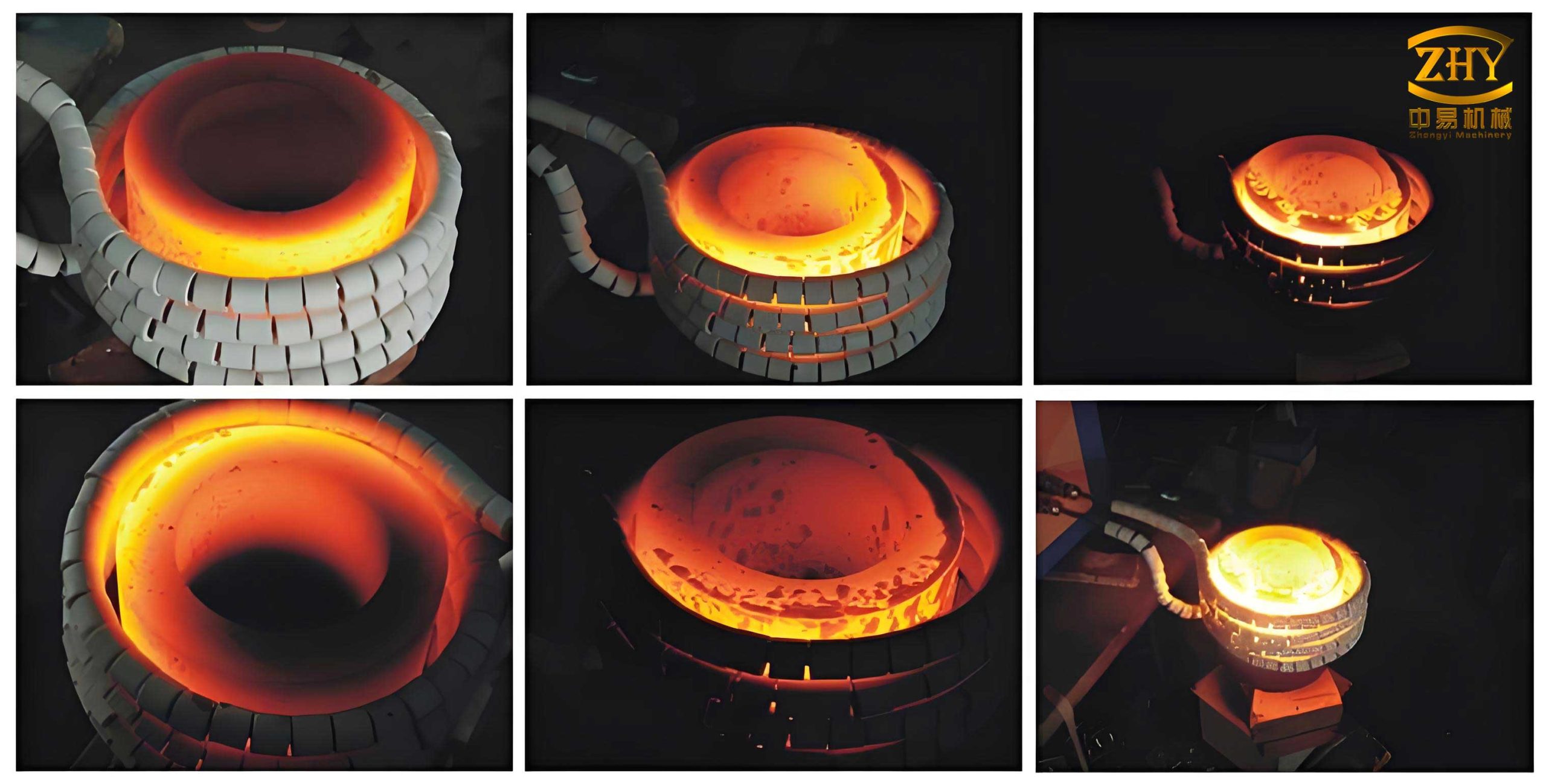
2. Primary Heat Treatment Methods for Gears
In my design practice, I routinely evaluate several key heat treatment methods to enhance a gear’s resistance to failure. The most common are quenching and tempering (often called ‘tempering’ in a broader sense, but more accurately ‘quenching and high-temperature tempering’ or ‘hardening and tempering’), surface hardening, carburizing and quenching, and nitriding.
2.1 Quenching and Tempering (Hardening and Tempering)
Quenching and tempering, commonly referred to simply as ‘tempering’ in many contexts, is a two-step process. First, the steel is heated above its critical temperature (Ac3 or Ac1, typically by 30–50°C), held to achieve uniform austenitization, and then rapidly cooled (quenched) to form a hard, brittle martensitic structure. This is followed by tempering, where the quenched part is reheated to a temperature below the Ac1 point (typically between 500–650°C for high-temperature tempering) and then cooled. The purpose of tempering is to relieve internal stresses introduced during quenching and to transform some of the martensite into more ductile structures, thereby achieving a superior combination of strength, toughness, and plasticity. The final microstructure is tempered sorbitte, which offers better mechanical properties than the sorbitte obtained from normalizing at the same hardness level.
The hardness after quenching and tempering typically ranges from HB 200 to 350. It is influenced by the tempering temperature, the steel’s tempering stability, and the component’s cross-sectional size. One must be vigilant about heat treatment defects during this process. Inadequate heating or cooling rates during quenching can lead to soft spots or incomplete hardening. Conversely, overly rapid quenching or improper part geometry can cause quenching cracks—a severe heat treatment defect. During tempering, incorrect temperature control or time can result in tempered martensite embrittlement or insufficient stress relief.
The core mechanical property relationship after quenching and tempering can be approximated by formulas relating hardness to strength. For many alloy steels, the ultimate tensile strength ($\sigma_b$) can be roughly estimated from the Brinell hardness (HB):
$$\sigma_b \approx k \times \text{HB}$$
where $k$ is a material constant, often around 3.5 for many steels (in MPa). However, this is a simplification, and precise relationships depend on the specific steel grade and microstructure.
2.2 Surface Hardening
Surface hardening is designed to create a hard, wear-resistant surface layer while preserving the softer, tougher core. This is achieved by rapidly heating only the surface layer to the austenitizing temperature and then immediately quenching it. The core remains unaffected as heat does not have time to conduct inward. Common methods include induction heating (high-frequency, medium-frequency, power-frequency) and flame heating.
From my experience, the optimal carbon content for steels used in surface hardening is between 0.40% to 0.50%. A higher carbon content increases the brittleness of the hardened layer and the risk of cracking, while a lower content reduces surface hardness and wear resistance. The surface hardness is usually specified in HRC or HS scales. For components where only wear resistance is critical, a lower hardness limit (e.g., HRC 35) might be specified, with the typical range being HRC 35 to 55. The permissible hardness variation on a single part is usually no less than 7 HRC points.
Compared to carburizing, surface hardening generally induces less distortion and is more cost-effective. However, it is not without its heat treatment defects. Inconsistent heating can lead to uneven hardness profiles or overheating, which causes grain growth and reduced toughness. For induction hardening, improper selection of frequency or power can result in shallow or excessive case depth, another common heat treatment defect. The case depth ($d_c$) is crucial and related to the heating time ($t$) and thermal diffusivity ($\alpha$):
$$d_c \propto \sqrt{\alpha t}$$
For induction heating, the frequency ($f$) inversely relates to the penetration depth ($\delta$) of the induced current (skin effect):
$$\delta \approx \frac{1}{\sqrt{\pi f \mu \sigma}}$$
where $\mu$ is permeability and $\sigma$ is electrical conductivity. Therefore, higher frequencies (e.g., 200+ kHz) produce shallower cases suitable for finer pitches, while lower frequencies (e.g., 1-10 kHz) are used for deeper cases on larger gears.
2.3 Carburizing and Quenching
Carburizing and quenching is a cornerstone process for high-performance, heavy-duty gears. It involves enriching the surface layer with carbon (carburizing) followed by quenching to produce a hard, high-carbon martensitic case. Carburizing is typically performed at temperatures between 880°C to 950°C in a carbon-rich atmosphere (gas carburizing), solid medium, or liquid bath. The goal is to achieve a surface carbon content of 0.7% to 1.0%, which gradually decreases towards the core.
I recommend using fine-grained steels with good hardenability and minimal thermal distortion for carburized gears. The core carbon content should generally be below 0.3% to ensure a core hardness of HRC 30-40 after quenching. An interesting aspect I’ve studied is the relationship between the carbon gradient and residual stresses. A steeper carbon gradient between the case and core generates higher compressive residual stresses at the surface, which significantly enhances the bending fatigue strength ($\sigma_{fw}$). This can be conceptually related via:
$$\sigma_{res} \propto -E \cdot \beta \cdot \Delta C$$
where $\sigma_{res}$ is the residual stress, $E$ is Young’s modulus, $\beta$ is a coefficient related to lattice parameter change with carbon, and $\Delta C$ is the carbon concentration difference. These compressive stresses counteract applied tensile stresses, delaying fatigue crack initiation.
The surface hardness after carburizing and quenching is typically HRC 56-62. However, the process is prone to specific heat treatment defects. These include excessive carbide networks at the surface (leading to brittleness), intergranular oxidation, quenching distortion (which often requires subsequent grinding), and insufficient case depth. Controlling the carburizing atmosphere (carbon potential, $C_p$) is critical to avoid these defects. The carbon diffusion depth ($d$) can be estimated using Fick’s second law:
$$d \approx \sqrt{D t}$$
where $D$ is the diffusion coefficient of carbon in austenite (which is temperature-dependent via an Arrhenius equation: $D = D_0 \exp(-Q/RT)$), and $t$ is time. In practice, more complex models accounting for surface reactions are used.
2.4 Nitriding
Nitriding is a low-temperature chemical heat treatment where nitrogen is diffused into the steel surface, forming hard nitride compounds (e.g., iron nitrides, alloy nitrides). It is usually the final manufacturing step, as it induces minimal distortion. Prior to nitriding, the component is typically subjected to quenching and tempering to achieve a tempered sorbitte core with good综合 mechanical properties.
The advantages of nitriding are substantial: exceptionally high surface hardness (up to HV 850 or more), excellent wear and scuffing resistance, high fatigue strength due to induced compressive stresses, and good corrosion resistance. The process temperature (typically 500-580°C) is below the steel’s tempering temperature, so no phase transformation occurs upon cooling, minimizing distortion. This makes it suitable for complex geometries or precision gears where post-heat-treatment machining is undesirable.
However, nitriding has limitations. The case depth is relatively shallow, and the process is time-consuming and expensive. Common heat treatment defects in nitriding include the formation of a brittle ‘white layer’ (compound zone) that is excessively thick, porosity in the diffusion zone, and insufficient hardness due to improper gas composition or temperature. The nitrided case depth ($d_n$) also follows a diffusion-controlled growth law:
$$d_n \approx \sqrt{D_N t}$$
where $D_N$ is the diffusion coefficient for nitrogen. The surface hardness is highly dependent on the steel’s alloying elements (like Al, Cr, V, Mo) that form stable nitrides.
3. Methodology for Selecting Gear Heat Treatment
In my design workflow, the selection of a heat treatment method is a systematic decision based on calculated service stresses and required hardness. The process begins with determining the gear’s geometrical dimensions, transmitted torque, and the resulting contact stress ($\sigma_H$) and bending stress ($\sigma_F$) at the tooth root.
A fundamental guideline I use involves calculating the required surface hardness (in HB) to withstand these stresses. Simplified empirical relationships are often employed for initial screening:
For contact stress (pitting resistance):
$$\sigma_H \leq Z_H \cdot \text{HB}$$
where $Z_H$ is a material and geometry factor.
For bending stress (root bending fatigue):
$$\sigma_F \leq 0.3 \cdot \text{HB}$$
(Note: The constant 0.3 is approximate and varies with material and safety factors; it’s used here for illustrative purposes.)
These inequalities provide a target hardness range. The selection logic flows as follows:
- If the required Brinell hardness (HB) is ≤ 350, the gear is classified as having a “soft” or “medium-hard” tooth surface. The appropriate heat treatment is Quenching and Tempering (hardening and tempering). The material should be a through-hardening steel suitable for quenching and tempering.
- If HB > 350, the gear requires a “hard” tooth surface, necessitating a surface heat treatment (either surface hardening or chemical heat treatment).
- If 350 < HB ≤ 550, Surface Hardening (typically induction hardening) is suitable. The choice of induction frequency (high, medium, low) is based on the required case depth and gear module. The material should be a surface-hardening steel.
- If HB > 550, Chemical Heat Treatment is required. For heavy-duty gears, Carburizing and Quenching is the predominant choice. Nitriding is considered as an alternative when gear geometry, distortion constraints, or specific performance needs (like high corrosion resistance) make carburizing less feasible. The material must be a carburizing steel or nitriding steel, respectively.
This decision tree must be applied with engineering judgment, considering factors like gear size, production volume, cost, and the potential for and mitigation of heat treatment defects. For instance, while carburizing offers high load capacity, its associated distortion might necessitate costly grinding, a consequence of inherent heat treatment defects. Nitriding, while low-distortion, has a thin case that may not be suitable for very high Hertzian contact stresses.
4. Determination of Case Depth
A critical parameter in surface hardening and chemical heat treatments is the effective case depth. This must be carefully specified to balance surface durability with core properties and to avoid heat treatment defects like case crushing or insufficient support. Based on industry standards and my experience, I rely on recommended values correlated with gear module.
4.1 For Carburized and Quenched Gears
The effective case depth is typically measured perpendicular to the tooth surface to a hardness level of 550 HV or 513 HV (approx. HRC 50). Here is a summarized table of recommended values:
| Module, m (mm) | Effective Case Depth (mm) Hardness Limit: 550 HV |
Effective Case Depth (mm) Hardness Limit: 513 HV |
|---|---|---|
| 1.5 | 0.25 – 0.50 | – |
| 1.75 | 0.30 – 0.60 | – |
| 2 | 0.40 – 0.65 | – |
| 2.5 | 0.50 – 0.75 | – |
| 3 | 0.65 – 1.00 | 2.0 – 2.6 |
| 3.5 | 0.65 – 1.00 | 2.3 – 3.2 |
| 4 | 0.75 – 1.30 | 2.5 – 3.5 |
| 5 | 1.00 – 1.50 | 3.0 – 4.0 |
| 6 | 1.30 – 1.80 | 3.0 – 4.5 |
| 7 | 1.50 – 2.00 | 3.5 – 5.0 |
| 8 | 1.80 – 2.30 | 4.0 – 5.0 |
| 9 | 1.80 – 2.30 | 4.0 – 5.0 |
Selecting a case depth outside these ranges can increase the risk of heat treatment defects. Too shallow a case may lead to early pitting or spalling under the applied Hertzian stress ($\sigma_H$), which is calculated as:
$$\sigma_H = Z_E \sqrt{\frac{F_t}{b d_1} \cdot \frac{u \pm 1}{u} \cdot Z_H Z_\epsilon}$$
where $Z_E$ is the elasticity factor, $F_t$ is the tangential load, $b$ is face width, $d_1$ is pinion pitch diameter, $u$ is gear ratio, $Z_H$ is zone factor, and $Z_\epsilon$ is contact ratio factor. The case depth must be sufficient to support the maximum shear stress occurring below the surface.
4.2 For Nitrided Gears
The nitrided layer depth is generally shallower. A common relationship with module is:
| Module, m (mm) | Nominal Depth (mm) | Depth Range (mm) |
|---|---|---|
| ≤ 1.25 | 0.15 | 0.10 – 0.25 |
| 1.5 – 2.5 | 0.30 | 0.25 – 0.40 |
| 3 – 4 | 0.40 | 0.35 – 0.50 |
| 4.5 – 6 | 0.50 | 0.45 – 0.55 |
| > 6 | 0.60 | > 0.50 |
The shallow depth of nitrided layers makes them sensitive to overloads that can cause case collapse, a specific heat treatment defect if the core strength is inadequate.
4.3 For Induction Hardened Gears
The case depth for induction hardening is closely tied to the frequency used. This table provides a guideline:
| Frequency (kHz) | Minimum Case Depth (mm) | Optimal Case Depth (mm) | Maximum Case Depth (mm) | Recommended Gear Module (mm) |
|---|---|---|---|---|
| 200-300 | 0.8 | 1.5 – 2.5 | 4.5 | 1.5 – 5 (2-3 best) |
| 30-80 | 1.0 | 1.5 – 2.0 | 5.0 | 3 – 7 (3-4 best) |
| 8 | 1.5 | 2.0 – 3.0 | 6.0 | 5 – 8 (5-6 best) |
| 2.5 | 2.5 | 4.0 – 6.0 | 10.0 | 8 – 12 (9-11 best) |
Incorrect frequency selection is a primary cause of heat treatment defects in induction hardening, leading to either shallow hardening or excessive heat penetration that affects the core properties.
5. In-Depth Analysis of Heat Treatment Defects and Mitigation
No discussion on gear heat treatment is complete without a thorough examination of potential heat treatment defects. These defects can severely compromise gear performance and lead to premature failure. In my projects, I always incorporate defect analysis into the selection process.
5.1 Distortion and Dimensional Changes
All heat treatment processes involving phase transformations (quenching, carburizing) introduce internal stresses that cause distortion. The distortion ($\Delta D$) can be modeled as a function of thermal gradient ($\nabla T$), phase transformation strain ($\epsilon_{tr}$), and material yield strength ($\sigma_y$):
$$\Delta D \propto \int_V (\alpha \nabla T + \epsilon_{tr}) dV – \text{constraints}$$
where $\alpha$ is the coefficient of thermal expansion. Carburizing and quenching typically cause the most distortion due to high temperatures and martensitic transformation. Nitriding causes minimal distortion. To mitigate this heat treatment defect, designers can use symmetrical gear geometries, specify uniform cross-sections, employ stress-relief annealing prior to final machining, or allocate a grinding stock for post-heat-treatment finishing.
5.2 Cracking
Quenching cracks are a catastrophic heat treatment defect. They occur due to high tensile stresses exceeding the material’s fracture strength during the rapid cooling phase. The risk is higher with higher carbon content, complex shapes, and sharp corners. The propensity for cracking can be assessed using the concept of quench severity ($H$) and the critical diameter ($D_c$) for through-hardening. Using Grossmann’s approach, the hardenability is characterized by the ideal critical diameter $D_I$. Cracking risk increases if the actual part dimensions approach or exceed the achievable hardened depth for the given quenchant. Preheating, interrupted quenching (martempering), or using oils instead of water as quenchants can reduce this risk.
5.3 Soft Spots and Inadequate Hardness
Uneven heating, poor furnace atmosphere control (in carburizing), or inadequate quenching agitation can lead to areas with lower hardness. This heat treatment defect directly reduces wear resistance and fatigue strength. For surface hardening, improper coupling in induction heating can create soft spots. The hardness profile should be verified using microhardness traverses. The case depth ($d_{ch}$) to a specific hardness ($H_{spec}$) should meet the design requirement:
$$d_{ch} = \max\{x : H(x) \geq H_{spec}\}$$
where $H(x)$ is the hardness at depth $x$ from the surface.
5.4 Microstructural Anomalies
- Excessive Retained Austenite (in Carburized Gears): High carbon content and inadequate tempering or sub-zero treatment can lead to retained austenite, which is soft and can transform under load, causing dimensional instability. The volume fraction of retained austenite ($V_\gamma$) can be reduced by multiple tempering cycles.
- Brittle Microstructures: Overheating during austenitizing can cause coarse grain structure, reducing toughness. In nitriding, a excessively thick white layer (compound zone of Fe$_2$3N and Fe$_4$N) is brittle and can spall under contact stress. Controlling the nitriding potential ($K_N = p_{NH_3}/p_{H_2}^{3/2}$) is key to managing this heat treatment defect.
- Decarburization/Oxidation: Exposure to air or improper atmosphere during heating can deplete surface carbon or form oxides, creating a soft surface layer. This is a critical heat treatment defect that must be prevented through the use of protective atmospheres or vacuum furnaces.
6. Advanced Selection Considerations and Formulas
Beyond the basic hardness criterion, I employ more sophisticated analyses for critical applications. This involves calculating the required core and case properties based on specific failure modes.
6.1 Bending Fatigue Design
The tooth root bending stress ($\sigma_F$) must be less than the permissible bending stress ($\sigma_{FP}$). For hardened gears, $\sigma_{FP}$ is related to the material’s bending fatigue limit ($\sigma_{FE}$), which itself is a function of surface hardness, residual stresses, and microstructure. An approximate relationship for the bending fatigue limit of hardened steel is:
$$\sigma_{FE} \approx 0.25 \cdot (\text{HB} + 100) \quad \text{(for through-hardened steels)}$$
$$\sigma_{FE} \approx 1.6 \cdot \text{HV}_{case} \quad \text{(for case-hardened surfaces, in MPa, with HV in kgf/mm²)}$$
These are empirical and vary widely. A more fundamental approach considers the stress intensity factor for surface cracks. The permissible bending stress must account for the stress concentration at the tooth root ($Y_{Fa}$, form factor) and the stress correction factor ($Y_{Sa}$):
$$\sigma_{FP} = \frac{\sigma_{FE} \cdot Y_{NT} \cdot Y_{\delta relT} \cdot Y_{RrelT} \cdot Y_X}{S_{Fmin}}$$
where $Y_{NT}$ is the life factor, $Y_{\delta relT}$ and $Y_{RrelT}$ are relative notch sensitivity and surface factors, $Y_X$ is the size factor, and $S_{Fmin}$ is the minimum safety factor. The presence of heat treatment defects like grinding burns or surface cracks effectively reduces $\sigma_{FE}$ and $Y_{RrelT}$.
6.2 Contact Fatigue (Pitting) Design
The contact stress ($\sigma_H$) is compared to the permissible contact stress ($\sigma_{HP}$). For pitting resistance, the surface durability is governed by the Hertzian stress and the material’s fatigue properties. The permissible contact stress can be related to hardness:
$$\sigma_{HP} \approx Z_L Z_V Z_R Z_W Z_X \cdot \frac{\sigma_{Hlim}}{S_{Hmin}}$$
Here, $\sigma_{Hlim}$ is the contact fatigue limit of the material. For case-hardened gears, $\sigma_{Hlim}$ is often correlated with the surface hardness. A classic relationship for the allowable Hertzian stress ($\sigma_{H,all}$) is:
$$\sigma_{H,all} \approx C \cdot \text{HB} \cdot Z$$
where $C$ is a constant and $Z$ incorporates lubrication and roughness factors. For high-hardness cases, the pitting resistance often depends more on the compressive residual stress profile than the absolute hardness. Inadequate case depth or the presence of heat treatment defects like soft subsurface regions can lead to spalling, where fatigue cracks initiate below the surface at the point of maximum orthogonal shear stress ($\tau_{max}$):
$$\tau_{max} \approx 0.3 \cdot p_0$$
where $p_0$ is the maximum Hertzian pressure. The case depth should extend beyond this depth to prevent subsurface-initiated spalling.
6.3 Thermal Effects during Heat Treatment
The thermal cycles during heat treatment can be modeled to predict microstructure and distortion. The temperature field $T(x,t)$ during heating for induction hardening can be solved from the heat conduction equation with an internal heat generation term $Q(x,t)$ from eddy currents:
$$\rho c_p \frac{\partial T}{\partial t} = \nabla \cdot (k \nabla T) + Q$$
where $\rho$ is density, $c_p$ is specific heat, $k$ is thermal conductivity. Solving this helps optimize heating patterns to avoid heat treatment defects. Similarly, during carburizing, the carbon concentration $C(x,t)$ is governed by Fick’s second law with a surface boundary condition:
$$\frac{\partial C}{\partial t} = D \frac{\partial^2 C}{\partial x^2}, \quad C(0,t) = C_s, \quad C(\infty,t)=C_0$$
Analytical solutions like the error function profile are used: $C(x,t) = C_s – (C_s – C_0) \cdot \text{erf}\left(\frac{x}{2\sqrt{Dt}}\right)$. Deviations from ideal profiles indicate potential heat treatment defects like poor atmosphere control.
7. Material Selection Synergy with Heat Treatment
The choice of steel grade is inextricably linked to the chosen heat treatment process. Each family of steels is optimized for a specific treatment.
- Quenching and Tempering Steels: Medium-carbon steels (e.g., AISI 1045, 4140, 4340) with carbon content ~0.4-0.5%. They require sufficient hardenability (governed by alloying elements like Cr, Ni, Mo) to through-harden to the required section size. The ideal critical diameter $D_I$ can be calculated using alloy factors.
- Surface Hardening Steels: Similar medium-carbon steels but often with controlled hardenability to ensure a sharp hardness transition. Steels like AISI 1045, 5140 are common.
- Carburizing Steels: Low-carbon steels (carbon <0.3%) with alloying additions (e.g., AISI 8620, 9310, 20MnCr5). The alloying elements increase hardenability of both the case and core. Core hardness after carburizing and quenching is given by formulas like: $$\text{Core HRC} \approx f(\text{C}_{eq}, \text{cooling rate})$$ where $C_{eq}$ is carbon equivalent.
- Nitriding Steels: Medium-carbon steels containing strong nitride-forming elements like Al, Cr, V, Mo (e.g., Nitralloy 135M, AISI 4140, 4340). The core properties are established by prior quenching and tempering.
Selecting the wrong material for a given heat treatment is a fundamental design error that guarantees heat treatment defects or inadequate performance.
8. Conclusion and Final Recommendations
In my professional journey, I have found that the selection of gear heat treatment is a multifaceted optimization problem balancing performance, cost, manufacturability, and reliability. The simple hardness-based guideline provides an excellent starting point, but it must be enriched with detailed analysis of stress states, case depth requirements, and a proactive strategy to mitigate heat treatment defects. I cannot overstate the importance of collaborating closely with heat treatment metallurgists and process engineers from the early design stages. Finite element analysis of thermal and phase transformation stresses is becoming increasingly valuable for predicting and minimizing distortion, a pervasive heat treatment defect.
To summarize my approach: calculate the stresses, determine the required hardness, select the process family (quenching and tempering, surface hardening, carburizing, nitriding), choose the appropriate steel grade, specify the case depth based on module and load, and define strict quality control measures to inspect for heat treatment defects such as hardness profile, microstructure, and distortion. Always remember that the most advanced heat treatment can be rendered ineffective by overlooked heat treatment defects. Therefore, a holistic view that integrates design, material science, and process engineering is paramount for developing gears that meet the demanding requirements of modern heavy-duty applications.