
The reliable operation of modern aviation engines is critically dependent on the performance of their core transmission components, with gears standing at the forefront. These components operate under extreme conditions characterized by high rotational speeds, significant power transmission, and the constant application of alternating and impact loads. The meshing action of gear teeth generates complex stress states, primarily contact stress on the tooth flank and bending stress at the tooth root. To withstand these demanding service conditions, aviation gears must exhibit an exceptional combination of properties: high surface strength, superior wear and contact fatigue resistance, adequate hardness, and excellent overall mechanical properties. Achieving this precise set of characteristics is fundamentally the domain of advanced heat treatment processes. The selection and precise control of parameters such as carburizing depth, quenching temperature, and tempering cycles directly govern the final microstructure—and consequently, the performance and longevity of the gear. However, deviations from optimal parameters can lead to various **heat treatment defects**, including excessive residual stresses, undesirable microstructural phases, and ultimately, premature failure.
The material choice for such critical applications is paramount. Alloys like 12Cr2Ni4A are favored in aerospace gearing due to their high hardenability and strength. The heat treatment roadmap for this material is complex, typically involving a sequence of normalizing, initial quenching and tempering, carburizing, followed by a final quench and multiple tempers. A traditional process sequence might be outlined as follows:
| Step | Process | Typical Parameters | Primary Objective | Key Control to Avoid **Heat Treatment Defects** |
|---|---|---|---|---|
| 1 | Normalizing | ~930°C, (1.5-2)h, air cool | Refine grain structure after forging, homogenize | Avoid excessive grain growth. |
| 2 | First Quench | ~820°C, (1.5-2)h, oil quench | Develop a strong, tough core microstructure. | Control cooling rate to prevent quench cracking. |
| 3 | First Tempering | ~400°C, (2.5-3)h, air cool | Relieve stresses from first quench, toughen core. | Ensure temperature uniformity to prevent soft spots. |
| 4 | Carburizing | ~927°C, ~9h at 0.9%C potential | Enrich surface carbon content for high hardness. | Prevent carbide networking, excessive retained austenite, or shallow case depth. |
| 5 | High-Temperature Temper / Stress Relief | ~5h hold, specific temperature | Stabilize carburized case before final quench. | Mitigate grinding cracks by reducing austenite content. |
| 6 | Final Quench | ~820°C, ~1.5h, oil quench | Transform case to high-carbon martensite. | Minimize distortion and control retained austenite level. |
| 7 | Final Tempering (Single) | ~400°C, ~4h, air cool | Relieve quenching stresses, achieve final hardness. | Avoid overtempering which reduces hardness and wear resistance. |
The ultimate goal is to obtain a fine, uniform microstructure. For the case (surface region), the ideal constitution is a matrix of fine, acicular (needle-like) martensite with a controlled, minimal amount of retained austenite and uniformly dispersed, fine carbides. The core should consist of a tough, low-carbon martensitic or bainitic structure. Deviations from this ideal are primary sources of **heat treatment defects**. For instance, carbide segregation can act as crack initiation sites, severely compromising fatigue life. Similarly, an excessively high level of retained austenite is a major **heat treatment defect** as it is a metastable phase. In service, under stress and temperature, it can transform to martensite, causing undesirable volume changes and inducing additional internal stresses that degrade dimensional stability and promote premature failure. Therefore, process optimization is not merely about maximizing hardness but about engineering a stable, defect-resistant microstructure.
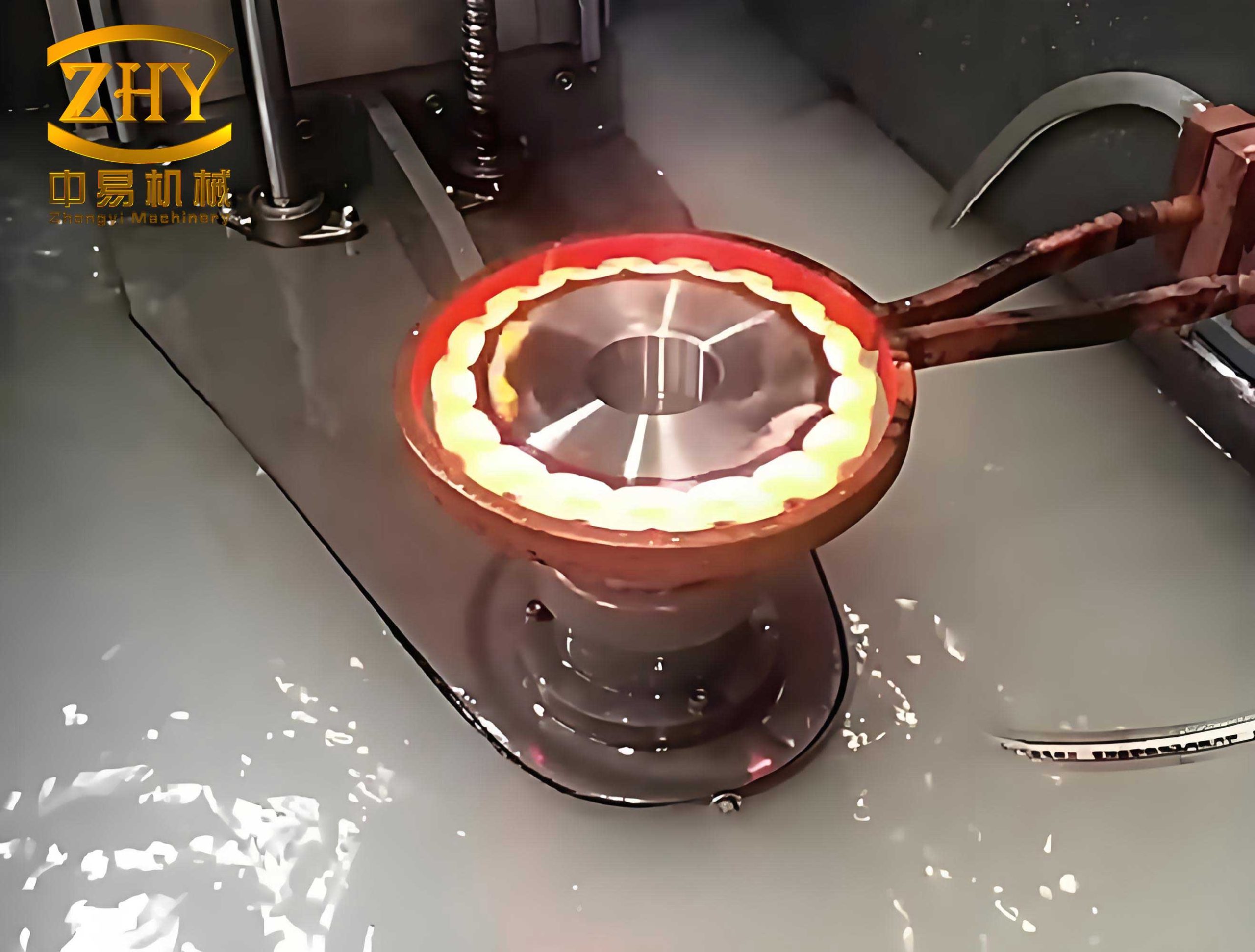
The landscape of potential **heat treatment defects** is broad, impacting various aspects of gear performance. A systematic classification helps in understanding their origin and implementing corrective measures during process optimization.
| Defect Category | Specific Defect | Primary Cause | Consequence for Gear Performance |
|---|---|---|---|
| Microstructural Defects | Excessive Retained Austenite (>20-25%) | High carbon content in case, high quench temperature, inadequate tempering. | Reduced hardness, poor wear resistance, dimensional instability during service. |
| Coarse or Networked Carbides | Excessive carbon potential during carburizing, too slow cooling from carburizing temperature. | Embrittlement of the case, acting as stress concentrators and crack initiation sites. | |
| Oxidation & Decarburization | Improper furnace atmosphere control during high-temperature stages. | Loss of surface carbon, leading to soft spots and drastically reduced fatigue strength. | |
| Stress & Distortion Defects | Excessive Residual Tensile Stresses | Non-uniform cooling during quenching, inadequate tempering. | Promotes fatigue crack propagation and increases susceptibility to stress corrosion cracking. |
| Distortion (Warpage, Size Change) | Non-uniform heating/cooling, residual stresses from prior machining, part design. | Poor gear meshing, increased noise and vibration, potential for premature bearing failure. | |
| Integrity Defects | Quench Cracks | Extremely high thermal and transformational stresses during rapid cooling, often combined with part geometry (sharp corners). | Catastrophic failure; parts are typically scrapped. |
| Grinding Cracks | Interaction of grinding-induced heat/stress with a susceptible microstructure (high retained austenite, untempered martensite). | Surface cracks that dramatically reduce contact fatigue life. |
The Critical Role of Quenching: Temperature’s Dual Effect on Hardness and Stress
Within the heat treatment sequence, the final quenching operation after carburizing is perhaps the most critical—and most prone to inducing **heat treatment defects** if not meticulously controlled. The quench temperature for a steel like 12Cr2Ni4A typically lies within a range (e.g., 780°C to 840°C). This parameter has a profound and competing influence on two key outcomes: surface hardness and residual stress state.
As the quenching temperature increases within the austenitizing range, the solubility of carbon and alloying elements in austenite rises, leading to a more homogeneous supersaturated solid solution. Upon quenching, this results in a martensite with higher carbon saturation, which directly translates to higher hardness. This relationship can be conceptually modeled. The maximum achievable hardness ($H_{max}$) is a function of the carbon content in austenite ($C_{\gamma}$) prior to quenching, which itself is a function of temperature ($T_q$) and time:
$$ C_{\gamma}(T_q, t) \approx C_{eq}(T_q) \cdot (1 – e^{-k t}) $$
$$ H_{max} \propto f(C_{\gamma}) $$
where $C_{eq}(T_q)$ is the equilibrium carbon solubility at temperature $T_q$, $k$ is a kinetic constant, and $t$ is time. Thus, higher $T_q$ generally increases $C_{eq}$, leading to higher potential hardness.
However, simultaneously, the residual stress state is being formed. During quenching, two major stress components develop: thermal stress ($\sigma_{th}$) due to steep temperature gradients between surface and core, and transformation stress ($\sigma_{tr}$) due to the volumetric expansion associated with the austenite-to-martensite transformation. The net residual stress ($\sigma_{res}$) near the surface is often a superposition:
$$ \sigma_{res} \approx \sigma_{th} + \sigma_{tr} $$
Thermal stress tends to create surface tensile stress (as the cool surface is constrained by a hotter core), which is highly undesirable. Transformation stress, because martensite has a larger specific volume than austenite, creates compressive stress in the case, which is highly beneficial for fatigue resistance. The magnitude of $\sigma_{th}$ increases with higher quench temperature due to a larger initial temperature difference. If the increase in detrimental thermal stress outweighs the beneficial increase in transformation stress, the net surface compressive stress can decrease. Finite element analysis (FEA) simulations of the process reveal this nuanced interplay: as quench temperature rises from 780°C to 820°C, surface hardness increases, but the surface residual compressive stress may show a decreasing trend, plateauing as the stresses balance. Therefore, selecting a quench temperature is an optimization exercise. A modest reduction from a standard temperature (e.g., from 820°C to 800°C) might result in a slight, acceptable decrease in peak hardness (e.g., from HRC 65 to HRC 64) while significantly boosting the beneficial compressive residual stress, thereby directly mitigating the **heat treatment defect** of inadequate surface compressive stress and improving resistance to contact fatigue and grinding cracks.
Tempering Strategy: The Key to Stability and Defect Mitigation
While quenching sets the initial microstructure, tempering determines its final stability and mechanical properties. The tempering process, involving heating the quenched gear to a temperature below the lower critical temperature (Ac1), is primarily aimed at relieving detrimental quenching stresses, improving toughness, and stabilizing the microstructure. The key parameters are temperature, time, and—critically—the number of tempering cycles. Inadequate tempering is a root cause of several **heat treatment defects**, most notably grinding cracks and poor dimensional stability.
The effect of tempering temperature ($T_t$) on hardness ($H$) follows a characteristic curve for secondary hardening steels. Initially, as $T_t$ increases, hardness may remain stable or even increase slightly due to the precipitation of fine alloy carbides and the transformation of retained austenite to harder phases like lower bainite. This can be described by a kinetic equation related to carbide precipitation:
$$ \frac{dH}{dt} = -A \cdot e^{-Q/RT_t} \cdot (H – H_{eq}(T_t)) $$
where $A$ is a constant, $Q$ is the activation energy for the softening process, $R$ is the gas constant, and $H_{eq}$ is the equilibrium hardness at that temperature. After reaching a peak (often around 400-450°C for many alloy steels), further increases in $T_t$ lead to coarsening of carbides and recovery of the martensitic matrix, resulting in a steady decrease in hardness. Therefore, selecting the proper $T_t$ is essential to achieve the required balance of hardness and toughness without introducing the **heat treatment defect** of overtempering (excessive softness).
The number of tempering cycles ($N_t$), however, has a profound impact on microstructural homogenization and stress relief that is not fully captured by temperature alone. A single tempering cycle may not completely eliminate unstable retained austenite or uniformly temper all martensite, especially in complex geometries with varying section sizes. Multiple tempering cycles allow for a more complete and uniform transformation. Each cycle further decomposes retained austenite and tempers any fresh martensite formed from this decomposition during the cooling of the previous cycle. The cumulative effect on residual stress ($\sigma_{res}$) can be modeled as a step-wise relaxation process:
$$ \sigma_{res}(N_t) = \sigma_0 \cdot e^{-k_T \cdot N_t} $$
where $\sigma_0$ is the residual stress after quenching, and $k_T$ is a temperature-dependent relaxation constant. Practically, this means the beneficial surface compressive stress may decrease slightly with additional tempers, but the microstructure becomes vastly more stable. Metallic microstructure analysis clearly shows the evolution: after a single temper, the structure may contain patches of less-desirable plate martensite alongside tempered acicular martensite. After a second temper, the structure refines further, with a more uniform distribution of fine, tempered acicular martensite and a minimal, stable amount of retained austenite. This refined and stabilized microstructure is significantly more resistant to the **heat treatment defect** of grinding crack formation during final finishing operations, as it eliminates the soft, unstable pockets that can lead to localized overheating and rehardening cracks during grinding.
Comprehensive Experimental Validation of Optimized Parameters
To validate the theoretical and simulation-based insights into optimizing the heat treatment process and minimizing **heat treatment defects**, a structured experimental plan is essential. The goal is to systematically vary the critical parameters identified—final quenching temperature and number of tempering cycles—while holding other factors (carburizing depth, tempering temperature and time, etc.) constant.
A designed experiment using a material like 12Cr2Ni4A, with specimens machined to relevant geometries, can follow a matrix such as the one below. The response variables must be carefully chosen to quantify both performance and the absence of defects: surface hardness (indicates strength), residual stress profile (indicates fatigue propensity), and detailed microstructural analysis (reveals retained austenite content, carbide distribution, and martensite morphology).
| Specimen Set | Final Quench Temp. [°C] | Number of Tempers | Tempering Parameters (per cycle) | Key Properties Measured |
|---|---|---|---|---|
| A | 800 | 1 | 400°C, 4h, Air Cool | Hardness Profile, Residual Stress, Microstructure |
| B | 800 | 2 | 400°C, 4h, Air Cool | Hardness Profile, Residual Stress, Microstructure, Grinding Crack Susceptibility |
| C | 820 (Baseline) | 1 | 400°C, 4h, Air Cool | Hardness Profile, Residual Stress, Microstructure |
| D | 820 | 2 | 400°C, 4h, Air Cool | Hardness Profile, Residual Stress, Microstructure |
| E | 840 | 1 | 400°C, 4h, Air Cool | Hardness Profile, Residual Stress, Microstructure |
| F | 840 | 2 | 400°C, 4h, Air Cool | Hardness Profile, Residual Stress, Microstructure |
The analysis of results typically confirms the predicted trends. Specimens quenched at 820°C and 840°C will generally show the highest surface hardness. However, residual stress measurements via X-ray diffraction often reveal that the 800°C quenched specimens develop a higher magnitude of surface compressive stress compared to those quenched at higher temperatures, validating the stress-optimization trade-off.
The most revealing analysis comes from metallography. Comparing microstructures, especially between single and double-tempered specimens at the same quench temperature, provides direct evidence of stabilization. The microstructure after a single temper may show a mix of dark-etching tempered martensite and lighter-etching regions of untransformed retained austenite or less-tempered martensite. After a second tempering cycle, the structure becomes markedly more uniform. The light-etching areas are significantly reduced, indicating further decomposition of retained austenite and more complete tempering of the martensitic matrix. This homogeneous, refined microstructure of fine tempered acicular martensite with finely dispersed carbides is the hallmark of a process designed to eliminate **heat treatment defects**.
The ultimate practical test is often a grinding trial. Specimens with the optimized combination of a slightly lower quench temperature (for higher compressive stress) and a double temper (for a stable, homogeneous microstructure) demonstrably exhibit a lower propensity for grinding cracks compared to the baseline single-tempered, higher-temperature quench specimens. This directly links the optimized parameters to the mitigation of a critical manufacturing **heat treatment defect**.
Integrated Process Model and Concluding Synthesis
The optimization of aviation gear heat treatment is a multivariate challenge where inputs (temperature, time, cycles) are transformed into outputs (hardness, stress, microstructure) through complex physical mechanisms. A holistic view can be conceptualized by integrating the relationships discussed:
Microstructural State Model:
$$ M_{final} = F_{temp}( F_{quench}(T_q, C_{case}, t_q), N_t, T_t, t_t ) $$
where $M_{final}$ is the final microstructure, $F_{quench}$ is the function describing the as-quenched state from temperature $T_q$ with case carbon $C_{case}$ for time $t_q$, and $F_{temp}$ is the tempering function over $N_t$ cycles at temperature $T_t$ for time $t_t$ per cycle.
Property Correlations:
$$ H_{surface} \approx g_1(\text{Martensite Carbon Content}, \text{Carbide Density}) $$
$$ \sigma_{res, surface} \approx g_2(\Delta T_{quench}, \text{Martensite Fraction}, \text{Transformation Plasticity}) $$
$$ \text{Grinding Crack Resistance} \approx g_3(\frac{1}{\text{Retained Austenite}}, \text{Microstructural Homogeneity}, \frac{1}{\text{Tensile Stress}}) $$
In conclusion, advancing beyond standard “recipe-based” heat treatment is imperative for next-generation aviation gears. The systematic study of process parameters reveals that:
- Quenching Temperature Optimization: A strategic, modest reduction from a standard high quench temperature (e.g., from 820°C to 800°C) can significantly enhance the beneficial compressive residual stress in the gear tooth case. While causing only a minor, acceptable reduction in peak hardness (e.g., HRC 65 to 64), this modification directly addresses the **heat treatment defect** of inadequate compressive stress, thereby improving contact fatigue life and creating a more forgiving condition for subsequent grinding.
- Tempering Strategy Enhancement: Implementing a double (or multiple) tempering cycle, as opposed to a single cycle, is a highly effective method for microstructural stabilization. It ensures more complete decomposition of retained austenite and uniform tempering of martensite, leading to a homogeneous, refined final structure. This is a critical step in eliminating the root causes of the **heat treatment defect** known as grinding crack susceptibility and in ensuring long-term dimensional stability under service loads.
- Holistic Defect Mitigation: The optimal performance is not achieved by maximizing any single property but by engineering a balanced set of characteristics: sufficient hardness, high and stable compressive residual stress, and a uniform, defect-free microstructure. This integrated approach, validated through simulation and controlled experimentation, transforms heat treatment from a mere hardening step into a precise engineering tool for manufacturing reliable, high-performance aviation transmission components, systematically designed to avoid the spectrum of potential **heat treatment defects**.
Therefore, the continuous refinement of heat treatment protocols through modeling and empirical validation remains a cornerstone of aerospace manufacturing, ensuring that gears meet the extreme demands of flight with unwavering reliability.