
The pursuit of higher efficiency, reliability, and quieter operation in mechanical transmissions places immense importance on understanding system dynamics. Among various transmission elements, the cylindrical gear stands as a fundamental component. Its performance is intrinsically linked to manufacturing precision and operational conditions. However, inherent imperfections are unavoidable. These imperfections, particularly tooth profile errors, are recognized as a primary source of vibration and noise, significantly compromising the dynamic stability of the entire transmission system. This article investigates the influence of tooth profile errors, arising from distinct sources, on the dynamic characteristics of spur cylindrical gear systems. Through integrated numerical simulation and analytical modeling, we explore the repercussions of these errors on time-varying mesh stiffness and the resulting nonlinear dynamic response, offering insights crucial for the design and maintenance of high-performance cylindrical gear drives.
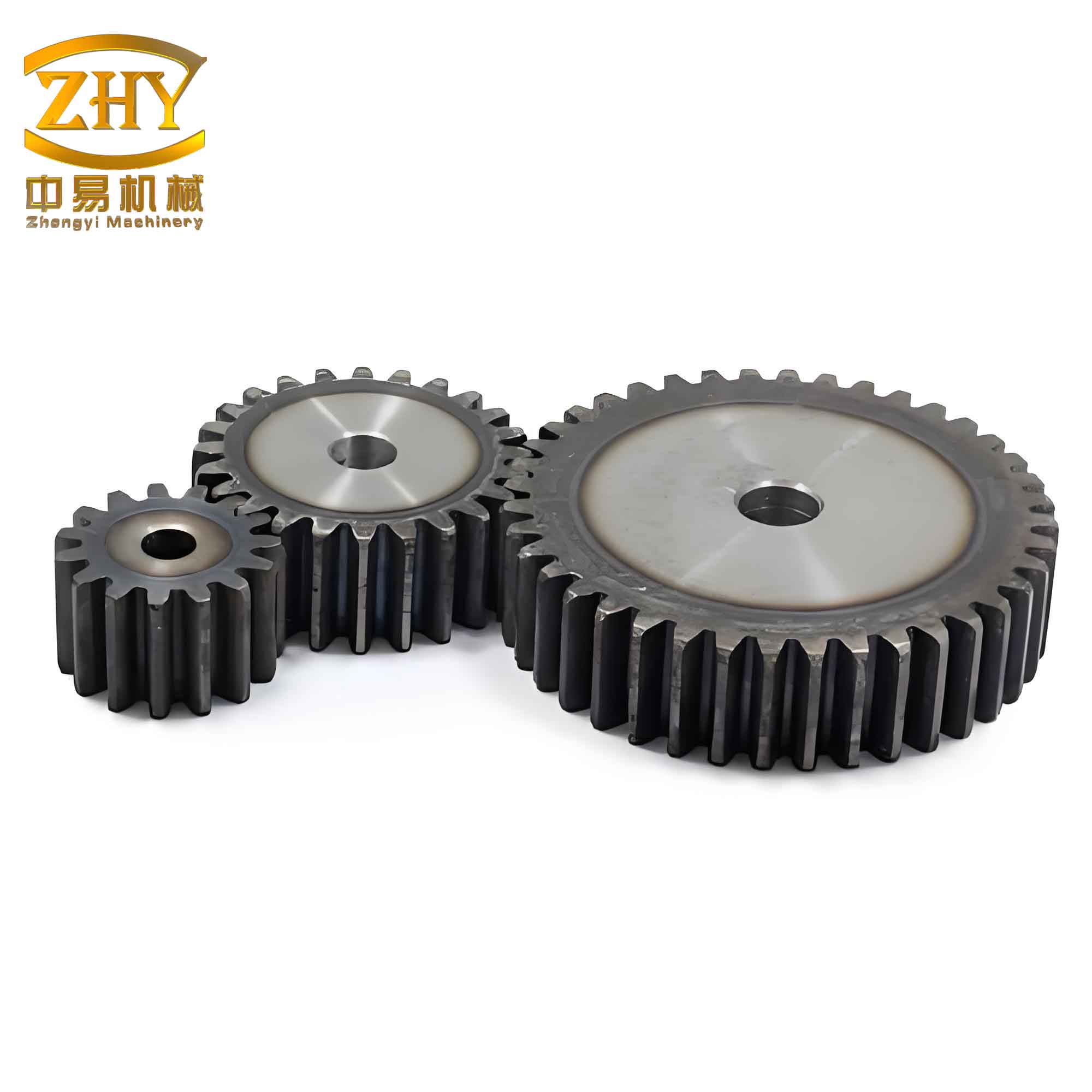
Modeling Tooth Profile Errors in Cylindrical Gears
Tooth profile error, or profile deviation, refers to the departure of the actual machined tooth flank from its ideal theoretical involute form. For cylindrical gears, these deviations manifest as convex, concave, or angular inaccuracies along the active profile. Their genesis can be traced to three principal sources: tooling inaccuracies during gear cutting, inherent errors in the machine tool system, and thermal deformations during gear meshing under load. Accurately modeling these errors is the first step in analyzing their dynamic impact.
1. Errors Induced by Cutting Tool Imperfections
In processes like hobbing, imperfections in the cutting tool are a dominant source of profile error in the finished cylindrical gear. These include theoretical errors in the tool profile, manufacturing tolerances, and errors in tool setting or alignment. The comprehensive profile error $\Delta f_T$ resulting from tooling can be estimated by synthesizing the effects of individual error components:
$$\Delta f_T = \sqrt{\Delta f_\alpha^2 + \Delta f_\gamma^2 + \Delta f_r^2 + \Delta f_\alpha^2 + \Delta f_{\alpha\theta}^2}$$
where:
- $\Delta f_\alpha$ is the error due to incorrect tool pressure angle.
- $\Delta f_\gamma$ is the error due to non-radial deviation of the tool.
- $\Delta f_r$ and $\Delta f_\alpha$ are errors from tool radial and axial runout, respectively.
- $\Delta f_{\alpha\theta}$ is the error from tool axis tilt.
These components collectively alter the local geometry of each tooth on the cylindrical gear, introducing a deterministic yet complex deviation from the ideal involute.
2. Errors Originating from Machine Tool Systems
The kinematic chain of the gear-cutting machine, especially periodic errors in the indexing mechanism, imparts a characteristic error pattern on the cylindrical gear. Errors in the machine’s rotary motion, such as radial displacements of supports and torsional vibrations of the worktable, directly translate into tooth profile deviations. The resultant machine-induced error $\Delta f_M$ can be expressed as:
$$\Delta f_M = \sqrt{(\Delta f_s)^2 + (\Delta f_r)^2}$$
Here, $\Delta f_s = \Delta S_2 \cos \alpha$ represents the error from radial support displacement ($\Delta S_2$), and $\Delta f_r = r \tan \alpha \cdot \phi_g$ represents the error from worktable torsional vibration ($\phi_g$). Unlike tool errors which might affect individual teeth variably, machine tool errors often impart a more systematic deviation across the gear.
3. Errors Caused by Thermal Deformation During Meshing
The operation of a cylindrical gear pair involves friction and contact stresses, leading to a rise in tooth surface temperature. This temperature field, consisting of a bulk gear temperature $\Delta t$ and a transient flash temperature $\Delta f(t)$ at the contact, causes thermal expansion. The resulting thermal deformation modifies the tooth profile in real-time. The instantaneous flash temperature is a function of meshing parameters:
$$\Delta f(t) = \frac{u f_m F_n [v_1(t) – v_2(t)]}{[g_1 \rho_1 c_1 v_1(t) + g_2 \rho_2 c_2 v_2(t)] B(t)}$$
where $v_i(t)$ are the surface velocities, $B(t)$ is the instantaneous Hertzian contact half-width, and other terms represent material thermal properties and friction. The total contact temperature change $\Delta T(t) = \Delta t + \Delta f(t)$ drives the thermal profile error $\Delta f_f(t)$ at a point on the involute:
$$\Delta f_f(t) = \Delta_i(t) \lambda \left[ r_{bi} \left( \text{inv} \alpha_k – \text{inv} \alpha \right) + \frac{S}{2} \right]$$
with $\Delta_i(t) = \Delta T(t) – \Delta_0$, where $\lambda$ is the coefficient of linear expansion, $r_{bi}$ is the base radius, $S$ is the base tooth thickness, and $\alpha_k$ is the pressure angle after thermal deformation. This error is dynamic, evolving with the meshing cycle and load conditions, making it a critical factor in the nonlinear dynamics of high-speed cylindrical gear systems.
Dynamic Modeling of Cylindrical Gear Systems with Profile Errors
To analyze the dynamic consequences of these profile errors, a multi-body elastic contact dynamics model is established for a cylindrical gear transmission system. The model considers a pair of spur cylindrical gears, accounting for time-varying mesh stiffness $k(t)$, mesh damping $c_m$, gear body inertias, and the nonlinear displacement excitation introduced by the profile errors $\Delta f_{err}$ (representing $\Delta f_T$, $\Delta f_M$, or $\Delta f_f$).
The equation of motion for the torsional vibration of a simple gear pair can be represented in a relative displacement coordinate along the line of action:
$$I_{eq} \ddot{x}(t) + c_m \dot{x}(t) + k(t) \cdot f(x(t), b(t)) = F_{m} – I_{eq} \ddot{e}(t)$$
where:
- $x(t) = r_{b1}\theta_1 – r_{b2}\theta_2 – e(t)$ is the relative dynamic transmission error.
- $I_{eq}$ is the equivalent mass moment of inertia.
- $f(x(t), b(t))$ is a nonlinear backlash function dependent on the time-varying half-backlash $b(t)=b_n – \Delta f_{err}$.
- $F_m$ is the average force from the input torque.
- $e(t)$ is the static transmission error, now inclusive of the profile error displacement: $e(t)=e_0 + e_a \sin(\omega_m t + \phi) + \Delta f_{err}$.
The time-varying mesh stiffness $k(t)$ is itself affected by the profile error. The composite mesh stiffness for an error-afflicted cylindrical gear pair becomes:
$$k(t) = k_t(t) + k_{\omega}(t)$$
$$k_{\omega}(t) = \frac{k_1(t) \cdot k_2(t)}{k_1(t) + k_2(t)}$$
Here, $k_t(t)$ is the traditional periodic mesh stiffness of an ideal gear pair, and $k_{\omega}(t)$ is the equivalent stiffness change derived from the local tooth deflections $\delta_i(t)$ caused by the profile errors, where $k_i(t) = F_n / (b \cdot \delta_i(t))$. This formulation integrates the profile error’s effect directly into the primary internal excitation mechanism of the cylindrical gear system.
Influence of Profile Errors on Mesh Stiffness of Cylindrical Gears
The mesh stiffness is a critical parameter governing the dynamic response. Using a finite element-based approach combined with the analytical contact model, the mesh stiffness was computed for both single-stage and two-stage cylindrical gear systems under the influence of the three profile error types. The results, compared against the ideal profile case, reveal significant degradation.
Stiffness Reduction in Single-Stage Cylindrical Gear Drive
For a single-stage cylindrical gear pair, the introduction of any profile error reduces the effective mesh stiffness throughout the engagement cycle. The following table exemplifies the reduction observed at various mesh phases for tooling-induced errors:
| Mesh Phase | Ideal Stiffness (10^4 N/mm) | Stiffness with $\Delta f_T$ (10^4 N/mm) |
|---|---|---|
| 1 | 1.1220 | 1.0729 |
| 2 | 1.3683 | 1.2679 |
| 3 | 1.3328 | 1.2977 |
| 4 | 1.3987 | 1.2119 |
| 5 | 1.3636 | 1.2815 |
A similar trend is observed for machine-induced ($\Delta f_M$) and thermal ($\Delta f_f$) errors. The thermal error, being dynamic, causes the most pronounced and unstable stiffness variation during meshing. The loss of stiffness is attributed to the altered contact conditions: profile errors reduce the effective contact area and can cause localized stress concentrations, leading to greater compliance under the same nominal load.
Amplified Stiffness Reduction in Two-Stage Cylindrical Gear Drive
The effect is magnified in a two-stage cylindrical gear system. The compounded interactions between errors in multiple gear meshes lead to a more substantial decrease in overall system stiffness. The table below shows the comparative stiffness for the second stage under tooling error influence:
| Mesh Phase | Ideal Stiffness (10^4 N/mm) | Stiffness with $\Delta f_T$ (10^4 N/mm) |
|---|---|---|
| 1 | 1.3681 | 1.0696 |
| 2 | 1.3301 | 1.0080 |
| 3 | 1.3711 | 1.0614 |
| 4 | 1.3397 | 1.0185 |
| 5 | 1.3803 | 1.0307 |
The percentage reduction in stiffness is consistently larger than in the single-stage case. The ranking of error impact on stiffness reduction, from most to least severe, is generally: Thermal Deformation Error ($\Delta f_f$) > Machine Tool Error ($\Delta f_M$) > Tooling Error ($\Delta f_T$). This hierarchy underscores the critical need to control operational temperature and machine tool accuracy in high-precision cylindrical gear applications.
Dynamic Response Analysis of Cylindrical Gear Systems with Profile Errors
The alteration in mesh stiffness and the direct displacement excitation from profile errors fundamentally change the dynamic output of the cylindrical gear system. Numerical integration of the system’s equations of motion yields the time-domain and frequency-domain responses.
Changes in Natural Frequency
The inherent natural frequencies of the system shift due to the modified stiffness characteristics. For tooling and thermal errors, which generally reduce stiffness, the natural frequencies tend to decrease. Conversely, certain machine tool errors that affect gear geometry systematically can sometimes alter the mass distribution or effective inertia, potentially leading to a different trend. This shift in natural frequencies is crucial as it changes the system’s propensity to resonate at certain operating speeds.
Time-Domain Vibration Response
The time-domain vibration amplitude increases markedly in the presence of profile errors. For a single-stage cylindrical gear system, the vibration amplitude in the direction of the line of action shows pronounced oscillations corresponding to the mesh frequency and its harmonics. In the two-stage system, the vibration amplitude is significantly larger than in the single-stage system for the same type and magnitude of error. This is due to the cascading effect of excitations through the two meshes. The startup transient phase exhibits severe冲击 due to the sudden engagement of imperfect tooth profiles, followed by a steady-state response with periodic fluctuations that are larger and less regular than in the error-free case. The thermal error induces the most unstable and time-varying amplitude due to the continuously changing profile deviation.
Frequency-Domain Spectral Characteristics
The frequency spectrum of the dynamic transmission error reveals the spectral contamination caused by profile errors. In an ideal cylindrical gear system, the spectrum is dominated by the mesh frequency and its harmonics. With profile errors, several detrimental changes occur:
- Sidebands: Modulation sidebands appear around the mesh frequency and its harmonics, spaced at the rotational frequency of the faulty gear. This is a classic signature of localized errors like those from tooling.
- Increased Harmonic Content: The amplitudes of existing mesh harmonics are amplified.
- Emergence of New Frequency Components: For periodic machine tool errors or the complex, time-varying thermal error, additional spectral lines appear at frequencies not harmonically related to the mesh frequency. These components indicate a more severe degradation of the system’s dynamic stability.
- Broadband Noise Increase: Particularly with thermal errors, a rise in the broadband noise floor is observed, indicating increased nonlinear interactions and chaotic tendencies within the cylindrical gear system.
The frequency response of a two-stage system under machine tool error, for instance, shows a highly unstable spectrum with numerous non-harmonic components, indicating a severe departure from smooth, predictable motion.
Conclusion
This investigation systematically elucidates the significant impact of tooth profile errors on the dynamic characteristics of cylindrical gear transmission systems. By modeling errors from tooling, machine tools, and operational thermal deformation, and integrating them into a nonlinear multi-body dynamics framework, the following key conclusions are drawn:
- All three sources of profile error lead to a measurable reduction in the time-varying mesh stiffness of cylindrical gear pairs. The reduction is most severe for thermally induced errors and is amplified in multi-stage gear systems compared to single-stage ones.
- The profile errors act as a direct kinematic excitation and, by altering the mesh stiffness, modulate the primary parametric excitation of the system. This dual effect dramatically increases the vibration amplitude in the time domain, with two-stage cylindrical gear systems exhibiting more severe vibrations than their single-stage counterparts.
- The spectral signature of the system’s response becomes enriched with sidebands and additional non-harmonic components, providing diagnostic features for error identification. The system’s natural frequencies shift, altering its critical speed map and potential resonance conditions.
- The dynamic behavior becomes less stable and predictable, especially under the influence of time-varying thermal profile errors, which can push the cylindrical gear system towards nonlinear, chaotic regimes of operation.
Therefore, controlling tooth profile accuracy is paramount not just for static load capacity but fundamentally for dynamic performance. This analysis provides a theoretical foundation for predicting vibration and noise, informing precision manufacturing tolerances, and developing condition monitoring strategies for cylindrical gear systems operating under realistic, imperfect conditions.