
The helicopter transmission system stands as a critical, demanding, and weight-sensitive component within the entire aircraft. Its primary function is to transmit immense power from the turbine engines to the main and tail rotors while significantly reducing rotational speed. Within this system, gears are paramount structural elements, operating under extraordinarily complex conditions. They must endure alternating tensile-compressive stresses, shear stresses, and impact loads while possessing capabilities for wear resistance, corrosion resistance, and high-temperature tolerance. The core metrics of an aviation gearbox—its mass, load-carrying capacity, dry-run capability, and service life—are intrinsically linked to the performance of its cylindrical gear transmission system.
Compared to helical or herringbone cylindrical gears, spur cylindrical gears, while having a lower inherent load capacity, offer significant advantages in simplicity, cost-effectiveness, and the absence of axial thrust loads. This elimination of axial forces simplifies bearing design, contributing directly to a reduction in the overall mass of the transmission system. Consequently, spur cylindrical gears are the most widely used gear form in aviation transmissions, particularly in the planetary stages ubiquitous in helicopter main gearboxes.
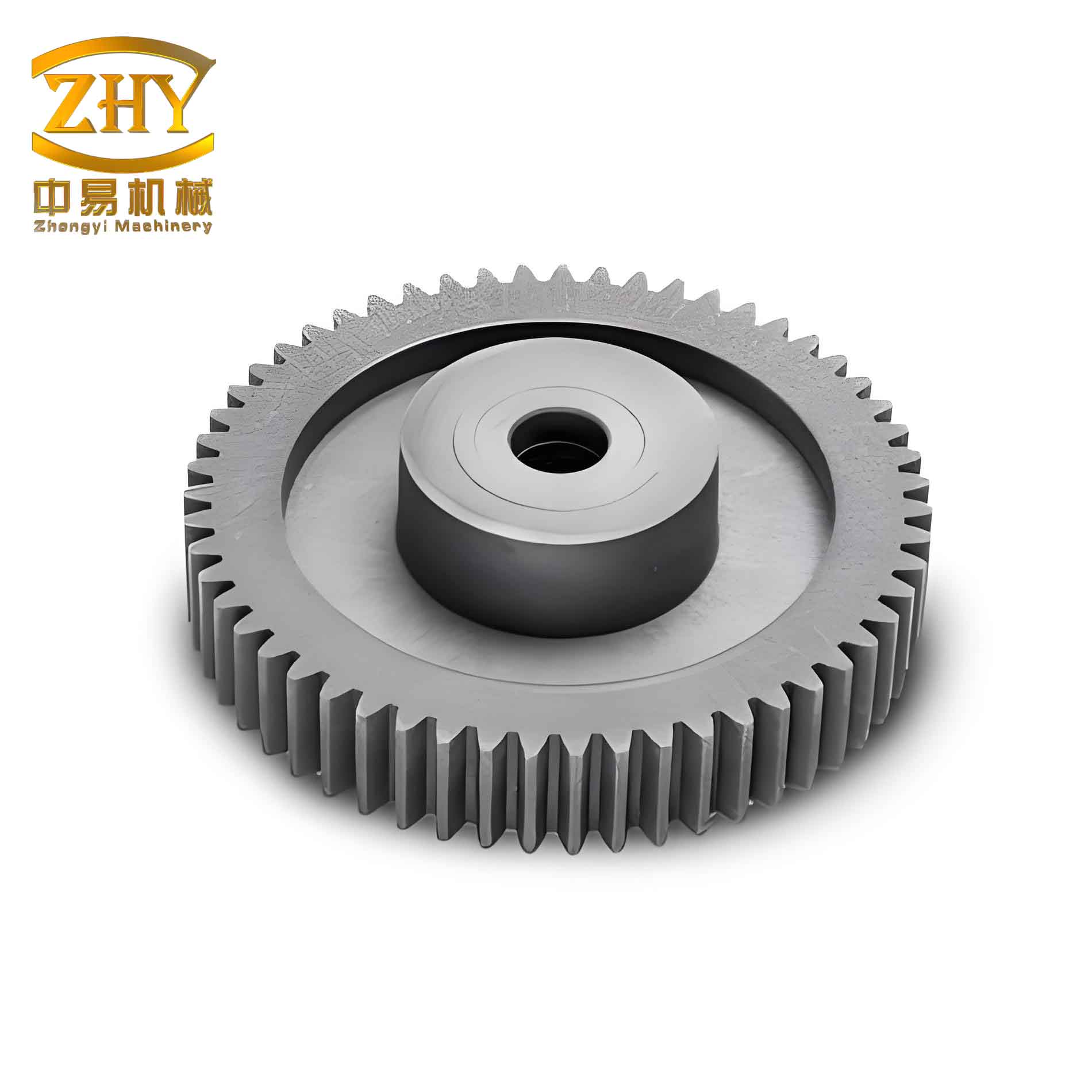
As technology advances, transmission systems in aerospace are relentlessly pushed towards higher speeds, heavier loads, and greater precision. This evolution demands even greater performance from cylindrical gears. While increasing the module or face width of a spur cylindrical gear can enhance its load capacity, it does so at the expense of increased volume and mass—a direct contradiction to the paramount aerospace requirements for compactness and high power-to-weight ratios. The pursuit of extreme power-to-weight ratios in helicopter transmissions has rendered conventional spur cylindrical gears increasingly inadequate. While new materials and processes offer a path forward, their development requires long-term accumulation and validation. In this context, novel, non-standard tooth geometry design emerges as a breakthrough point for enhancing gear capacity, serving as a crucial direction to resolve the dilemma of achieving high power density, compact size, and low vibration in aerospace gearing.
Fundamental Concepts: From Conventional to High Contact Ratio Gearing
Gear transmission operates on the principle of successive tooth pair engagement. Continuous, constant-ratio motion is only achieved when a subsequent tooth pair enters mesh before the preceding pair disengages. The parameter quantifying this overlap in engagement is the transverse contact ratio (εα).
For a standard spur cylindrical gear pair, the contact ratio typically lies between 1 and 2 (1 < εα < 2). This means that for a significant portion of the mesh cycle, only a single tooth pair carries the entire load, and for a shorter period, two pairs share the load. This is classified as Low Contact Ratio (LCR) gearing.
A High Contact Ratio (HCR) spur cylindrical gear pair is characterized by a transverse contact ratio greater than 2 (εα > 2). Consequently, for most of the engagement cycle, two tooth pairs are in contact, and for a period, three pairs simultaneously share the load. This fundamental shift in load-sharing mechanics underpins all the advantages and challenges associated with HCR cylindrical gears.
The contact ratio for a spur gear pair is calculated based on the path of contact and the base pitch:
$$ \varepsilon_\alpha = \frac{\sqrt{r_{a1}^2 – r_{b1}^2} + \sqrt{r_{a2}^2 – r_{b2}^2} – a \sin\alpha_t}{p_b} $$
Where:
- $r_{a1}, r_{a2}$ are the tip radii of the pinion and gear.
- $r_{b1}, r_{b2}$ are the base circle radii.
- $a$ is the operating center distance.
- $\alpha_t$ is the operating transverse pressure angle.
- $p_b$ is the base pitch ($p_b = \pi m_n \cos\alpha_n$, where $m_n$ is the normal module and $\alpha_n$ is the normal pressure angle).
To achieve εα > 2, several design parameter modifications are employed, often in combination:
- Reduced Pressure Angle (α): A smaller pressure angle increases the length of the path of contact for given tip diameters.
- Increased Addendum Coefficient (ha*): Enlarging the tooth height (increasing tip diameter) extends the active profile, lengthening the path of contact.
- Increased Number of Teeth (z): More teeth increase the overlap, though this also increases gear size.
- Profile Shift (x): Strategic application of profile shift (modifying the cutting tool offset) can optimize contact patterns and balance specific sliding velocities.
A comparison of typical design parameters is shown in the table below:
| Parameter | Conventional LCR Spur Gear | High Contact Ratio (HCR) Spur Gear |
|---|---|---|
| Transverse Contact Ratio (εα) | 1.4 – 1.8 | > 2.0 (typically 2.1 – 2.4) |
| Pressure Angle (α) | 20° – 25° | 14° – 20° |
| Addendum Coefficient (ha*) | 1.0 – 1.25 | 1.4 – 1.8 |
| Tooth Tip Thickness | Substantial | Relatively thin, a critical design constraint |
Technical Advantages of HCR Cylindrical Gears for Helicopter Applications
The fundamental shift in load-sharing mechanics confers several critical advantages to HCR spur cylindrical gears, making them highly attractive for helicopter transmissions.
1. Improved Load Distribution and Reduced Unit Loading
The most significant advantage is the distribution of the transmitted load across two or three tooth pairs simultaneously. This dramatically reduces the load borne by any individual tooth pair at a given instant. The load-sharing is governed by the relative stiffness of the contacting tooth pairs. The total mesh stiffness $k_{mesh}(t)$ of an HCR gear pair is the sum of the individual tooth pair stiffnesses $k_i(t)$ for all pairs in contact:
$$ k_{mesh}(t) = \sum_{i=1}^{n(t)} k_i(t) $$
where $n(t)$ is the number of tooth pairs in contact at time $t$ (2 or 3 for HCR). The load $F_i$ on the i-th tooth pair is approximately:
$$ F_i(t) \approx \frac{k_i(t)}{k_{mesh}(t)} \cdot F_{total} $$
This leads to a lower average load per unit length of contact line, directly benefiting contact (pitting) fatigue life. Furthermore, the most critically loaded point for bending stress moves away from the vulnerable tooth tip region, enhancing bending fatigue resistance.
2. Enhanced Strength and Durability
Analytical and Finite Element Analysis (FEA) studies consistently show strength improvements for HCR cylindrical gears. The bending stress $\sigma_F$ at the tooth root can be modeled by a refined form of the Lewis equation, incorporating load-sharing factors:
$$ \sigma_F = \frac{F_t}{b m_n} \cdot Y_F \cdot Y_\varepsilon \cdot Y_\beta \cdot K_A K_V K_{F\alpha} K_{F\beta} $$
For HCR gears, the transverse load factor $Y_\varepsilon$, which accounts for the contact ratio, becomes more favorable. A common approximation for the bending strength gain is that when εα crosses the threshold of 2, the effective stress can see a step-like reduction. Similarly, for contact stress $\sigma_H$ (Hertzian stress):
$$ \sigma_H = Z_{H} Z_{E} Z_{\varepsilon} Z_{\beta} \sqrt{\frac{F_t}{b d_1} \cdot \frac{u+1}{u} \cdot K_A K_V K_{H\alpha} K_{H\beta}} $$
The zone factor $Z_H$ and the contact ratio factor $Z_\varepsilon$ are influenced by the increased number of contact lines and the altered curvature at the contact points, generally leading to a reduction in the maximum contact pressure compared to an LCR gear under the same nominal load and size.
3. Reduced Vibration and Noise
Helicopter cabin and community noise are major design drivers. The multi-pair contact of HCR cylindrical gears results in a smoother transfer of power. The variation in total mesh stiffness $k_{mesh}(t)$ over a mesh cycle (the primary source of gear-induced vibration) is significantly lower in amplitude for HCR gears than for LCR gears. This reduction in stiffness excitation directly translates to lower dynamic loads, reduced vibration amplitudes, and consequently, lower noise emission, particularly at the gear mesh frequency and its harmonics. This is a critical advantage for passenger comfort and meeting stringent environmental noise regulations.
4. System Resilience and Survivability
With a contact ratio consistently above 2, an HCR gear train possesses an inherent fail-safe feature: it can continue to transmit power (albeit at reduced capacity and with increased vibration) even after the loss of an entire tooth. This “damage tolerance” or “limp-home” capability is highly valuable for enhancing the survivability and safety of helicopter transmission systems, a non-negotiable requirement in aviation.
5. Potential for Mass Reduction
Given their higher load capacity per unit face width, HCR cylindrical gears offer the potential to achieve a specified power rating with a narrower face width or smaller module compared to LCR gears. This can lead to a direct reduction in gear mass and potentially smaller bearing sizes, contributing to the overall goal of improving the transmission’s power-to-weight ratio. However, this potential must be balanced against other constraints like scoring risk and heat generation.
The following table summarizes the qualitative comparison between different spur gear transmission forms for helicopter applications:
| Feature / Requirement | Conventional LCR Spur Gears | HCR Spur Gears | Helical/Herringbone Gears |
|---|---|---|---|
| Load Capacity (Bending/Contact) | Baseline | Superior | Superior (due to axial overlap) |
| Transmission Error & Vibration | Higher | Lower | Lowest (smooth engagement) |
| Noise Emission | Higher | Lower | Low |
| Axial Thrust Bearings | Not Required | Not Required | Required (adds complexity & mass) |
| Manufacturing Complexity/Cost | Lowest | Moderate (special tooling/processes) | Higher |
| Damage Tolerance (ε>2) | No | Yes | Possible but not inherent |
| Primary Risk | Fatigue | Scoring & Heat Management | Complexity, Thrust Loads |
Critical Design and Analysis Challenges
Despite the compelling advantages, the implementation of HCR cylindrical gears in demanding helicopter transmissions is fraught with significant technical challenges that must be meticulously addressed.
1. The Void in Strength Calculation Standards
A major hurdle for designers is the lack of universally accepted, precise calculation methods for HCR gears in mainstream standards. Prominent standards explicitly caution against their use for high-contact-ratio designs.
- AGMA Standards: The American Gear Manufacturers Association standards (e.g., ANSI/AGMA 2001-D04) typically state that they are not intended for the precise design of spur gears with a transverse contact ratio greater than 2.
- ISO Standards: While ISO 6336 series acknowledges contact ratios above 2, its treatment is often simplified. The standard applies a contact ratio factor ($Z_\varepsilon$, $Y_\varepsilon$) but does not perform a detailed multi-pair load distribution analysis based on actual tooth stiffness variation, potentially leading to inaccuracies.
This standard gap forces reliance on advanced analytical tools like specialized load distribution programs and high-fidelity Finite Element Analysis (FEA) for stress verification. Developing and validating standardized calculation methodologies that accurately model the multi-pair contact and load sharing in HCR cylindrical gears is an urgent need for the industry.
2. The Imperative of Tooth Profile Modification
The extended tooth engagement in HCR gears, coupled with manufacturing errors and deflections under load, can lead to edge-loading at the tips and roots of the teeth. This is particularly detrimental because the high sliding velocities in these regions, inherent to the HCR geometry, already elevate the risk of scuffing (scoring). Therefore, deliberate tooth profile modifications (tip and root relief) are not optional but essential for HCR cylindrical gears.
The goal is to pre-compensate for deflections and avoid detrimental edge contacts, thereby optimizing the load distribution across the active profile and minimizing the risk of scuffing. Determining the optimal modification curve (linear, parabolic, etc.), its starting point (usually at 70-90% of the active profile from the start of active profile), and its magnitude is a complex task. It requires sophisticated system-level analysis considering shaft, bearing, and housing deflections. An optimized profile modification $C_{mod}(s)$ as a function of roll distance $s$ along the profile is crucial for performance.
3. The Challenge of Tooth Tip Integrity and Heat Treatment
The high addendum necessary for HCR results in thin, pointed tooth tips. This geometry poses a serious challenge during case-hardening processes like carburizing or nitriding, which are standard for high-strength aerospace cylindrical gears. The thin tip can lead to excessive carbon concentration or nitride formation, causing embrittlement. This makes the tip prone to chipping, micro-cracking, or even gross fracture under load.
The standard mitigation technique is to mask the tooth tips (e.g., by copper plating) before carburizing to prevent case formation at the very tip. However, this leaves the tip region with core hardness, compromising its wear resistance. This trade-off between tip toughness (avoiding brittleness) and tip durability (resisting wear and deformation) requires careful management through precise process control and potentially novel heat treatment strategies tailored for HCR geometry.
4. Lubrication, Scoring Risk, and Thermal Management
This is arguably the most critical challenge for HCR cylindrical gears. The increased addendum amplifies the sliding velocity $v_g$ at the points of engagement and disengagement. The sliding velocity is given by:
$$ v_g = v_{t1} – v_{t2} $$
where $v_{t1}$ and $v_{t2}$ are the tangential velocities of the pinion and gear at the point of contact. High sliding velocities, combined with high contact pressures, lead to increased friction power loss and a dramatic rise in localized flash temperatures at the tooth surfaces. This significantly increases the risk of scuffing (adhesive wear), a catastrophic failure mode.
The risk is often assessed using scoring criteria like the flash temperature method (Blok). The contact flash temperature $T_f$ is a function of the load, sliding velocity, material properties, and lubrication. For HCR gears, $v_g$ is higher, pushing $T_f$ closer to or beyond the critical limit for the lubricant/material pair.
Consequently, HCR gears place far more stringent demands on the lubrication system:
- Advanced Lubricants: Requiring lubricants with higher extreme pressure (EP) additives and thermal stability.
- Aggressive Cooling: Demanding highly efficient cooling systems (e.g., oil jets directed precisely at the mesh exit) to remove the additional frictional heat.
- Potential Efficiency Trade-off: The higher sliding friction can lead to a slight reduction in transmission efficiency compared to an equivalent LCR design, which must be accounted for in system thermal models.
The table below summarizes the primary design challenges and their mitigation strategies:
| Challenge | Root Cause | Potential Consequences | Mitigation Strategies |
|---|---|---|---|
| Scoring (Scuffing) Risk | High sliding velocities at tip/root engagement. | Catastrophic adhesive wear, surface destruction. | Optimized profile modification; Advanced EP lubricants; Enhanced cooling; Special surface treatments (DLC, etc.). |
| Tooth Tip Chipping/Cracking | Thin tip geometry + case hardening. | Fatigue initiation, reduced bending strength, debris generation. | Tip masking (copper plating) during carburizing; Controlled carburizing cycles; Alternative heat treatment (e.g., induction hardening of tips). |
| Inaccurate Strength Prediction | Lack of standard methods for multi-pair load share. | Over-design (mass penalty) or under-design (reliability risk). | Development of specialized FEA/analytical tools; Generation of proprietary design factors; Full-scale testing. |
| Thermal Management | Increased frictional power losses. | High bulk oil temperature, reduced lubricant life, accelerated wear. | High-flow, targeted oil jet cooling; Optimized oil formulation for heat removal; Thermal modeling of the gearbox. |
Application Case Studies in Helicopter Transmissions
The theoretical benefits of HCR cylindrical gears have driven several leading helicopter manufacturers to pursue their development and implementation, with notable successes.
1. Bell Helicopter’s Pioneering Work and the Advanced Rotorcraft Transmission (ART) Program
Bell Helicopter was a pioneer, first implementing HCR spur gears in the transmission of the Bell 222. Their most significant development occurred under the joint U.S. Army/NASA Advanced Rotorcraft Transmission (ART) program in the early 1990s. The objective was a lighter, more efficient main rotor drive system. Bell’s design focused on a two-stage HCR planetary system with a target contact ratio > 2.1. The final design, after iterations to manage bearing loads and thermal issues, achieved a mass reduction of approximately 3.6 kg compared to a conventional LCR planetary system, along with a reported 20% increase in bending strength and significantly lower noise.
2. McDonnell Douglas (Now Boeing) ART Program Contributions
Under the same ART program, McDonnell Douglas explored an HCR planetary design with a contact ratio of about 2.22. Their final gearbox design weighed only 31 kg, representing a 5% mass saving. While tests showed a slight decrease in efficiency (from 99.93% to 99.85%) and a notable increase in contact temperature (from 131°C to 170°C) compared to the baseline LCR design, the benefits were compelling: a noise reduction of about 9.5 dB and a doubling of predicted fatigue life. This case starkly highlights the thermal challenge inherent in HCR designs.
3. Boeing’s Research on Non-Involute HCR Profiles
Boeing also conducted research into non-standard, high-contact-ratio tooth profiles. By deviating from the standard involute form, they aimed to optimize the radius of curvature along the profile, particularly in the high-sliding tip and root regions, to better balance contact stress and scoring resistance. This represents an advanced avenue for HCR cylindrical gear development, moving beyond simple parameter modification of the involute.
4. Sikorsky’s Focus on Dynamics and Profile Modification
Sikorsky Aircraft conducted extensive dynamic analysis of HCR gears, leading to the development of optimized profile modifications based on dynamic performance goals. Their research indicated that a parabolic relief starting at around 90% of the tooth active profile height was effective. Crucially, their testing demonstrated that properly modified HCR gears could exhibit a 2x improvement in pitting fatigue life (at 10% failure probability) and slightly better scoring resistance compared to LCR gears, proving that the thermal/scoring challenge could be managed through intelligent design.
5. International Adoption: Eurocopter (Airbus) and AgustaWestland (Leonardo)
The technology saw successful international adoption. The French company Eurocopter (now Airbus Helicopters) employed HCR planetary gears in the SA 365N “Dauphin” helicopter main gearbox, with reported contact ratios of 2.17 and 2.18 for the sun-planet and planet-ring meshes, respectively. Flight tests confirmed significant gains in load capacity and reduced noise and vibration. Similarly, AgustaWestland (now Leonardo) upgraded the input stage of the AW109 helicopter transmission with HCR gears. The result was a 10% power increase, a 20% reduction in face width, an 8% mass reduction, and an average noise reduction of 9 dB at mesh frequency, with a maximum A-weighted sound pressure level reduction of 13 dB.
The following table provides a consolidated view of these key historical applications:
| Company / Program | Helicopter / Project | Reported HCR (εα) | Key Reported Benefits / Findings |
|---|---|---|---|
| Bell Helicopter / NASA ART | Advanced Technology Demonstrator | > 2.1 | ~3.6 kg mass saving, 20% bending strength increase, lower noise. |
| McDonnell Douglas / NASA ART | Advanced Technology Demonstrator | ~2.22 | 5% mass saving, 9.5 dB noise reduction, 2x life, but higher contact temp. |
| Sikorsky Aircraft | Research & Development | N/A | Optimized parabolic profile relief developed; 2x pitting fatigue life demonstrated. |
| Eurocopter (Airbus) | SA 365N Dauphin | 2.17 / 2.18 | Increased load capacity, reduced noise and vibration in flight. |
| AgustaWestland (Leonardo) | AW109 Upgrade | N/A | 10% more power, 20% narrower face, 8% lighter, 9-13 dB noise reduction. |
Future Outlook and Critical Research Needs
The journey of HCR spur cylindrical gears from a promising concept to a proven technology in Western helicopter transmissions underscores its value. However, for broader and more optimized adoption, several key areas demand focused research and development.
1. Development of Robust Design Standards and Tools: There is an urgent need to extend or create new sections within international gear rating standards (AGMA, ISO) specifically for HCR gears. This requires extensive testing to generate reliable data for calculating factors like the load distribution factor ($K_{H\alpha}$, $K_{F\alpha}$), the contact ratio factors ($Z_\varepsilon$, $Y_\varepsilon$), and scoring risk criteria for HCR geometry. The development of validated, user-friendly design software incorporating advanced load-sharing algorithms is equally important.
2. Advanced, Integrated Profile and Lead Optimization: Research must move beyond simple tip/root relief. The optimization of tooth modifications (profile, lead, and bias) should be performed using multi-objective algorithms that simultaneously minimize transmission error (for noise), maximize scoring load capacity (flash temperature), and ensure favorable load distribution (for strength). This requires tightly coupled thermo-elastohydrodynamic lubrication (TEHL) and dynamic models.
3. Innovative Manufacturing and Heat Treatment Processes: Processes must be developed to reliably produce the delicate HCR tooth tip without compromising its integrity or durability. This could involve:
- Advanced grinding techniques with optimized wheel profiles.
- Alternative case-hardening methods with precise case depth control.
- Exploration of post-hardening finishing processes like abrasive flow machining or laser shock peening to improve the surface condition of the tip region.
4. Holistic System Integration and Thermal Modeling: The design of HCR gears cannot be done in isolation. It must be integrated with the design of the lubrication and cooling system from the outset. High-fidelity computational fluid dynamics (CFD) and thermal network models are needed to predict bulk oil and gear temperatures accurately, ensuring that the higher thermal load of HCR meshes can be effectively managed without penalty to system efficiency or reliability.
In conclusion, High Contact Ratio spur cylindrical gears represent a sophisticated and powerful technology for enhancing the performance of helicopter transmission systems. Their ability to improve load capacity, reduce noise and vibration, and provide inherent damage tolerance aligns perfectly with the evolving demands of modern rotorcraft. However, reaping these benefits requires conquering significant challenges centered on scoring resistance, thermal management, tooth tip integrity, and the lack of standardized design practices. The historical application cases prove the feasibility and value of the technology. Future progress hinges on a concerted, interdisciplinary effort focusing on advanced analysis, innovative manufacturing, and holistic system design to fully mature HCR cylindrical gear technology and solidify its role in the next generation of high-performance, quiet, and reliable helicopter transmissions.