
In the pursuit of high-efficiency, low-noise, and highly durable power transmission systems, the dynamic behavior of gear trains remains a critical area of investigation. As systems trend towards higher speeds and power densities, mitigating vibration and noise becomes paramount. A significant source of dynamic excitation in cylindrical gear pairs stems from manufacturing imperfections, assembly variations, and operational environment changes. These factors impart a stochastic nature to the composite transmission error and the microscopic topography of the gear tooth surfaces, leading to complex and often unpredictable dynamic responses.
From an engineering perspective, the uncertainties inherent in the machining and assembly processes of a cylindrical gear transmission directly result in unpredictable transmission errors. This uncertainty subsequently influences the surface morphology during meshing. The topography of the tooth surface is a primary driver of friction phenomena at the gear interface. It is well-established that frictional forces tend to increase with surface roughness, which itself possesses a random character. Crucially, the gear transmission error and tooth surface friction parameters are not independent; they interact and influence each other. The combined effect of these random excitations—transmission error and friction parameters—on the overall dynamic characteristics of a cylindrical gear system is not fully understood. Therefore, developing a dynamic model that accounts for the randomness in both composite transmission error and tooth surface friction parameters is essential. This work aims to provide a theoretical foundation for subsequent reliability analysis and dynamic optimization of gear transmission systems.
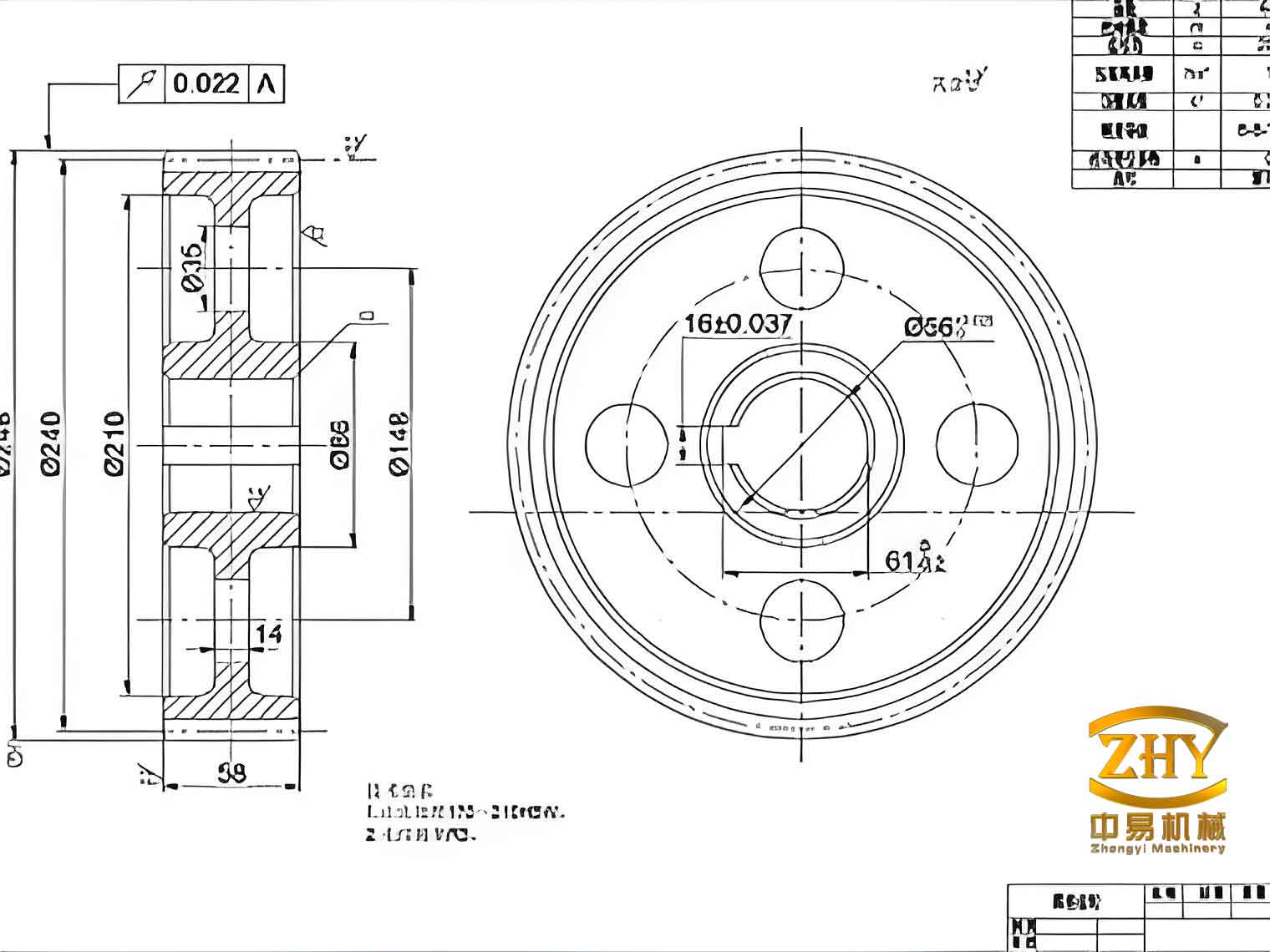
To address this, a dynamic model for a spur cylindrical gear pair is formulated, integrating principles from probability statistics and the lumped mass method. Key parameters, namely the transmission error and factors governing tooth surface friction (coefficient of friction and meshing radius), are mathematically characterized as random variables. A three-degree-of-freedom bending-torsional coupled vibration model is established. The dynamic responses are solved numerically, and the individual and combined influences of these random parameters on the system’s vibration characteristics are thoroughly analyzed.
1. Dynamic Model of a Spur Cylindrical Gear Pair with Random Error and Friction
A three-degree-of-freedom bending-torsional coupled dynamic model for a spur cylindrical gear pair is established using the lumped mass method. The model considers displacements in the line-of-action direction, the off-line-of-action direction, and the rotational direction for both the driving (pinion) and driven (gear) wheels. The generalized coordinate vector is defined as:
$$ \mathbf{q} = [x_p, y_p, \theta_p, x_g, y_g, \theta_g]^T $$
Accounting for time-varying mesh stiffness \(k_m(t)\), tooth surface friction force \(F_f(t)\), and the composite transmission error \(e(t)\), the system of differential equations of motion is derived:
$$
\begin{aligned}
m_p \ddot{x}_p + k_{xp} x_p + \sin\alpha \cdot k_m(t) \delta(t) &= F_f(t)\sin\alpha \\
m_p \ddot{y}_p + k_{yp} y_p + \cos\alpha \cdot k_m(t) \delta(t) &= -F_f(t)\cos\alpha \\
I_p \ddot{\theta}_p + R_p(t) k_m(t) \delta(t) &= T_p(t) \\
m_g \ddot{x}_g + k_{xg} x_g – \sin\alpha \cdot k_m(t) \delta(t) &= -F_f(t)\sin\alpha \\
m_g \ddot{y}_g + k_{yg} y_g – \cos\alpha \cdot k_m(t) \delta(t) &= F_f(t)\cos\alpha \\
I_g \ddot{\theta}_g – R_g(t) k_m(t) \delta(t) &= -T_g(t)
\end{aligned}
$$
The dynamic transmission error \(\delta(t)\) along the line of action is given by:
$$ \delta(t) = \sin\alpha (x_p – x_g) + \cos\alpha (y_p – y_g) + R_p(t)\theta_p – R_g(t)\theta_g + e(t) $$
In these equations, \(m_i\), \(I_i\), \(k_{xi}\), \(k_{yi}\) represent the mass, mass moment of inertia, and supporting stiffnesses in the x and y directions for the pinion (\(i=p\)) and gear (\(i=g\)). \(T_i(t)\) is the applied torque, \(R_i(t)\) is the equivalent radius of curvature at the instantaneous contact point, \(\alpha\) is the pressure angle, and \(F_f(t)\) is the friction force.
The friction force is modeled as \(F_f(t) = \mu(t) \cdot k_m(t) \cdot \delta(t)\), where \(\mu(t)\) is the time-varying coefficient of friction. The parameters for the example spur cylindrical gear pair used in this study are summarized in the table below.
| Parameter | Pinion | Gear |
|---|---|---|
| Number of Teeth | 33 | 26 |
| Mass (kg) | 10.6 | 7.43 |
| Module (mm) | 7 | 7 |
| Moment of Inertia (kg·mm²) | 147,670 | 61,426 |
| Pressure Angle (°) | 20 | 20 |
| Face Width (mm) | 69 | 69 |
| Input Speed (r/min) | 2000 | – |
| Input Torque (N·m) | 2340.7 | – |
The time-varying mesh stiffness \(k_m(t)\) is calculated using the potential energy method (Weber’s method) and exhibits periodic fluctuation at the gear mesh frequency, as expected for a spur cylindrical gear.
2. Analysis of Randomness in Error and Tooth Surface Friction Parameters
2.1 Modeling of Random Transmission Error
The composite transmission error \(e(t)\) arises primarily from profile error and pitch error. A deterministic component is modeled as a sinusoidal function at the mesh frequency \(\omega_m\): \(e_d(t) = e_m + E \sin(\omega_m t + \phi)\). To account for manufacturing variability, these error components are treated as independent, normally distributed random variables within their specified tolerance bands (based on AGMA or ISO standards). Consequently, the total transmission error is modeled as the sum of the deterministic harmonic function and a Gaussian white noise process \(\xi_e(t)\):
$$ e(t) = e_d(t) + \xi_e(t) $$
For a gear of standard Grade 6 accuracy, the deterministic amplitude \(E\) is selected per the relevant standard, and the white noise \(\xi_e(t)\) is assumed to have zero mean and a variance of \(5 \times 10^{-4}\).
2.2 Tooth Surface Friction Parameters under Random Error Influence
The stochastic nature of the transmission error implies randomness in the instantaneous contact conditions on the tooth surfaces of the cylindrical gear. This, in turn, affects parameters governing friction: the coefficient of friction \(\mu(t)\) and the effective contact radius \(R_i(t)\).
The friction coefficient is modeled to reflect surface roughness variations, which are assumed to follow a Gaussian distribution:
$$ \mu(t) = \mu_0 + \sigma_{\mu} \cdot \xi_{\mu}(t) $$
where \(\mu_0\) is the nominal mean friction coefficient (taken as 0.109), \(\sigma_{\mu}\) is its standard deviation (0.05), and \(\xi_{\mu}(t)\) is a zero-mean Gaussian random variable.
The distance \(s(t)\) from the pitch point to the instantaneous point of contact on the tooth flank of the cylindrical gear is also subject to randomness due to surface topography. The equivalent radii of curvature for the pinion and gear are therefore:
$$
\begin{aligned}
R_p(t) &= r_{bp} + s(t) = r_p \sin\alpha + s(t) \\
R_g(t) &= r_{bg} – s(t) = r_g \sin\alpha – s(t)
\end{aligned}
$$
Here, \(r_{bp}, r_{bg}\) are the base circle radii, \(r_p, r_g\) are the pitch circle radii, and \(s(t)\) is modeled as \(s(t) = s_0 + \xi_s(t)\), where \(s_0\) is the mean value derived from geometric relations of the involute contact, and \(\xi_s(t)\) is another Gaussian random variable.
| Parameter | Mathematical Model | Key Variables |
|---|---|---|
| Transmission Error, \(e(t)\) | \(e(t) = e_m + E \sin(\omega_m t + \phi) + \xi_e(t)\) | \(\xi_e(t) \sim \mathcal{N}(0, \sigma_e^2)\) |
| Friction Coefficient, \(\mu(t)\) | \(\mu(t) = \mu_0 + \sigma_{\mu} \cdot \xi_{\mu}(t)\) | \(\xi_{\mu}(t) \sim \mathcal{N}(0, 1)\) |
| Contact Radius Offset, \(s(t)\) | \(s(t) = s_0 + \sigma_s \cdot \xi_s(t)\) | \(\xi_s(t) \sim \mathcal{N}(0, 1)\) |
3. Dynamic Response Characteristics
The governing nonlinear differential equations of motion for the spur cylindrical gear pair are solved numerically using a fourth-order fixed-step Runge-Kutta method. A simulation time step of \(1.5 \times 10^{-4}\) seconds is used to ensure accuracy and capture the high-frequency content. The system’s dynamic response under the combined influence of random transmission error and random friction parameters is analyzed.
The time-domain acceleration responses for the pinion and gear in the x-direction (off-line-of-action), y-direction (line-of-action), and torsional direction are obtained. Statistical analysis of the response reveals distinct characteristics. The driven gear generally exhibits larger amplitudes in bending vibration accelerations compared to the driving pinion, while their torsional vibration amplitudes are similar. For each individual cylindrical gear, the vibration amplitude in the y-direction (line-of-action) is significantly greater than that in the x-direction. The standard deviation of the responses, a measure of their randomness, is consistently higher for the driven gear and for the y-direction responses compared to their counterparts, as quantified below.
| Component | X-Direction (mm/s²) | Y-Direction (mm/s²) | Torsional (rad/s²) |
|---|---|---|---|
| Pinion | 5.51 | 15.13 | 0.125 |
| Gear | 7.87 | 21.59 | 0.238 |
The Power Spectral Density (PSD) of the torsional acceleration response is examined to understand the frequency-domain behavior. The dominant peaks in the spectrum are observed at the fundamental mesh frequency \(f_m\) (approximately 1100 Hz for this cylindrical gear pair) and its second harmonic \(2f_m\). This confirms that the vibration response is primarily a modulation of the excitation provided by the periodic meshing process. However, due to the convolution effects between the time-varying mesh stiffness, the random friction coefficient, and the random transmission error, the spectrum displays numerous sidebands around these primary peaks, and the overall amplitude levels are elevated, indicating a more complex and energetic dynamic state induced by the random excitations.
4. Influence Analysis of Randomness
4.1 Impact of Random Transmission Error
To isolate the effect of random transmission error, the dynamic response of the spur cylindrical gear system with deterministic friction parameters is compared against the response with both random error and random friction. The time-domain acceleration signals become markedly more erratic and exhibit larger fluctuations when random error is present. Quantitatively, the standard deviation of the pinion’s acceleration response increases substantially across all degrees of freedom when random error is introduced.
| Condition | X-Direction (mm/s²) | Y-Direction (mm/s²) | Torsional (rad/s²) |
|---|---|---|---|
| With Random Error | 5.51 | 15.13 | 0.125 |
| Without Random Error | 3.34 | 9.16 | 0.076 |
| Percentage Increase | 65.0% | 65.2% | 65.2% |
In the frequency domain, the PSD plot under random error excitation shows a continuous spectrum with significant energy spread, unlike the cleaner discrete spectrum observed in the deterministic error case. The amplitudes at the mesh frequency and its harmonics are also higher. The phase portraits (plots of velocity vs. displacement) further illustrate this effect. For the deterministic case, the phase trajectory forms a smooth, closed limit cycle, indicating periodic motion. In contrast, with random error, the phase portrait becomes disordered and fills a broader region of the phase plane, signifying a non-periodic, chaotic-like dynamic state induced by the stochastic excitation in the cylindrical gear system.
4.2 Impact of Randomness in Tooth Surface Friction Parameters
Next, the specific influence of random friction parameters is analyzed by comparing two scenarios under the same random transmission error: one where friction parameters (\(\mu\), \(R_i\)) are treated as random variables, and another where they are held at their mean constant values. The results indicate that the randomness in friction parameters introduces additional volatility into the system’s response. The acceleration time histories show more pronounced oscillations when friction parameters are random. The standard deviation of the response increases by approximately 27% across all measured directions when friction randomness is included.
| Condition | X-Direction (mm/s²) | Y-Direction (mm/s²) | Torsional (rad/s²) |
|---|---|---|---|
| Random Friction Parameters | 6.99 | 19.20 | 0.159 |
| Constant Friction Parameters | 5.51 | 15.13 | 0.125 |
| Percentage Increase | 26.8% | 26.9% | 26.8% |
The frequency spectrum also reflects this influence. While the main peaks at \(f_m\) and \(2f_m\) remain, their amplitudes are higher in the case with random friction. Furthermore, the sideband structures around these peaks become more complex and pronounced, suggesting a stronger modulation effect due to the interaction between the time-varying friction and the other dynamic forces in the cylindrical gear mesh.
5. Conclusions
This study presents a comprehensive analysis of the vibration characteristics in spur cylindrical gear pairs by developing a dynamic model that incorporates the stochastic nature of both transmission error and tooth surface friction parameters. The key findings are summarized as follows:
1. A probabilistic framework was successfully integrated with a lumped-parameter dynamic model. The transmission error was modeled as a combination of deterministic harmonic function and Gaussian noise, while tooth surface friction parameters (coefficient of friction and effective contact radius) were modeled as stochastic processes linked to surface roughness, which is assumed to follow a Gaussian distribution.
2. A three-degree-of-freedom bending-torsional coupled vibration model for a spur cylindrical gear pair was established, explicitly incorporating these random parameters. The model was solved numerically, and the dynamic responses were analyzed to dissect the individual and combined effects of the random excitations.
3. The analysis conclusively demonstrates that both sources of randomness significantly impact the system’s dynamic behavior:
- Random Transmission Error: This has a dominant and severe impact. It causes a substantial increase (over 65% in the studied case) in the standard deviation of vibration accelerations, leads to a continuous and broad frequency spectrum with higher energy levels, and transforms the system’s phase portrait from a periodic limit cycle to a disordered, random-looking attractor. This indicates a strong degradation in dynamic stability.
- Random Tooth Surface Friction Parameters: This factor also contributes notably to the system’s stochastic response (causing an approximate 27% increase in response standard deviation). It amplifies vibration amplitudes at the mesh frequency and its harmonics and enriches the sideband structure in the frequency domain, adding another layer of complexity to the dynamic signature of the cylindrical gear transmission.
4. In the combined scenario, the interactions between the random error and the random friction parameters produce a dynamic response that is more complex and exhibits greater randomness in both the time domain, frequency domain, and phase space than when either factor is considered alone. The overall dynamic stability of the cylindrical gear system is considerably reduced under these combined stochastic excitations.
The developed model provides a more realistic representation of gear dynamics by accounting for inherent manufacturing and operational uncertainties. The results underscore the importance of considering these stochastic factors during the design and analysis phase of high-performance cylindrical gear transmissions. This work offers a theoretical reference and a modeling foundation for future dynamic optimization and reliability assessment aimed at achieving quieter and more robust gear systems.