
The pursuit of efficient, high-quality, and cost-effective manufacturing methods for power transmission components is a constant driver in modern industry. Among these components, the cylindrical spur gear holds a fundamental position, serving as a critical element in countless applications ranging from aerospace and automotive systems to industrial machinery and precision instruments. The conventional manufacturing route for these cylindrical gear components often involves multi-step processes including hot forging, extensive machining, and heat treatment. While functional, this approach suffers from significant material waste, compromised mechanical properties due to cut fiber lines, and higher associated costs.
Cold precision forging has emerged as a superior alternative for producing cylindrical gear parts. This process involves plastically deforming a metal billet at room temperature within a closed die to achieve a near-net-shape component. The advantages are compelling: exceptional material utilization, superior surface finish and dimensional accuracy, enhanced mechanical strength due to work hardening and continuous grain flow, and reduced need for secondary machining. The inherent efficiency and quality make cold forging particularly attractive for mass production of high-performance cylindrical gear units.
However, the cold forging of complex shapes like a cylindrical gear presents formidable technical challenges. The primary obstacles are the exceptionally high forming loads required to completely fill the intricate tooth profiles, especially the corner radii at the tooth tips, and the resultant stress concentrations within the forging dies. These high loads accelerate die wear and fatigue, leading to reduced tool life and increased production costs. Furthermore, inadequate material flow can result in underfilled regions, producing defective parts. Therefore, optimizing both the forging process geometry and the operational parameters is essential to mitigate these issues, making the process viable for robust industrial application.
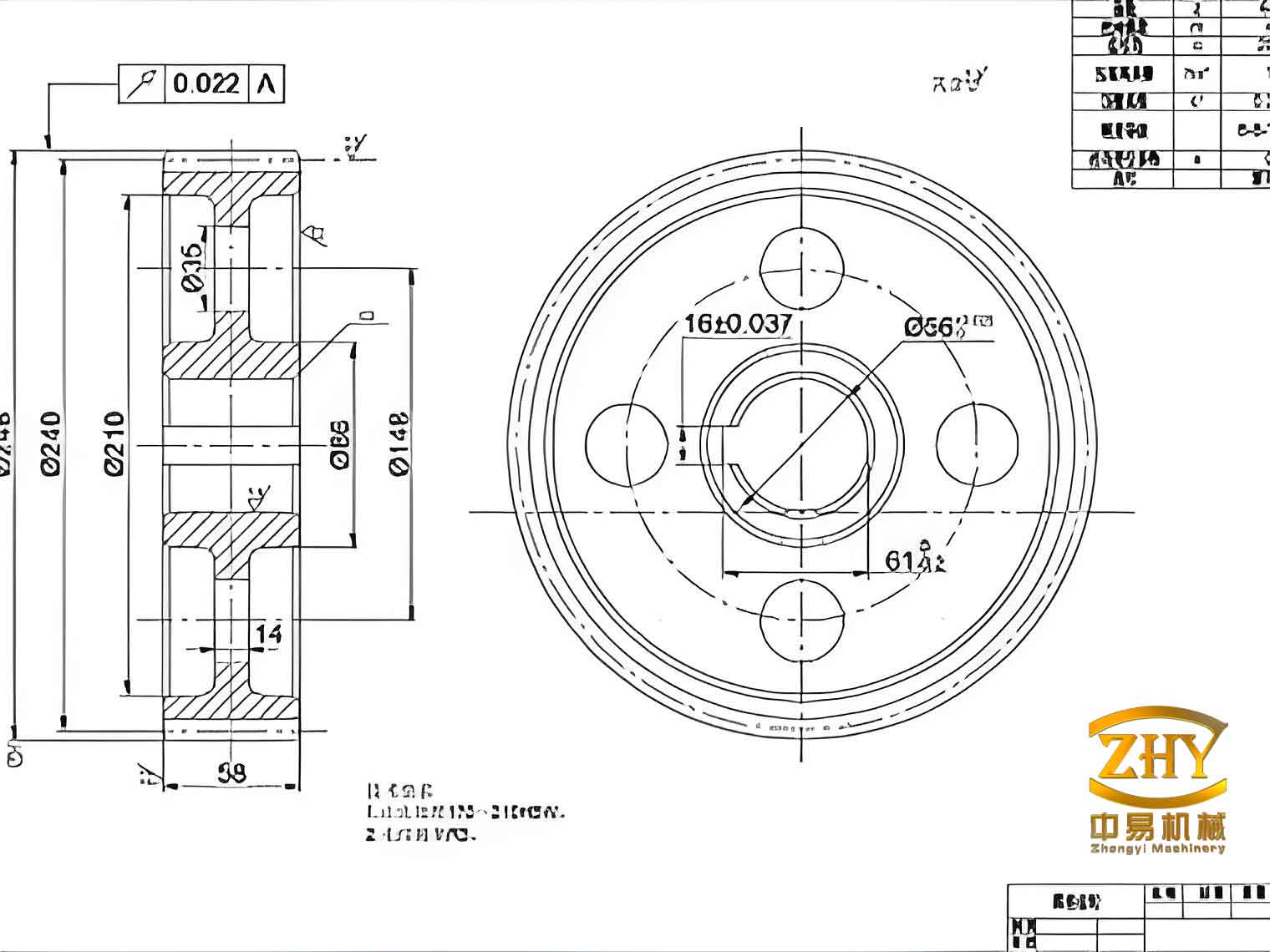
This article presents a detailed investigation into the cold precision forging process for a standard cylindrical gear. The core objective is to employ numerical simulation techniques to analyze and optimize the process, targeting a significant reduction in forming load and an improvement in forging quality. The study is structured around two main pillars: first, the design and evaluation of novel die geometries aimed at facilitating material flow and relieving pressure; and second, a systematic analysis of key process parameters to identify their influence on the forging outcome.
Process Design and Numerical Modeling
Gear Specifications and Initial Process (Plan A)
The subject of this study is a standard cylindrical gear with the following key specifications: a module (m) of 2.0 mm, 30 teeth (Z=30), a face width of 20 mm, and a pressure angle (α) of 20°. The initial forging process, designated as Plan A, represents a conventional closed-die forging setup without any specific flow-aid features. The goal is to completely form the gear teeth from a cylindrical billet in a single pressing stroke under cold conditions. This plan serves as the baseline for comparing the effectiveness of subsequent modifications. The initial billet volume is calculated to match the final forged gear volume, considering no flash formation in this closed-die concept. The required billet diameter (D_b) can be derived from the gear’s pitch diameter (d) and face width (F):
$$ V_{billet} = \frac{\pi}{4} D_b^2 H_b = V_{gear} $$
Where $V_{gear}$ is the total volume of the forged cylindrical gear. For a simplified estimation, the gear volume can be approximated from the pitch cylinder and the addendum.
Enhanced Process Designs: Plan B and Plan C
To address the high load and filling issues inherent in Plan A, two modified process designs are proposed. Both aim to alter the stress state and material flow pattern within the die cavity.
Plan B – Flash Hole Design: This modification introduces a controlled escape channel for material. A through-hole, termed a “flash hole,” is incorporated along the central axis of the upper die punch. Its primary function is to act as a pressure relief mechanism. As the billet is compressed and begins to fill the tooth cavities, a small amount of material is allowed to flow into this central hole. This flow creates an additional free surface, effectively lowering the hydrostatic pressure inside the deformation zone. The diameter of this hole is a critical design parameter; a larger hole reduces load more significantly but wastes more material. For this study, a practical, relatively small diameter of 6 mm was chosen to balance load reduction with material savings.
Plan C – Relief Groove Design: This design focuses directly on aiding the filling of the most challenging area: the tooth tip corners. Small “relief grooves” or “diverting grooves” are machined into the die cavity at the location corresponding to the addendum circle of the cylindrical gear. These grooves provide a preliminary, easier path for material to flow into during the early stages of tooth formation. By the time the main tooth cavity is nearly full, material has already begun to occupy these groove spaces, reducing the final pressure peak needed to squeeze material into the sharp corners. The depth of these grooves is a key parameter; here, a minimal depth of 0.5 mm is used to demonstrate the concept while minimizing post-forging machining.
The three process plans are summarized for comparison below:
| Process Plan | Key Design Feature | Primary Objective | Post-Forging Operation |
|---|---|---|---|
| Plan A | Standard closed-die | Baseline reference | None (if filling is complete) |
| Plan B | Central axial flash hole (Ø6 mm) | Reduce forming load via pressure relief | Machining of central hole (if not desired in final part) |
| Plan C | Relief grooves at tooth tip (0.5 mm depth) | Improve filling of tooth tip corners, reduce load | Light machining to remove groove remnants |
Finite Element Analysis Framework
To quantitatively analyze these processes, a rigorous Finite Element Method (FEM) model was developed using the specialized metal forming simulation software Deform-3D. The assumptions and setup parameters are detailed below.
The cylindrical gear possesses rotational symmetry. To drastically reduce computational time without sacrificing result accuracy, a 90-degree sector (one-quarter) of the full model was used for simulation, with appropriate symmetric boundary conditions applied on the cut planes. The billet material was modeled as a plastic workpiece, while the upper punch and lower die were modeled as rigid bodies. The material selected for the cylindrical gear was AISI 4120 steel, a common alloy for forged components. Its flow stress behavior during cold forging is critically important and is typically represented by a hardening law. A commonly used model is the Hollomon power law:
$$ \sigma_f = K \varepsilon^n $$
Where $\sigma_f$ is the flow stress, $\varepsilon$ is the true strain, $K$ is the strength coefficient, and $n$ is the strain-hardening exponent. Accurate values for K and n for the specific heat treatment condition of the billet are essential for realistic simulation.
The interaction between the workpiece and the die surfaces is governed by friction. A shear friction model is often employed in bulk forming simulations:
$$ \tau = m \cdot k $$
Here, $\tau$ is the frictional shear stress, $m$ is the friction factor (ranging from 0, perfect sliding, to 1, perfect sticking), and $k$ is the shear yield strength of the workpiece material ($k \approx \sigma_f / \sqrt{3}$). For the baseline simulations comparing Plans A, B, and C, a friction factor corresponding to a coefficient of approximately 0.1 with good lubrication was assumed.
The initial simulation parameters are consolidated in the following table:
| Parameter | Value / Description | Notes |
|---|---|---|
| Workpiece Material | AISI 4120 Steel | Plastic, with strain-hardening properties |
| Die Material | Rigid Body | Typically modeled as tool steel |
| Initial Billet Size | Ø50.0 mm × 38.5 mm | Volume matched to final gear |
| Process Temperature | 20°C (Room Temperature) | Isothermal conditions assumed |
| Friction Condition (Baseline) | Shear Factor m ≈ 0.1 | Represents well-lubricated contact |
| Punch Speed (Baseline) | 1 mm/s | Quasi-static forming speed |
| Mesh Elements (Workpiece) | ~100,000 tetrahedral elements | Local mesh refinement in tooth region |
| Model Geometry | 90-degree sector with symmetry | Reduces computation time |
Results and Analysis of Process Design
Forming Load Analysis
The forming load-stroke curves for the three process plans provide the first clear metric for comparison. The maximum load is a direct indicator of the required press capacity and the magnitude of stress imposed on the forging dies.
Simulation results showed a significant difference between the plans. Plan A (Baseline) required the highest load to complete the forging of the cylindrical gear, reaching a peak of approximately 1,500 kN. In contrast, both modified plans demonstrated a substantial reduction. Plan B (Flash Hole) peaked at about 1,393 kN, and Plan C (Relief Groove) at about 1,397 kN. This represents a load reduction of over 100 kN (approximately 7%) for both enhanced plans compared to the baseline, even with the deliberately conservative, small dimensions of the design features (6 mm hole, 0.5 mm groove). The load-stroke profiles for Plans B and C were also notably similar, suggesting both methods are equally effective from a pure load-reduction perspective for this specific cylindrical gear geometry.
The mechanism of load reduction differs between the two. In Plan B, the central hole provides an “escape” for material, reducing the triaxial compressive stress state. In Plan C, the grooves facilitate early-stage flow into the critical tooth tip regions, preventing a severe pressure buildup at the end of the stroke. The relationship between pressure (P), flow stress ($\sigma_f$), and geometry can be conceptualized by considering an augmentation factor (Q) to account for shape complexity and friction:
$$ F_{form} = A_{projected} \cdot \sigma_f \cdot Q_{geometry} $$
Plans B and C effectively reduce this $Q_{geometry}$ factor for the cylindrical gear forging.
Material Flow and Filling Behavior
Analyzing the material velocity vectors and the sequence of die filling is crucial to understand the effectiveness of the relief groove design (Plan C). In the baseline Plan A, material flows radially outward from the center during the initial upsetting stage. As the teeth begin to form, material is forced into the narrow, deep cavities. The tooth tip corners are the last to fill, often requiring a significant final pressure spike, as seen in the load curve.
In Plan C, the presence of the shallow grooves at the tooth tips alters this flow pattern. Early in the tooth-forming phase, a portion of the material finds it easier to initiate flow laterally into these grooves. This “diverts” some material and creates a preliminary presence of metal in the problematic zone. Consequently, the final stage of compaction to achieve a sharp corner involves less drastic material displacement and lower resistance. This results in more uniform filling and eliminates the risk of having a small, isolated underfilled volume at the tooth tip of the cylindrical gear.
Stress and Strain Field Analysis
The internal state of the forged component, characterized by stress and strain distribution, is a key determinant of its quality, potential for springback, and service performance.
Examining the effective stress fields at the end of the forging stroke reveals important insights. In Plan A, the maximum effective stress within the forged cylindrical gear was observed to be relatively high, reaching a value normalized to approximately 5.5 (in arbitrary simulation units). High-stress concentrations were notably present in the root fillet regions and at the tooth tips.
In both Plan B and Plan C, the maximum effective stress values were significantly lower, around a normalized value of 3. More importantly, the stress distribution appeared more uniform throughout the gear teeth. The reduction in peak stress directly correlates with the lowered forming loads. A more uniform stress state implies reduced residual stresses after the part is ejected from the die, leading to better dimensional stability and potentially lower distortion during any subsequent heat treatment. The effective strain distribution showed that the highest deformation, as expected, occurred at the tooth tips and roots. However, the gradients were less severe in Plans B and C.
The evolution of these fields during the process can be summarized in stages:
- Stage 1 (Upsetting, 0-50% stroke): Primarily bulk compression. Low, uniform strain. Stress begins to build.
- Stage 2 (Tooth Formation Initiation, 50-80% stroke): Material starts flowing into tooth cavities. Strain localizes in tooth regions. Stress increases markedly.
- Stage 3 (Final Filling & Compaction, 80-100% stroke): Tooth tips and corners fill. Strain peaks in these areas. Stress reaches its maximum value. This final peak is attenuated in Plans B and C.
This analysis confirms that the modified plans not only lower the required force but also promote a more favorable internal stress state in the finished cylindrical gear, enhancing its forged quality.
Optimization of Key Process Parameters
Having identified an optimal die design (Plan C chosen for its direct improvement on filling, assuming secondary machining is acceptable), the focus shifts to optimizing the operating parameters. Two factors within direct control during production are the lubrication condition (affecting friction) and the press speed.
Parameter Selection and Experimental Matrix
Friction Coefficient / Factor: Lubrication is paramount in cold forging to reduce load, improve surface finish, and prevent galling. The friction condition is varied to represent a range from excellent lubrication (µ ≈ 0.1, m ≈ 0.1) to poor lubrication (µ ≈ 0.3, m ≈ 0.3).
Punch Speed (v): While cold forging is often considered a quasi-static process, speed influences strain rate, which affects material flow stress ($\sigma_f$), and machine dynamics. Very high speeds can cause inertia effects and excessive die wear. Very low speeds hurt productivity. A practical range of 1, 5, and 10 mm/s was selected for analysis. The strain rate ($\dot{\varepsilon}$) is related to punch speed and instantaneous workpiece height (h):
$$ \dot{\varepsilon} \approx \frac{v}{h} $$
As forging progresses and h decreases, the strain rate increases for a constant punch speed. Many materials exhibit strain-rate sensitivity, where flow stress increases with strain rate, often modeled by:
$$ \sigma_f = C \cdot \dot{\varepsilon}^m $$
where C is a constant and m is the strain-rate sensitivity exponent (typically low for steels at room temperature).
A full-factorial design of experiments (DOE) with these two parameters at three levels each was created, resulting in 9 simulation runs for Plan C. The primary output response is the maximum forming load ($F_{max}$).
Analysis of Parameter Effects
The results from the 9 simulations are presented in the table below. The values clearly demonstrate the significant impact of both parameters on the forging load for the cylindrical gear.
| Run | Friction Factor (m) / Coeff. (µ~) | Punch Speed (mm/s) | Max. Forming Load, F_max (kN) |
|---|---|---|---|
| 1 | 0.1 | 1 | 1489 |
| 2 | 0.1 | 5 | 1652 |
| 3 | 0.1 | 10 | 1688 |
| 4 | 0.2 | 1 | 1654 |
| 5 | 0.2 | 5 | 1773 |
| 6 | 0.2 | 10 | 1862 |
| 7 | 0.3 | 1 | 1718 |
| 8 | 0.3 | 5 | 1873 |
| 9 | 0.3 | 10 | 2070 |
The data reveals several key trends:
- Effect of Friction: For any given punch speed, increasing the friction factor consistently increases the maximum forming load. This is intuitive, as higher friction resists material flow radially into the teeth and increases the redundant work. The load increase from low to high friction can exceed 300 kN at the highest speed.
- Effect of Punch Speed: For any given friction condition, increasing the punch speed also increases the forming load. This is primarily due to the strain-rate sensitivity of the material. Even a small sensitivity exponent, when combined with the high strains and decreasing height in forging, leads to a measurable increase in flow stress and thus total load.
- Interaction: The effects are synergistic. The highest load (2070 kN) occurs with the combination of worst-case parameters: high friction (m=0.3) and high speed (10 mm/s). The lowest load (1489 kN) occurs with the best-case parameters: low friction (m=0.1) and low speed (1 mm/s). The total load reduction from worst to best case is 581 kN, representing a substantial 28% decrease.
This parametric study provides a crucial “map” for process engineers. It quantifies the trade-offs. To minimize press tonnage and die stress (extending die life), one should strive for excellent lubrication and use a slower, more controlled press speed. If production rate is paramount and a higher-capacity press is available, the chart shows exactly what load penalty to expect for choosing higher speeds or tolerating less-than-ideal lubrication during the forging of the cylindrical gear.
Discussion on Die Design and Manufacturing Implications
The success of a cold forging process, especially for a complex component like a cylindrical gear, is inextricably linked to the design and integrity of the forging dies. The optimization discussed previously has direct implications for die life and manufacturability.
The primary failure modes for cold forging dies are wear (abrasion and adhesion), fatigue cracking, and plastic deformation. The maximum forming load ($F_{max}$) is a primary driver of stress levels within the die insert. The contact pressure ($p_{die}$) on the die surface can be related to the flow stress and a pressure multiplier:
$$ p_{die} \approx \sigma_f \cdot \left(1 + \frac{\mu \cdot d}{h}\right) $$ for simple geometries, but is far more complex for gear teeth. Reducing $F_{max}$ through process design (Plans B/C) and parameter optimization directly reduces $p_{die}$, thereby increasing die fatigue life, often governed by an equation of the form related to the stress range ($\Delta \sigma$):
$$ N_f \propto (\Delta \sigma)^{-b} $$
where $N_f$ is cycles to failure and $b$ is a material constant. A small reduction in stress can lead to a large increase in life.
The choice between Plan B and Plan C also involves manufacturing considerations. Plan B requires drilling a precise hole in the center of the upper punch, which is relatively straightforward. Plan C requires machining intricate, small relief grooves into the tooth profile of the die cavity, which is more challenging and adds to die manufacturing cost. The post-forging operation for Plan B involves drilling out the flash stem if a solid gear is required, while Plan C requires a shaving or skiving operation to clean up the tooth tips. The optimal choice depends on the specific production volume, available equipment, and final part specifications for the cylindrical gear.
Furthermore, the analysis underscores the critical importance of die material selection (e.g., premium powder metallurgy tool steels like Vanadis 4 Extra or ASP 2023) and advanced surface treatments (e.g., Physical Vapor Deposition (PVD) coatings such as TiAlN or CrN) to combat wear and galling, particularly under the high surface pressures of cold cylindrical gear forging.
Conclusion and Future Perspectives
This comprehensive numerical study has successfully demonstrated a methodology for analyzing and optimizing the cold precision forging process for a cylindrical gear. The key findings are summarized as follows:
- Process Design Efficacy: The introduction of flow-aiding features, specifically a central flash hole (Plan B) and tooth-tip relief grooves (Plan C), proved highly effective. Even with minimally sized features, both designs reduced the maximum forming load by over 100 kN (≈7%) compared to the standard closed-die approach (Plan A).
- Forging Quality Improvement: Finite element analysis of stress and strain fields revealed that the modified plans not only lower loads but also result in a more uniform stress distribution within the forged cylindrical gear. This indicates a reduction in residual stresses and a lower likelihood of defects related to non-uniform material flow, translating to higher part quality.
- Parameter Sensitivity and Optimization: A systematic parametric study quantified the significant influence of friction and punch speed. The maximum forming load was found to be highly sensitive to both, varying by up to 28% (from 1489 kN to 2070 kN) across the tested range. This provides a clear quantitative basis for selecting production parameters: excellent lubrication and moderate press speeds are recommended to minimize load and maximize die life.
- Practical Guidance: For the specific cylindrical gear studied, Plan C (relief grooves) is recommended if complete tooth-tip filling is the paramount concern, accepting the need for light finishing. The parameter combination of low friction (m=0.1-0.2) and a punch speed of 1-5 mm/s offers an optimal balance between press load, die stress, and production rate.
Future work in this domain could explore several promising avenues:
- Multi-Objective Optimization: Employing advanced optimization algorithms (e.g., Response Surface Methodology, Genetic Algorithms) to simultaneously optimize feature dimensions (hole diameter, groove geometry) and process parameters (speed, friction) for conflicting objectives like minimizing load, minimizing material waste, and maximizing die filling.
- Advanced Material Models: Implementing more sophisticated constitutive models that account for anisotropic behavior (from the initial billet) and damage accumulation to better predict internal flaws in the cylindrical gear.
- Die Stress and Life Prediction: Coupling the forging simulation with structural FE analysis of the die assembly to predict stress concentrations, elastic deformation, and fatigue life under cyclic loading, enabling proactive die design.
- Exploration of New Materials: Applying the optimized process to advanced, high-strength alloys or powder metallurgy preforms to further expand the applicability of cold forging for high-performance cylindrical gear applications.
In conclusion, numerical simulation serves as an indispensable tool for unlocking the full potential of cold precision forging. The insights gained from such analyses enable the design of robust, efficient, and high-quality manufacturing processes for essential components like the cylindrical gear, contributing to advancements in various engineering fields.