
In the field of mechanical engineering, the design of gear reducers is a critical task that directly impacts the performance, efficiency, and compactness of machinery. Among various types, the two-stage cylindrical gear reducer stands out due to its excellent meshing characteristics, high overlap ratio, and reliable transmission capabilities. It finds widespread applications in aerospace equipment, conveyor machinery, and other industrial systems. However, designing such a reducer involves addressing complex multi-objective optimization problems to ensure balanced performance metrics like minimal volume, maximum transmission efficiency, and reduced inertia. Traditional design approaches often rely on empirical methods or single-objective optimizations, which may lead to suboptimal solutions. In this study, I explore a comprehensive multi-objective optimization framework for two-stage cylindrical gear reducers, leveraging advanced algorithms to achieve superior design outcomes.
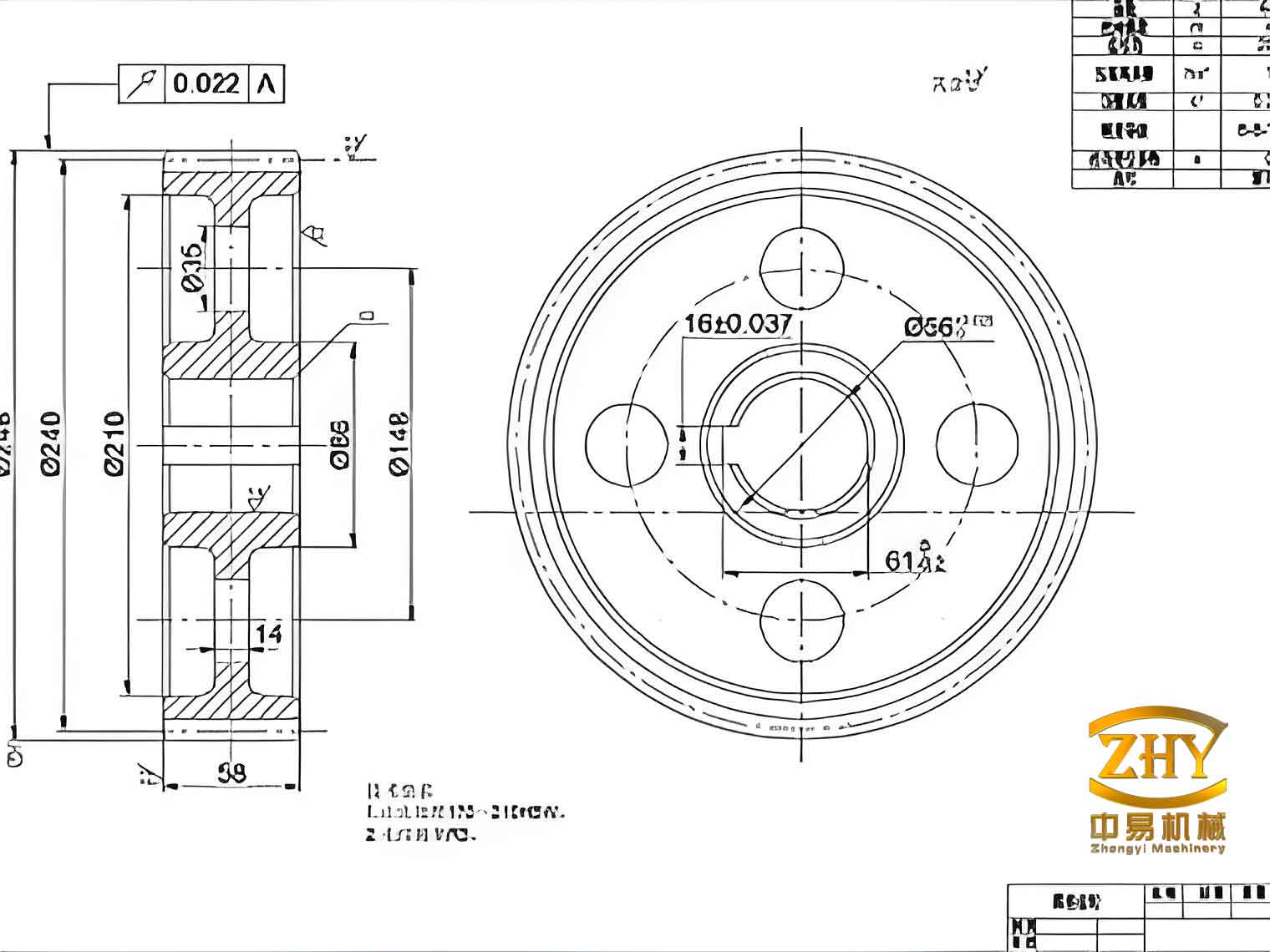
The two-stage cylindrical gear reducer typically consists of components such as gears, shafts, couplings, and a motor. Its design requires meticulous parameter selection, including gear module, number of teeth, transmission ratio, and helix angle. These parameters influence key performance indicators, including center distance, volume, and transmission efficiency. A poorly designed cylindrical gear reducer can result in excessive size, low efficiency, or inadequate reliability. Therefore, optimizing these parameters through a systematic approach is essential. In this research, I formulate the design as a multi-objective optimization problem, where conflicting goals must be reconciled. For instance, minimizing the center distance of the cylindrical gear reducer can reduce volume, but it may compromise gear strength or efficiency. Similarly, maximizing transmission efficiency might increase complexity or cost. To tackle these challenges, I develop mathematical models and employ genetic algorithms to find Pareto-optimal solutions.
The optimization of a cylindrical gear reducer involves numerous design variables and constraints. Key variables include the normal module for high-speed and low-speed stages, the number of teeth on pinions, transmission ratios, and the helix angle. These can be represented as a vector:
$$ \mathbf{X} = [m_{n1}, m_{n2}, z_1, z_2, i_1, \beta]^T = [x_1, x_2, x_3, x_4, x_5, x_6]^T $$
where \( m_{n1} \) and \( m_{n2} \) are the normal modules for the high-speed and low-speed stages, respectively; \( z_1 \) and \( z_2 \) are the number of teeth on the pinions; \( i_1 \) is the transmission ratio of the high-speed stage; and \( \beta \) is the helix angle. The total transmission ratio \( i \) is given as \( i = i_1 \times i_2 \), where \( i_2 \) is the low-speed stage ratio. For a two-stage cylindrical gear reducer, the center distance is a primary measure of compactness. The initial objective function to minimize the center distance \( F_1 \) is derived from the gear geometry:
$$ F_1 = \frac{1}{\cos \beta} \left[ m_{n1} z_1 (1 + i_1) + m_{n2} z_2 (1 + i_2) \right] $$
This function accounts for the sum of center distances for both stages, adjusted by the helix angle. Another important objective is to minimize the rotational inertia of the system, which enhances dynamic response and reduces energy consumption. For a cylindrical gear reducer with solid gears, the rotational inertia objective \( F_2 \) can be approximated using equivalent moments of inertia:
$$ F_2 = J_1 + (J_2 + J_3) \frac{1}{i_1^2} + J_4 \frac{1}{i_1^2 i_2^2} $$
where \( J_1 \) to \( J_4 \) are the moments of inertia of the four gears, calculated based on gear dimensions. Additionally, minimizing the total volume of the cylindrical gear reducer is crucial for material savings and lightweight design. The volume objective \( F_3 \) is expressed as:
$$ F_3 = \frac{\pi \alpha_{d1}}{4} \left( \frac{m_{n1} z_1}{\cos \beta} \right)^3 (1 + i_1^3) + \frac{\pi \alpha_{d2}}{4} \left( \frac{m_{n2} z_2}{\cos \beta} \right)^3 \left(1 + \left(\frac{i}{i_1}\right)^3\right) $$
Here, \( \alpha_{d1} \) and \( \alpha_{d2} \) are the face width coefficients for the high-speed and low-speed gears, respectively. These objective functions often conflict; for example, reducing center distance may increase volume or inertia. To handle this, I combine them into a weighted sum for the final multi-objective function:
$$ \min F(\mathbf{X}) = \sum_{j=1}^{3} w_j F_j'(\mathbf{X}), \quad \text{subject to } g_m(\mathbf{X}) \geq 0 \text{ for } m = 1, 2, \dots, 23 $$
where \( w_j \) are weighting factors summing to 1, and \( F_j'(\mathbf{X}) \) are normalized versions of \( F_j \) to ensure uniformity across scales. Normalization is performed as:
$$ F_j'(\mathbf{X}) = \frac{F_j(\mathbf{X}) – m_j}{M_j – m_j} $$
with \( m_j \) and \( M_j \) being the minimum and maximum values of \( F_j \) over the design space. The constraints \( g_m(\mathbf{X}) \) encompass various design limits for the cylindrical gear reducer. These include bounds on variables based on gear standards and strength criteria. For instance, the normal module must typically range from 2 to 3 mm to balance size and load capacity. The helix angle \( \beta \) is constrained between 8° and 20° to manage axial forces in helical cylindrical gears. Pinion teeth numbers are limited to 20–30 to avoid undercutting, and transmission ratios are kept within 2–5 per stage. Strength constraints are derived from gear design principles, such as contact stress and bending stress limits:
$$ \sigma_H = 305 \sqrt{\frac{(i + 1)^3 K_i T_i}{i b \alpha^2}} \leq [\sigma_H] $$
$$ \sigma_{F1} = \frac{1.5 K_i T_i}{b d_1 m_{n1} Y_1} \leq [\sigma_F]_1 $$
$$ \sigma_{F2} = \sigma_{F1} \frac{Y_1}{Y_2} \leq [\sigma_F]_2 $$
where \( \sigma_H \) is the contact stress, \( [\sigma_H] \) is the allowable contact stress, \( K_i \) is the load factor, \( T_i \) is the torque on the shaft, \( b \) is the face width, \( \alpha \) is the center distance, \( \sigma_{F1} \) and \( \sigma_{F2} \) are bending stresses for pinion and gear, \( Y_1 \) and \( Y_2 \) are tooth form factors, and \( [\sigma_F] \) are allowable bending stresses. Additionally, geometric constraints ensure no interference between shafts and gears, such as:
$$ \alpha_2 – E – \frac{d_{r2}}{2} \geq 0 $$
with \( \alpha_2 \) as the center distance between stages, \( E \) as the clearance, and \( d_{r2} \) as the tip diameter of the high-speed gear. These constraints form a complex nonlinear optimization problem for the cylindrical gear reducer.
To solve this multi-objective optimization problem, I employ a genetic algorithm (GA) enhanced with adaptive strategies. Traditional multi-objective algorithms often suffer from issues like premature convergence or loss of diversity in Pareto solutions. In this study, I implement a GA that utilizes knee points—solutions on the Pareto front with maximal marginal utility—to guide the search. The algorithm maintains multiple subpopulations and adaptively adjusts neighborhood sizes around knee points to balance exploration and exploitation. This approach ensures both diversity and convergence in the solution set. The algorithm workflow begins with initializing a population of design vectors for the cylindrical gear reducer. Each vector represents a candidate design, evaluated using the objective functions and constraints. Through iterations, selection, crossover, and mutation operators generate offspring. Non-dominated sorting identifies Pareto fronts, and knee points are detected based on distances to extreme points in the objective space. These knee points are prioritized for reproduction, and their neighborhoods are adaptively resized to preserve diversity. The process continues until termination criteria, such as a maximum number of evaluations, are met.
I validate the algorithm through simulation tests comparing it with other methods like traditional evolutionary algorithms and bubble sort algorithms. The performance is assessed using metrics like inverted generational distance (IGD), where lower values indicate better convergence. The results, based on 30 independent runs for three-objective and four-objective problems, are summarized in Table 1.
| Multi-Objective Problem | Genetic Algorithm | Traditional Evolutionary Algorithm | Bubble Sort Algorithm |
|---|---|---|---|
| Three-Objective | 2.417e-1 (6.72e-3) | 2.895e-1 (1.23e-2) | 3.067e-1 (9.53e-3) |
| Four-Objective | 6.942e-1 (1.24e-2) | 8.124e-1 (1.05e-1) | 7.787e-1 (2.24e-2) |
The table shows mean IGD values with standard deviations in parentheses. The genetic algorithm achieves lower IGD scores, demonstrating superior convergence and diversity maintenance. This makes it suitable for optimizing cylindrical gear reducers, where multiple conflicting objectives must be addressed. The algorithm’s ability to adaptively identify knee points reduces computational complexity while ensuring high-quality solutions. In contrast, traditional methods may stagnate or produce less diverse Pareto sets.
For practical application, I consider a case study of a two-stage cylindrical gear reducer used in automotive systems. The reducer is driven by a motor with a rated power of 9 kW and an output speed of 80 rpm. The design lifetime is 12 years, assuming 8 hours of daily operation for 300 days per year. The total transmission ratio is 31.5 with a tolerance of ±5%. The gears are standard spur cylindrical gears with a pressure angle of 20°, and the face width coefficient is set to 1. Material properties are specified: high-speed stage gears are made of 45 steel with hardness 228–255 HB, while the low-speed pinion is 40Cr steel with hardness 187–207 HB, and the low-speed gear is 45 steel. All gears have soft tooth surfaces and an accuracy grade of 8. The optimization aims to minimize the total center distance and maximize transmission efficiency simultaneously, ensuring a compact and efficient cylindrical gear reducer.
I implement the optimization using MATLAB, leveraging its Global Optimization Toolbox. The genetic algorithm is configured with a population size of 200 and a maximum of 10,000 evaluations. The objective functions and constraints are coded as separate files, and the GUI is used to input parameters interactively. The optimization yields a set of Pareto-optimal designs. To illustrate the benefits of multi-objective optimization, I compare the results with single-objective designs focusing solely on center distance or efficiency. The key design parameters and performance metrics are listed in Table 2.
| Design Scheme | \( m_1 \) (mm) | \( m_2 \) (mm) | \( z_1 \) | \( z_2 \) | \( i_1 \) | \( \beta \) (°) | Center Distance (mm) | Transmission Efficiency (%) |
|---|---|---|---|---|---|---|---|---|
| Original Design | 3 | 3 | 30 | 30 | 5 | 20 | 598.5 | 97.2 |
| Single-Objective (Min Center Distance) | 2.5 | 3 | 20 | 30 | 5.7 | 17 | 459.4 | 96.7 |
| Single-Objective (Max Efficiency) | 2.5 | 3 | 21 | 30 | 5.7 | 16 | 469.2 | 97.9 |
| Multi-Objective Optimization | 2.5 | 3 | 20 | 29 | 5.7 | 18 | 451.1 | 98.1 |
The multi-objective design achieves a center distance of 451.1 mm and an efficiency of 98.1%, outperforming the single-objective designs in both metrics when considered together. For instance, the single-objective center distance minimization gives 459.4 mm but lower efficiency, while the efficiency maximization yields higher efficiency but a larger center distance. The multi-objective approach balances these goals, resulting in an optimal compromise. To verify the design, I check gear compatibility: for the high-speed stage, the gear teeth are \( z_1 = 20 \) and \( z_3 = 20 \times 5.7 = 114 \); for the low-speed stage, \( z_2 = 29 \) and \( z_4 = 29 \times (31.5 / 5.7) \approx 160.26 \), rounded to 160. The actual total ratio is \( (114/20) \times (160/29) \approx 31.45 \), within the 5% error tolerance. Thus, the optimized cylindrical gear reducer is both compact and efficient.
The success of this optimization hinges on the genetic algorithm’s ability to handle discrete and continuous variables inherent in cylindrical gear reducer design. Parameters like module and tooth count are discrete in practice, but the algorithm treats them as continuous during optimization and rounds them post-processing. The adaptive knee-point strategy ensures that the Pareto front is well-explored, preventing convergence to local optima. Compared to classical methods like weighted sum or epsilon-constraint approaches, this GA provides a more diverse set of solutions, allowing designers to choose based on specific priorities. Furthermore, the integration of MATLAB streamlines the process, reducing manual iteration and enabling rapid prototyping of cylindrical gear reducers.
In conclusion, multi-objective optimization is essential for designing high-performance two-stage cylindrical gear reducers. By formulating objectives such as minimizing center distance and maximizing efficiency, and incorporating constraints from gear mechanics, I develop a robust optimization model. The genetic algorithm, enhanced with knee-point detection, effectively solves this model, yielding balanced designs that outperform single-objective alternatives. This approach not only reduces the volume and inertia of cylindrical gear reducers but also enhances their transmission efficiency, contributing to more sustainable and compact machinery. Future work could explore additional objectives like cost minimization or noise reduction, and incorporate more detailed manufacturing constraints for cylindrical gear production. Overall, this study demonstrates the value of advanced optimization techniques in mechanical design, particularly for complex systems like cylindrical gear reducers.
To further elaborate on the mathematical formulation, let me detail the constraint functions. The bounds on design variables for the cylindrical gear reducer are summarized in Table 3.
| Variable | Symbol | Lower Bound | Upper Bound | Remarks |
|---|---|---|---|---|
| High-speed normal module | \( m_{n1} \) | 2 mm | 3 mm | Based on power and gear standards |
| Low-speed normal module | \( m_{n2} \) | 2 mm | 4 mm | Allows for higher torque capacity |
| Pinion teeth (high-speed) | \( z_1 \) | 20 | 30 | Avoid undercutting and ensure durability |
| Pinion teeth (low-speed) | \( z_2 \) | 20 | 40 | Balances size and strength |
| High-speed transmission ratio | \( i_1 \) | 2 | 5 | Typical range for cylindrical gear stages |
| Helix angle | \( \beta \) | 8° | 20° | Controls axial forces in helical cylindrical gears |
These bounds ensure practical manufacturability and performance. Additionally, the strength constraints are derived from ISO standards for cylindrical gears. The contact stress equation is based on the Hertzian theory, while bending stress uses the Lewis formula modified with factors for load distribution and geometry. The allowable stresses \( [\sigma_H] \) and \( [\sigma_F] \) are determined from material fatigue limits, with safety factors applied for reliability. For the case study, the values are: \( [\sigma_H] = 600 \) MPa for high-speed gears and 550 MPa for low-speed gears; \( [\sigma_F] = 200 \) MPa for high-speed gears and 180 MPa for low-speed gears. These values are typical for the specified materials.
The genetic algorithm parameters are fine-tuned for this cylindrical gear reducer problem. The crossover probability is set to 0.8, using simulated binary crossover, and mutation probability is 0.1 with polynomial mutation. The adaptive knee-point neighborhood size starts at 10% of the objective space and adjusts based on the ratio of knee points to non-dominated solutions. This dynamic adjustment helps maintain diversity as the search progresses. The algorithm terminates after 10,000 function evaluations, which provides a good balance between solution quality and computational time. On a standard desktop computer, the optimization takes approximately 5–10 minutes, making it feasible for engineering design cycles.
The advantages of this multi-objective optimization approach extend beyond the case study. For industrial applications, designers can adjust weighting factors in the objective function to reflect different priorities. For example, if weight reduction is critical for aerospace cylindrical gear reducers, the volume objective can be weighted higher. Alternatively, for high-efficiency systems like wind turbine gearboxes, the efficiency objective can be emphasized. The Pareto front generated by the algorithm provides a set of optimal trade-offs, enabling informed decision-making. Moreover, the method can be extended to multi-stage cylindrical gear reducers with more than two stages, though the complexity increases with additional variables and constraints.
In summary, this research presents a comprehensive framework for optimizing two-stage cylindrical gear reducers. By integrating multi-objective modeling, genetic algorithms, and practical design constraints, I achieve significant improvements in compactness and efficiency. The cylindrical gear reducer, as a fundamental component in machinery, benefits greatly from such optimization, leading to enhanced performance and sustainability. This work underscores the importance of computational methods in modern mechanical engineering, particularly for complex systems like cylindrical gear drives.