
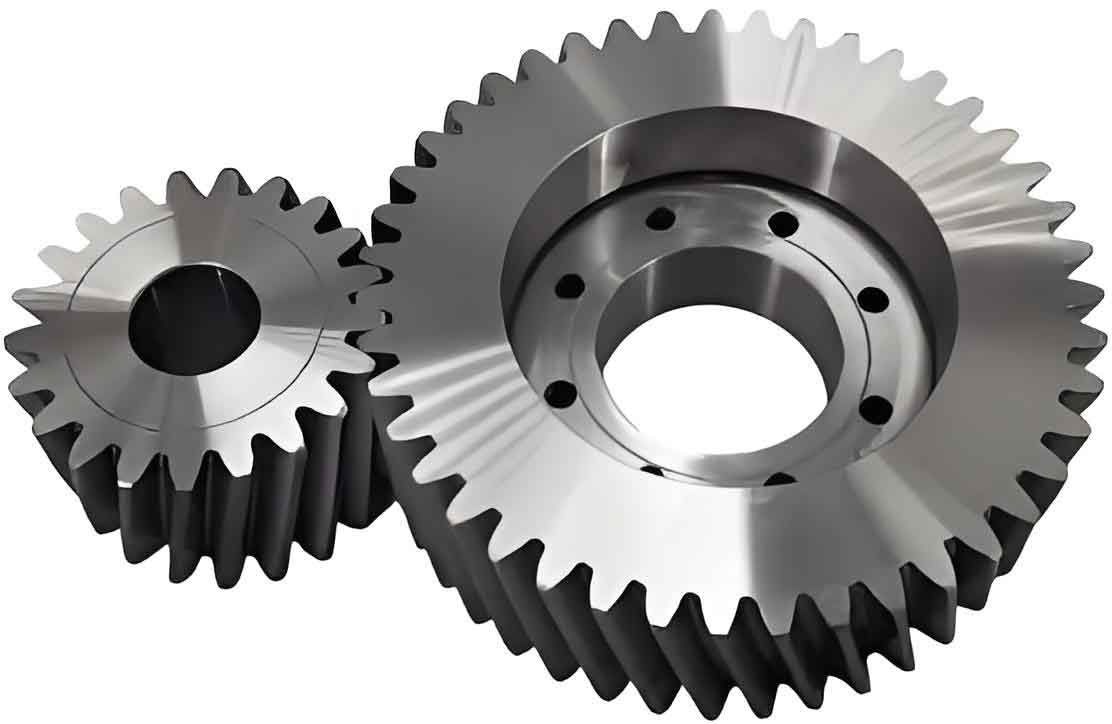
As a critical transmission component, cylindrical gears are indispensable in the automotive industry and various mechanical systems. Their operational strength and longevity directly influence the performance and durability of high-end machinery. With the rapid advancement of the automotive sector, the demand for high-quality, long-life cylindrical gears is surging. Traditionally, cylindrical gears are manufactured using gear hobbing or shaping processes. While effective, these methods inherently sever the metal flow lines within the tooth region, potentially compromising the gear’s mechanical strength and service life. Moreover, these processes can be inefficient for mass production. To address these limitations, this research focuses on the development and optimization of a one-step hot extrusion process for forming cylindrical gears, aiming to enhance production efficiency, material utilization, and the intrinsic quality of the gears themselves.
1. Design and Feasibility Analysis of the One-Step Extrusion Process for Cylindrical Gears
The proposed process is designed to form a cylindrical gear in a single press stroke. The core mechanism involves an upper punch and a lower die with an internal gear cavity. A preheated cylindrical billet is placed into the lower die. The upper punch, which features a central tooth profile and a surrounding cylindrical section, descends vertically. The initial contact forces the billet material to flow radially into the tooth cavities of the lower die. As the stroke completes, the central tooth on the punch aids in forming the gear’s bore and facilitates the upward flow of excess material as flash, reducing forming resistance. The process consists of three stages: billet preparation and heating, initial contact and radial filling, and final forging and flash formation.
To analyze the feasibility of this process for manufacturing cylindrical gears, a finite element model was established. A quarter-section of the gear and tools was modeled to reduce computational time. The billet material was defined as 20CrMnTiH steel, a common gear steel, with its flow stress data incorporated. The initial temperatures for the billet and the lower die were set at 800°C and 300°C, respectively. The simulation parameters are summarized in the table below.
| Simulation Setting | Parameter Value |
|---|---|
| Billet Mesh Count | 100,000 |
| Die Mesh Count | 100,000 |
| Minimum Cell Size (mm) | 0.25 |
| Initial Billet Temperature (°C) | 800 |
| Initial Die Temperature (°C) | 300 |
| Friction Coefficient | 0.3 |
| Upper Punch Speed (mm/s) | 7.5 |
The simulation revealed the metal flow pattern. The filling of the tooth cavities is non-synchronous along the axial direction, starting from the mid-height region and progressing towards the top and bottom. A key indicator of complete filling is the consistent radial displacement of material points at the tooth tip across different axial sections. Analysis showed that this radial displacement was uniform, confirming the complete filling of the gear teeth. This is crucial for achieving the dimensional accuracy of the final cylindrical gears.
Furthermore, the distribution and evolution of effective strain were examined. The effective strain in the tooth region was relatively uniform compared to other areas, indicating homogeneous plastic deformation. This uniformity is beneficial for the mechanical properties of the forged cylindrical gears. The cumulative effective strain at corresponding points on different teeth showed only minor variations, which suggests that the one-step extrusion process can produce cylindrical gears with consistent and high-quality deformation characteristics.
An experimental trial was conducted to validate the simulation. A cylindrical billet of 20CrMnTiH was heated and extruded using the designed tooling. The successfully formed gear blank confirmed the process’s practicality. To investigate the material integrity, a single tooth was sectioned, polished, and etched to reveal its metal flow lines. The observed flow lines were continuous and followed the tooth contour, closely matching the flow patterns predicted by the simulation. This continuous grain flow, unbroken by cutting operations, is a significant advantage of the extrusion process for cylindrical gears, as it enhances fatigue strength and overall durability compared to machined gears where the flow lines are severed.
2. Optimization of Die Structure and Process Parameters to Enhance Die Life
In the production of cylindrical gears via extrusion, the lower die, containing the intricate gear cavity, is subjected to severe thermal and mechanical loads, making wear a primary failure mode. Optimizing the process to minimize die wear is essential for economic viability. The wear on the die surface during the forging of cylindrical gears can be modeled using the Archard wear theory, adapted for temperature-dependent properties. The wear depth \( W \) at a given temperature \( T \) can be expressed as:
$$ W(T) = K(T) \frac{P L}{H(T)} $$
where \( K(T) \) is the temperature-dependent wear coefficient, \( P \) is the contact pressure, \( L \) is the sliding length, and \( H(T) \) is the temperature-dependent hardness of the die material (H13 steel in the initial study). Empirical relations for H13 steel are:
$$ H(T) = 9216.4 \times T^{-0.505} $$
$$ K(T) = (29.29 \times \ln(T) – 168.73) \times 10^{-6} $$
Analysis of the simulation showed that the wear rate and the load on the die increased dramatically in the final stage of the stroke. This is when the tooth feature on the upper punch engages the billet, creating complex metal flow and higher pressures. Therefore, optimizations targeted this critical phase.
2.1 Upper Punch Structure Optimization
To alleviate stress and improve material flow in the final stage, the sharp corner at the base of the tooth on the upper punch was replaced with a fillet. Different fillet radii (R) were simulated. While a larger fillet can reduce resistance, it also creates more space for axial flash, which can lead to underfilling of the top tooth regions unless the billet volume is increased. A balance must be struck. The results indicated that a fillet radius of 6 mm provided a good compromise, reducing die wear without compromising the filling quality of the cylindrical gears. Larger radii required more material and could even increase wear due to longer sliding contact.
2.2 Optimization of Billet Volume and Punch Stroke
The process does not fully pierce the gear bore, leaving a thin layer of material (flash) at the bottom. A controlled “feed allowance” (\(\Delta h\)), which is the unfinished stroke length, was introduced. By stopping the punch slightly early, the high-wear final phase is shortened. However, to ensure complete filling of the cylindrical gears with this shorter stroke, the billet volume must be precisely calculated and increased accordingly (by increasing billet height). An optimal feed allowance of 1.5 mm was identified, which minimized die wear while maintaining gear form accuracy.
2.3 Optimization of Key Process Parameters
A Response Surface Methodology (RSM) based on a Box-Behnken Design (BBD) was employed to systematically optimize three critical parameters for minimizing die wear during the extrusion of cylindrical gears: lower die preheat temperature (T), friction coefficient (μ), and upper punch speed (V). The experimental design and results are shown below.
| Run | T (°C) | μ | V (mm/s) | Wear Depth (10⁻⁶ mm) |
|---|---|---|---|---|
| 1 | 250 | 0.25 | 10 | 1.969 |
| 2 | 250 | 0.30 | 7.5 | 1.822 |
| 3 | 300 | 0.35 | 7.5 | 1.918 |
| 4 | 300 | 0.30 | 5 | 2.108 |
| 5 | 200 | 0.30 | 10 | 2.168 |
The data was fitted to a second-order polynomial model. The analysis of variance (ANOVA) confirmed the model’s significance. The interaction effects revealed that while friction has an impact, the punch speed and die temperature have more pronounced effects on the wear of dies used for cylindrical gears. An intermediate punch speed is optimal; too slow increases contact time, while too fast increases strain rates and load. The optimal parameters predicted by the model for minimal wear in the production of cylindrical gears are: Die Preheat Temperature = 280°C, Friction Coefficient = 0.27, and Punch Speed = 8.3 mm/s. A simulation with these parameters yielded a maximum wear depth of \(1.77 \times 10^{-6}\) mm per cycle.
2.4 Die Life Prediction
To estimate service life, multiple extrusion cycles were simulated sequentially, updating the die geometry with accumulated wear. The cumulative wear depth (\(W_n\)) after \(n\) cycles was found to fit a quadratic function:
$$ W_n = 1.74 – 4.49 \times 10^{-3}n + 4.17 \times 10^{-5}n^2 $$
(where \(W_n\) is in units of \(10^{-4}\) mm)
Assuming a maximum allowable wear depth of 0.5 mm before the gear accuracy of the cylindrical gears is compromised, the equation predicts the die can produce approximately 11,000 gears before requiring reconditioning or replacement.
3. Development of Advanced Metal-Ceramic Die Material
To further push the limits of die life for extruding cylindrical gears, a novel metal-ceramic composite material was developed as a candidate for the lower die. The base material chosen was (Ti,W)C ceramic, reinforced with a combination of micron and nano-sized Al₂O₃ particles and bonded with a Ni-Co-Mo metallic phase. The goal was to enhance hardness, wear resistance, fracture toughness, and thermal shock resistance compared to traditional tool steels like H13.
3.1 Material Preparation and Composition
Powders of (Ti,W)C, micro-Al₂O₃, nano-Al₂O₃, Ni, Co, and Mo were weighed according to designed volume fractions. The powders were mixed via ball milling in ethanol. The composite mixtures were then consolidated using Spark Plasma Sintering (SPS) at 1450°C under 30 MPa pressure for 10 minutes. Various compositions were prepared by varying the nano-Al₂O₃ content while adjusting the micro-Al₂O₃ content inversely, keeping the metal binder content constant. The designated compositions are listed below.
| Material ID | (Ti,W)C (vol.%) | Micro-Al₂O₃ (vol.%) | Nano-Al₂O₃ (vol.%) | Ni+Co+Mo (vol.%) |
|---|---|---|---|---|
| nW0 | 85 | 0 | 0 | 15 |
| nW10 | 55 | 20 | 10 | 15 |
| nW15 | 55 | 15 | 15 | 15 |
| nW25 | 55 | 5 | 25 | 15 |
| nW30 | 55 | 0 | 30 | 15 |
3.2 Microstructure and Mechanical Properties
XRD analysis confirmed the stable coexistence of all phases without undesirable chemical reactions. SEM examination of fracture surfaces revealed that the addition of nano-Al₂O₃ effectively inhibited grain growth of the (Ti,W)C and micro-Al₂O₃ phases. The composite with 15 vol.% nano-Al₂O₃ (nW15) exhibited the finest and most uniform microstructure. However, when the nano-Al₂O₃ content exceeded 20 vol.% (nW25, nW30), particle agglomeration occurred, leading to increased porosity and coarse grains. The mechanical properties correlated directly with the microstructure. The nW15 composite achieved the best overall performance, as summarized in the following table.
| Property | nW0 | nW10 | nW15 | nW25 | nW30 |
|---|---|---|---|---|---|
| Relative Density (%) | 96.1 ±0.35 | 98.2 ±0.28 | 98.8 ±0.21 | 97.5 ±0.31 | 96.8 ±0.40 |
| Avg. Grain Size (μm) | 2.24 ±0.23 | 1.45 ±0.19 | 1.23 ±0.21 | 1.88 ±0.24 | 2.15 ±0.26 |
| Flexural Strength (MPa) | 820 ±30 | 900 ±25 | 940 ±23 | 870 ±28 | 790 ±32 |
| Vickers Hardness (GPa) | 18.02 ±0.63 | 18.75 ±0.42 | 19.01 ±0.35 | 18.20 ±0.55 | 17.85 ±0.60 |
| Fracture Toughness (MPa·m¹/²) | 7.2 ±0.35 | 8.5 ±0.31 | 8.9 ±0.29 | 8.0 ±0.33 | 7.5 ±0.38 |
3.3 Thermal Shock and Wear Resistance
Thermal shock resistance is critical for dies used in hot forging of cylindrical gears. Tests involved indenting samples to create controlled cracks, heating them to various temperatures (300-500°C), and then quenching in water. The nW10 and nW15 composites showed the highest crack initiation temperature and the most stable, slowest crack propagation, indicating superior thermal shock resistance. This is attributed to their finer microstructure, higher toughness, and better thermal stress resistance parameter \(R”\) which is related to fracture toughness \(K_{IC}\) and strength \(\sigma_f\):
$$ R” \propto \frac{K_{IC}^2}{\sigma_f^2} $$
Dry sliding wear tests against a Si₃N₄ ball were conducted. The nW15 composite exhibited the lowest friction coefficient (0.44) and the lowest wear rate (\(3.92 \times 10^{-6}\) mm³/N·m). SEM analysis of wear tracks indicated that the primary wear mechanism for nW15 was mild abrasion, while the other composites showed evidence of grain pull-out and more severe abrasive grooves due to lower hardness or microstructural defects.
4. Near-Net-Shape Fabrication of the Extrusion Die via Inverse Sintering
Manufacturing a complex internal gear cavity in a hard, brittle metal-ceramic composite using conventional machining (EDM, grinding) is extremely difficult and costly. An innovative “inverse sintering” or “net-shape forming” process was developed to fabricate the lower die for cylindrical gears. A graphite mold set was precision-machined to the negative shape of the final die, including the internal gear profile. The prepared (Ti,W)C-based composite powder (nW15 composition) was loaded into this mold cavity. The assembly was then sintered using the SPS process under the same parameters used for making the material samples. After sintering and cooling, the fully dense, near-net-shape die was extracted. Dimensional inspection of the sintered die’s internal gear teeth using a coordinate measuring machine (CMM) showed that the deviations from the theoretical design were all within 1 mm, with average deviations around 0.5%. This demonstrates the feasibility of directly manufacturing complex extrusion dies for cylindrical gears using this powder metallurgy route, which preserves continuous material structure and avoids machining-induced surface flaws.
5. Conclusion and Outlook
This research comprehensively investigated a one-step hot extrusion process for manufacturing cylindrical gears. The key findings are:
- Process Feasibility & Advantage: The designed process is viable, as confirmed by finite element simulation and physical experimentation. The extruded cylindrical gears exhibit continuous, unbroken metal flow lines along the tooth profile, which is a significant advantage for enhancing mechanical strength and fatigue life compared to machined gears.
- Die Wear Optimization: Through structural modification (adding a 6 mm fillet to the punch) and process parameter optimization (Die Temp: 280°C, μ: 0.27, Speed: 8.3 mm/s, Feed Allowance: 1.5 mm), the wear on a conventional H13 steel die was minimized. The predicted service life for producing cylindrical gears under these optimized conditions is approximately 11,000 pieces.
- Advanced Die Material: A (Ti,W)C-based metal-ceramic composite reinforced with 15 vol.% micro-Al₂O₃ and 15 vol.% nano-Al₂O₃ (nW15) was developed. It demonstrated an excellent combination of mechanical properties (strength, hardness, toughness), superior thermal shock resistance, and outstanding wear resistance, making it a highly promising candidate material for extrusion dies for cylindrical gears.
- Die Manufacturing Innovation: A net-shape sintering process was successfully demonstrated to fabricate the complex gear-cavity die directly from the composite powder, overcoming the challenges of machining such hard materials.
For future work, the optimized process parameters should be validated through physical trials with instrumented tooling. Furthermore, the developed nW15 metal-ceramic die should be tested in actual extrusion trials of cylindrical gears to compare its performance and lifetime directly against optimized H13 steel dies, providing a definitive evaluation of the benefits of this advanced material system for industrial gear forging applications.