
The accurate measurement of geometric parameters is fundamental to ensuring the quality, performance, and reliability of mechanical components. Among these, the spur and pinion gear stands as one of the most ubiquitous elements for power and motion transmission across countless machines and devices. Traditional contact-based measurement techniques, while accurate, often involve sophisticated and expensive instrumentation, require skilled operation, and are not easily adapted for in-line inspection or wear monitoring. In recent years, the advancement of machine vision and computational image processing has opened a compelling pathway for non-contact, automated, and cost-effective dimensional analysis. This work delves into the development and application of a robust image processing methodology, implemented through MATLAB, for the precise measurement of key parameters in standard spur and pinion gears. The approach emphasizes algorithmic clarity, leveraging fundamental techniques in image segmentation, boundary analysis, and pattern recognition to extract critical dimensions such as bore diameter, addendum and dedendum circle diameters, number of teeth, and ultimately, the module.
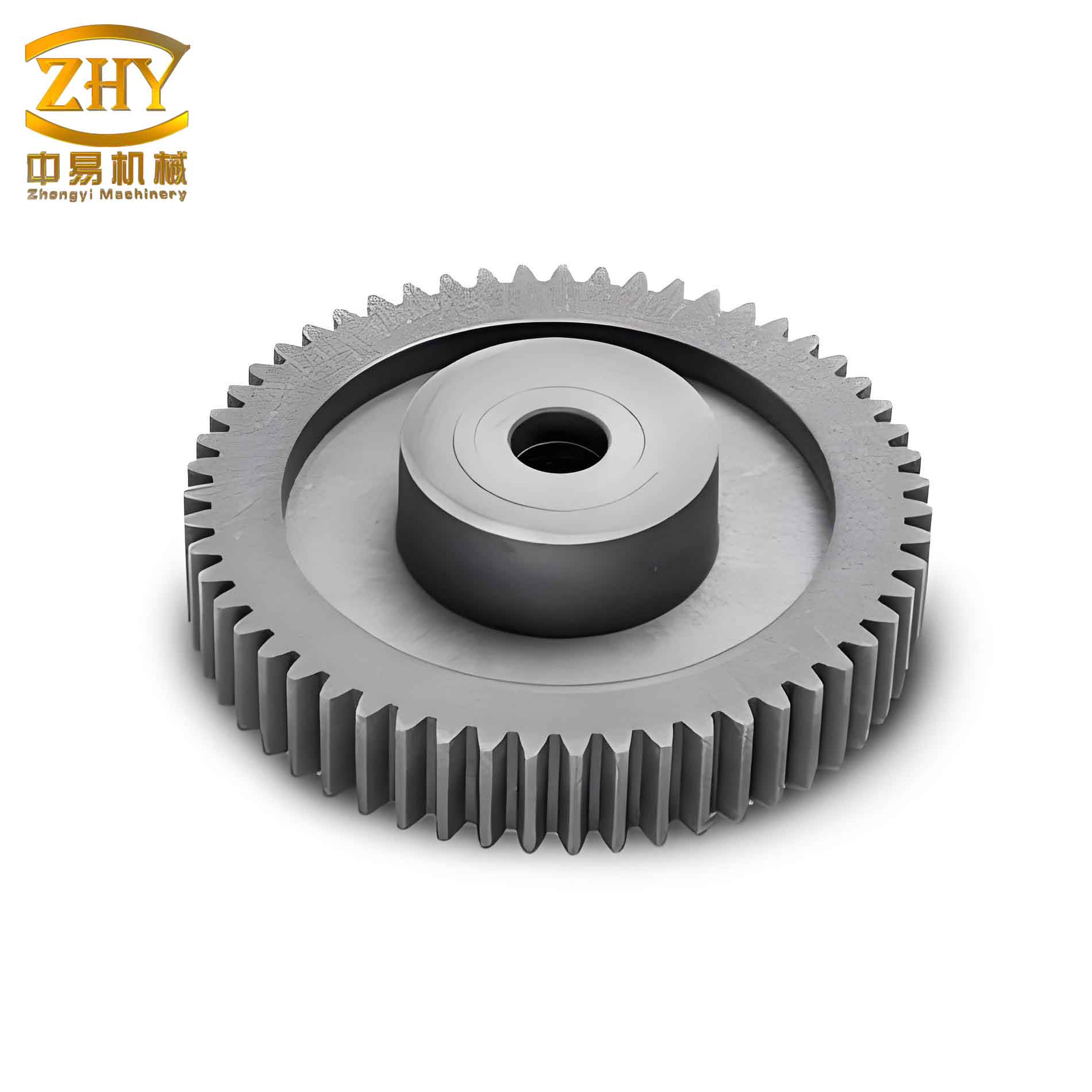
The fundamental principle underpinning this metrological approach is the conversion of physical dimensions into pixel counts within a digital image, followed by a scaling back to real-world units. A machine vision system is deployed for this purpose, typically comprising a high-resolution digital camera (e.g., a CMOS sensor), appropriate lensing, controlled illumination to ensure consistent contrast, and a computational platform running image processing software. The spur and pinion gear is placed within the field of view, and an image is captured. The subsequent analysis is performed entirely in the digital domain, offering repeatability and speed unattainable by manual methods.
The first and critical step before any measurement is system calibration. Since the image is composed of discrete pixels, a conversion factor must be established to translate pixel distances into millimeters. A simple yet effective calibration method involves imaging a standard artifact of known length \( L \) (e.g., a gauge block). After processing this calibration image to accurately detect the edges of the artifact, the number of pixels \( N \) spanning the known length is computed. The scale factor, or the real-world length per pixel \( L_p \), is then given by:
$$ L_p = \frac{L}{N} $$
This factor \( L_p \) is subsequently used to convert all pixel-based measurements from the spur and pinion gear image into meaningful engineering dimensions.
Image Preprocessing Pipeline
The raw image captured by the camera is a color (RGB) image. While rich in information, color data is computationally intensive for dimensional analysis. Therefore, the initial preprocessing step is grayscale conversion, reducing each pixel to a single intensity value while preserving the essential geometric information. Following this, image noise—inherent from sensor electronics and environmental factors—must be suppressed. A median filter is particularly effective for this task, as it excels at removing “salt-and-pepper” noise while preserving edge sharpness, which is crucial for subsequent boundary detection on the spur and pinion gear.
The next pivotal step is image segmentation, separating the object of interest (the gear) from the background. This is achieved through thresholding, which converts the grayscale image into a binary image. The key is selecting an appropriate global threshold value \( T \). For a grayscale image \( g(x,y) \), the binary image \( b(x,y) \) is created as:
$$ b(x,y) =
\begin{cases}
1 & \text{if } g(x,y) > T \\
0 & \text{if } g(x,y) \leq T
\end{cases} $$
Automated threshold selection methods, such as Otsu’s method, are employed to determine \( T \) by maximizing the inter-class variance between the foreground and background pixel intensities. The result is a clean, binary image where the spur and pinion gear appears as a solid white object on a black background, or vice-versa, ready for precise contour extraction.
Algorithmic Measurement of Gear Parameters
The measurement of specific parameters for the spur and pinion gear requires a sequence of targeted image processing operations. The process begins with isolating and analyzing the central bore, then proceeds to the more complex task of characterizing the gear teeth.
1. Bore Diameter Measurement
In a binary image of a typical spur and pinion gear, two primary connected components exist: the solid gear body and the central bore (hole). The first task is to identify and separate these. Using 8-connected component labeling, all distinct white (or black) regions are identified. The region properties, particularly area, are computed. By analyzing the areas, the two largest regions—the gear body and the bore—can be isolated. The bore region is extracted.
To measure its diameter, the edge of the bore is first detected using a reliable operator like the Canny edge detector, known for its good localization and low error rate. The detected edge is a single-pixel-thick contour. The bore diameter is then approximated by calculating the dimensions of the smallest axis-aligned bounding rectangle that encloses this contour. If the bounding box has a width \( W_{px} \) and height \( H_{px} \) in pixels, the bore diameter \( d_{bore} \) in millimeters is calculated as:
$$ d_{bore} = L_p \times \frac{(W_{px} + H_{px})}{2} $$
This method provides a robust and fast estimation of the bore size for the spur and pinion gear.
2. Addendum and Dedendum Circle Diameter Measurement
Measuring the outer diameters (addendum circle) and root diameters (dedendum circle) of a spur and pinion gear is more challenging due to the discontinuous contour caused by the teeth. The process involves several sub-steps:
a) Outer Contour Extraction: The filled gear body (after bore removal) is used. A boundary tracking algorithm, such as an 8-neighborhood tracer, is applied to obtain an ordered, single-pixel list of coordinates representing the gear’s outer perimeter.
b) Gear Center Estimation: The centroid of the outer contour polygon provides a reliable estimate for the center coordinates \( (x_c, y_c) \) of the spur and pinion gear.
c) Classification of Contour Points: This is the core challenge. The contour consists of points lying on the addendum circle (tooth tips) and points lying on the dedendum circle (tooth roots). A machine learning approach is employed to classify these points. A feature vector \( D \) is created containing the radial distance from the estimated center to every contour point. A subset of these distances is manually labeled (based on known approximate size) to create a training set for a simple classifier, such as a shallow neural network or a support vector machine. The network learns to distinguish between the larger radii (addendum) and smaller radii (dedendum). After training, the entire contour is classified.
d) Circle Fitting and Diameter Calculation: Once the addendum points and dedendum points are separately identified, a circle is fitted to each set using a least-squares fitting algorithm. The objective is to find the circle parameters (center \(a, b\) and radius \(R\)) that minimize the sum of squared errors between the fitted circle and the data points \( (x_i, y_i) \). The error for a point is \( \epsilon_i = (x_i – a)^2 + (y_i – b)^2 – R^2 \). The least-squares solution provides the best-fit radius \( R_{add} \) and \( R_{ded} \) for the addendum and dedendum circles, respectively. The diameters are then:
$$ d_a = 2 \times L_p \times R_{add, px} $$
$$ d_f = 2 \times L_p \times R_{ded, px} $$
where the radii are in pixels. This fitting process is inherently robust against minor misclassifications or edge detection noise.
3. Tooth Count and Module Calculation
The number of teeth \( z \) on the spur and pinion gear can be determined directly from the binary image of the classified addendum points. The isolated addendum points are first dilated (morphologically expanded) to merge nearby points belonging to the same tooth tip into a single connected region. Subsequently, performing 8-connected component labeling on this dilated image yields a number of regions equal to the number of teeth. This count is highly reliable.
Finally, with the addendum diameter \( d_a \) and the tooth count \( z \) known, the module \( m \) of the spur and pinion gear—a fundamental design parameter—can be calculated using the standard formula:
$$ m = \frac{d_a}{z + 2} $$
assuming a standard addendum coefficient of 1. This completes the extraction of all primary geometric parameters for the spur and pinion gear.
Experimental Validation and Results
To validate the methodology, a software interface was developed in MATLAB, and several standard spur and pinion gears with different modules and tooth counts were measured. The system was calibrated using a precision gauge block. The following table summarizes the measurement results for one such gear, comparing the image-based measurements to their theoretical nominal values.
| Parameter | Theoretical Value (mm) | Image-Based Measurement (mm) | Absolute Error (mm) |
|---|---|---|---|
| Bore Diameter | 12.000 | 11.987 | 0.013 |
| Addendum Circle Diameter (d_a) | 38.000 | 37.926 | 0.074 |
| Dedendum Circle Diameter (d_f) | 29.000 | 29.270 | 0.270 |
| Number of Teeth (z) | 17 | 17 | 0 |
| Module (m) | 2.000 | 1.996 | 0.004 |
A more extensive test was conducted on a batch of five additional spur and pinion gears. The results, consolidated below, demonstrate the consistency and accuracy of the approach across different sizes.
| Gear ID | Nominal Module (mm) | Measured Module (mm) | Tooth Count Error | Max Diameter Error (mm) |
|---|---|---|---|---|
| 1 | 1.5 | 1.496 | 0 | 0.114 |
| 2 | 1.5 | 1.496 | 0 | 0.214 |
| 3 | 1.5 | 1.498 | 0 | 0.264 |
| 4 | 1.5 | 1.496 | 0 | 0.169 |
| 5 | 1.5 | 1.492 | 0 | 0.092 |
The data shows that tooth count is always correctly identified—a critical requirement. The module is calculated with very high accuracy, typically within ±0.01 mm of the nominal value. Diameter measurements for the spur and pinion gear show slightly higher but still acceptable errors for many industrial quality control applications, with the dedendum circle typically being more challenging to measure precisely due to the geometry of the root fillet and potential lighting shadows.
Advantages, Limitations, and Concluding Remarks
The image-based methodology for measuring spur and pinion gear parameters presents distinct advantages. It is a non-contact technique, eliminating the risk of damaging delicate parts or being affected by probe wear. It offers high speed, enabling the potential for 100% in-line inspection in manufacturing environments. The system setup, based on a standard camera and computer, is significantly more cost-effective than dedicated coordinate measuring machines or gear analyzers. Furthermore, the algorithms are highly automatable, reducing the need for specialized operator skill.
However, limitations exist. The accuracy is ultimately governed by the camera resolution and the quality of the optical setup. Sub-pixel edge detection techniques could be integrated to improve precision beyond the pixel scale factor \( L_p \). The method assumes a perfect top-down view; any tilt in the spur and pinion gear will introduce projective distortion and measurement error, necessitating precise fixturing or more advanced 3D correction algorithms. The classification step for addendum/dedendum points may require tuning for gears with non-standard profiles or significant wear.
In conclusion, this work successfully details and validates a comprehensive, algorithm-driven approach for the optical measurement of spur and pinion gears. By strategically combining fundamental image processing techniques—calibration, filtering, thresholding, connected component analysis, boundary tracking, and pattern classification—key geometric parameters are extracted automatically and with satisfactory accuracy. This framework establishes a versatile foundation not only for quality inspection of new gears but also for the monitoring of wear and degradation in serviced spur and pinion gear sets, contributing to predictive maintenance strategies. Future work may focus on integrating sub-pixel analysis, automating the setup for different gear types, and extending the principles to more complex gear geometries like helical or bevel gears.