
The analysis of fretting wear in spur and pinion gear systems represents a critical challenge in mechanical engineering and predictive maintenance. Traditional methods for assessing this wear often suffer from significant inaccuracies, particularly in capturing localized damage evolution and its precise magnitude over time. Experimental approaches, while valuable, typically yield only macro-scale wear volumes, lack detailed local characteristics, and are both time-consuming and costly. Conversely, purely numerical simulation techniques, though capable of revealing wear patterns, frequently struggle with quantifying the exact degree of wear due to modeling assumptions and convergence issues. To bridge this gap and significantly enhance the precision of fretting wear analysis for spur gears, this study introduces and validates a robust finite element analysis (FEA) methodology that leverages the sensitivity of modal flexibility. This parameter serves as a powerful diagnostic indicator for identifying the condition and extent of subsurface damage initiated by fretting action on the tooth flanks of a spur and pinion pair.
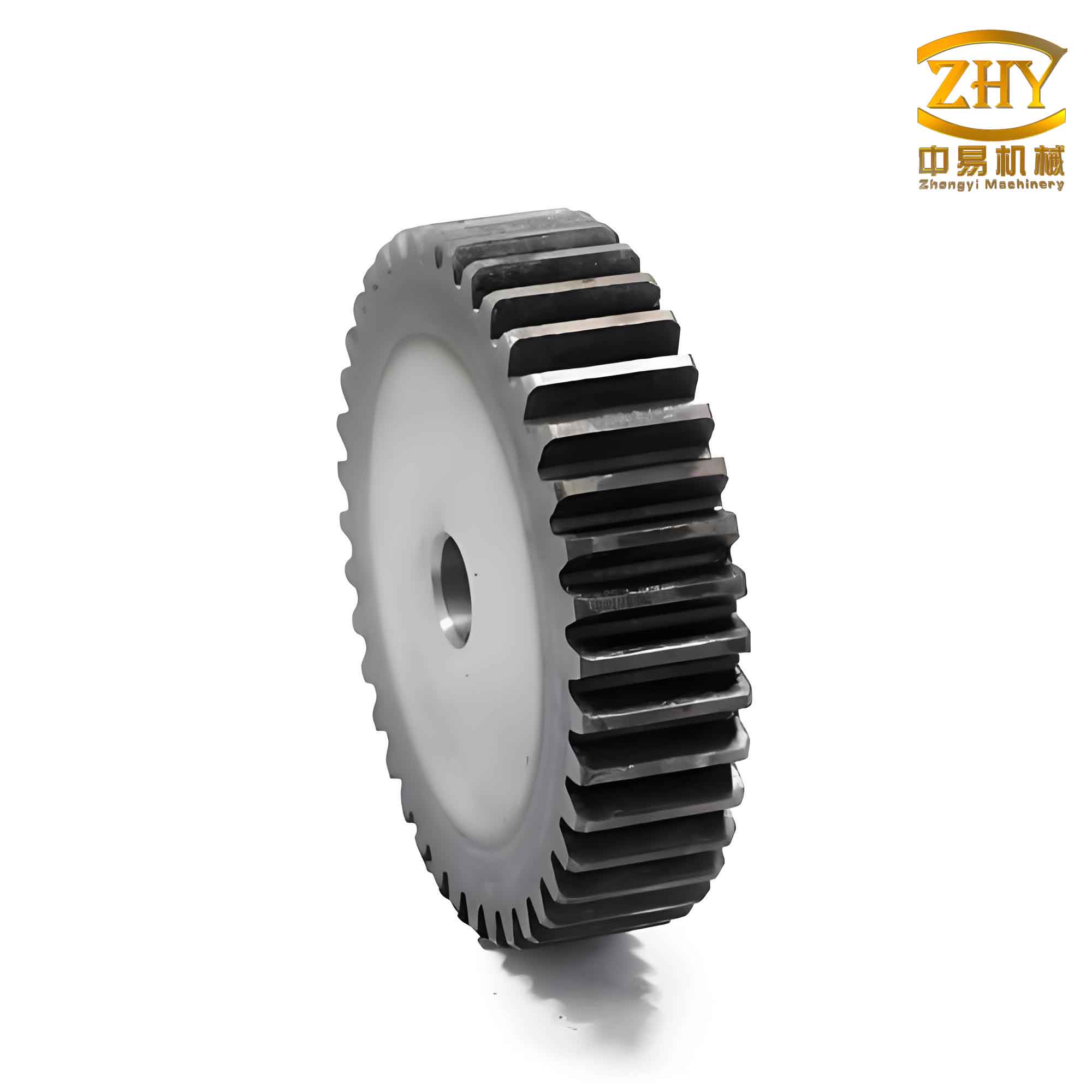
The core of the proposed methodology involves a synergistic integration of high-fidelity geometric modeling, dynamic modal analysis, and physics-based wear simulation. The process begins with the precise digitization of the spur gear tooth surface. An automated scanning apparatus is employed to capture dense point cloud data representing the intact tooth profile. This raw data is then processed and fitted using computational software like MATLAB to reconstruct the accurate involute geometry. The coordinate data defining this geometry is subsequently imported into a dedicated finite element pre-processing environment to construct a high-resolution mesh model. This model faithfully represents the spur and pinion’s complex contact geometry, forming the foundation for all subsequent analyses.
A pivotal step in this framework is the extraction of modal parameters. A modal analysis of the pristine spur gear finite element model is performed to obtain its natural frequencies and corresponding mode shapes. From this, the modal flexibility matrix, which describes the system’s static displacement response in terms of its dynamic characteristics, is calculated. The fundamental premise is that incipient fretting wear, which modifies the local stiffness and mass distribution at the tooth surface, will induce measurable changes in this modal flexibility. This sensitivity makes modal flexibility an excellent candidate for a non-destructive evaluation (NDE) parameter to detect and quantify early-stage wear in a spur and pinion system before it progresses to catastrophic failure.
To mathematically describe the wear process, one must first define the changing geometry. An involute coordinate system is established on the tooth flank of the spur gear model, with the origin at the gear’s rotational center. The equation for the ideal involute curve in this system can be expressed as:
$$ x_i = R_b (cos(\alpha_k) + \alpha_k sin(\alpha_k)) $$
$$ y_i = R_b (sin(\alpha_k) – \alpha_k cos(\alpha_k)) $$
where \( R_b \) is the base circle radius and \( \alpha_k \) is the involute roll angle. For practical FEA implementation, this is often translated. By subtracting \( R_b \) from the y-coordinate, a modified set of coordinates \((x, y)\) is obtained for defining the profile in the simulation workspace.
As fretting wear progresses, material is removed from the tooth surface, causing the profile to deviate from its original involute form. Consider a point \( l \) on the unworn surface with coordinates \((x_l, y_l)\). If a wear depth \( c_l \) is removed along the local surface normal direction, the new coordinates \((x’_l, y’_l)\) of that point can be determined. The relationship is governed by the direction of material loss, characterized by the slope angle \( \beta \) of the surface at point \( l \). The new coordinates must satisfy the condition of moving along the normal vector by the wear depth:
$$ (x’_l – x_l) sin(\beta) – (y’_l – y_l) cos(\beta) = 0 $$
$$ (x’_l – x_l) cos(\beta) + (y’_l – y_l) sin(\beta) = c_l $$
The calculation of the wear depth \( c_l \) (or the volumetric wear \( V \)) is achieved using the well-established Archard wear formula, which is adapted for the finite element context. The classic Archard equation states:
$$ V = \frac{\mu F_w Z}{s} $$
where \( V \) is the wear volume, \( \mu \) is the dimensionless wear coefficient, \( F_w \) is the normal contact force, \( Z \) is the sliding distance, and \( s \) is the hardness of the softer material in the contact pair. For FEA, it is often more convenient to work with wear depth \( \phi \) per loading cycle. If the nominal contact area is \( A \), then \( V = A \phi \). Noting that contact pressure \( p = F_w / A \), the equation can be transformed into a differential form suitable for incremental simulation:
$$ \phi = k p Z $$
Here, \( k = \mu / s \) is the dimensional wear coefficient (e.g., in \( m^2/N \)). This formulation allows for the wear depth at any node on the spur or pinion tooth surface to be calculated incrementally based on the local contact pressure \( p \) and the incremental sliding distance \( \Delta Z \) computed by the FEA solver for each simulation cycle \( i \):
$$ \phi_i = k p_i \Delta Z_i $$
The wear coefficient \( k \) is a critical material parameter that must be determined from controlled experiments for the specific spur and pinion material pair under fretting conditions.
The procedural workflow combining these elements is implemented in a sequential manner. First, a static contact analysis of the meshing spur and pinion is performed under load to determine the initial contact pressure distribution \( p \) and slip \( \Delta Z \). Second, the wear depth \( \phi \) is calculated for all surface nodes. Third, the nodal coordinates of the finite element model are updated according to the wear direction equations to reflect the new, worn geometry. Fourth, a new modal analysis is conducted on the updated gear model to compute the changed modal flexibility. This four-step process—Contact, Wear, Update, Modal—constitutes one simulation cycle, representing a certain number of operational loading cycles of the physical spur and pinion system. The change in modal flexibility between successive cycles serves as a global indicator of the accumulating wear damage.
To demonstrate and validate the proposed methodology, a detailed experimental and numerical case study was conducted. The test objects were a set of spur gear pairs (a driving pinion and a driven spur gear) manufactured from common gear steels, purchased from the same batch to ensure consistency. Key material and geometric properties are summarized in the table below:
| Parameter Name | Pinion (Driver) | Spur Gear (Driven) |
|---|---|---|
| Gear Material | 42CrMo | 40Cr |
| Number of Teeth | 30 | 60 |
| Face Width (mm) | 28 | 14 |
| Pressure Angle (°) | 18 | 13 |
| Module (mm) | 2.5 | 2.5 |
| Center Distance (mm) | 112.5 | 112.5 |
| Young’s Modulus (GPa) | 211 | 200 |
| Poisson’s Ratio | 0.30 | 0.29 |
| Density (kg/m³) | 7850 | 7850 |
Six identical machine tool setups were prepared, each fitted with a new gear pair. To accelerate the wear process for analysis, the machines were operated under controlled, identical conditions but for different cumulative durations: 2, 6, 10, 14, 18, and 24 hours of equivalent high-load service. After each prescribed interval, the corresponding spur and pinion set was carefully disassembled. The wear on the tooth flanks was then meticulously measured using a high-precision coordinate measuring machine (CMM) to establish a ground-truth dataset for validation. Simultaneously, the proposed FEA workflow was executed, simulating the same operational duration for each case.
The finite element simulation provided detailed insights into the wear distribution. The results clearly showed that the maximum wear depth for both the pinion and the spur gear consistently occurred at two critical locations: the dedendum (root region) and the addendum (tip region). The profile near the pitch circle exhibited significantly less wear. This pattern aligns with known gear contact mechanics, where substantial sliding velocities coexist with high contact stress at the approach and recess phases of meshing (near the root and tip), promoting adhesive and abrasive wear mechanisms. The pitch point experiences predominantly rolling contact, resulting in minimal wear. A comparison of the wear depth profile predicted by the modal-flexibility-informed FEA against the CMM measurements for the 24-hour test case revealed a remarkably close match, confirming the model’s accuracy in capturing spatial wear trends.
The quantitative validation focused on the accuracy of the computed wear depth at a reference point on the pinion tooth flank. The following table compares the error (simulation result minus CMM measurement) for the proposed method against two other contemporary numerical methods from the literature (referred to as Method A and Method B) across all test durations.
| Operating Time (Hours) | Proposed Method Error (mm) | Method A Error (mm) | Method B Error (mm) |
|---|---|---|---|
| 2 | -0.0003 | +0.0013 | +0.0019 |
| 6 | +0.0000 | -0.0021 | -0.0023 |
| 10 | +0.0002 | -0.0019 | +0.0025 |
| 14 | +0.0006 | -0.0014 | -0.0006 |
| 18 | +0.0009 | +0.0029 | +0.0005 |
| 24 | +0.0000 | -0.0005 | -0.0029 |
The data clearly demonstrates the superior performance of the modal flexibility-based approach. The errors from the proposed method are not only smaller in magnitude but also far more stable and consistent, oscillating closely around zero. In contrast, the errors from Methods A and B show larger fluctuations and greater absolute values, indicating less reliability and higher sensitivity to simulation parameters or cycle extrapolation. This stability is a direct consequence of using the modal flexibility change as a global conditioner or validation step within the simulation loop, which helps to constrain and correct the incremental wear accumulation process, preventing drift from the physically realistic wear path.
A further analysis was conducted to explicitly link the simulated wear state to the diagnostic modal parameter. The change in the diagonal term of the modal flexibility matrix corresponding to a degree of freedom at the gear’s periphery was tracked against the simulated total wear volume. A strong, non-linear correlation was observed, which can be approximated by a power-law relationship:
$$ \Delta F_{modal} \propto V^{\,n} $$
where \( \Delta F_{modal} \) is the change in modal flexibility and \( n \) is an exponent determined from the curve fit. This relationship underscores the potential for using vibration-based modal testing in the field to inversely estimate the accumulated wear volume in a spur and pinion assembly, providing a powerful tool for condition-based maintenance without disassembly.
In conclusion, this work has successfully developed and demonstrated a high-fidelity finite element methodology for analyzing fretting wear in spur and pinion gears. The key innovation lies in the integration of dynamic modal analysis—specifically, the tracking of modal flexibility changes—into the iterative wear simulation process. This integration acts as a stabilizing and accuracy-enhancing mechanism, leading to predictions of wear depth and distribution that are significantly more reliable and consistent than those from conventional incremental wear simulation methods. The results conclusively show that critical wear occurs at the tooth root and tip of both mating gears. The proposed framework not only serves as a superior design and analysis tool for predicting gear life but also establishes a foundational link between simulated subsurface damage and measurable vibration characteristics, paving the way for advanced non-destructive monitoring techniques for gear transmission systems in industrial applications.