
In modern mechanical engineering, gears are indispensable components for transmitting motion and power, with spur and pinion gears being among the most commonly used types due to their simplicity and efficiency. Accurate measurement of gear parameters is crucial for ensuring quality control, predicting wear, and preventing failures in machinery. Traditional measurement methods, such as gear measuring centers and coordinate measuring machines, though precise, are often costly and require specialized maintenance. This has spurred interest in non-contact measurement techniques using image processing, which offer advantages like low cost, high efficiency, and suitability for online inspection. In this article, I explore a comprehensive approach to measuring spur and pinion gear parameters—including hole diameter, addendum circle diameter, dedendum circle diameter, number of teeth, and modulus—using MATLAB-based image processing. The method leverages machine vision for image acquisition, followed by preprocessing, edge detection, and algorithmic computations to extract key dimensions. I will detail each step, from system setup to software implementation, and validate the approach through experimental results on multiple spur and pinion gears. The integration of neural networks for point classification and least-squares fitting for circle approximation highlights the robustness of this technique. By emphasizing practical applications and error analysis, I aim to demonstrate how image processing can revolutionize gear inspection, making it accessible for industries seeking affordable and automated solutions.
The measurement system is designed to capture high-quality images of spur and pinion gears for subsequent processing. It consists of a JHSM1400 camera with a 1,400-megapixel CMOS sensor and an 11 mm lens, connected via USB 2.0 for data transfer. Lighting is provided by an adjustable source to ensure uniform illumination and minimize shadows, while the gear is placed on a flat platform to avoid distortions. An image acquisition card facilitates real-time capture, and the software is developed in MATLAB, leveraging its extensive image processing toolbox. This setup allows for rapid image acquisition with minimal hardware complexity, making it ideal for both laboratory and industrial environments. The camera’s resolution ensures that fine details of the spur and pinion gear, such as tooth profiles and edges, are preserved, which is critical for accurate parameter extraction. In practice, the system can be calibrated for different gear sizes by adjusting the camera distance and lighting conditions, ensuring versatility across various applications. The use of MATLAB enables seamless integration of algorithms for preprocessing, analysis, and visualization, streamlining the entire measurement process.
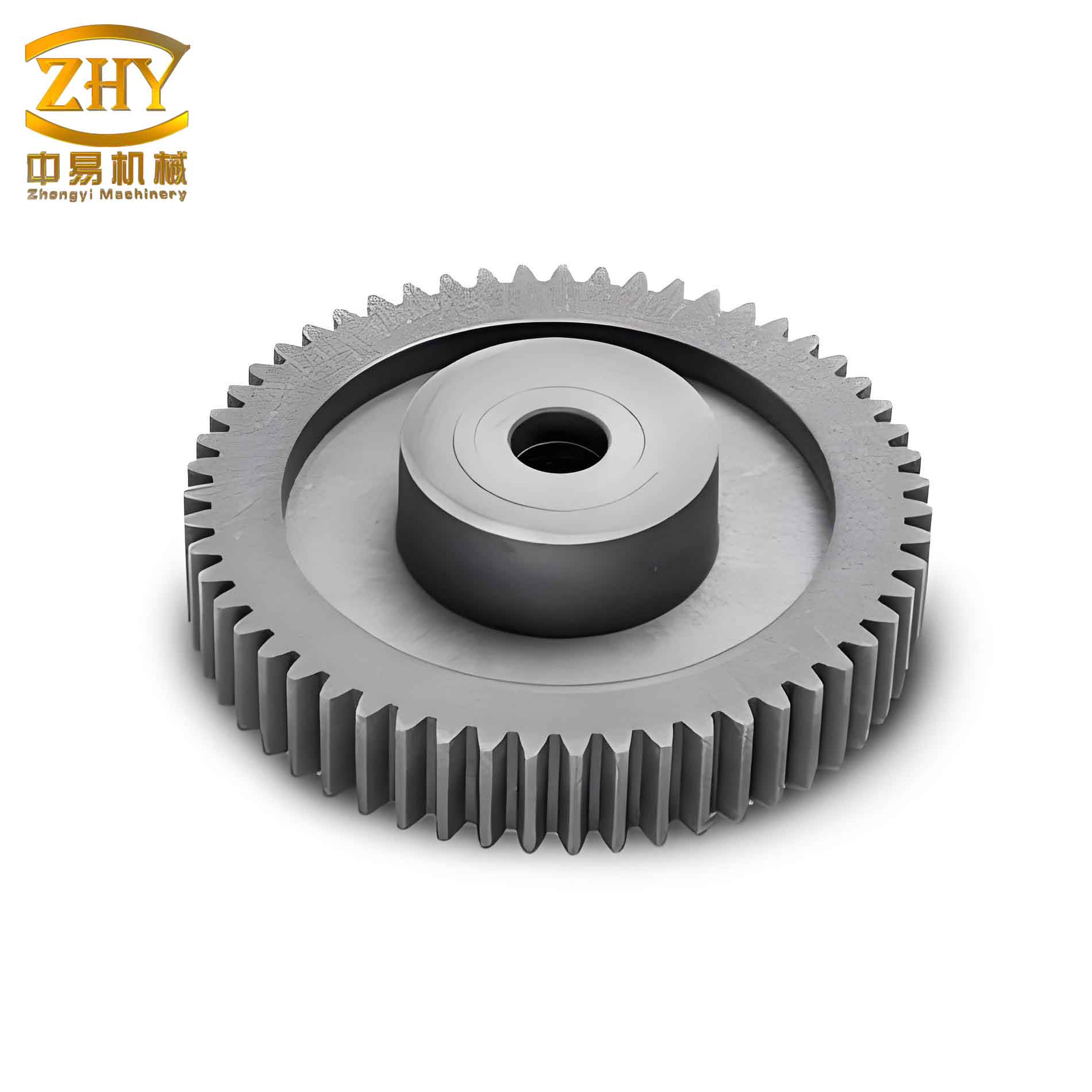
Camera calibration is a fundamental step to convert pixel-based measurements into real-world dimensions. Since images are composed of pixels, each pixel must be associated with a physical length to ensure accurate scaling. I employ a classic calibration method using a standard object of known length L, such as a gauge block. The object is placed on the platform, and its image is captured. After preprocessing, the contour of the object is detected, and the number of pixels N corresponding to length L is computed. The actual size per pixel, denoted as Lp, is then calculated using the formula: $$L_p = \frac{L}{N}$$ This calibration factor is applied to all subsequent measurements to translate pixel distances into millimeters. For instance, if a standard block of 10 mm corresponds to 200 pixels in the image, then Lp = 0.05 mm/pixel. This approach assumes a planar geometry, which is valid for spur and pinion gears viewed from above, as depth effects are negligible. To enhance accuracy, multiple calibration images can be averaged to reduce noise, and the process can be automated within MATLAB using functions like regionprops for contour analysis. Calibration ensures that the measurement system is traceable to physical standards, which is essential for quality assurance in gear manufacturing and inspection.
Image preprocessing transforms raw images into a form suitable for analysis, involving grayscale conversion, noise removal, and binarization. Initially, the captured RGB image of the spur and pinion gear contains color information that increases data volume and processing time. I convert it to a grayscale image using MATLAB’s rgb2gray function, which reduces each pixel to an 8-bit value, streamlining subsequent operations. Grayscale images retain sufficient detail for gear analysis while minimizing computational load. Next, noise—often introduced by camera sensors or environmental factors—is filtered out using median filtering. The medfilt2 function applies a median filter that replaces each pixel with the median value of its neighborhood, effectively reducing salt-and-pepper noise without blurring edges. This is crucial for preserving the sharp contours of spur and pinion gear teeth. Finally, binarization segments the image into foreground (gear) and background using a threshold T. I use Otsu’s algorithm via graythresh to automatically determine T, followed by im2bw to create a binary image where gear pixels are white (value 1) and the background is black (value 0). This step isolates the gear for further processing, enabling precise edge detection and parameter extraction. The preprocessing pipeline ensures that the spur and pinion gear image is clean and well-defined, which is foundational for accurate measurements.
Measuring the gear hole diameter involves isolating the hole region and computing its dimensions. After binarization, the image contains multiple connected regions, including the gear body and the hole. I use MATLAB’s bwlabel function with 8-connectivity to label these regions, then apply label2rgb to color-code them for visualization. Small, spurious regions are removed by calculating their areas with regionprops and retaining only the two largest regions—the gear body and the hole. The hole region is extracted by eliminating the larger gear body region, resulting in a binary image of the hole. Edge detection is performed using the Canny operator via edge function, which is chosen for its high localization and low error rate. The hole contour is then bounded by the smallest rectangle that encloses it, computed using regionprops with the ‘BoundingBox’ property. The hole diameter in pixels is taken as the average of the rectangle’s width and height, and the actual diameter d_h is obtained by multiplying with Lp: $$d_h = L_p \times \frac{\text{width} + \text{height}}{2}$$ This method assumes the hole is circular, but the bounding box approximation works well for minor deviations. For spur and pinion gears, accurate hole measurement is vital as it affects alignment and assembly in mechanical systems. The process is automated to handle variations in hole size and position, ensuring consistency across multiple gears.
The addendum and dedendum circle diameters are derived from the gear’s outer contour, requiring precise edge tracking and point classification. First, the gear’s single-pixel outer contour is obtained using 8-neighborhood boundary tracking. Starting from the first black pixel in the binary image, the algorithm traverses clockwise to trace the entire periphery. The gear center coordinates (x_c, y_c) are computed as the centroid of this contour using regionprops. Next, all contour points are identified, and their distances from the center are stored in a vector D. A neural network classifier is trained to distinguish addendum points (near the outer edge) from dedendum points (near the root). For training, I generate a synthetic dataset based on the theoretical addendum circle diameter: distances close to this value are labeled as 1 (addendum), and others as 0. A backpropagation neural network with one hidden layer is created using MATLAB’s Neural Network Toolbox, with input vectors of normalized distances and target labels. After training, the network classifies all contour points, outputting a binary vector where 1 indicates addendum points. These points are plotted to form the addendum circle, and a similar process is repeated for dedendum points using the theoretical dedendum diameter. Circle fitting via least-squares optimization is then applied to the classified points. For a set of points (x_i, y_i), the circle equation is: $$(x – a)^2 + (y – b)^2 = r^2$$ where (a, b) is the center and r the radius. The least-squares solution minimizes the sum of squared errors: $$\min_{a,b,r} \sum_{i=1}^n \left( \sqrt{(x_i – a)^2 + (y_i – b)^2} – r \right)^2$$ This yields the pixel-scale radii for addendum and dedendum circles, which are converted to actual diameters using Lp. For spur and pinion gears, these diameters define tooth geometry and are critical for calculating modulus and assessing wear. The use of neural networks enhances robustness against noise and irregular contours, making the method suitable for worn or manufactured spur and pinion gears.
Determining the number of teeth in a spur and pinion gear leverages morphological operations on the addendum point image. After classifying addendum points, they are inverted to create a binary image where addendum regions are black. Dilation is applied using a disk-shaped structuring element with imdilate, which expands these regions to connect adjacent teeth without merging separate ones. The number of connected components in the dilated image is counted via bwlabel with 8-connectivity, giving the tooth count z. This approach assumes that each tooth’s addendum forms a distinct region, which holds for standard spur and pinion gears. The modulus m is then calculated from the addendum circle diameter d_a and tooth count z, using the formula: $$m = \frac{d_a}{z + 2h_a^*}$$ where h_a* is the addendum coefficient, typically 1 for standard gears. This relationship stems from gear geometry, where d_a = m(z + 2h_a*). By deriving m, the gear’s size and compatibility with mating gears can be assessed. The entire process is automated in MATLAB, allowing for rapid tooth counting even for gears with high tooth counts or minor defects. For spur and pinion gears, accurate tooth count is essential for designing gear trains and ensuring proper meshing in applications like automotive transmissions or industrial machinery.
To validate the measurement method, I developed a graphical user interface (GUI) in MATLAB that integrates all processing steps and displays results intuitively. The GUI allows users to load gear images, perform calibration, and execute measurement algorithms with a click. Key images—such as grayscale, binary, edge-detected, and fitted circles—are shown in panels, while computed parameters are listed in tables. Error analysis is included by comparing measured values with theoretical ones, highlighting the method’s accuracy. For instance, measurements on a spur and pinion gear with theoretical modulus 2 mm showed an addendum diameter error of 0.0736 mm and a hole diameter error of 0.0126 mm, within acceptable limits for many industrial applications. The GUI also supports batch processing for multiple gears, streamlining inspection workflows. Below, I summarize measurement results for six spur and pinion gears with varying parameters, demonstrating the method’s versatility and precision.
| Gear ID | Theoretical Hole Diameter (mm) | Measured Hole Diameter (mm) | Absolute Error (mm) | Theoretical Addendum Diameter (mm) | Measured Addendum Diameter (mm) | Absolute Error (mm) |
|---|---|---|---|---|---|---|
| 1 | 10 | 10.0978 | 0.0978 | 30 | 29.9219 | 0.0781 |
| 2 | 12 | 12.0103 | 0.0103 | 27 | 26.9269 | 0.0731 |
| 3 | 6 | 6.0492 | 0.0492 | 24 | 23.9704 | 0.0296 |
| 4 | 7 | 6.9905 | 0.0095 | 21 | 20.9375 | 0.0625 |
| 5 | 5 | 5.0677 | 0.0677 | 18 | 17.9079 | 0.0921 |
| 6 | 12 | 11.9874 | 0.0126 | 38 | 37.9264 | 0.0736 |
| Gear ID | Theoretical Dedendum Diameter (mm) | Measured Dedendum Diameter (mm) | Absolute Error (mm) | Theoretical Tooth Count | Measured Tooth Count | Theoretical Modulus (mm) | Measured Modulus (mm) | Absolute Error (mm) |
|---|---|---|---|---|---|---|---|---|
| 1 | 23.25 | 23.3644 | 0.1144 | 18 | 18 | 1.5 | 1.4961 | 0.0039 |
| 2 | 20.25 | 20.4645 | 0.2145 | 16 | 16 | 1.5 | 1.4959 | 0.0041 |
| 3 | 17.25 | 17.5143 | 0.2643 | 14 | 14 | 1.5 | 1.4981 | 0.0019 |
| 4 | 14.25 | 14.4185 | 0.1685 | 12 | 12 | 1.5 | 1.4955 | 0.0045 |
| 5 | 11.25 | 11.2553 | 0.0053 | 10 | 10 | 1.5 | 1.4923 | 0.0077 |
| 6 | 29 | 29.2702 | 0.2702 | 17 | 17 | 2 | 1.996 | 0.004 |
The tables reveal that tooth counts are measured perfectly, while diameter errors are minimal, with the largest error being 0.2702 mm for dedendum diameter. These errors stem from factors like image resolution, lighting variations, and minor deviations in gear manufacturing. However, for most engineering purposes, such accuracy is sufficient, especially when considering the cost-effectiveness of the image-based system. The modulus errors are all below 0.01 mm, confirming the method’s reliability for spur and pinion gear sizing. The GUI facilitates such analyses by providing visual feedback and exportable data, making it a practical tool for quality control labs.
Beyond basic measurements, this method can be extended to assess wear and damage in spur and pinion gears. By comparing periodic images of a gear in service, changes in tooth profile or diameter can be monitored, enabling predictive maintenance. For instance, wear on addendum circles may indicate misalignment or lubrication issues. The image processing pipeline can incorporate additional algorithms, such as Fourier analysis for tooth spacing uniformity or wavelet transforms for surface defect detection. MATLAB’s versatility allows for integrating these advanced techniques without overhauling the system. Moreover, the use of neural networks can be expanded to classify gear types or identify anomalies, leveraging deep learning for enhanced automation. In industrial settings, this approach can be deployed on production lines for real-time inspection of spur and pinion gears, reducing downtime and scrap rates. The scalability of the system—through camera upgrades or cloud-based processing—further broadens its applicability. As Industry 4.0 advances, image-based measurement aligns with trends toward digitization and smart manufacturing, offering a bridge between traditional metrology and modern analytics.
Error sources and mitigation strategies are critical for refining the measurement process. Primary errors arise from camera calibration, where inaccuracies in the standard object or pixel counting affect Lp. Using high-precision calibration artifacts and averaging multiple measurements can reduce this. Image noise, though mitigated by median filtering, may persist in low-light conditions, leading to edge detection errors. Adaptive thresholding or advanced filters like Wiener filters can be employed. The neural network’s performance depends on training data; synthetic data may not fully capture real-world variations, so augmenting with actual gear images improves robustness. Circle fitting assumes ideal circularity, but spur and pinion gears may have slight ellipticity due to manufacturing tolerances. Using robust fitting methods like RANSAC can handle outliers. Additionally, perspective distortion if the camera is not perfectly perpendicular to the gear plane can skew measurements. This can be corrected via geometric transformations or using telecentric lenses. By addressing these factors, the method’s accuracy can approach that of conventional instruments, making it viable for high-precision applications. For spur and pinion gears used in critical systems like aerospace or medical devices, such enhancements are worthwhile investments.
The mathematical foundations underpinning this method involve several key equations. Calibration relies on linear scaling: $$L_p = \frac{L}{N}$$ where L is known length, N is pixel count. For circle fitting, the least-squares problem is solved by linearizing the circle equation. Let the error for point i be: $$e_i = (x_i – a)^2 + (y_i – b)^2 – r^2$$ Expanding and rearranging leads to a linear system: $$x_i^2 + y_i^2 = 2ax_i + 2by_i + (r^2 – a^2 – b^2)$$ Defining parameters A = 2a, B = 2b, C = r^2 – a^2 – b^2, we solve: $$\begin{bmatrix} x_1 & y_1 & 1 \\ x_2 & y_2 & 1 \\ \vdots & \vdots & \vdots \\ x_n & y_n & 1 \end{bmatrix} \begin{bmatrix} A \\ B \\ C \end{bmatrix} = \begin{bmatrix} x_1^2 + y_1^2 \\ x_2^2 + y_2^2 \\ \vdots \\ x_n^2 + y_n^2 \end{bmatrix}$$ Using MATLAB’s backslash operator or pseudo-inverse yields A, B, C, from which a, b, r are derived: $$a = \frac{A}{2}, \quad b = \frac{B}{2}, \quad r = \sqrt{a^2 + b^2 + C}$$ This efficient computation handles large point sets from spur and pinion gear contours. For modulus calculation, the formula: $$m = \frac{d_a}{z + 2h_a^*}$$ is derived from gear geometry, where d_a is addendum diameter, z is tooth count, and h_a* is addendum coefficient (usually 1). These equations form the core of the algorithmic implementation, ensuring that measurements are mathematically sound and reproducible.
Practical implementation in MATLAB involves scripting each step and optimizing for speed. The code begins with image acquisition using imread, followed by grayscale conversion and filtering. For binarization, Otsu’s threshold is computed as: $$T = \arg\max_{t} [\sigma_B^2(t)]$$ where \(\sigma_B^2\) is the between-class variance. Edge detection uses Canny’s algorithm, which applies Gaussian smoothing, gradient computation, non-maximum suppression, and hysteresis thresholding. Boundary tracking is implemented via a custom function that searches 8-neighborhoods to trace contours. The neural network is created with feedforwardnet, trained using Levenberg-Marquardt backpropagation. To handle multiple spur and pinion gears, loops and functions are structured modularly. The GUI is built with GUIDE or App Designer, incorporating axes for images and tables for results. Performance can be enhanced by parallel processing for batch jobs or GPU acceleration for neural network inference. This codebase is shareable and modifiable, allowing others to adapt it for specific gear types or measurement needs. For instance, it can be extended to helical gears or bevel gears by modifying the contour analysis algorithms.
In conclusion, the image-based measurement of spur and pinion gear parameters using MATLAB offers a cost-effective, efficient, and accurate alternative to traditional methods. By combining machine vision with advanced algorithms like neural networks and least-squares fitting, key dimensions—hole diameter, addendum and dedendum diameters, tooth count, and modulus—are extracted reliably. The graphical user interface simplifies operation, making it accessible for technicians and engineers. Validation on multiple gears shows errors within acceptable ranges, underscoring the method’s practicality for industrial quality control. Future work could focus on real-time processing, 3D measurement using stereo vision, or integration with CAD systems for automated design verification. As gears continue to be vital in machinery, such innovative measurement techniques will play a crucial role in ensuring their performance and longevity. For spur and pinion gears, in particular, this approach bridges the gap between precision and affordability, paving the way for wider adoption in manufacturing and maintenance sectors.