
The pursuit of efficient, high-strength, and cost-effective manufacturing methods for power transmission components is a constant driver in mechanical engineering. Among these components, the spur and pinion gear stands as one of the most fundamental and widely used elements. For decades, the primary method for producing these spur and pinion gears has been traditional machining—processes like hobbing, shaping, or milling. While capable of high precision, these subtractive methods suffer from significant drawbacks: low material utilization, severed metal fiber lines which weaken the component, high energy consumption, and considerable production time. This has created a pressing need for advanced near-net-shape manufacturing techniques that can overcome these limitations and unlock superior mechanical properties.
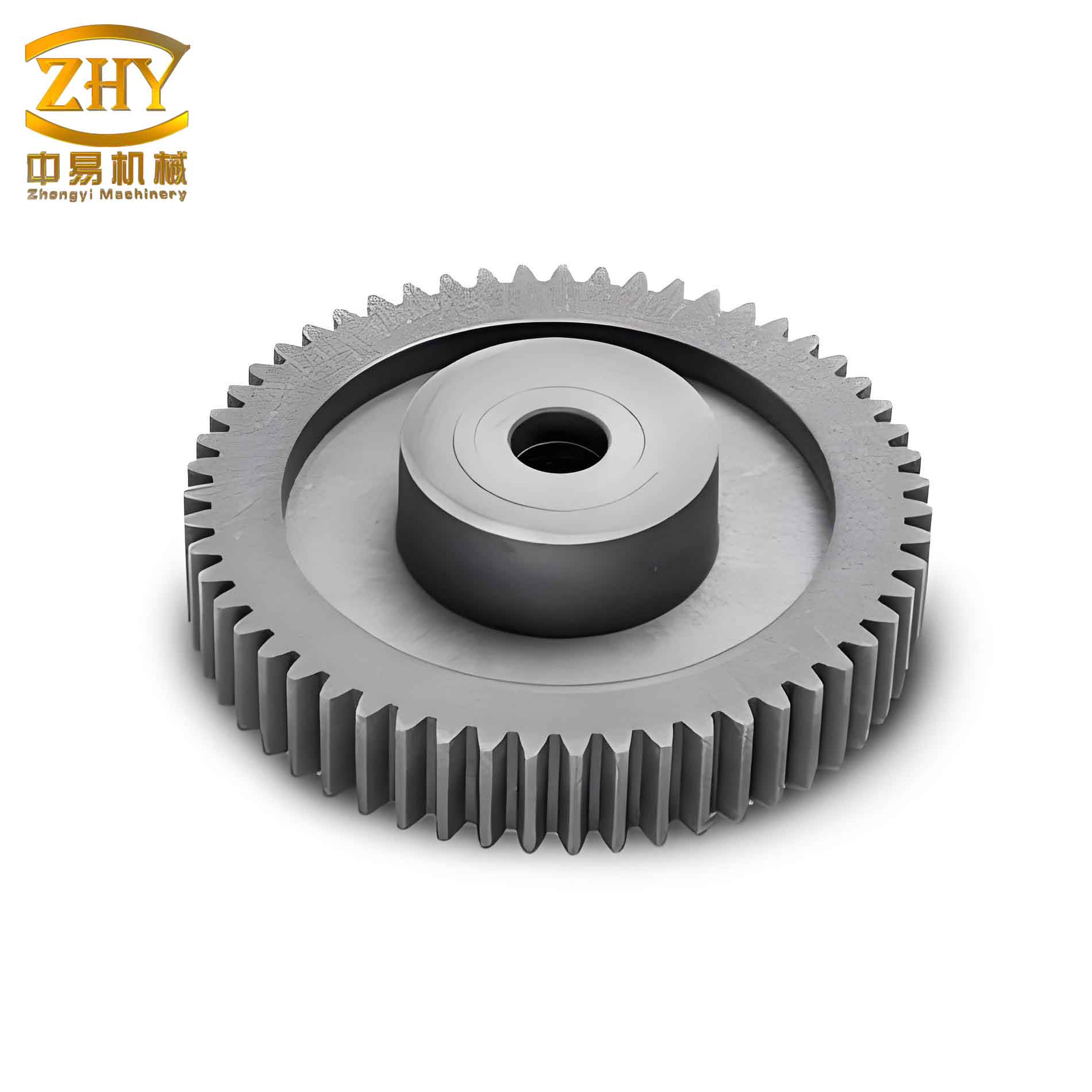
Plastic forming, or cold forging, presents a compelling alternative for spur and pinion gear production. By forcing metal to flow into a precise die cavity under high pressure, this process creates gears with continuous grain flow, enhanced surface finish, and superior load-bearing capacity due to work hardening. The material yield approaches 100%, and production rates can be dramatically higher. However, the full realization of this potential for complex shapes like a spur and pinion gear has been hindered by a critical challenge: excessively high forming loads. The intricate tooth profile requires massive amounts of metal displacement, leading to immense pressures that severely reduce die life, increase equipment costs, and limit the size and module of gears that can be practically formed. This economic barrier has slowed the widespread industrial adoption of forged spur and pinion gears.
To address this central issue of high forming load, innovative process variants have been explored. One particularly promising strategy is the “hole divided-flow” forming method. The core principle involves using a preform—a cylindrical billet—with a central axial hole. During compression, this hole acts as an internal free surface, allowing material to flow not only radially outward into the tooth cavities but also radially inward. This bifurcation of material flow, or “divided-flow,” effectively reduces the extreme resistance encountered when forcing all material outward. It lowers the mean contact pressure on the die walls and, consequently, the total forging load. This paper presents a comprehensive analysis of this hole divided-flow forming process for a standard spur and pinion gear, utilizing advanced three-dimensional finite element analysis (FEA) to unravel the complex metal flow, stress evolution, and load characteristics. Our goal is to demonstrate how this technique can successfully produce a high-quality spur and pinion gear while significantly mitigating the traditional drawback of prohibitive forming forces.
Fundamentals of Gear Geometry and Process Design
The spur and pinion gear under investigation is defined by a standard set of geometric parameters. For the purpose of this analysis and to establish a clear benchmark, we selected a gear with a module of 3 mm and 20 teeth, resulting in a standard pitch diameter of 60 mm. The pressure angle is 20° with no profile shift (zero addendum modification). The material chosen for the billet is AISI 1010 steel, a common low-carbon steel known for its good formability, which is often used in cold forging applications. Its flow stress behavior is crucial for accurate simulation and is typically modeled by a hardening law. A common representation is the Hollomon power law:
$$\sigma_f = K \cdot \varepsilon^n$$
where $\sigma_f$ is the flow stress, $\varepsilon$ is the true strain, $K$ is the strength coefficient, and $n$ is the strain-hardening exponent. For AISI 1010, typical values are $K \approx 530$ MPa and $n \approx 0.23$ at room temperature.
The success of the hole divided-flow process hinges on the intelligent design of the initial billet. The key dimensions are its outer diameter (OD), the diameter of the central hole (ID), and its height. The OD must be slightly smaller than the root diameter of the gear die cavity to allow for initial placement and to guide the flow. The hole ID is the critical “divided-flow” parameter; its size determines the volume of material available for inward flow versus outward flow. An optimized hole size balances load reduction with complete tooth fill and the absence of defects. The initial billet height is calculated based on volume constancy, ensuring the final forged spur and pinion gear is fully dense. The specific dimensions used in our simulation are summarized in the table below.
| Parameter | Value | Description |
|---|---|---|
| Module (m) | 3 mm | Defines tooth size |
| Number of Teeth (z) | 20 | – |
| Pressure Angle ($\alpha$) | 20° | – |
| Pitch Diameter (D) | 60 mm | Calculated as $m \times z$ |
| Billet Outer Diameter (OD) | 52 mm | Slightly less than gear root diameter |
| Billet Inner Diameter (ID) / Hole Size | 16 mm | The “divided-flow” channel |
| Billet Initial Height (H0) | 37.5 mm | Determined by volume constancy |
Numerical Simulation Methodology
To accurately model the complex three-dimensional deformation during the forging of a spur and pinion gear, we employed the DEFORM-3D software, a specialized finite element analysis package for metal forming processes. The numerical model was built with several critical assumptions and settings to reflect real-world conditions as closely as possible while maintaining computational efficiency.
The die components—the upper punch (which acts as the flat die face) and the lower die containing the precise tooth cavity—were defined as rigid bodies. This is a standard and valid assumption as their elastic deformation is negligible compared to the large plastic strain of the workpiece. The workpiece, the AISI 1010 steel billet, was modeled as a rigid-plastic material, obeying the flow stress law mentioned earlier. Friction at the die-workpiece interface plays a major role in metal flow. A shear friction model was adopted with a friction factor (m) of 0.12, a typical value for cold forging with lubrication. The model is expressed as:
$$\tau_f = m \cdot \frac{\sigma_f}{\sqrt{3}}$$
where $\tau_f$ is the frictional shear stress and $\sigma_f$ is the current flow stress of the material.
Given the axisymmetric nature of the initial billet and the cyclic symmetry of the spur and pinion gear tooth profile, we leveraged symmetry to drastically reduce computation time. Only one-quarter of the full model was simulated, with appropriate symmetric boundary conditions applied on the two orthogonal planes of symmetry. The billet was meshed with approximately 150,000 tetrahedral elements, with automatic remeshing activated to handle the severe shape changes without compromising mesh quality. The punch speed was set to a constant 10 mm/s, a representative industrial forging speed. The simulation tracked the process until the punch completed its stroke and the gear flash filled the entire cavity.
Analysis of Simulation Results: Stress, Strain, and Flow
The finite element simulation provides a wealth of data, allowing us to visualize and quantify the forming process in ways impossible with physical experimentation alone. The analysis of equivalent (von Mises) stress, effective strain, and material velocity vectors reveals the intricate mechanics of manufacturing a spur and pinion gear via hole divided-flow.
Evolution of Stress Distribution
The equivalent stress distribution is a direct indicator of the deformation resistance and load required at any point during the stroke. In the early stage of deformation (approximately 30% of the stroke), high stress concentrations appear locally at the entrance to the tooth cavities in the die. The material in the center of the billet, near the hole, shows significantly lower stress. This pattern confirms that initial deformation is focused on the tooth-forming regions, and the central hole is already providing a low-resistance path, alleviating pressure.
At an intermediate stage (around 80% stroke), the tooth profiles are largely formed. The maximum stress is now observed at the root fillet areas of the spur and pinion gear teeth. This is mechanically intuitive: the root is where the inward-flowing material from the central region must undergo severe shear to turn and flow radially outward into the tooth space. The stress here can be conceptually related to a combined compression and shear state. Simultaneously, the central hole has noticeably reduced in diameter but remains open, continuing its load-reduction function.
At the final stage, the stress distribution becomes more uniform throughout the forged spur and pinion gear, typically ranging between 615 and 673 MPa for this geometry and material. The central hole is fully closed. The absolute maximum stress points are found at the top edges of the gear teeth—specifically, at the corners that were the last points to contact the die and fill completely. This final high-stress region is responsible for the sharp load increase at the end of the stroke.
Patterns of Effective Strain
Effective strain maps show how much the material has been deformed. Initially, high strain is localized in the tooth areas. As the punch descends, an interesting “barreling” or “drum” shape emerges in the partially formed teeth. This occurs because the material at the mid-height of the tooth cavity flows more easily (less friction constraint) than the material at the top and bottom faces, which are in direct contact with the rigid dies. By the intermediate stage, the tooth roots again show peak strain values, correlating with the high-stress zones, as the material here undergoes the most severe shape change. At completion, the strain maxima shift to the top and bottom corner radii of the teeth—the last places to fill. The final strain distribution is highly non-uniform, which is characteristic of complex forging operations, but it results in beneficial work hardening in the highly stressed root and flank areas of the spur and pinion gear.
Material Flow and the Role of the Central Hole
Velocity vector plots are invaluable for understanding the “divided-flow” phenomenon. They clearly show two distinct flow fields: a dominant radial outward flow into the gear teeth and a simultaneous radial inward flow towards the central hole. This inward flow is the key to reducing the overall forming load. The volume of the hole decreases progressively, acting as a “sink” for material, which reduces the hydrostatic pressure build-up that would occur in a solid billet. The effectiveness of this for a spur and pinion gear can be quantified by comparing the final load to that of a solid-billet forging. The inward flow also helps in achieving more uniform fill by preventing premature locking of material in the center.
Forming Load Analysis and Process Window
The forming load versus punch stroke curve is the most critical practical output from the simulation, as it directly informs press selection and die design. The load curve for the hole divided-flow forming of this spur and pinion gear exhibits a distinct profile.
During the first two-thirds of the stroke, the load increases relatively gradually and steadily. This corresponds to the easy flow of material both outward into the teeth and inward into the shrinking hole. The presence of significant free surfaces (the hole and the open tooth cavities) keeps the tri-axial compressive stress state, and hence the required pressure, relatively low. The maximum load in this phase remains around 1,000 kN.
In the final 10-15% of the stroke, the curve turns sharply upward. This steep ascent is caused by the closure of the last free surfaces. The central hole fully closes, and the only remaining unfilled volumes are the small, geometrically restrictive corner radii at the tips of the spur and pinion gear teeth. Filling these final corners requires overcoming extremely high hydrostatic pressure, as the material is now fully constrained. The load peaks at approximately 2,200 kN right at the end of the stroke. This characteristic “end spike” is typical in precision forging and defines the necessary capacity of the forging press.
The table below summarizes key load metrics and compares them qualitatively with a hypothetical solid-billet approach for the same spur and pinion gear.
| Load Characteristic | Hole Divided-Flow Process | Solid Billet Process (Estimated) | Implication |
|---|---|---|---|
| Peak Forming Load | ~2,200 kN | ~3,500 – 4,000 kN (Estimated) | ~35-45% load reduction enables use of smaller press. |
| Load at 75% Stroke | ~1,500 kN | ~3,000 kN (Estimated) | Significantly lower load for majority of process, reducing die stress and wear. |
| Shape of Load Curve | Gradual rise followed by sharp end spike | Steeper rise throughout, with very high end spike | More controlled loading, but end spike still critical for die design. |
The process window for successful forging of a spur and pinion gear using this method is defined by several interacting parameters, which can be expressed through functional relationships. The required forging load ($F$) can be approximated as a function of the flow stress ($\sigma_f$), the projected contact area ($A_c$), a shape factor ($Q_p$ accounting for geometry complexity and friction), and a factor ($\phi$) representing the load-reduction effect of the hole:
$$ F \approx \phi \cdot Q_p \cdot \sigma_f \cdot A_c $$
Here, $\phi < 1$ due to the divided-flow effect. The optimal hole diameter ($d_{hole}$) is a critical variable. It must be large enough to provide meaningful load reduction but small enough to ensure sound closure without creating internal defects like laps or folds. Its initial volume ($V_{hole}$) relates to the total displaced volume ($V_{disp}$) needed to form the teeth:
$$ V_{hole, initial} = \beta \cdot V_{disp} $$
where $\beta$ is an empirical coefficient (typically between 0.15 and 0.35) that must be optimized via simulation or experiment for a given spur and pinion gear geometry.
Advantages, Challenges, and Future Outlook
The numerical analysis conclusively demonstrates that hole divided-flow forming is a viable and advantageous process for manufacturing spur and pinion gears. The primary benefit is the substantial reduction in maximum forming load—on the order of 35-45% compared to a solid billet approach for the same final spur and pinion gear. This directly translates to lower press tonnage requirements, reduced energy consumption, and, most importantly, significantly extended die life due to lower average and peak stresses on the tooling. The simulation confirmed that complete and flawless filling of the complex tooth profile is achievable, resulting in a spur and pinion gear with excellent dimensional accuracy and the inherent benefits of forged microstructure.
However, the process introduces its own set of design and control challenges. The selection of the initial billet hole size is not trivial and requires careful optimization, often through iterative FEA as performed here. An improperly sized hole can lead to defects: a hole too large may cause incomplete closure or internal folding, while a hole too small offers insufficient load reduction. The process also demands precise billet positioning and consistent lubrication to ensure symmetric flow into all teeth of the spur and pinion gear. The high stresses at the end of the stroke, although reduced, still concentrate on the die corners, necessitating the use of high-grade tool steels and possibly local strengthening treatments in these areas.
Looking forward, the potential of this process for spur and pinion gear manufacturing is vast. Future work lies in multi-objective optimization, using algorithms to simultaneously optimize the hole diameter, billet OD, and die geometry (including slight modifications to aid flow) for a target balance of minimal load, uniform strain, and die stress. The principles can be extended to more complex gear geometries, such as helical gears or bevel gears, where the divided-flow concept could manage asymmetric metal flow. Furthermore, integrating this simulation-based process design with advanced manufacturing techniques like additive manufacturing for producing complex preforms or hardened die inserts could push the boundaries of what is feasible in the precision forging of high-performance spur and pinion gears. In conclusion, hole divided-flow forming, guided by robust numerical simulation, represents a significant step toward the economical and high-quality mass production of forged gears, promising stronger, more efficient, and more reliable power transmission systems.