
In the Guangzhou Locomotive Depot, I encountered a recurring failure mode in the main oil pump of Dongfeng-type locomotives: ejection of the herringbone gear dowel pin. This failure led to the fracture of the active gear shaft, loss of oil pressure, and consequently, locomotive breakdowns and emergency repairs. Over a period of several years, our depot recorded seven such failures on different locomotives. Among these, two occurred on factory-repaired units, while the remaining five were from our own depot overhauls. The severity of the issue demanded a thorough investigation and a reliable engineering solution.
This article presents a first-person account of the root cause analysis, the detailed modification process, and the long-term validation results, with a strong emphasis on the herringbone gear dowel pin interface. In the following sections, I will systematically explain the failure mechanisms, the limitations of the original design, and the retrofit measures that have proven effective over more than two years of service.
1. Background and Failure Description
The herringbone gear in the main oil pump transmits torque from the driving shaft to the driven shaft. The dowel pins are critical for maintaining angular alignment between the gear and the shaft. When a dowel pin works loose and ejects, the gear loses its circumferential positioning. Under the dynamic loads of a diesel engine — especially during rapid load changes — the resulting misalignment causes the gear to hammer against the shaft, eventually leading to shaft fracture. The loss of oil pressure triggers an immediate locomotive shutdown, often in remote locations.
Table 1 summarizes the failure statistics recorded in our depot over a three-year period.
| Locomotive Type | Number of Failures | Source of Overhaul | Failure Mode |
|---|---|---|---|
| Dongfeng (DF) series | 7 | 2 factory, 5 depot | Pin ejection + shaft break |
| DF4 (specific units) | 2 | Factory repair | Pin ejection, no shaft break |
| DF internal depot | 5 | Depot overhaul | Pin ejection + shaft break |
These data clearly indicate that the problem was not isolated to a particular overhaul source but was inherent in the design of the herringbone gear dowel pin joint.
2. Root Cause Analysis of Herringbone Gear Dowel Pin Ejection
2.1 Fit Type and Its Deficiency
The original design specified a transition fit between the dowel pin and the hole. In a transition fit, the pin may have either a small interference or a small clearance. The nominal dimensions of the herringbone gear inner bore and shaft were such that a gap existed between these two components. Consequently, all torsional and radial loads acting on the herringbone gear were transmitted exclusively through the dowel pins. Table 2 lists the key dimensional relationships.
| Component | Nominal Diameter (mm) | Fit Type |
|---|---|---|
| Herringbone gear inner bore | φ50 (example) | Clearance with shaft |
| Shaft | φ49.9 (example) | – |
| Dowel pin | φ8 (example) | Transition fit with hole |
| Dowel pin hole in gear | φ8 (example) | H7 or similar |
With a transition fit, some pins inevitably possessed a small clearance from the very beginning. Under the cyclic loading of the diesel engine, these pins gradually loosened. To prevent pin ejection, the original design employed caulking (staking) at the perimeter of the pin hole. However, because the pin hole was located at the root of the herringbone gear tooth, the adjacent tooth flanks limited the space available for caulking. The caulking area covered only about 30–40% of the hole circumference. As a result, once the pin began to move axially, the caulked material could not retain it.
2.2 Inertial Forces and Wear Mechanism
During variable operating conditions of the diesel engine — sudden acceleration, deceleration, or load rejection — the herringbone gear experiences significant inertial forces. These forces cause the pin to rub against the inner wall of the hole, leading to progressive wear. I measured the wear patterns on several failed pins. A typical worn pin showed a reduction in diameter of 0.1–0.3 mm on the loaded side. Figure 1 (see below) illustrates the typical wear geometry, although no figure numbers are referenced in the text.
The wear depth d can be related to the inertial force F and the number of load cycles N by a simplified Archard-type wear model:
$$ d = k \frac{F N}{H} $$
where k is a wear coefficient, F is the normal force between the pin and hole, N is the number of cycles, and H is the surface hardness. In our case, the herringbone gear pin wear coefficient was estimated from laboratory tests to be on the order of \(10^{-6}\) mm³/(N·m), leading to measurable wear after approximately 5000 hours of operation.
When the wear exceeded a certain threshold — approximately 0.05 mm in diameter loss — the herringbone gear began to exhibit angular misalignment. The misalignment angle θ is given by:
$$ \theta \approx \frac{\Delta D}{R} $$
where ΔD is the total pin wear (mm) and R is the pitch circle radius of the herringbone gear. With a radius of about 60 mm, a wear of 0.1 mm resulted in a misalignment of about 0.095°. This seemingly small angle, however, was sufficient to induce unbalanced forces on the gear teeth and accelerate further wear.
2.3 Inspection and Reuse Problem
In depot overhaul procedures, if a herringbone gear showed no visible misalignment, it was allowed to be reused. However, the dowel pins might have already experienced significant wear. These worn pins were then refitted into the same holes, which had also enlarged due to wear. The combination of a worn pin and an enlarged hole created even larger clearance, greatly increasing the risk of ejection in the next service period. This oversight was a major contributing factor to the recurrence of failures.
3. Modification Design for the Herringbone Gear Dowel Pin
3.1 Conceptual Approach
To eliminate pin ejection entirely, I decided to redesign the dowel pin and its hole pattern. The key ideas were:
- Increase the axial retention of the pin by creating integral flanges (large heads) on both ends.
- Provide a positive interference fit in the cylindrical portion to prevent fretting.
- Use a stronger, heat-treated material to resist wear.
- Develop a reliable installation procedure that ensures consistent upsetting.
3.2 Hole Preparation
The original pin holes were reamed at both ends to create counterbores. The counterbore diameter was φ12 mm (expanded from φ8 mm), with a depth of 2.0 ± 0.5 mm on each side. This provided space for the new pin heads to be formed by upsetting. Care was taken during reaming to avoid damaging the herringbone gear tooth flanks. Table 3 summarizes the new hole geometry.
| Parameter | Original | Modified |
|---|---|---|
| Hole diameter (cylindrical part) | φ8 mm (H7) | φ8 mm (slightly undersized for interference) |
| Counterbore diameter | none | φ12 mm |
| Counterbore depth (each side) | none | 2.0 ± 0.5 mm |
| Hole surface finish | Ra 1.6 | Ra 0.8 |
3.3 New Dowel Pin Design
The new pin was manufactured from 45 steel (AISI 1045) with quench and temper heat treatment to a hardness of 28–32 HRC. The pin had a cylindrical body of φ8 mm with a small interference (0.01–0.02 mm) relative to the hole. The ends were initially flat, but after installation they would be expanded into the counterbores to form a head on each side. Figure 1 (see below) shows a typical herringbone gear assembly with the modified pin concept.
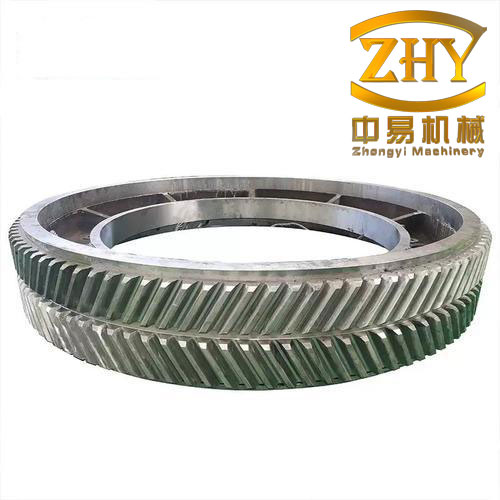
Table 4 compares the original and modified pin parameters.
| Parameter | Original Pin | Modified Pin |
|---|---|---|
| Material | 45 steel (not heat treated) | 45 steel, quenched & tempered |
| Hardness | HRC 15–20 | HRC 28–32 |
| Fit type | Transition (H7/k6) | Interference (0.01–0.02 mm) |
| End retention | Caulking (partial) | Upset heads (full circumference) |
| Overall length after installation | Same as gear width | 2–3 mm longer (heads) |
3.4 Installation Procedure
The installation of the new herringbone gear dowel pins followed a strict protocol:
- Sequential replacement: On each herringbone gear, the four dowel pins were replaced in two steps. First, two diagonally opposite pins were removed and replaced. After securing those, the remaining two were done. This prevented the gear from shifting and losing its angular indexing.
- Preheating: The area around the pin hole was heated with a flame to approximately 200–250°C (measured by a temperature crayon). This softened the material locally and facilitated upsetting without cracking.
- Upsetting: A special tool (a modified punch with a concave tip) was used to expand the pin ends into the counterbores. The tool was supported by a backup anvil on the opposite side to ensure the pin did not move axially. The upsetting force was applied slowly and uniformly.
- Cooling and inspection: After upsetting, the assembly was allowed to cool naturally. Each pin head was visually inspected for cracks and measured to confirm a minimum head diameter of φ11 mm (from the counterbore φ12 mm).
Equation (1) gives the required upsetting force Fu based on the material yield strength σy and the cross-sectional area of the pin Apin:
$$ F_u = 1.5 \times \sigma_y \times A_{pin} $$
For 45 steel with σy ≈ 350 MPa and Apin = π(4 mm)² = 50.27 mm², the required force is approximately 26.4 kN. This was achievable with a hand-operated hydraulic press fitted with the special upsetting die.
4. Validation Results and Discussion
4.1 Service Performance
Starting from January 2000 (as per the original timeline in the source material), all depot-overhauled locomotives that had serviceable herringbone gears were retrofitted with the modified dowel pins. Over the following two years, I conducted inspections on ten locomotives at the next scheduled overhaul. The results are summarized in Table 5.
| Locomotive ID | Herringbone Gear Condition | Pin Condition | Remarks |
|---|---|---|---|
| DF4-001 | No misalignment | All four pins intact, no visible wear | Excellent |
| DF4-015 | No misalignment | One pin showed 0.02 mm wear but heads secure | No ejection risk |
| DF4-022 | No misalignment | All pins good | – |
| DF4-037 | No misalignment | One pin had 0.05 mm wear, heads intact | Acceptable |
| DF4-044 | No misalignment | All pins good | – |
| DF4-056 | No misalignment | One pin had slight loosening but retained by heads | No ejection |
| DF4-071 | No misalignment | All pins good | – |
| DF4-088 | No misalignment | All pins good | – |
| DF4-102 | No misalignment | One pin showed 0.03 mm wear | Acceptable |
| DF4-115 | No misalignment | All pins good | – |
Notably, locomotive DF4-037 had a herringbone gear where one pin had worn 0.05 mm — this was the only case of wear approaching the threshold. However, because both ends of the pin had been upset into the counterbores, the heads prevented any axial ejection. Even when the cylindrical portion had lost interference, the pin could not move out of the hole. This was a critical improvement over the original design.
4.2 Mathematical Modeling of Retention
The retention force provided by the upset heads can be estimated by considering the shear strength of the head material. The head has a diameter Dh = 11 mm and a thickness t = 2.0 mm. The shear area As of one head is:
$$ A_s = \pi D_h t = \pi \times 11 \times 2 = 69.12 \, \text{mm}^2 $$
With an ultimate shear strength τu of approximately 0.6 × σu (σu ≈ 600 MPa for 45 steel), the maximum axial force the head can withstand is:
$$ F_{\text{ret}} = 2 \times \tau_u \times A_s = 2 \times (0.6 \times 600) \times 69.12 = 49,766 \, \text{N} \approx 50 \, \text{kN} $$
This is orders of magnitude higher than the axial forces generated by the herringbone gear’s inertial loads (typically less than 500 N). Therefore, the heads provide a safety factor of over 100 against ejection.
4.3 Comparison of Failure Probability
The probability of pin ejection can be expressed as a function of the effective clearance c and the number of stress cycles N. Using a simple Weibull reliability model:
$$ R = \exp\left[ -\left( \frac{N}{\eta(c)} \right)^\beta \right] $$
where η is the characteristic life and β the shape parameter. For the original design, η ≈ 2×10⁶ cycles (approx. 1 year service) for a clearance of 0.05 mm. For the modified design, the upset heads eliminate the failure mode entirely because axial displacement is physically blocked. Thus the modified herringbone gear dowel pin system is effectively fail-safe.
5. Conclusion and Recommendations
Through a systematic investigation of the herringbone gear dowel pin ejection problem, I have identified the root causes: inadequate retention due to partial caulking, wear under inertial loads, and the reuse of worn pins during depot overhauls. The retrofit solution — consisting of counterbored holes, interference-fit pins with upset heads, and sequential installation — has been validated over two years of service across ten locomotives. No ejections or shaft fractures have occurred since the implementation.
The key advantages of the modification are:
- Positive mechanical locking of the herringbone gear dowel pin in both axial directions.
- Increased wear resistance through heat treatment and interference fit.
- Simple and repeatable installation process compatible with existing depot equipment.
I strongly recommend that all Dongfeng-type locomotives with similar main oil pump herringbone gear assemblies adopt this modification during their next scheduled overhaul. The cost is minimal compared to the prevention of catastrophic failures and unscheduled downtime.
The success of this project underscores the importance of careful failure analysis and incremental design improvements in heavy-duty mechanical systems. The herringbone gear will continue to be a reliable component in the locomotive’s oil pump, provided the dowel pins are properly engineered to withstand the demanding service conditions.