
In the rapidly evolving landscape of new energy vehicles, pure electric vehicles have emerged as a dominant market trend due to their zero emissions, low energy consumption, and superior driving comfort. However, the elimination of traditional internal combustion engines and their masking noise sources has significantly increased vehicle sensitivity to Noise, Vibration, and Harshness (NVH) performance. During my research on a specific pure electric pickup truck, I encountered a critical issue: abnormal vibration and noise in the electric drive axle transmission system during energy regenerative coasting. This problem severely impacts the subjective quality perception and ride comfort of the vehicle. In this paper, I present a comprehensive study on the analysis and experimental validation of helical gears modification techniques to mitigate these NVH issues.
The electric drive axle transmission system under investigation consists of an electric motor, motor shaft, primary and secondary reduction helical gears, and a differential gear set. Through real-vehicle testing, I identified that the primary helical gear pair was the main source of the abnormal noise, exhibiting significant energy enhancement at the 27th-order frequency, which corresponds to the meshing frequency of the primary helical gear pair. This discovery motivated me to develop a systematic approach combining simulation, optimization, and experimental validation to address the NVH problem effectively.
My research methodology involved building a rigid-flexible coupled dynamic model of the electric drive axle helical gear transmission system using MASTA software. I analyzed the gear meshing characteristics under three typical energy regenerative coasting conditions: low, medium, and high intensity. Using orthogonal experimental design, I optimized the tooth surface modification parameters for the helical gears. The optimized helical gears were then manufactured and tested in real-vehicle conditions to validate the NVH performance improvement.
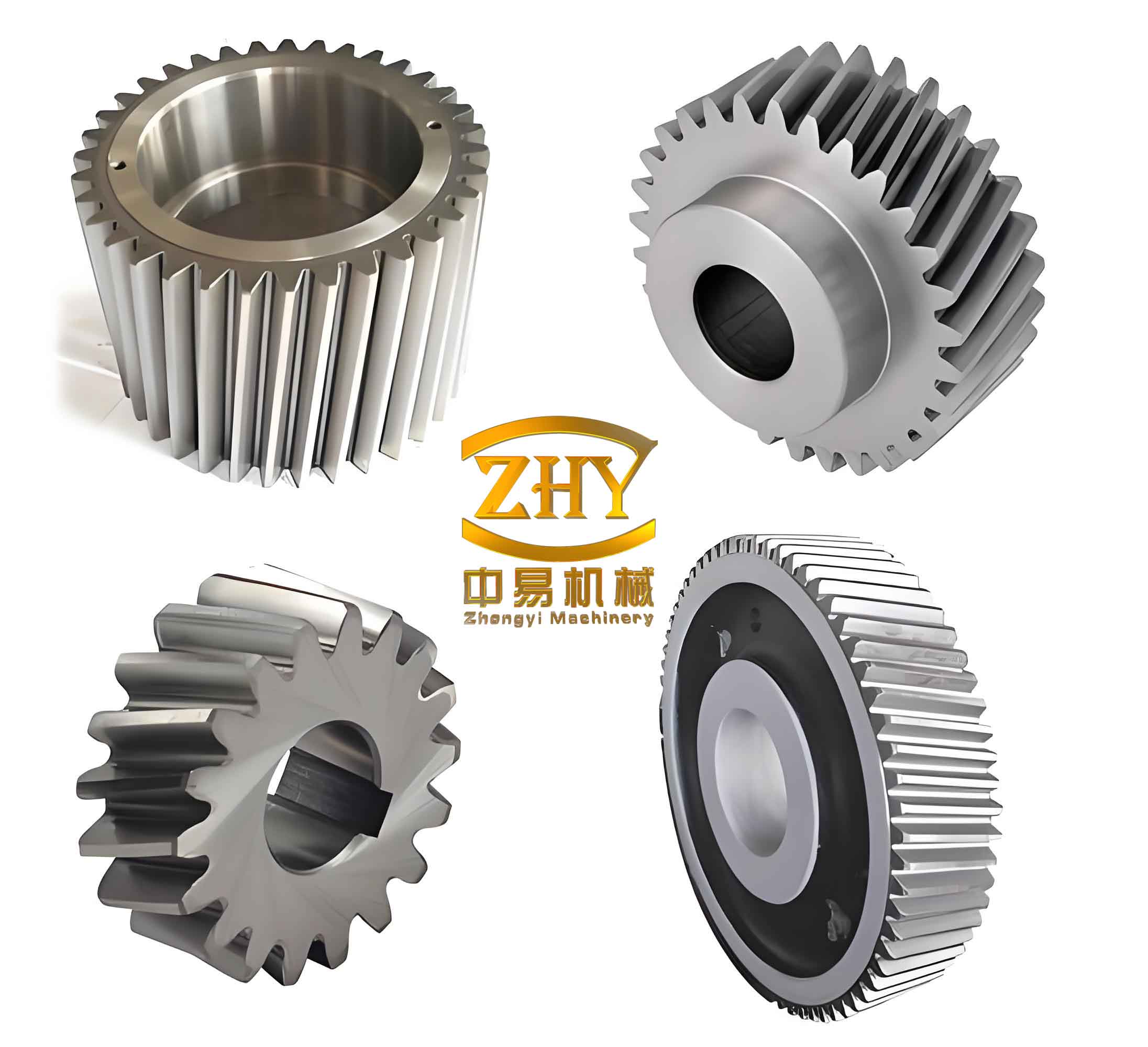
Real-Vehicle Vibration and Noise Testing of Helical Gears
To accurately characterize the abnormal vibration and noise phenomenon in the electric drive axle, I conducted comprehensive real-vehicle testing on a pure electric pickup truck. The test vehicle exhibited significant noise issues during energy regenerative coasting within the complaint speed range of 3,500 to 5,500 r/min. I carefully designed the test setup to capture both vibration and acoustic signals from the electric drive axle system.
For vibration measurement, I installed accelerometers on the axle housing to collect structural vibration signals. For acoustic measurement, I positioned a microphone approximately 10 cm above the electric drive axle, fixed to the vehicle frame, to capture external radiated noise. The data acquisition system operated at a sampling frequency of 25.6 kHz, ensuring adequate resolution for analyzing the high-frequency noise components generated by the helical gears.
The vehicle tests were conducted on proving ground roads under three distinct operating conditions representing different levels of energy regeneration:
| Operating Condition | Speed Range (r/min) | Torque Range (Nm) | Description |
|---|---|---|---|
| Low Energy Recovery | 9,500 → 2,000 | 0 – 27 | Minimal regenerative braking torque |
| Medium Energy Recovery | 9,500 → 2,000 | 37 – 65 | Moderate regenerative braking torque |
| High Energy Recovery | 9,500 → 2,000 | 73 – 102 | Maximum regenerative braking torque |
During the tests, the motor speed gradually decreased from 9,500 r/min to 2,000 r/min while the regenerative braking torque correspondingly increased. This procedure covered the typical operating envelope of the vehicle during energy recovery, allowing me to capture the full spectrum of vibration and noise characteristics.
The analysis of the acquired signals using order tracking techniques revealed a consistent pattern across all three operating conditions. The Colormap analysis showed a prominent energy band at the 27th order, which corresponds to the meshing frequency of the primary helical gear pair, calculated as $f_s Z_1$, where $f_s$ is the rotational frequency of the driving gear and $Z_1 = 27$ is the number of teeth on the driving helical gear. This strong 27th-order excitation indicated that the primary helical gear pair was experiencing significant periodic impact during meshing, making it the primary source of the abnormal vibration and noise during coasting.
Notably, the noise amplitude was highest during the low energy recovery condition, suggesting that the helical gears were more susceptible to excitation under light-load conditions. This phenomenon occurs because at low loads, the gear contact pressure is insufficient to maintain stable contact, leading to increased transmission error fluctuations and meshing impacts. The transmission error, defined as the deviation between the theoretical and actual angular displacement of the driven gear, is a key indicator of gear meshing quality and directly correlates with NVH performance.
The transmission error $\delta$ can be expressed mathematically as:
$$ \delta = r_1(\theta_2 – \theta_2′) – r_2(\theta_1 – \theta_1′) $$
where $r_1$ and $r_2$ are the pitch circle radii of the driving and driven helical gears, $\theta_1$ and $\theta_2$ are the instantaneous angular displacements, and $\theta_1’$ and $\theta_2’$ are the initial angular displacements of the driving and driven helical gears, respectively.
The real-vehicle test results clearly demonstrated that the 27th-order excitation from the primary helical gear pair was the dominant contributor to the NVH problem. This finding guided my subsequent efforts to optimize the tooth surface modification of the helical gears to reduce transmission error and improve meshing characteristics.
Rigid-Flexible Coupled Dynamic Model of the Helical Gear System
To accurately simulate the dynamic behavior of the electric drive axle helical gear transmission system, I developed a rigid-flexible coupled dynamic model using MASTA software. The model incorporates the flexibility of key components including the axle housing, shafts, and support bearings, which significantly influence the tooth contact characteristics under operating loads.
The actual installation position of helical gears in an electric drive axle deviates from the ideal position due to elastic deformations of the housing, bearings, and shafts under operational loads. These structural deformations cause uneven load distribution on the tooth surfaces, leading to partial loading, increased local meshing stiffness variation, and transmission error fluctuations. Therefore, it is essential to consider these factors in the simulation model to accurately predict the dynamic behavior of the helical gears.
In the MASTA model, I set the primary driving and driven helical gears as flexible bodies and imported their modal characteristics using the finite element substructure method. This approach enabled a rigid-flexible integrated coupling analysis. I modeled the gear meshing using a micro-contact model that captures load distribution, contact stress, and instantaneous meshing stiffness variations with high accuracy.
The simulation input parameters were selected based on the actual operating conditions from the real-vehicle tests, specifically the typical speeds and motor braking torques during the three energy recovery scenarios. The input rotation direction was set to match the actual vehicle condition. I applied a constant torque boundary at the motor input side and suspended the output end on a fixed damping support structure to simulate the wheel-end feedback condition.
To solve for the system dynamic response and transmission error, I employed a nonlinear transient dynamic solver that considers the interaction between contact nonlinearity and structural flexibility. The solution time step was adaptively adjusted based on the meshing period to ensure accurate capture of high-frequency response characteristics.
| Parameter | Driving Gear | Driven Gear |
|---|---|---|
| Normal Module (mm) | 2 | |
| Number of Teeth | 27 | 98 |
| Helix Angle (°) | 28.5 | |
| Hand of Helix | Right | Left |
| Pitch Circle Diameter (mm) | 62.64 | 227.36 |
| Normal Pressure Angle (°) | 18 | |
| Face Width (mm) | 42.5 | 40.5 |
| Accuracy Grade | 6 | |
| Lead Crown Modification (μm) | 6 | 6 |
| Helix Angle Modification (μm) | 5 | -10 |
| Profile Crown Modification (μm) | 3 | 5 |
| Pressure Angle Modification (μm) | -3 | 6 |
Table 2 shows the parameters of the primary helical gear pair used in the electric drive axle. It is important to note that the helical gears in the original design already had some modification applied during the design stage, including lead crown modification, helix angle modification, profile crown modification, and pressure angle modification. These modifications were intended to improve meshing characteristics, but as the real-vehicle tests revealed, they were insufficient to eliminate the abnormal noise during energy regenerative coasting.
Using the rigid-flexible coupled model, I simulated the tooth contact characteristics and transmission error of the primary helical gear pair under the three energy recovery conditions. The results revealed significant edge contact phenomena and uneven load distribution along the tooth width direction, with localized load concentrations that caused substantial variations in meshing stiffness.
Under the low energy recovery condition, the maximum contact pressure on the helical gear tooth surface was 653.52 MPa, and the peak-to-peak transmission error was only 0.0983 μm. Under this light-load condition, the tooth surface load and elastic deformation were both small, resulting in low meshing stiffness. The gear backlash effect became more significant, making the system more sensitive to small perturbations and consequently more prone to exciting vibration and noise.
For the medium and high energy recovery conditions, the contact pressure increased to 883.22 MPa and 1,583.35 MPa, respectively, with corresponding peak-to-peak transmission errors of 0.147 μm and 0.272 μm. As the load increased, the tooth surface elastic deformation and meshing stiffness also increased progressively. The gear backlash gradually closed up under higher loads, leading to a more stable dynamic response and reduced noise energy.
The simulation results confirmed my hypothesis that the uneven contact load distribution on the helical gear tooth surfaces was the root cause of the transmission error fluctuations and the resulting NVH issues. This finding provided the impetus for optimizing the tooth surface modification design to achieve more uniform load distribution and reduced transmission error.
Theoretical Basis of Helical Gear Tooth Surface Modification
Gear transmission error is composed of several components including tooth deformation $E_t$, contact deformation $E_h$, gear body deformation $E_f$, tooth surface modification amount $C$, and installation position deformation $E_i$. The total transmission error can be expressed as:
$$ \delta = E_t + E_h + E_f + E_i + C $$
These deformation components vary periodically as the gears mesh, and the contact point moves along the line of action, causing the tooth surface modification amount $M$ to also vary periodically. By introducing appropriate tooth surface modification along the entire line of action, I can compensate for these variations and reduce the peak-to-peak transmission error.
Gear modification typically includes lead modification (along the tooth width direction) and profile modification (along the tooth profile direction). The selection of modification amounts generally follows two approaches: empirical methods and theoretical calculations.
For the empirical approach, standards such as ISO 21771 suggest lead crown modification amounts in the range of 5 to 15 μm, with an additional allowance of approximately 5 μm for manufacturing tolerances. The tip relief modification amount is typically larger than the tooth surface contact deformation and can be estimated using:
$$ C_e = (2 \sim 4) \frac{F_m}{b C_\gamma} $$
where $F_m$ is the tangential force at the contact point, $b$ is the contact length, and $C_\gamma$ is the meshing stiffness of the helical gear pair.
For the theoretical approach, the lead crown modification amount $C_c$ can be calculated as:
$$ C_c = \sqrt{\frac{2 F_{\beta y} F_m}{C_\gamma b}} $$
where $F_{\beta y}$ is the meshing deviation of the helical gear pair. When lead modification is applied simultaneously, the lead modification amount $C_h$ and the lead crown modification amount $C_{\beta c}$ can be expressed as:
$$ C_h = F_{\beta y} – \frac{F_m}{C_\gamma b} $$
$$ C_{\beta c} = 1.5 \frac{F_m}{C_\gamma b} $$
Based on these theoretical foundations, I selected four key modification parameters as optimization variables: lead crown modification, helix angle modification, profile crown modification, and pressure angle modification. These parameters have been shown in previous studies to significantly influence transmission error and contact characteristics of helical gears.
Orthogonal Experimental Design for Helical Gear Modification Optimization
To efficiently optimize the tooth surface modification parameters for the helical gears, I employed orthogonal experimental design, which is well-suited for multi-factor, multi-level problems. This method allows me to obtain equivalent results to full factorial experiments with significantly fewer trials, offering advantages in efficiency, implementation speed, and cost-effectiveness.
Based on previous research findings indicating that lead crown modification, helix angle modification, profile crown modification, and pressure angle modification significantly affect transmission error and contact characteristics, I selected these four parameters as the optimization variables. Each modification parameter was defined on the driving helical gear, and the same modification scheme was applied to the driven gear to reduce the number of experimental factors. The total modification amount was the sum of the modifications on both the driving and driven helical gears. The modification side was set to the left tooth flank, which is the actual contact surface during meshing.
The range for each modification parameter was established based on tooth surface inspection reports and practical manufacturing constraints, as shown in Table 3.
| Factor | Modification Parameter | Lower Limit | Upper Limit |
|---|---|---|---|
| A | Lead Crown Modification | 2 | 12 |
| B | Helix Angle Modification | -15 | 15 |
| C | Profile Crown Modification | 2 | 10 |
| D | Pressure Angle Modification | -8 | 8 |
I conducted the orthogonal experimental design for the low energy recovery condition, which exhibited the most severe NVH issues. The experimental scheme and corresponding results are presented in Table 4.
| Scheme | Factors | Indicators | ||||
|---|---|---|---|---|---|---|
| A | B | C | D | Peak-to-Peak TE (μm) | Max Contact Stress (MPa) | |
| 1 | 2 | -15 | 2 | -8 | 0.0689 | 835.5 |
| 2 | 2 | 0 | 6 | 0 | 0.0780 | 582.6 |
| 3 | 2 | 15 | 10 | 8 | 0.1096 | 620.2 |
| 4 | 7 | -15 | 6 | 8 | 0.1123 | 584.5 |
| 5 | 7 | 0 | 10 | -8 | 0.0926 | 630.3 |
| 6 | 7 | 15 | 2 | 0 | 0.1098 | 565.1 |
| 7 | 12 | -15 | 10 | 0 | 0.2021 | 652.2 |
| 8 | 12 | 0 | 2 | 8 | 0.0851 | 697.4 |
| 9 | 12 | 15 | 6 | -8 | 0.0905 | 633.8 |
Through range analysis of the orthogonal experimental results, I identified the optimal tooth surface modification parameters that minimize the peak-to-peak transmission error:
- Lead Crown Modification: 2 μm
- Helix Angle Modification: 0 μm
- Profile Crown Modification: 2 μm
- Pressure Angle Modification: -8 μm
This optimal combination achieves a significantly improved balance between contact stress distribution and transmission error stability compared to the original modification design.
Simulation Results of Optimized Helical Gear Modification
Using the same rigid-flexible coupled dynamic model of the electric drive axle system, I applied the optimized tooth surface modification parameters and simulated the tooth contact characteristics and transmission error under identical boundary conditions and load cases as the original design. The results demonstrated substantial improvements across all three energy recovery conditions.
The optimized tooth contact patterns showed significantly more uniform load distribution along the meshing line direction. The edge contact phenomena that were prominent in the original design were substantially reduced, indicating that the optimized modification effectively suppressed the meshing impacts caused by load concentration and improved the smoothness of the meshing process.
Table 5 summarizes the comparison between the original and optimized modification designs for the three energy recovery conditions.
| Operating Condition | Max Contact Stress (MPa) | Peak-to-Peak TE (μm) | ||
|---|---|---|---|---|
| Original | Optimized | Original | Optimized | |
| Low Energy Recovery | 653.52 | 537.67 | 0.0983 | 0.0629 |
| Medium Energy Recovery | 883.22 | 735.50 | 0.147 | 0.102 |
| High Energy Recovery | 1,583.35 | 1,235.42 | 0.272 | 0.208 |
The results clearly demonstrate the effectiveness of the optimized helical gear modification scheme. The maximum contact stress was reduced by 17.73% under low energy recovery, 16.73% under medium energy recovery, and 21.97% under high energy recovery conditions. The edge stress peaks were substantially diminished, indicating more uniform load distribution across the tooth surface.
More importantly, the peak-to-peak transmission error, which is the primary excitation source for gear whine noise, showed remarkable reductions of 36.01%, 30.61%, and 23.53% under the three respective conditions. The transmission error is critically important because it directly correlates with the vibration and noise generated by the helical gear pair. A lower peak-to-peak transmission error means smoother meshing, reduced dynamic excitation forces, and consequently lower noise levels.
The significant reduction in transmission error fluctuations can be attributed to the optimized modification parameters that better compensate for tooth deflections under load. When helical gears mesh under load, the teeth deflect due to bending and contact deformations. These deflections cause deviations from the ideal involute profile, leading to transmission error. Proper tooth surface modification compensates for these deflections, restoring the effective involute action and reducing transmission error.
Furthermore, the optimized modification improved the contact pattern by distributing the load more evenly across the tooth surface. In the original design, the contact pattern exhibited significant edge loading, particularly at the tooth ends. This edge loading not only increases stress concentrations but also causes abrupt changes in meshing stiffness as the teeth enter and exit mesh, contributing to higher transmission error fluctuations. The optimized modification reduced edge loading by providing appropriate amounts of lead crown and profile crown modifications that compensate for the misalignments caused by housing and shaft deflections.
Real-Vehicle Validation Testing of Optimized Helical Gears
To validate the simulation results and confirm the effectiveness of the optimized helical gear modification in real-world conditions, I manufactured new helical gear pairs with the optimized modification parameters and conducted real-vehicle testing under identical conditions as the original tests. The optimized helical gears were produced using precision CNC gear grinding technology, which can accurately realize the designed modification profiles with tight tolerances.
Figure 10 shows the comparison of the 27th-order noise curves before and after optimization for the three energy recovery conditions. The results clearly demonstrate significant noise reduction across all operating conditions within the complaint speed range of 3,500 to 5,500 r/min.
Table 6 summarizes the noise reduction achievements at the maximum noise points within the complaint speed range for each operating condition.
| Operating Condition | Original Max Noise (dB(A)) | Optimized Max Noise (dB(A)) | Noise Reduction (dB(A)) |
|---|---|---|---|
| Low Energy Recovery | Baseline | Baseline – 12 | 12 |
| Medium Energy Recovery | Baseline | Baseline – 7 | 7 |
| High Energy Recovery | Baseline | Baseline – 4 | 4 |
The real-vehicle test results confirmed that the optimized helical gear modification significantly improved the NVH performance of the electric drive axle system. The most substantial improvement was observed under the low energy recovery condition, which originally exhibited the highest noise levels. The 12 dB(A) reduction under this condition represents a dramatic improvement in acoustic comfort, as a 10 dB(A) reduction is perceived by the human ear as approximately half the loudness.
Even under the high energy recovery condition, where the original noise levels were already lower due to the stabilizing effect of higher loads, the optimized helical gears still achieved a noticeable 4 dB(A) reduction. This consistent improvement across all operating conditions demonstrates the robustness of the optimized modification design.
The experimental validation also confirmed the correlation between transmission error reduction and noise level reduction that I predicted from the simulation results. The condition with the greatest reduction in peak-to-peak transmission error (low energy recovery, 36.01%) also showed the greatest noise reduction (12 dB(A)), while the condition with the smallest reduction in transmission error (high energy recovery, 23.53%) showed the smallest noise reduction (4 dB(A)). This consistent correlation validates the theoretical understanding that transmission error is the primary excitation source for gear whine noise and that reducing transmission error is an effective strategy for NVH improvement.
Manufacturing Considerations for Optimized Helical Gears
The successful implementation of the optimized tooth surface modification for helical gears requires careful attention to manufacturing processes. The modification design was based on theoretical modification curves, and the actual manufacturing was accomplished through precision CNC gear grinding technology. Both the driving and driven helical gears of the primary gear pair were manufactured with the same modification design and modification amounts.
It is important to note that the modification profiles used in this study are well within the capabilities of modern gear manufacturing technology. Precision CNC gear grinding machines can achieve modification accuracies within ±1 μm, which is sufficient to realize the designed modification parameters. The additional manufacturing cost for implementing the optimized modification is minimal, as it only requires adding a few machining and inspection steps to the existing precision grinding process.
The manufacturing process for the optimized helical gears involved:
- Gear blank preparation: The gear blanks were machined to the required dimensions with appropriate heat treatment to achieve the desired material properties.
- Rough cutting: The gear teeth were rough cut using hobbing or shaping processes to create the basic tooth geometry.
- Heat treatment: The gears were case-hardened to achieve surface hardness of 58-62 HRC with appropriate case depth.
- Precision grinding: The tooth surfaces were finish ground using CNC gear grinding machines with the optimized modification parameters programmed into the machine control.
- Inspection: The manufactured gears were inspected using gear measurement machines to verify that the actual modification profiles matched the design specifications within acceptable tolerances.
The precision grinding process is capable of producing the required lead crown modification, helix angle modification, profile crown modification, and pressure angle modification simultaneously through coordinated motion of the grinding wheel and workpiece axes. Modern CNC gear grinding machines can generate complex modification topographies with high accuracy and repeatability.
Discussion of Results and Practical Implications
The results of this study demonstrate that systematic optimization of helical gear tooth surface modification can effectively address NVH issues in electric drive axle systems. The approach combining rigid-flexible coupled dynamic simulation, orthogonal experimental design, and real-vehicle validation provides a comprehensive methodology for gear modification optimization that can be applied to similar problems in the automotive industry.
The key findings from this research can be summarized as follows:
First, the primary helical gear pair is the dominant source of whine noise in electric drive axles during energy regenerative coasting. The 27th-order excitation corresponding to the meshing frequency of the primary helical gears was identified as the main contributor to the abnormal noise. This finding highlights the importance of optimizing the primary helical gear pair in electric drive axle NVH development.
Second, tooth surface modification is an effective method for reducing transmission error and improving NVH performance. The optimized modification reduced the peak-to-peak transmission error by 23-36% across different operating conditions, with corresponding noise reductions of 4-12 dB(A). The modification achieves this by compensating for tooth deflections under load and distributing the contact load more evenly across the tooth surface.
Third, the orthogonal experimental design method is efficient for optimizing multiple modification parameters simultaneously. With only 9 experimental trials, I was able to identify the optimal combination of four modification parameters that significantly improved the NVH performance. This approach is far more efficient than full factorial experiments while still providing reliable results.
Fourth, the correlation between transmission error reduction and noise reduction confirms that transmission error is a reliable indicator for predicting gear whine noise. This finding validates the use of transmission error as a key performance metric in gear design optimization for NVH.
The practical implications of this research are significant for the automotive industry. As electric vehicles become more prevalent, the demand for quiet and comfortable driving experiences will continue to increase. The methodology developed in this study provides engineers with a systematic approach to address gear whine noise in electric drive axles through optimized helical gear modification design.
Furthermore, the optimized modification design identified in this study can be directly applied to similar electric drive axle systems with comparable helical gear geometries and operating conditions. The modification parameters may need to be adjusted for different gear sizes, helix angles, or load conditions, but the optimization methodology remains applicable.
Conclusions and Future Research Directions
In this comprehensive study, I have successfully addressed the abnormal vibration and noise issue in the electric drive axle transmission system of a pure electric pickup truck during energy regenerative coasting. The main conclusions from this research are:
- Problem identification: Through real-vehicle testing and order tracking analysis, I identified the primary helical gear pair as the main source of the 27th-order whine noise during energy regenerative coasting. The noise was most severe under low energy recovery conditions.
- Simulation model development: I developed a rigid-flexible coupled dynamic model of the electric drive axle helical gear transmission system using MASTA software. The model accurately captured the tooth contact characteristics and transmission error under various operating conditions.
- Optimization of helical gear modification: Using orthogonal experimental design, I optimized four key tooth surface modification parameters: lead crown modification, helix angle modification, profile crown modification, and pressure angle modification. The optimal combination significantly reduced both contact stress and transmission error across all operating conditions.
- Experimental validation: Real-vehicle testing with the optimized helical gears confirmed noise reductions of 12 dB(A), 7 dB(A), and 4 dB(A) under low, medium, and high energy recovery conditions, respectively, within the complaint speed range of 3,500 to 5,500 r/min.
- Correlation validation: The consistent correlation between transmission error reduction and noise reduction across all three operating conditions validates the theoretical understanding that transmission error is the primary excitation source for gear whine noise.
The results of this study demonstrate that systematic optimization of helical gear tooth surface modification is an effective approach for improving the NVH performance of electric drive axle systems. The methodology combining simulation, optimization, and experimental validation provides a practical engineering reference for similar problems in the automotive industry.
Looking ahead, several directions for future research can be identified:
Advanced optimization algorithms: While orthogonal experimental design is efficient, more advanced optimization algorithms such as genetic algorithms, particle swarm optimization, or surrogate-based optimization could potentially identify even better modification solutions, especially for problems with a larger number of design variables or more complex objective functions.
Multi-objective optimization: In addition to transmission error and contact stress, other performance metrics such as gear efficiency, tooth root stress, and scuffing risk could be included in a multi-objective optimization framework to achieve a more comprehensive design trade-off.
Robustness considerations: Manufacturing tolerances and operating condition variations can affect the actual performance of optimized modifications. Future research could incorporate robustness analysis to ensure that the optimized modification performs consistently well across the expected range of manufacturing and operating variations.
Application to other gear types: The methodology developed in this study for helical gears could be extended to other gear types used in electric drive axles, such as hypoid gears, planetary gears, or bevel gears. Each gear type has unique meshing characteristics and modification requirements that would need to be addressed.
Integration with system-level NVH analysis: The gear modification optimization could be integrated with system-level NVH analysis that considers the full vehicle structure, including the motor, inverter, and vehicle body. This would allow for optimization of the complete system rather than just the gear pair in isolation.
In conclusion, this study provides a comprehensive and practical approach to improving the NVH performance of electric drive axle helical gears through optimized tooth surface modification. The significant noise reductions achieved in real-vehicle testing demonstrate the effectiveness of this approach and provide valuable engineering guidance for the design and development of quiet and comfortable electric vehicles.