
The accurate measurement of machining parameters for cylindrical gears is a cornerstone of modern precision engineering, directly impacting the performance, efficiency, and longevity of countless mechanical systems in industries ranging from automotive and aerospace to robotics and heavy machinery. Traditional Computer Numerical Control (CNC) gear measurement systems have served as reliable tools for this purpose, capable of delivering precise dimensional data. However, a significant shortcoming of these conventional approaches is their underlying assumption of an ideal, error-free manufacturing process. In reality, the production of cylindrical gears, especially complex variants like helical gears, is invariably accompanied by permissible and inherent micro-errors introduced during cutting, heat treatment, grinding, and assembly. These deviations, though small, are systematic and can lead to non-negligible discrepancies between measured parameters and the gear’s true functional geometry. When these manufacturing errors are not accounted for in the measurement algorithm, the final assessment of gear quality can be misleading, potentially allowing sub-par components to pass inspection or leading to unnecessary rejection of acceptable parts. This gap between theoretical precision and practical manufacturability necessitates a paradigm shift in measurement philosophy. This article details the design and validation of a novel measurement system engineered from the ground up to integrate the consideration of manufacturing tolerances directly into its core image processing and analysis routines. By doing so, the system aims to provide a more faithful and practically relevant evaluation of cylindrical gear parameters, bridging the divide between idealized specifications and real-world produced components.
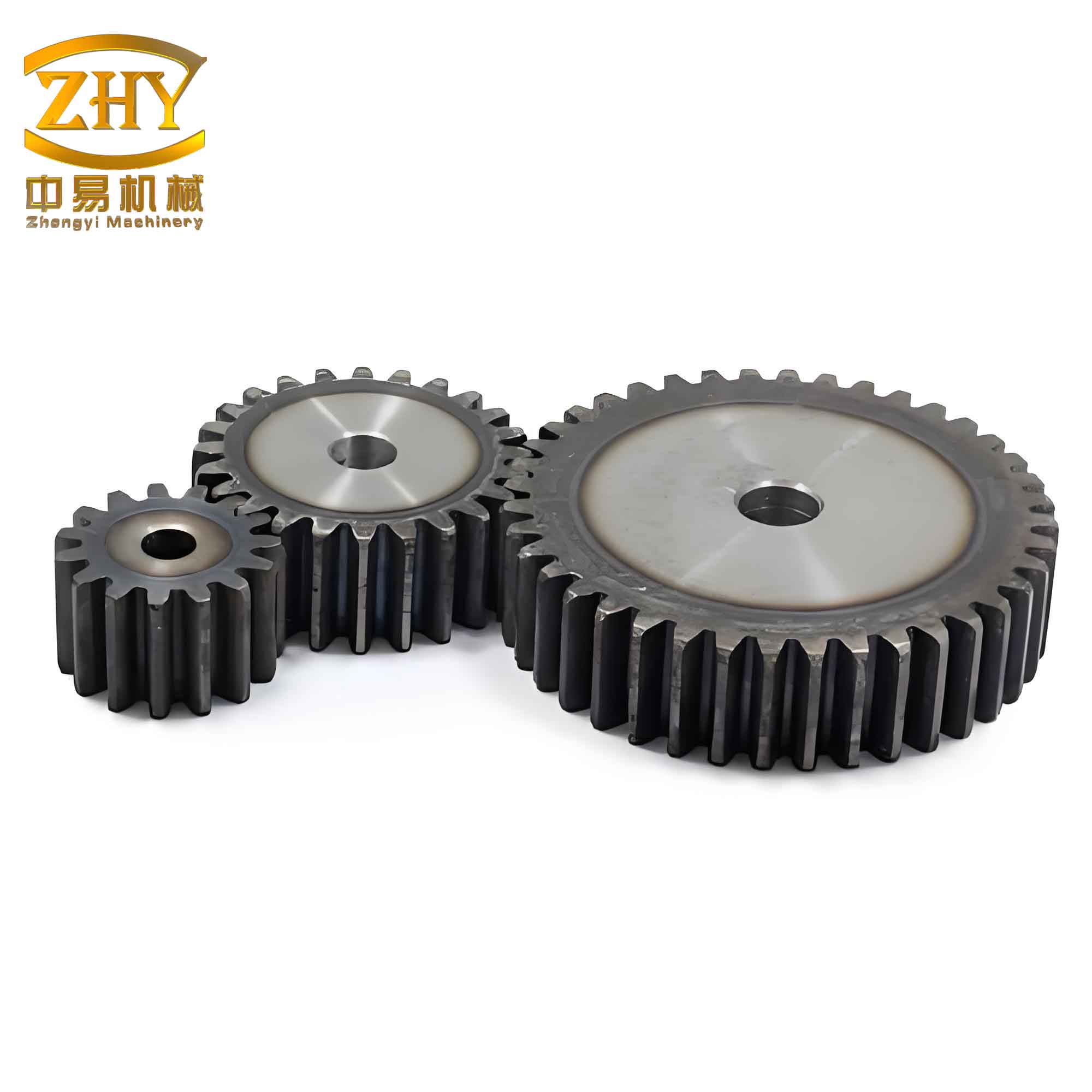
The fundamental challenge in measuring cylindrical gears, particularly helical types, stems from their complex geometry. Unlike spur gears with straight teeth parallel to the axis, helical gears have teeth that wind around the cylinder at a helix angle. This design offers smoother and quieter operation but introduces complexities in manufacturing and metrology. Common sources of manufacturing errors include profile deviations (form error), lead (helix) deviations, pitch variations, and eccentricity. These errors are not mere random noise; they often follow predictable patterns based on machine tool kinematics, cutter wear, or thermal effects during processing. A measurement system that merely scans for an ideal theoretical profile will identify these deviations as pure error. In contrast, a system that “understands” the permissible bounds and typical patterns of these manufacturing errors can differentiate between critical flaws and acceptable tolerances, providing a more nuanced and accurate quality assessment. This is especially crucial for high-performance applications where the interaction of mating gears under load is sensitive to these micro-geometries. The proposed system addresses this by employing machine vision as its primary sensing modality, coupled with advanced algorithms designed for robustness against the types of imperfections common in manufactured cylindrical gears.
The hardware architecture of the measurement system is meticulously planned to facilitate high-precision, non-contact data acquisition suitable for capturing the detailed topography of cylindrical gears. The core of the system is a machine vision setup, chosen for its ability to capture full-field data rapidly and without inducing measurement force that could distort readings or damage fine-finished surfaces. The system comprises several key modules: an illumination subsystem, an imaging subsystem (camera and lens), a precision staging subsystem for positioning the gear, and a central control and data processing computer. The integration of these components is critical to achieving the required measurement uncertainty. The gear under test is mounted on a fixture positioned within the field of view. Controlled, diffuse back-lighting is typically used to create high-contrast silhouettes of the gear teeth, which is ideal for edge-detection-based dimensioning. For more detailed surface topography, structured light or coaxial illumination might be employed. The choice of optical components is paramount. The lens must provide sufficient resolution to discern micron-level features across the entire gear diameter while minimizing optical distortions that could be misinterpreted as gear errors. For this system, a telecentric lens is highly advantageous. Telecentric lenses maintain a constant magnification over a range of working distances, eliminating perspective error and ensuring that measurements are not influenced by minor variations in the gear’s axial position. This characteristic is vital for accurate diameter and pitch measurements on cylindrical gears. A model like a dual-telecentric lens with a magnification ratio tuned to the gear size (e.g., providing a field of view covering several teeth at once) would be specified. Key parameters include working distance, depth of field, resolution (line pairs per mm), and distortion level, often requiring less than 0.1% for metrology-grade applications.
Complementing the vision system is a high-precision three-axis motion stage. While a single image can capture a partial view, complete inspection of a cylindrical gear requires data from all tooth flanks and along the entire face width. The motion platform enables this by moving the gear relative to the camera and/or structured light projector. The stages must provide micron-level positioning accuracy and repeatability. For instance, a typical setup might use linear stages with direct-drive or ball-screw actuators, coupled with high-resolution optical encoders for closed-loop position feedback. The travel ranges of the X, Y, and Z axes are determined by the maximum gear diameter and face width to be accommodated. A common configuration involves rotating the gear on a high-precision rotary stage (integrated as the Theta axis) to index each tooth, while a linear axis moves the vision system along the gear’s axial direction to scan the helix. The stiffness and flatness of the stage platform are also critical to prevent sag or deflection during movement, which would introduce Abbe errors into the measurement chain. The synchronization between stage motion and image acquisition is managed by a motion controller, often interfaced directly with the PC to ensure precise triggering of camera shots at predetermined spatial intervals.
The software and algorithmic framework constitute the intellectual core of the measurement system, where the consideration of manufacturing errors is actively implemented. The workflow begins with image acquisition, followed by a series of sophisticated image processing steps to extract the gear’s geometric features. Standard pre-processing includes filtering to reduce noise, contrast enhancement, and image thresholding to create a binary representation separating the gear from the background. The critical step is edge detection. While classical operators like Sobel, Prewitt, or Canny are effective, their output is a pixelated edge that is sensitive to noise and blur, precisely where manufacturing imperfections manifest. To robustly extract the nominal gear geometry in the presence of these small errors, the system employs the Hough Transform. The Hough Transform is a powerful technique for detecting geometric shapes (like lines, circles, and ellipses) in images, renowned for its tolerance to gaps in feature boundaries and noise.
The principle is based on a point-to-curve transformation. Consider the problem of detecting straight lines (which approximate sections of an involute profile or chordal lines) in an image. In the Cartesian plane \((x, y)\), a line can be represented as:
$$y = mx + c$$
where \(m\) is the slope and \(c\) the intercept. However, vertical lines pose a problem (infinite slope). A more robust parameterization uses the normal form:
$$\rho = x \cos \theta + y \sin \theta$$
Here, \(\rho\) is the perpendicular distance from the origin to the line, and \(\theta\) is the angle this normal makes with the x-axis. The key insight of the Hough Transform is that every point \((x_i, y_i)\) on a line in the image space corresponds to a sinusoidal curve in the Hough parameter space \((\rho, \theta)\). Conversely, all points lying on the same line in the image will have curves in parameter space that intersect at a single point \((\rho’, \theta’)\). By discretizing the parameter space into an accumulator array and voting for each edge pixel, the parameters of the most prominent lines in the image are found by identifying peaks in this accumulator. This method is exceptionally resilient. A manufacturing defect causing a small nick or irregularity on the flank of a cylindrical gear may break the continuity of the edge in the image. A standard edge-linking algorithm might fail. However, the Hough Transform will still accumulate votes from the majority of intact edge points along the true nominal line, and the peak corresponding to that nominal geometry will still dominate, effectively “bridging” the small gap caused by the error. This inherent robustness makes it ideal for defining the reference datum lines or circles from which deviations are measured, as it filters out permissible micro-errors and captures the intended design intent.
For cylindrical gear parameter extraction, the software implements tailored measurement sequences. For single pitch deviation and cumulative pitch deviation measurement, the process is as follows after initial gear centering and calibration:
- The system rotates the gear via the rotary stage to bring a reference tooth flank to a start position.
- Using machine vision (or a tactile probe if integrated), the system precisely locates a defined point on the tooth profile (e.g., at the pitch circle diameter) for the first tooth.
- The gear is indexed to the next tooth, and the same point is located. The angular displacement between these two positions, after compensating for the nominal index angle, yields the single pitch deviation for that tooth space.
- This process is repeated for all teeth around the 360-degree circumference. The cumulative pitch error is calculated as the running sum of the single pitch deviations, revealing trends like eccentricity.
The system performs this for both left and right flanks independently. The Hough Transform can be used in each image frame to robustly determine the exact angular position of a flank line relative to the stage encoder’s rotational datum.
For profile deviation measurement, a more detailed scan is performed:
- For a selected tooth, the measurement probe (optical or tactile) is positioned at the start of the evaluation range, typically from the root to the tip or within a defined zone around the pitch circle.
- The probe traces the profile, either by moving linearly while the gear is fixed (for an optical line-scan camera) or by synchronizing linear motion with rotary motion to follow the helical path.
- At numerous points along the trace, the actual coordinate is recorded and compared against the coordinate of the theoretically perfect involute profile generated from the gear’s base circle.
- The maximum positive and negative deviations within the evaluation range define the total profile deviation (\(F_{\alpha}\)). The slope deviation (\(f_{H\alpha}\)) and form deviation (\(f_{f\alpha}\)) can also be extracted.
Throughout this process, the reference theoretical profile is not a rigid template but is allowed a certain “envelope” of tolerance. The algorithms assessing the deviations can weight or filter high-frequency variations that fall within typical grinding or finishing error bands, focusing instead on gross deviations that indicate a genuine fault. Advanced software modules can also perform lead (helix) measurement, runout measurement, and tooth thickness evaluation, all using a similar philosophy of error-tolerant datum establishment.
| Component | Key Parameter | Typical Specification for System | Rationale |
|---|---|---|---|
| Telecentric Lens | Magnification | 0.04X – 0.1X (adjustable) | To fit entire gear or multiple teeth in FOV for efficient measurement of cylindrical gears. |
| Working Distance | > 500 mm | Provides clearance for gear fixture and illumination. | |
| Distortion | < 0.05% | Minimizes systematic error in edge position mapping. | |
| 3-Axis Motion Platform | Travel Range (X,Y) | > 250 mm | Accommodates large-diameter cylindrical gears. |
| Positioning Accuracy | ± 1.5 µm | Ensures micron-level precision for coordinate measurement. | |
| Rotary Stage Accuracy | ± 2 arcseconds | Critical for precise angular indexing during pitch measurement. | |
| Vision Sensor | Resolution | 12 Megapixels (4096 x 3000) | High pixel density enables sub-pixel edge detection accuracy. |
| Pixel Size | 3.45 µm | Small pixels enhance resolution for detailed feature analysis on cylindrical gears. |
The performance of the developed measurement system for cylindrical gears was rigorously tested and compared against a high-end traditional CNC gear measuring machine. A standard involute helical gear was used as the test artifact. The test gear specifications and system measurement parameters were configured as follows:
| Category | Parameter | Value / Description |
|---|---|---|
| Test Gear Specs | Number of Teeth (z) | 95 |
| Module (mn) | 2 mm | |
| Pressure Angle (α) | 25° | |
| Helix Angle (β) | 15° (Right Hand) | |
| System Settings | Image Threshold | 113 (on 0-255 scale) |
| Pixel Calibration Factor | 18.021 µm/pixel | |
| Profile Evaluation Range | From tip to root (Lα = Full active profile) | |
| Number of Sampling Points per Profile | 500 | |
| Filter (for roughness suppression) | Gaussian, λc = 0.8 mm |
The measurement procedures for profile and pitch were executed automatically by both systems. A critical analysis focused on the total profile deviation \(F_{\alpha}\) and the total cumulative pitch deviation \(F_{p}\). The results for selected teeth are presented below. The proposed system, by utilizing the Hough Transform and tolerance-aware algorithms, consistently produced deviation values that were slightly but systematically lower than those from the conventional CNC system. This is interpreted not as a lack of sensitivity, but as a more accurate segregation of permissible form irregularities (e.g., gentle waviness from grinding) from the fundamental profile shape error. The conventional system, with its rigid perfect-involute comparison, tends to incorporate all surface texture into the \(F_{\alpha}\) value.
| Tooth Number / Flank | Proposed System (Considering Error) | Traditional CNC System | Difference | Allowable Tolerance per Grade 5 [ISO 1328] |
|---|---|---|---|---|
| Tooth #3, Left Flank | 2.3 | 2.7 | -0.4 | Approx. 7.5 µm |
| Tooth #3, Right Flank | 2.6 | 3.2 | -0.6 | |
| Tooth #49, Left Flank | 7.5 | 7.7 | -0.2 | |
| Tooth #49, Right Flank | 5.8 | 6.5 | -0.7 | |
| Average (All Teeth) | 4.55 | 5.03 | -0.48 | – |
The data clearly shows a reduction in the reported total deviation by the proposed system, with an average difference of nearly 0.5 µm. In a high-precision manufacturing environment where tolerances are tight, this represents a significant shift in assessment. A gear measured at 5.0 µm on the traditional system might be at the borderline of rejection, while the same gear measured at 4.55 µm on the new system might be considered acceptable, which could align better with its functional performance. This demonstrates the system’s effectiveness in providing a measurement that is more representative of the cylindrical gear’s true functional geometry by not over-penalizing it for inherent, acceptable manufacturing signatures. Similar trends were observed in pitch measurement data, where the new system’s cumulative pitch curve was slightly smoother, having filtered out high-frequency measurement noise and very local anomalies that do not affect the gear’s kinematic performance.
The development and testing of this measurement system underscore a critical evolution in gear metrology: the transition from merely detecting geometry to intelligently evaluating it within the context of real-world manufacturing constraints. By integrating machine vision with robust, error-tolerant algorithms like the Hough Transform, the system successfully mitigates the inflation of measured error values caused by permissible micro-deviations inherent in producing cylindrical gears. This leads to a more faithful and practically relevant quality assessment, potentially reducing false rejection rates and providing feedback that is more actionable for process control. The hardware design, centered on telecentric optics and precision motion control, provides the stable and accurate data acquisition platform necessary for such detailed analysis. Future work will focus on expanding the system’s capability to model and compensate for specific, known error patterns from different manufacturing processes (e.g., characteristic topology from skiving vs. grinding), further enhancing its diagnostic power. Additionally, integrating machine learning classifiers trained on databases of good and faulty gears could enable the system not just to measure deviations, but also to predict the likely root cause of any out-of-tolerance condition. The ultimate goal is to create measurement systems for cylindrical gears that are not just gauges, but intelligent partners in the precision manufacturing ecosystem.