
The rotary vector reducer represents a pivotal advancement in precision power transmission, particularly for applications demanding compact size, high torque density, and exceptional positional accuracy, such as industrial robotics. Its core transmission principle is based on a two-stage system combining a primary planetary stage with a secondary cycloidal-pin gear stage. The unique motion of the cycloidal gear, resulting from the combination of eccentric revolution and counter-rotation, allows for significant speed reduction and torque multiplication within a remarkably small envelope. The performance, reliability, and lifespan of a rotary vector reducer are intrinsically linked to the contact behavior between the cycloidal gear teeth and the cylindrical pins. Excessive or uneven contact stress can lead to premature pitting, wear, and ultimately, failure. Therefore, a profound understanding of the load distribution, contact stress magnitude, and contact pattern evolution during the meshing cycle is paramount for optimal design and durability prediction.
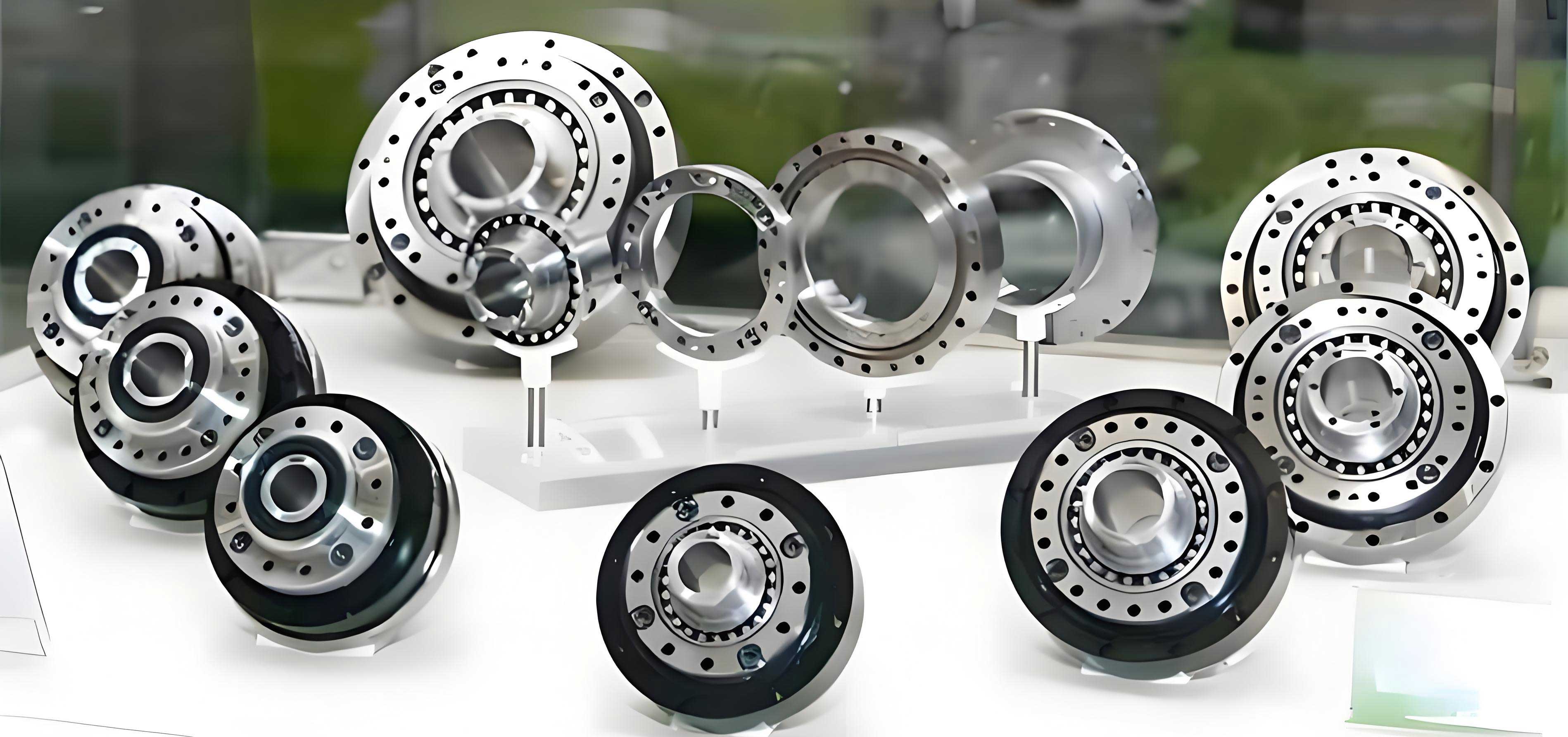
Traditional analytical methods for cycloidal drives often rely on simplified two-dimensional models or Hertzian contact theory, which, while valuable, may not fully capture the three-dimensional nature of the contact, including edge effects and the actual pressure distribution across the tooth face width. In this analysis, I employ a detailed three-dimensional Finite Element Method (FEM) model to investigate the tooth contact characteristics of a rotary vector reducer’s cycloidal stage. My goal is to elucidate the static load-sharing among the multiple simultaneously engaged teeth, visualize the contact stress distribution, and analyze how these parameters change as the cycloidal gear rotates through its meshing cycle. This approach provides a more comprehensive and realistic insight into the complex interfacial mechanics governing the performance of the rotary vector reducer.
Theoretical Foundation of Cycloidal Gearing in Rotary Vector Reducers
The heart of the rotary vector reducer’s second stage is the cycloidal disk. Its tooth profile is a trochoid, generated by tracing a point on a circle (the rolling circle) as it rolls without slipping around the outside of a fixed base circle. For a standard cycloidal profile used in a rotary vector reducer, the parametric equations defining the coordinates of the tooth flank relative to the gear’s center can be derived. Let \(z_c\) be the number of teeth on the cycloidal gear and \(z_p\) be the number of pins (where typically \(z_p = z_c + 1\)). The short-width coefficient is denoted by \(K_1 = a z_p / r_p\), where \(a\) is the eccentricity and \(r_p\) is the pitch circle radius of the pin distribution. The theoretical tooth profile, before accounting for the pin radius, is given by:
$$
\begin{aligned}
x &= r_p \left( \sin(\phi) – \frac{K_1}{z_c} \sin(z_c \phi) \right) \\
y &= r_p \left( \cos(\phi) – \frac{K_1}{z_c} \cos(z_c \phi) \right)
\end{aligned}
$$
where \(\phi\) is the generation angle or parameter. The actual working profile is the equidistant offset of this curve by the pin radius \(r_{rp}\). The curvature radius \(\rho\) of the actual profile at any point is crucial for contact stress calculation and is expressed as:
$$
\rho = \frac{r_p (1 + K_1^2 – 2K_1 \cos(\phi))^{3/2}}{K_1(z_p + 1)\cos(\phi) – 1 – z_p K_1^2} + r_{rp}
$$
In a loaded rotary vector reducer, torque is transmitted from the crankshaft to the cycloidal gear. Due to its eccentric motion, multiple teeth are in contact simultaneously. Assuming rigid body conditions initially, the load on each engaged pin-cycloid tooth pair is proportional to the distance from the contact point to the instantaneous center of rotation. The force on the \(i\)-th tooth, \(F_i\), can be estimated as:
$$
F_i = \frac{4 T_c \sin(\psi_i)}{K_1 z_c r_p \sqrt{1 + K_1^2 – 2K_1 \cos(\psi_i)}}
$$
where \(T_c\) is the torque transmitted to the cycloidal gear and \(\psi_i\) is the angular position of the \(i\)-th pin relative to the line of action. Using the classical Hertzian formula for contact between two cylinders, the maximum contact stress \(\sigma_{H}\) on a tooth flank can be approximated by:
$$
\sigma_{H} = 0.418 \sqrt{ \frac{E_c F_i}{b_c} \cdot \frac{\rho_i r_{rp}}{\rho_i – r_{rp}} }
$$
Here, \(E_c\) is the equivalent elastic modulus, and \(b_c\) is the face width of the cycloidal gear. For this study, I use the design parameters listed in the table below for theoretical calculation and subsequent model creation.
| Parameter | Symbol | Value |
|---|---|---|
| Eccentricity | \(a\) | 1.0 mm |
| Number of Cycloid Teeth | \(z_c\) | 39 |
| Number of Pins | \(z_p\) | 40 |
| Pin Circle Radius | \(r_p\) | 51 mm |
| Pin Radius | \(r_{rp}\) | 2 mm |
| Cycloid Gear Width | \(b_c\) | 9 mm |
| Short-Width Coefficient | \(K_1\) | 40/51 ≈ 0.7843 |
| Transmitted Torque (per gear) | \(T_c\) | 126.5 Nm |
Applying these formulas, the theoretical load distribution across the 19 teeth typically engaged at any instant follows a quasi-sinusoidal pattern, reaching a peak near the tooth aligned with the direction of the input torque. The corresponding theoretical maximum Hertzian contact stress for the most loaded tooth under these conditions is calculated to be approximately 587 MPa.
Three-Dimensional Finite Element Modeling of the Rotary Vector Reducer Stage
To move beyond analytical approximations and gain insight into the true three-dimensional contact state, I developed a detailed finite element model of the cycloidal gear meshing with its pin ring. The geometry of a single cycloidal tooth profile was generated programmatically based on the equations provided earlier and imported into ANSYS. A full 360-degree model of the cycloidal gear was constructed, and the stationary pin ring with 40 pins was modeled around it. To reduce computational cost while maintaining focus on the gear tooth contact mechanics, the internal features of the cycloidal gear (e.g., the bearing holes for the crankshaft) were simplified, and only the outer rim containing the teeth was retained.
The model was meshed with high-order solid elements. A critical step was the local refinement of the mesh in the regions where contact between the cycloidal teeth and the pins was expected to occur. This ensures accurate resolution of the high stress gradients in the contact zone. Surface-to-surface contact pairs were defined between each potentially contacting cycloidal tooth flank and its corresponding pin cylinder. A standard Coulomb friction model with a low coefficient was applied to represent the lubricated contact condition.
The boundary conditions and loads were applied to simulate a static load case representing a snapshot during the operation of the rotary vector reducer. The outer cylindrical surface of the pin housing was fixed with zero displacement in all directions. For the cycloidal gear, all degrees of freedom on its inner cylindrical surface were constrained except for the rotation about its own axis. The input torque \(T_c\) was applied to the inner surface of the cycloidal gear as a distributed tangential force. This setup accurately represents the load transfer from the crankshaft to the cycloidal gear and then to the pins.
Analysis of Contact Characteristics at a Fixed Meshing Position
Solving the finite element model for the initial, un-rotated position provides the baseline contact state. The results clearly show that approximately half of the teeth, 19 in this specific design, share the load simultaneously, validating the fundamental operating principle of the cycloidal drive in a rotary vector reducer. The contact stress on the tooth flanks is not uniform; it forms distinct band-like patterns.
By extracting the maximum contact stress value from each of the 19 engaged tooth flanks, I constructed a load distribution profile. The FEM results, while showing minor numerical fluctuations, perfectly capture the expected trend: the contact stress rises to a maximum near the 4th tooth (counting from the theoretical point of highest load) and then symmetrically decreases. The peak value from the FEM analysis was approximately 352 MPa. This is lower than the theoretical Hertzian value of 587 MPa, which is expected as the FEM accounts for load sharing among neighboring teeth and localized deformations that the simple Hertz formula does not consider. The comparative data is summarized below.
| Tooth Pair Number | Theoretical Force \(F_i\) (N) | Theoretical Stress \(\sigma_H\) (MPa) | FEM Max Stress (MPa) |
|---|---|---|---|
| 1 | 125 | 262 | ~150 |
| 2 | 365 | 445 | ~245 |
| 3 | 585 | 564 | ~315 |
| 4 (Peak) | 685 | 587 | ~352 |
| 5 | 585 | 564 | ~330 |
| … | … | … | … |
| 19 | 125 | 262 | ~155 |
A more granular investigation of the contact pattern on a single tooth reveals its three-dimensional nature. Defining a coordinate system where the Z-axis is along the tooth width and the X-axis is perpendicular to the tooth flank, I extracted contact pressure data along lines at various Z-positions. The pressure is lower at the very edges of the tooth (near Z=0 and Z=9 mm) and reaches a higher, more stable value in the central region. Similarly, examining lines at different X-positions shows that the contact pressure is highest at the center of the contact band and tapers off towards its edges. This combined effect results in a contact patch that is not a simple uniform stripe, but rather has a crowned or barrel-shaped appearance. This is a critical finding for understanding wear patterns and for potential tooth profile modification (tip and root relief) in the design of high-performance rotary vector reducers.
Dynamic Evolution of Contact Through the Meshing Cycle
The static analysis above provides a single snapshot. However, the essence of the rotary vector reducer’s operation is continuous motion. To understand the dynamic contact behavior, I simulated several discrete positions by rotating the cycloidal gear. The motion involves both a “revolution” around the center of the pin circle and a “counter-rotation” about its own center. The net effect is a slow relative rotation of the cycloidal gear. I analyzed six distinct angular positions, \(\theta_0\) to \(\theta_6\), as defined in the following table.
| Position Label | Self-Rotation Angle | Revolution Angle | Meshing Event (Example) |
|---|---|---|---|
| \(\theta_0\) (Baseline) | 0° | 0° | Reference state. |
| \(\theta_1\) | +1° | -39° | 4 new teeth engage; teeth 16-19 disengage. |
| \(\theta_2\) | +2/3° | -26° | 3 new teeth engage; teeth 17-19 disengage. |
| \(\theta_3\) | +1/3° | -13° | 2 new teeth engage; teeth 18-19 disengage. |
| \(\theta_4\) | -1/3° | +13° | 2 new teeth engage; teeth 1-2 disengage. |
| \(\theta_5\) | -2/3° | +26° | 3 new teeth engage; teeth 1-3 disengage. |
| \(\theta_6\) | -1° | +39° | 4 new teeth engage; teeth 1-4 disengage. |
In every simulated position, the number of teeth in simultaneous contact remained constant at 19, demonstrating the excellent load-sharing capability inherent to the cycloidal drive principle of the rotary vector reducer. Plotting the maximum contact stress for all 19 teeth at each rotation angle yielded a family of curves. While the absolute stress values shifted slightly, the fundamental shape of the distribution—a peak near the middle of the engaged arc—remained remarkably consistent across all positions. This indicates a stable and predictable load-sharing mechanism throughout the meshing cycle.
Focusing on a specific tooth, such as tooth number 5, as it progresses through the cycle from engagement to disengagement reveals its individual history. The maximum contact stress on tooth 5 starts low when it first enters the load zone (e.g., at \(\theta_6\)), increases to a peak near the central position (\(\theta_0\)), and then decreases as it approaches the exit point (\(\theta_1\)). Concurrently, the location of the contact patch on the tooth flank shifts. At initial engagement, the contact occurs closer to the root of the tooth. As the gear rotates, this patch moves across the flank towards the tip region before the tooth finally disengages. This rolling/sliding contact motion is characteristic of cycloidal gearing and has direct implications for lubrication and wear.
Conclusion and Implications for Rotary Vector Reducer Design
This detailed three-dimensional finite element analysis has provided a comprehensive view of the tooth contact mechanics within the critical cycloidal stage of a rotary vector reducer. The study successfully bridged theoretical calculations with numerical simulation, confirming the fundamental multi-tooth engagement and the characteristic load distribution pattern where forces peak near the center of the engaged arc. The FEM results, while correlating well with theoretical trends, provided more realistic stress values by accounting for system compliance and three-dimensional effects.
A key finding is the identification of the crowned, barrel-shaped contact pattern across the tooth face width, with reduced pressure at the edges. This highlights the importance of considering three-dimensional effects and suggests that perfect theoretical line contact is an idealization. The dynamic analysis through discrete rotation steps demonstrated the stability of the load-sharing mechanism and visualized the predictable journey of individual teeth through the engagement cycle, including the migration of the contact zone from root to tip.
For designers and engineers working on rotary vector reducers, these insights are invaluable. They underscore the necessity of precision in manufacturing the cycloidal profile and the pin geometry to achieve the predicted optimal load distribution. The observed contact patterns can guide decisions on tooth profile modifications, such as crowning or lead modification, to further optimize pressure distribution and minimize edge-loading under real-world misalignments or deformations. Furthermore, understanding the stress history of individual teeth aids in accurate fatigue life prediction. In summary, advanced finite element modeling, as demonstrated here, is an essential tool for pushing the boundaries of performance, durability, and miniaturization in the next generation of high-precision rotary vector reducers.