
Spur gears are among the most fundamental and widely used components in power transmission systems, found in applications ranging from automotive drivetrains to aerospace actuators and industrial machinery. The pursuit of higher efficiency in these systems is paramount, as it directly translates to energy savings, reduced operational costs, and improved performance. A critical component of the overall power loss in a geared system is the meshing loss, which arises from friction between the contacting teeth as they roll and slide against each other. Accurately predicting this meshing efficiency for spur gears has therefore been a long-standing focus of engineering research.
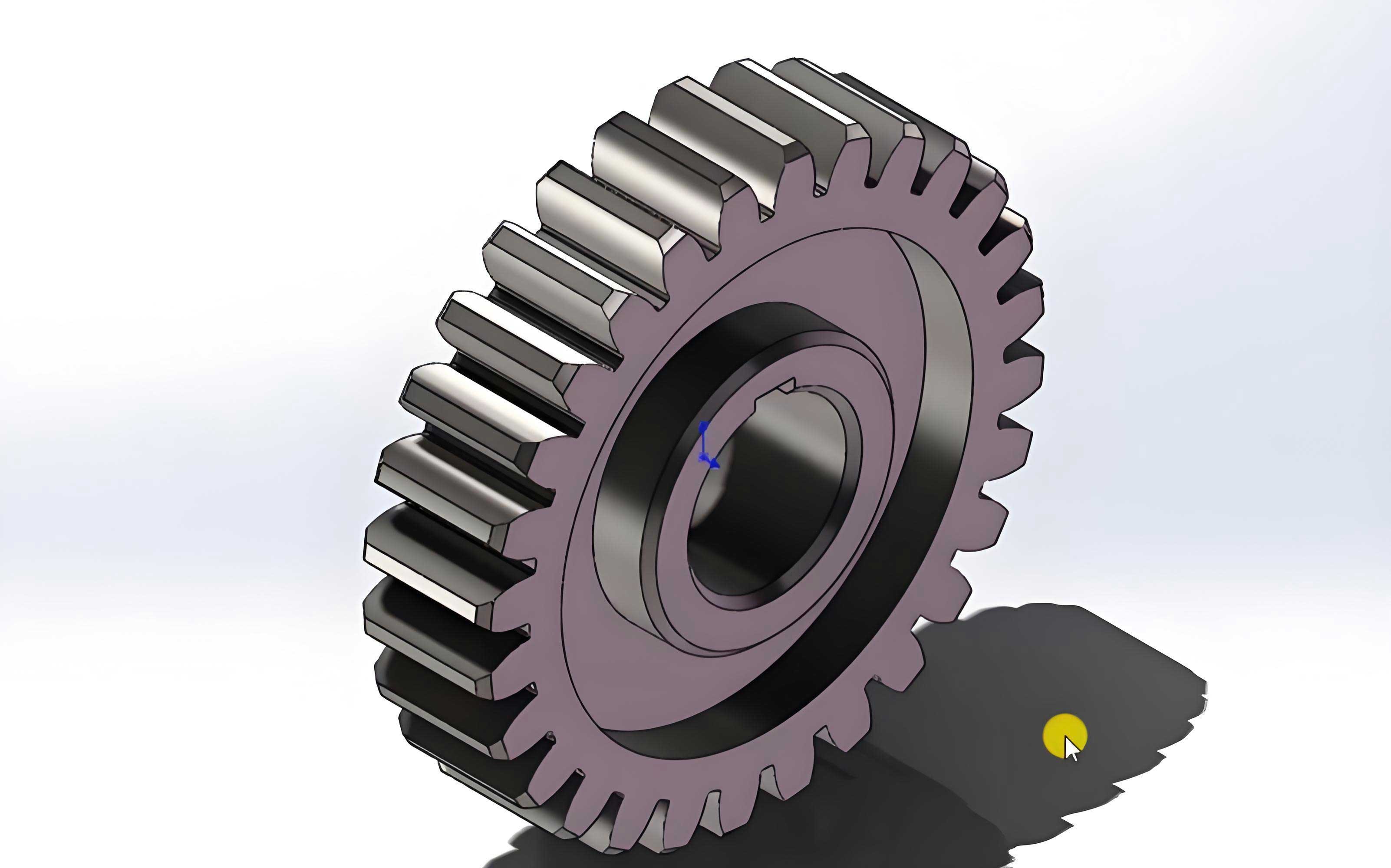
Traditional approaches to calculating the meshing efficiency of spur gears often rely on simplified assumptions that can limit their accuracy. Two of the most crucial assumptions pertain to the coefficient of friction and the load distribution along the path of contact. Historically, average or constant friction coefficients were employed, disregarding the complex, transient lubrication regime in the contact. Furthermore, the load was frequently assumed to be shared equally between tooth pairs in the double-contact regions and carried fully by a single pair elsewhere. While these simplifications lead to tractable formulas, such as those codified in international standards like ISO/TR 14179-1 and ISO/TR 14179-2, they can deviate significantly from physical reality, especially under high-load or high-speed conditions.
This work develops and validates a new, more refined methodology for predicting the meshing efficiency of spur gears. The core innovation lies in the simultaneous integration of two advanced models: a modern Elastohydrodynamic Lubrication (EHL) friction coefficient model that captures the transient tribological conditions, and a time-varying load distribution model that accounts for the influence of friction on the force equilibrium of the gear teeth. By abandoning the classical assumption of fixed load-sharing ratios and instead solving for the instantaneous normal load under frictional forces, a more physically accurate representation of the meshing process is achieved. The instantaneous power loss is then integrated over the entire meshing cycle to obtain the average efficiency. A numerical model based on this methodology is implemented, and its predictions are compared against experimental data and the results from the aforementioned ISO standards. The comparison demonstrates that the proposed model offers superior predictive accuracy, providing a valuable tool for the design and analysis of high-performance spur gear transmissions.
Mathematical Modeling of Meshing Power Loss
The analysis focuses on external spur gear pairs. The coordinate system is established along the line of action, as shown in the schematic. The path from the start of contact to the end is divided into four segments based on single and double tooth contact zones. The fundamental loss mechanism considered is sliding friction loss, as rolling friction loss is typically negligible. The goal is to calculate the net work input and output over one complete meshing period for a single tooth pair, from engagement to disengagement.
EHL Friction Coefficient Model
The friction between lubricated spur gear teeth operates predominantly in the elastohydrodynamic lubrication regime. A sophisticated model proposed by Xu, which considers surface roughness, non-Newtonian lubricant behavior, and thermal effects, is adopted here. The instantaneous friction coefficient \(\mu\) is given by:
$$
\mu = e^{f(SR, P_h, \nu_0, S)} P_h^{b_2} \bar{v}_e^{b_3} \nu_0^{b_6} e^{b_7 \nu_0} \bar{R}^{b_8}
$$
where:
$$
f(SR, P_h, \nu_0, S) = b_1 + b_4 |SR| P_h \log_{10}(\nu_0) + b_5 e^{-|SR| P_h \log_{10}(\nu_0)} + b_9 e^{S}
$$
The variables in these equations are:
- \(SR\): Slide-to-roll ratio.
- \(P_h\): Maximum Hertzian contact pressure (Pa).
- \(\nu_0\): Lubricant kinematic viscosity at inlet conditions (cSt).
- \(S\): Combined root-mean-square surface roughness (\(\mu m\)).
- \(\bar{v}_e\): Mean entrainment velocity (m/s).
- \(\bar{R}\): Effective radius of curvature at the contact point (m).
The coefficients \(b_1\) through \(b_9\) are empirical constants derived from extensive test data fitting. Their values are listed in the table below:
| Parameter | \(b_1\) | \(b_2\) | \(b_3\) | \(b_4\) | \(b_5\) |
|---|---|---|---|---|---|
| Value | -8.9164 | 1.0330 | 1.0360 | -0.3540 | 2.8120 |
| Parameter | \(b_6\) | \(b_7\) | \(b_8\) | \(b_9\) |
|---|---|---|---|---|
| Value | -0.1006 | 0.7527 | -0.3909 | 0.6203 |
This model allows \(\mu\) to vary dynamically along the path of contact for spur gears, as parameters like \(SR\), \(P_h\), \(\bar{v}_e\), and \(\bar{R}\) change with the meshing position.
Time-Varying Load Distribution Model
Contrary to traditional load-sharing models, the time-varying model explicitly includes the effect of friction on the force balance of the gear. The input torque on the driving gear is balanced by the combined moments from the normal forces and friction forces on all teeth in contact. For a driving pinion, the force diagrams during engagement and disengagement are constructed, defining the friction angle \(\rho = \arctan(\mu)\).
1. Engagement Process:
- Single Tooth Contact Zone: The entire input torque \(M_1\) is carried by one tooth. The normal force \(F_{n_{x1}}\) is solved from equilibrium:
$$
F_{n_{x1}} = \frac{M_1}{R_{b1} – \mu(R_{b1} \tan\alpha_w + e_x)}
$$
where \(R_{b1}\) is the base radius, \(\alpha_w\) is the operating pressure angle, and \(e_x\) is the contact position coordinate (negative during engagement). - Double Tooth Contact Zone: The input torque is assumed to be shared equally between two teeth in contact. The normal force on one tooth \(F_{n_{x2}}\) is:
$$
F_{n_{x2}} = \frac{M_1}{2[R_{b1} – \mu(R_{b1} \tan\alpha_w + e_x)]}
$$
2. Disengagement Process:
- Single Tooth Contact Zone: The normal force \(F_{n_{y1}}\) is:
$$
F_{n_{y1}} = \frac{M_1}{R_{b1} + \mu(R_{b1} \tan\alpha_w + e_y)}
$$
where \(e_y\) is positive during disengagement. - Double Tooth Contact Zone: The normal force on one tooth \(F_{n_{y2}}\) is:
$$
F_{n_{y2}} = \frac{M_1}{2[R_{b1} + \mu(R_{b1} \tan\alpha_w + e_y)]}
$$
These equations show that the normal load on spur gears is not constant but varies with the meshing position \(e\) and the instantaneous friction coefficient \(\mu\).
Derivation of Meshing Efficiency Formula
The efficiency is derived by calculating the work input to and output from the gear pair over one meshing cycle. The coordinate \(e\) along the line of action is used as the integration variable, with the angular displacement \(d\theta = de / R_b\).
Input Work (\(W_{in}\)): This is the work done by the input torque \(M_1\) over the angular displacement of the pinion during the meshing cycle of one pair. It integrates the moment from the resultant force (normal + friction) on the driving gear.
$$
W_{in} = W_{x1} + W_{y1}
$$
$$
W_{x1} = \int_{-e_1}^{-e_3} T_{x1} \frac{1}{R_{b1}} de + \int_{-e_3}^{0} T_{x1} \frac{1}{R_{b1}} de = \frac{M_1}{2R_{b1}}(e_1 + e_3)
$$
$$
W_{y1} = \int_{0}^{e_4} T_{y1} \frac{1}{R_{b1}} de + \int_{e_4}^{e_2} T_{y1} \frac{1}{R_{b1}} de = \frac{M_1}{2R_{b1}}(e_2 + e_4)
$$
Where \(T_{x1}, T_{y1}\) are the moments on the pinion from the resultant forces, and \(e_1, e_2, e_3, e_4\) define the boundaries of the single and double contact zones for spur gears.
Output Work (\(W_{out}\)): This is the work delivered by the driven gear, calculated from the moment of the reaction forces on it.
$$
W_{out} = W_{x2} + W_{y2}
$$
For the engagement phase (\(W_{x2}\)):
$$
W_{x2} = \int_{-e_1}^{-e_3} \frac{ \left[ R_{b2} – \mu(R_{b2}\tan\alpha_w – e) \right] }{ R_{b2} \left[ R_{b1} – \mu(R_{b1}\tan\alpha_w + e) \right] } \frac{M_1}{2} de \; + \int_{-e_3}^{0} \frac{ \left[ R_{b2} – \mu(R_{b2}\tan\alpha_w – e) \right] }{ R_{b2} \left[ R_{b1} – \mu(R_{b1}\tan\alpha_w + e) \right] } M_1 de
$$
For the disengagement phase (\(W_{y2}\)):
$$
W_{y2} = \int_{0}^{e_4} \frac{ \left[ R_{b2} + \mu(R_{b2}\tan\alpha_w + e) \right] }{ R_{b2} \left[ R_{b1} + \mu(R_{b1}\tan\alpha_w + e) \right] } M_1 de \; + \int_{e_4}^{e_2} \frac{ \left[ R_{b2} + \mu(R_{b2}\tan\alpha_w + e) \right] }{ R_{b2} \left[ R_{b1} + \mu(R_{b1}\tan\alpha_w + e) \right] } \frac{M_1}{2} de
$$
Meshing Efficiency (\(\eta\)): The average meshing efficiency for the spur gear pair over one cycle is the ratio of output to input work.
$$
\eta = \frac{W_{out}}{W_{in}} = \frac{W_{x2} + W_{y2}}{W_{x1} + W_{y1}}
$$
Numerical Simulation and Comparative Analysis
Simulation Parameters
A spur gear pair from published experimental studies is used for validation. The key geometric and operational parameters are listed below:
| Parameter | Value |
|---|---|
| Module (mm) | 3.95 |
| Pressure Angle (°) | 25 |
| Gear Ratio | 1:1 |
| Number of Teeth | 23 |
| Pitch Diameter (mm) | 90.86 |
| Base Circle Diameter (mm) | 82.34 |
| Addendum Circle Diameter (mm) | 100.34 |
| Face Width (mm) | 26.7 / 19.5 / 14.2 |
| Surface Roughness, Ra (μm) | 0.32 |
| Composite Elastic Modulus (Pa) | 2.276e11 |
| Lubricant Viscosity @ 40°C (Pa·s) | 0.0347 |
| Lubricant Density (g/cm³) | 0.82 |
To compare directly with experimental efficiency data (which includes bearing losses), the load-dependent bearing power loss \(P_B\) is added to the calculated meshing loss. For a single bearing:
$$
P_B = 0.5 \mu_B W_B d_B \omega \times 10^{-3} \quad \text{(kW)}
$$
where \(\mu_B = 0.0011\), \(W_B\) is the radial load (N), \(d_B = 0.03\) m is the bore diameter, and \(\omega\) is the angular speed (rad/s). The overall gear pair efficiency \(\eta_m\) is then:
$$
\eta_m = 1 – \frac{n P_B + (1-\eta)P_D}{P_D}
$$
with \(n\) as the number of bearings and \(P_D\) as the input power.
Results and Discussion
The predictions of the proposed model (EHL + Time-Varying Load) are compared against the experimental data and the results from ISO/TR 14179-1 (ISO-1) and ISO/TR 14179-2 (ISO-2). The following table summarizes key comparisons across different torque and speed conditions, highlighting the central finding: the new model’s consistent alignment with test data.
| Operating Condition | Experimental Efficiency | Proposed Model | ISO-2 Model | ISO-1 Model | Key Observation |
|---|---|---|---|---|---|
| 2000 rpm, Varying Torque | Gradually increases with torque | Matches trend and magnitude closely | Shows a slight decreasing trend | Unavailable (out of range) | New model captures the correct torque-dependency. |
| 4000 rpm, Varying Torque | Increases, then plateaus | Closely follows the curve | Predicts a steady decrease | Available but less accurate | ISO-2 shows opposite trend to experiments. |
| 6000 rpm, Varying Torque | Clear increasing trend | Accurately replicates increase | Predicts a decrease | Unavailable (out of range) | Fundamental discrepancy between ISO-2 and reality is evident. |
| 265 N·m, Varying Speed | Decreases with speed | Accurate prediction of decrease | Overpredicts loss at high speed | Less accurate, especially at high speed | New model correctly models speed dependence. |
| 540 N·m, Varying Speed | Decreases with speed | Very good agreement | Significant overprediction of loss | Unavailable for high speeds | ISO-2 becomes increasingly pessimistic at high speed. |
| 685 N·m, Varying Speed | Decreases with speed | Excellent agreement | Large overprediction of loss | Unavailable for high speeds | Proposed model’s accuracy is maintained across load range. |
The superior accuracy of the proposed model for spur gears stems from its physically realistic foundations. The critical difference is highlighted in the behavior of the friction coefficient. Under a constant speed of 6000 rpm, the EHL model predicts how \(\mu\) varies along the path of contact for different torques. A key insight is that in the double-contact regions where sliding velocities are high and most power loss occurs, the friction coefficient actually decreases with increasing load for spur gears. This is due to the complex interplay between pressure, film thickness, and lubricant rheology captured by the EHL model. In contrast, the empirical formulas in standards like ISO-2 often link \(\mu\) directly to load and sliding velocity in a way that causes it to increase monotonically with torque, leading to the erroneous prediction of decreasing efficiency.
The time-varying load model further refines the calculation. Instead of assuming a fixed 50% load share in double contact, it calculates the dynamic load on each tooth, which is influenced by the instantaneous friction. This provides a more precise estimate of the normal force, which in turn affects both the friction force (\(\mu F_n\)) and the calculated moments for work input/output.
Conclusion
This work has successfully developed and validated a comprehensive analytical model for predicting the meshing efficiency of spur gears. The model’s principal advancement is the synergistic integration of a modern Elastohydrodynamic Lubrication (EHL) friction model with a time-varying load distribution analysis. The EHL model provides a realistic, transient friction coefficient that varies along the path of contact, capturing effects that average coefficients miss. The time-varying load model solves the gear tooth force equilibrium by incorporating the friction forces, leading to a dynamic normal load that deviates from classical fixed-ratio sharing assumptions.
The proposed methodology was implemented numerically and tested against experimental data from a reference spur gear pair, with comparisons also made to the predictions of international standards ISO/TR 14179-1 and ISO/TR 14179-2. The results demonstrate that the new model achieves significantly better agreement with experimental measurements, both in terms of absolute values and in capturing the correct trends with varying load and speed. Notably, it correctly predicts the increase in efficiency with torque under constant speed conditions—a trend that the ISO-2 standard fails to replicate due to its simplified friction modeling.
This model provides engineers and designers with a more accurate and physically grounded tool for analyzing power losses in spur gear transmissions. It is particularly valuable for high-performance applications where efficiency optimization is critical, such as in electric vehicles, aerospace systems, and precision industrial machinery. Future work could extend this approach to helical and bevel gears, and incorporate additional loss mechanisms like gear windage and churning losses for a complete system efficiency analysis.