
This paper presents a comprehensive investigation into the dynamic contact behavior of the multi-group needle roller bearings (NRBs) that are critical to the performance and reliability of rotary vector reducers. As a core transmission component in industrial robots, the rotary vector reducer’s compact design and high load capacity are paramount. Within this system, the needle roller bearings, particularly those serving as the turning arm bearings without inner and outer rings, are subjected to complex, fluctuating loads. These dynamic loads, exacerbated by inevitable manufacturing imperfections like position errors in bearing holes, are a primary factor limiting the service life of the entire rotary vector reducer. Therefore, establishing an accurate dynamic model to reveal the load distribution characteristics under realistic operating and manufacturing conditions is essential for advanced design and reliability enhancement.
1. Introduction and Problem Statement
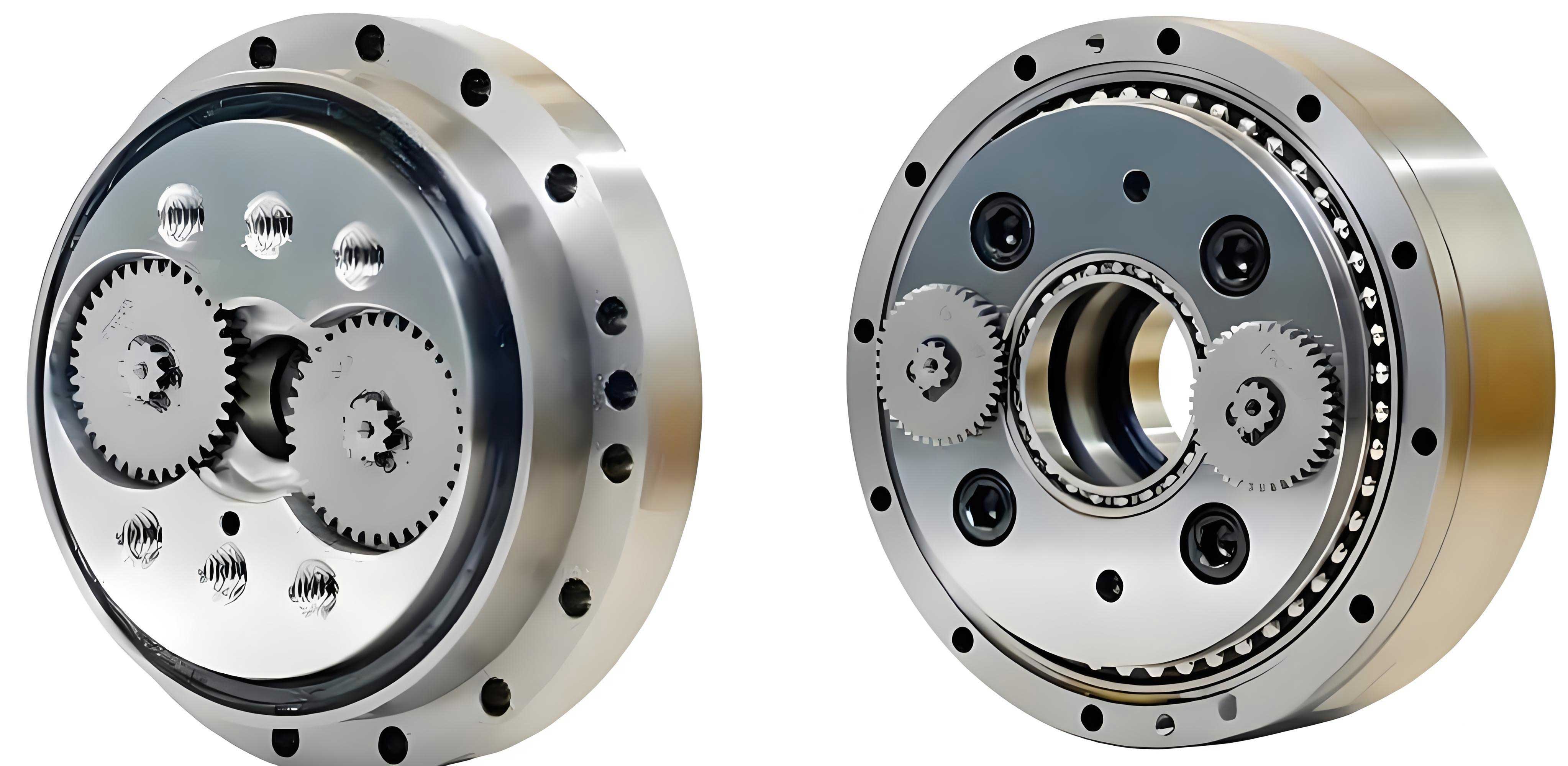
The rotary vector reducer, renowned for its high reduction ratio, compactness, high rigidity, and precision, is indispensable in robotic joint applications. Its transmission principle combines a planetary gear stage with a cycloidal-pin gear stage. A critical yet vulnerable component in this assembly is the turning arm needle roller bearing. Constrained by the internal space, these bearings often lack inner and outer rings, with the rolling elements directly contacting the crankpin (acting as the inner raceway) and the bore of the cycloidal gear (acting as the outer raceway). This design, while space-efficient, leads to severe and complex dynamic contact loads. In practical rotary vector reducers, two or three crank shafts work in parallel, each fitted with two NRBs (180° out of phase) engaging with two cycloidal gears. Consequently, multiple sets of bearings share the transmitted load. However, manufacturing position errors in the bearing holes on the cycloidal gears disrupt the ideal load-sharing condition, leading to uneven load distribution among the bearing groups. This uneven loading accelerates fatigue and is a dominant failure mode. The primary objective of this research is to develop a coupled dynamical model of the multi-group NRB and cycloidal-pin gear transmission system that explicitly accounts for these position errors. Using this model, I aim to analyze the dynamic contact load distribution within individual bearings and, more importantly, evaluate the load-sharing performance across the multiple bearing sets in a rotary vector reducer.
2. Theoretical Modeling of the Coupled Transmission System
The dynamic model integrates the contact mechanics of the cycloidal-pin gear mesh and the needle roller bearings within a multibody dynamics framework. The system for a typical three-crank rotary vector reducer consists of six major bodies: three crank shafts, two cycloidal gears, and one output carrier (or planet carrier).
2.1. Multi-point Contact Modeling of Cycloidal-Pin Gear Pair
The force transmission between the cycloidal gear and the stationary pin wheel is characterized by multi-tooth engagement. The continuous cycloidal tooth profile is discretized into a set of points. For a given pin, the potential contact region on the cycloid is identified by finding all discrete points satisfying the geometric penetration condition. The point with the maximum penetration depth within this region is selected as the actual contact point. The normal contact force $F_j^{n,z}$ at the j-th pin for cycloidal gear $z$ ($z=A$, $B$) is calculated using a nonlinear Hertzian contact model with damping:
$$F_j^{n,z} = K_c \left( \delta_{j,\text{max}}^z \right)^{1.5} + c_c D_c V_j^{d,z}$$
where $K_c$ is the contact stiffness (varying with the local curvature), $\delta_{j,\text{max}}^z$ is the maximum elastic deformation (penetration depth), $D_c$ is the damping coefficient, $V_j^{d,z}$ is the relative normal velocity at the contact point, and $c_c$ is a damping stabilization factor. The tangential friction force $F_j^{t,z}$ is modeled as:
$$F_j^{t,z} = -\mu c_d F_j^{n,z} \frac{V_j^{t,z}}{|V_j^{t,z}|}$$
where $\mu$ is the friction coefficient, $V_j^{t,z}$ is the relative tangential velocity, and $c_d$ is a friction stabilization factor to ensure numerical smoothness.
2.2. Dynamic Contact Modeling of Needle Roller Bearings
Each needle roller bearing is modeled considering the contact between each rolling element and the two raceways (crankpin and gear bore). The relative eccentricity vector $\mathbf{e}^A$ between the centers of the inner and outer raceways is calculated from the positions of the crank shaft and the cycloidal gear. For the k-th rolling element located at angle $\phi_k$, the radial deflection $\delta_k^b$ is:
$$\delta_k^b = e_x^A \cos\phi_k + e_y^A \sin\phi_k$$
where $e_x^A$ and $e_y^A$ are the components of $\mathbf{e}^A$. The contact force $F_k^b$ on the rolling element is only active when $\delta_k^b > 0$ and is given by:
$$F_k^b = K_b (\delta_k^b)^{10/9} + D_b v_k^b$$
Here, $K_b$ is the combined contact stiffness for the roller-raceway interfaces, derived from the individual stiffnesses $K_i$ and $K_o$: $K_b = \left[ (K_i)^{-10/9} + (K_o)^{-10/9} \right]^{-9/10}$. The stiffness for a single line contact can be approximated as $K_{i,o} \approx 8.06 \times 10^7 L^{8/9}$ N/m, where $L$ is the roller length. $D_b$ is the contact damping, and $v_k^b$ is the relative approach velocity of the roller.
2.3. Formulation of Position Errors for Bearing Holes
To model manufacturing imperfections, I introduce two types of position errors for the bearing holes on the cycloidal gear: angular position (division) error and radial position error. In an ideal rotary vector reducer, all bearing hole centers lie perfectly on a circle concentric with the gear’s center. Due to machining tolerances, the actual center of the i-th bearing hole deviates. Its actual position angle $\theta_i’$ and distribution radius $r_i’$ are defined as:
$$\theta_i’ = \theta_i + \text{Rand}[\varphi_0, \varphi_1]$$
$$r_i’ = r_{b0} + \text{Rand}[l_0, l_1]$$
where $\theta_i$ is the ideal angle, $r_{b0}$ is the ideal distribution radius, and $\text{Rand}[a, b]$ denotes a random value uniformly distributed in the interval $[a, b]$. The parameters $\Delta \varphi = \varphi_1 – \varphi_0$ and $\Delta l = l_1 – l_0$ define the range of the position error, representing the machining precision grade. A larger $\Delta \varphi$ and $\Delta l$ corresponds to a lower precision grade. This modeling approach realistically simulates the random yet bounded nature of manufacturing errors in a rotary vector reducer.
2.4. Assembly of the System Dynamics Equations
The system’s configuration is described by 18 generalized coordinates, encompassing the planar translation and rotation of the three crankshafts, the two cycloidal gears, and the output carrier. The equations of motion are derived using Lagrange’s method with constraints and are formulated as a differential-algebraic equation (DAE) system:
$$
\begin{bmatrix}
\mathbf{M} & \boldsymbol{\Phi}_q^T \\
\boldsymbol{\Phi}_q & \mathbf{0}
\end{bmatrix}
\begin{Bmatrix}
\ddot{\mathbf{q}} \\
\boldsymbol{\lambda}
\end{Bmatrix}
=
\begin{Bmatrix}
\mathbf{Q}_G \\
\boldsymbol{\gamma}
\end{Bmatrix}
$$
where $\mathbf{M}$ is the mass matrix, $\boldsymbol{\Phi}_q$ is the Jacobian of the constraint equations $\boldsymbol{\Phi}$, $\ddot{\mathbf{q}}$ is the acceleration vector, $\boldsymbol{\lambda}$ is the vector of Lagrange multipliers, $\mathbf{Q}_G$ is the generalized force vector containing all contact and external forces, and $\boldsymbol{\gamma} = -(\boldsymbol{\Phi}_q \dot{\mathbf{q}})_q \dot{\mathbf{q}} – 2\boldsymbol{\Phi}_{qt}\dot{\mathbf{q}} – \boldsymbol{\Phi}_{tt}$.
3. Case Study: Dynamic Analysis of an RV80E Rotary Vector Reducer
To demonstrate the application and insights from the model, I conducted a detailed analysis of a common rotary vector reducer model, RV80E, with three crank shafts. The key geometric and operational parameters are listed below.
| Component | Parameter | Value |
|---|---|---|
| Cycloidal Stage | Eccentricity, $e$ (mm) | 1.5 |
| Pin Diameter, $d_{rp}$ (mm) | 6 | |
| Pin Circle Diameter, $d_{rp}$ (mm) | 153 | |
| Number of Pins, $N_p$ | 40 | |
| Number of Cycloid Teeth, $N_c$ | 39 | |
| Short Width Coefficient, $K$ | 0.78 | |
| Needle Roller Bearing | Inner Raceway Diameter (Crankpin), $d_i$ (mm) | 26 |
| Outer Raceway Diameter (Gear Bore), $d_o$ (mm) | 36 | |
| Roller Diameter, $d_r$ (mm) | 5 | |
| Number of Rollers per Bearing, $N_b$ | 14 | |
| Operating Condition | Input Crank Speed (rpm) | 585 |
| Output Load Torque (Nm) | 784 |
I defined five distinct precision grades for the bearing hole position errors, as summarized in Table 2. Grade 0 represents the ideal, error-free case. The subsequent grades (I to IV) represent progressively wider error ranges, simulating a decrease in machining precision for the rotary vector reducer components.
| Grade | Angular Error Range, $\Delta\varphi$ (arc-sec) | Radial Error Range, $\Delta l$ (μm) |
|---|---|---|
| 0 (Ideal) | ±0 | ±0 |
| I | ±10 | ±1 |
| II | ±20 | ±2 |
| III | ±30 | ±3 |
| IV | ±40 | ±4 |
4. Results and Discussion on Dynamic Load Characteristics
4.1. Dynamic Contact Loads on Individual Rollers
The simulation reveals the complex, time-varying load distribution within a single needle roller bearing in the rotary vector reducer. At any instantaneous position of the crank shaft, approximately half of the rollers are under load, while the other half are unloaded. The specific set of loaded rollers and the magnitude on each change continuously as the crank rotates. The presence of position errors alters the magnitude of the contact forces on individual rollers but does not significantly change the number of rollers participating in load carrying.
The most critical finding concerns the peak load values. Figure 1 shows the statistical results for the maximum and average contact force on any roller among all bearings, across different position error grades. The average roller force remains relatively stable at approximately 304 N. However, the peak roller force increases with deteriorating precision, from 1579 N (Grade 0) to 1662 N (Grade IV). This peak force is 5.19 to 5.47 times the average roller force, highlighting the severe stress concentration that occurs during operation. This high peak-to-average ratio is a fundamental driver of contact fatigue in the bearings of a rotary vector reducer.
4.2. Dynamic Load on Entire Bearings and Load-Sharing Among Groups
The vector sum of all roller contact forces gives the total dynamic load acting on each bearing. In the ideal case (Grade 0), the load on all six bearings follows periodic patterns with 180° phase difference for bearings on the same crank and 120° phase difference for bearings on the same cycloidal gear. While the phase differs, the amplitude range of the load fluctuation is identical for all bearings in an ideal rotary vector reducer. The load fluctuates between a maximum of 5414 N and a minimum of 698 N, with an average of about 3378 N.
The introduction of position errors disrupts this ideal load-sharing. As shown in the load-time history for Grade IV errors, the amplitude of load fluctuation becomes different for each bearing. Some bearings experience higher peak loads while others experience higher minimum loads. The sensitivity analysis, summarized in Table 3, indicates that the minimum load in the cycle is most sensitive to position errors, with deviations up to 63% from the ideal case.
| Bearing ID | Max Load (N) | Min Load (N) | Load Amplitude (N) |
|---|---|---|---|
| A1 | 4749 | 258 | 4491 |
| B1 | 5503 | 787 | 4716 |
| A2 | 5643 | 1100 | 4543 |
| B2 | 5710 | 895 | 4815 |
| A3 | 5302 | 789 | 4513 |
| B3 | 5441 | 654 | 4787 |
4.3. Quantitative Evaluation of Load-Sharing Performance
The average load over a cycle is a key parameter for bearing life calculation. Table 4 presents the average load for each of the six bearings under different error grades. In the ideal case, the average loads are nearly equal (difference ~27 N). As the position error range increases, the deviation in average load among the bearings grows significantly. For Grade IV errors, the difference between the highest and lowest average bearing load is 798 N.
To quantify load-sharing, I define a load-sharing coefficient for each bearing as the ratio of its actual average load to the ideal average load. A perfect sharing would yield a coefficient of 1 for all bearings. The results show that as precision degrades, the spread of these coefficients widens considerably. For Grade I, coefficients range from 0.92 to 1.06; for Grade IV, they range from 0.85 to 1.08. This widening spread clearly indicates worsening load imbalance, or “偏载” (partial loading), among the bearing sets in the rotary vector reducer.
| Bearing ID | Ideal Avg. Load (N) | Grade I | Grade IV | ||
|---|---|---|---|---|---|
| Avg. Load (N) | Coefficient | Avg. Load (N) | Coefficient | ||
| A1 | 3365.1 | 3106.5 | 0.923 | 2851.4 | 0.847 |
| B1 | 3392.3 | 3567.1 | 1.052 | 3648.7 | 1.076 |
| A2 | 3376.6 | 3361.9 | 0.996 | 3364.3 | 0.996 |
| B2 | 3392.2 | 3580.1 | 1.055 | 3506.0 | 1.034 |
| A3 | 3364.7 | 3312.0 | 0.984 | 3605.9 | 1.072 |
| B3 | 3377.2 | 3338.2 | 0.989 | 3375.4 | 1.000 |
| Spread (Max-Min) | 27.2 N | 473.6 N | 0.132 | 797.3 N | 0.229 |
5. Conclusions
This study successfully establishes a high-fidelity coupled dynamic model for the multi-group needle roller bearing and cycloidal-pin gear transmission system within a rotary vector reducer. The model explicitly incorporates the influence of manufacturing position errors in the bearing holes, providing a powerful tool for analyzing real-world operating conditions.
The key findings are:
- Severe Internal Load Concentration: Within a single needle roller bearing, the maximum contact load on a roller can be 5.2 to 5.5 times the average roller load. This extreme ratio is a primary contributor to contact fatigue and underscores the demanding operating environment inside a rotary vector reducer.
- Significant Dynamic Load Fluctuation: The total load on a bearing fluctuates cyclically with large amplitude. The maximum bearing load is about 1.6 times its average, while the minimum can be as low as 0.2 times the average. The minimum load point is highly sensitive to the presence of position errors.
- Degraded Load-Sharing with Increased Errors: Position errors directly lead to uneven load distribution (偏载) among the multiple sets of bearings. As the error range increases (machining precision decreases), the deviation in the average load carried by each bearing grows substantially. The spread of the load-sharing coefficient widens, confirming worsened imbalance. This imbalance means some bearings are consistently overloaded while others are underutilized, compromising the overall system reliability and life of the rotary vector reducer.
This research provides critical mechanical insights and a quantitative framework for optimizing the geometric parameters of needle roller bearings, setting rational manufacturing tolerances, and ultimately solving the performance matching problem between the bearings and the rotary vector reducer to enhance its longevity and reliability.