
In modern manufacturing, gear grinding serves as a critical finishing process for producing high-precision gears used in automotive, aerospace, and industrial machinery. Among various techniques, gear profile grinding and generating gear grinding are widely employed to achieve superior surface quality and dimensional accuracy. However, the presence of grinding cracks and deviations in gear teeth remains a significant challenge, primarily due to dynamic disturbances such as fluctuating grinding forces, thermal effects, and mechanical delays in multi-axis systems. This paper addresses these issues by proposing an adaptive synchronous control strategy centered on an electronic gearbox (EGB) framework, which enhances the anti-interference capability of gear grinding systems.
The core of our approach lies in integrating an adaptive extended Kalman observer with feedforward compensation to mitigate errors induced by real-time grinding force variations. We first establish a multi-axis linkage model based on EGB principles, which governs the coordinated motion of the grinding wheel and workpiece axes. Subsequently, we derive mathematical relationships between synchronization errors and gear quality metrics, such as helix deviation and pitch deviation. By employing an adaptive observer, we accurately estimate grinding forces—key contributors to grinding cracks and profile inaccuracies—and design a feedforward mechanism to compensate for positional deviations. Simulation and experimental results validate the effectiveness of our method in reducing gear errors and improving robustness.
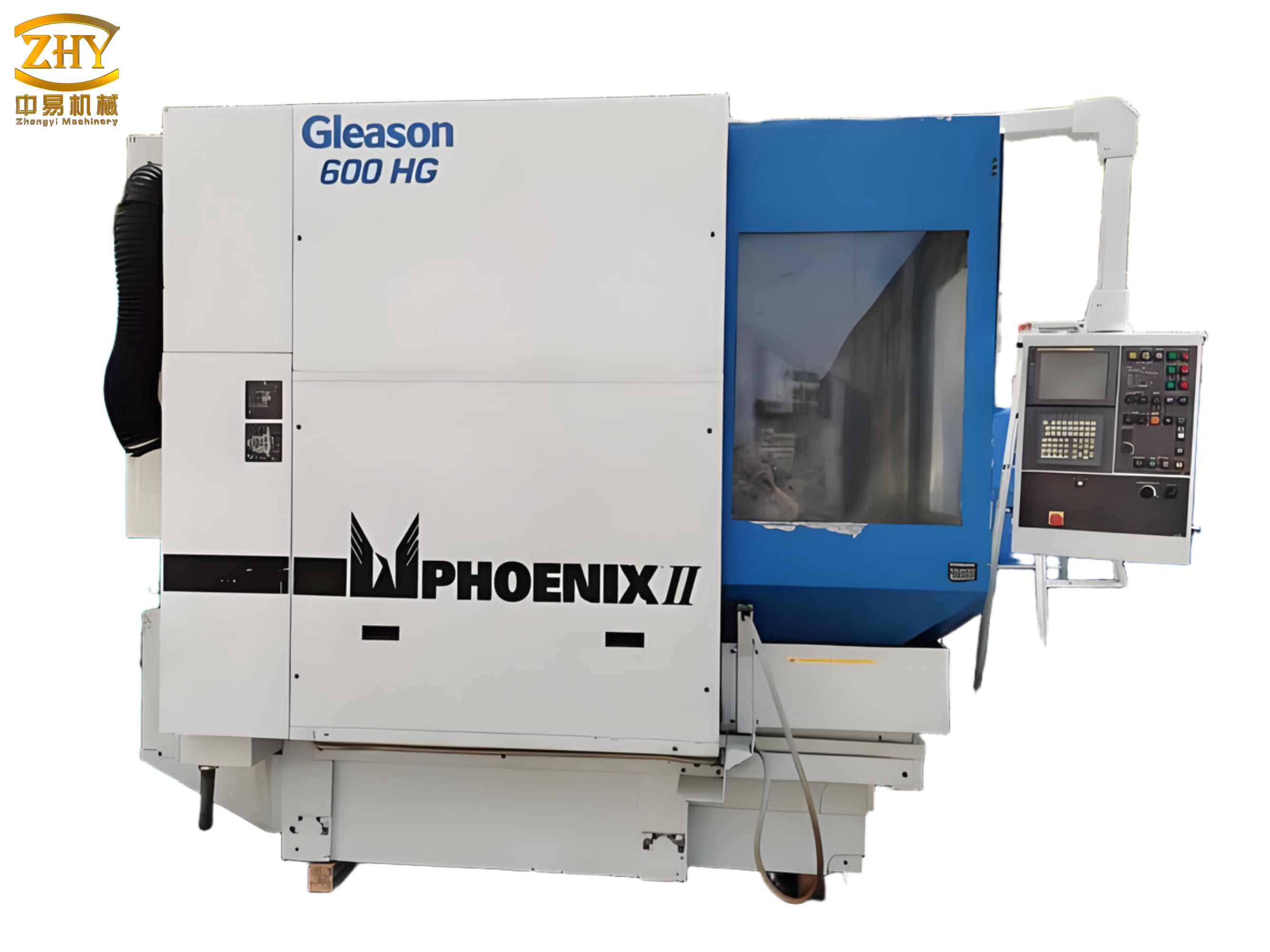
Fundamentals of Gear Grinding and Electronic Gearbox Architecture
Generating gear grinding involves the continuous meshing of a worm-shaped grinding wheel with a gear workpiece, where precise relative motions are essential for accurate tooth form generation. In gear profile grinding, the wheel’s profile directly mirrors the gear tooth space, demanding high synchronization between axes to prevent grinding cracks and ensure uniform material removal. The electronic gearbox replaces mechanical gear trains with software-based synchronization, enabling flexible control over the grinding wheel (B-axis), workpiece (C-axis), and feed axes (X, Y, Z). The motion relationship is governed by the following equation, which defines the workpiece rotation increment $\Delta n_c$:
$$ \Delta n_c = K_b \frac{k}{z} \Delta n_{bc} + K_z \frac{360 \sin \beta}{\pi m_n z} \Delta Z + K_y \frac{360 \cos \lambda}{\pi m_n z} \Delta Y $$
Here, $k$ denotes the number of grinding wheel starts, $z$ is the gear tooth count, $\lambda$ represents the wheel installation angle, $\beta$ is the helix angle, $m_n$ is the normal module, $K_i$ (for $i = b, z, y$) are directional coefficients, and $\Delta n_{ic}$ account for tracking errors propagated to the C-axis. This model ensures that the workpiece follows the grinding wheel precisely, minimizing the risk of grinding cracks during high-speed operations.
The EGB control structure adopts a master-slave configuration combined with parallel processing, where the grinding wheel axis operates in velocity mode, and other axes receive interpolated commands derived from encoder feedback. This setup, however, introduces synchronization lag due to independent axis control. To quantify the impact on gear quality, we relate EGB errors to gear deviations. Specifically, the pitch deviation $F_p$ and helix deviation $F_\beta$ are expressed as functions of the workpiece axis error $E_c$:
$$ F_p = \left[ \frac{K_{pc} (\pi m_n z)}{360 \cos \beta} + \frac{K_{py} (\pi m_n z)}{360 K_y} \right] E_c $$
$$ F_\beta = \left[ \frac{K_{\beta c} (\pi m_n z)}{360 \cos \beta} + \frac{K_{\beta y} (\pi m_n z)}{360 K_y} + \frac{K_{\beta z} (\pi m_n z)}{360 K_z \cos \beta} \right] E_c $$
In these equations, $K_{pi}$ and $K_{\beta i}$ are deviation coefficients, and $E_c$ encapsulates cumulative errors from multiple axes. This formulation allows real-time estimation of gear accuracy during grinding, providing a basis for adaptive compensation.
Design of Adaptive Extended Kalman Observer and Feedforward Compensation
To address dynamic disturbances in gear grinding, we develop an adaptive extended Kalman observer that estimates grinding forces—a primary source of grinding cracks and profile errors. The observer processes current and velocity measurements from a permanent magnet synchronous motor (PMSM) driving the workpiece axis. The discrete state-space model of the system is defined as:
$$ x_{k+1} = \phi x_k + B u_k + \omega_k $$
$$ z_{k+1} = H x_{k+1} + v_{k+1} $$
where the state vector $x_k = [\omega_r, T_1]^T$ includes motor speed $\omega_r$ and equivalent load torque $T_1$, $u_k$ is the input current $i_q$, and $\omega_k$ and $v_{k+1}$ represent process and measurement noise, respectively. The matrices $\phi$, $B$, and $H$ are given by:
$$ \phi = \begin{bmatrix} 1 & -\frac{T_s}{J} \\ 0 & 1 \end{bmatrix}, \quad B = \begin{bmatrix} \frac{K_e}{J} \\ 0 \end{bmatrix}, \quad H = \begin{bmatrix} 1 & 0 \end{bmatrix} $$
Here, $T_s$ is the sampling time, $J$ is the moment of inertia, and $K_e$ is the current coefficient. The extended Kalman observer comprises prediction and correction steps:
- Prediction:
$$ \hat{x}_{k|k-1} = \phi \hat{x}_{k-1} + B u_{k-1} $$
$$ P_{k|k-1} = \phi P_{k-1} \phi^T + Q $$ - Correction:
$$ K_k = P_{k|k-1} H^T (H P_{k|k-1} H^T + R)^{-1} $$
$$ \hat{x}_k = \hat{x}_{k|k-1} + K_k (z_k – H \hat{x}_{k|k-1}) $$
$$ P_k = (I – K_k H) P_{k|k-1} $$
To enhance adaptability, we introduce a time-varying noise covariance matrix $Q_k$ that adjusts based on the innovation error $e_{k|k-1} = z_k – H \hat{x}_{k|k-1}$:
$$ Q_k = \alpha I + \beta e_{k|k-1}^T e_{k|k-1} I $$
where $\alpha$ and $\beta$ are positive coefficients, with $\beta$ set to a small value (e.g., $10^{-8}$ to $10^{-3}$) to ensure convergence during transients. This adaptive mechanism allows the observer to respond swiftly to sudden disturbances, such as grinding force fluctuations that could lead to grinding cracks in gear profile grinding.
Using the estimated grinding torque $\hat{T}_1$, we design a feedforward compensator to counteract positional deviations. The relationship between grinding force and acceleration is linear, as verified through simulations. Thus, the feedforward torque $T_{ff}$ is computed as:
$$ T_{ff} = k_1 \iint a \, dt $$
where $a$ is the acceleration derived from the observed force, and $k_1$ is a proportional gain. This compensation is integrated into the control loop, effectively reducing errors in helix and pitch dimensions.
Simulation Analysis and Validation
We evaluate our method using MATLAB/Simulink simulations, with parameters matching a practical gear grinding setup. The PMSM parameters are listed in Table 1, and the system operates at 10 kHz with a current loop period of 0.1 ms. A dynamic grinding force profile—simulating real-world disturbances in gear grinding—is applied to the workpiece axis.
| Parameter | Symbol | Value |
|---|---|---|
| Rated Speed | $n$ | 3,000 rpm |
| Rated Torque | $T_1$ | 0.637 N·m |
| Rated Current | $I$ | 7.5 A |
| Inductance | $L_d, L_q$ | 0.9 mH |
| Resistance | $R$ | 0.33 Ω |
| Rotor Inertia | $J$ | 0.189 × 10⁻⁴ kg·m² |
| Pole Pairs | $p$ | 4 |
| Back EMF Coefficient | $K_e$ | 5.4 mV/(r/min) |
Figure 1 compares the observed grinding force from the traditional Kalman observer and our adaptive version. The adaptive observer achieves a peak error below 20 N·cm and an average error under 3 N·cm, with a response lag of less than 1 ms. This high accuracy is crucial for preventing grinding cracks by enabling timely compensation.
We further analyze the effect of feedforward compensation on gear errors. Under a simulated grinding force disturbance, the helix deviation $F_\beta$ and pitch deviation $F_p$ are significantly reduced after compensation. As summarized in Table 2, the average helix deviation decreases from 26.32 μm to 3.77 μm, and the pitch deviation drops from 41.63 μm to 6.92 μm. The compensation ensures that deviations converge toward zero, enhancing the overall quality of gear profile grinding.
| Condition | Average Helix Deviation (μm) | Average Pitch Deviation (μm) | Peak Deviation (μm) |
|---|---|---|---|
| Without Compensation | 26.32 | 41.63 | 50 |
| With Feedforward Compensation | 3.77 | 6.92 | 11 |
The simulation results demonstrate that our adaptive observer and feedforward strategy effectively suppress errors caused by grinding force variations, thereby reducing the likelihood of grinding cracks and improving synchronization in gear grinding processes.
Experimental Verification and Performance Discussion
We validate our approach on a multi-motor control platform based on DSP28335, with motors configured according to Table 1. The experiment involves three scenarios: no load, load without compensation, and load with feedforward compensation. The workpiece axis rotates at 60 rpm, and a grinding force profile—representative of actual gear grinding conditions—is applied as a disturbance.
Figure 2 illustrates the positional deviation under these scenarios. Without compensation, the deviation exhibits large fluctuations (peak-to-peak range of 591 μm) due to grinding force impacts. After applying feedforward compensation, the deviation amplitude is reduced to 13 μm, and the range narrows to 13 μm. This confirms that our method effectively balances disturbances, minimizing errors that could lead to grinding cracks in precision gear profile grinding.
The experimental data align closely with simulation outcomes, underscoring the consistency and reliability of our adaptive control strategy. By integrating real-time force observation and compensation, we achieve a robust system capable of maintaining high accuracy under dynamic grinding conditions.
Conclusion
In this study, we have developed an adaptive multi-axis synchronous control system for generating gear grinding, leveraging an electronic gearbox framework. Our key contributions include:
- Formulating a multi-axis linkage model that relates synchronization errors to gear quality metrics, such as helix and pitch deviations.
- Designing an adaptive extended Kalman observer that accurately estimates grinding forces in real-time, addressing sources of grinding cracks and profile inaccuracies.
- Implementing a feedforward compensator that significantly reduces gear errors, as validated through simulations and experiments.
The results show that our method reduces average helix and pitch deviations by over 80%, ensuring high precision in gear profile grinding. Future work will focus on extending this approach to multi-stage grinding processes and incorporating thermal compensation to further enhance robustness against grinding cracks and other defects.