
In the precision manufacturing of gears, the processes of gear hobbing and gear shaving play critical roles in achieving the desired tooth profile, surface finish, and mechanical properties. As a manufacturing engineer specializing in gear production, I have encountered numerous challenges where imperfections in one stage cascade into issues in subsequent operations. One such persistent problem is the insufficient undercut—or root relief—in hobbed gears, which, if not addressed properly during gear shaving, can lead to compromised gear root strength and potential failure. This article delves into the adjustment methods for gear shaving when the undercut from hobbing is inadequate, focusing on practical solutions that balance tooth profile accuracy and root integrity. Through detailed analysis, mathematical formulations, and empirical data, I aim to provide a comprehensive guide for engineers facing similar dilemmas.
The importance of undercut in gears cannot be overstated. It refers to the slight removal of material at the tooth root, typically ranging from 0.01 mm to 0.05 mm, designed to prevent stress concentration and improve fatigue resistance. In a typical gear shaving process, the shaving tool removes a thin layer of material from the hobbed gear to refine the tooth form. However, when the hobbed undercut is insufficient, the shaving tool may inadvertently remove the entire root relief, resulting in a flat or even over-cut root region. This scenario severely weakens the gear, increasing the risk of tooth breakage under load. In my experience, this issue often arises during mass production, where tool wear or manufacturing tolerances accumulate, necessitating timely interventions.
I recall a specific instance during the serial production of a five-speed transmission gear, where post-shaving inspection revealed that the root undercut was completely eliminated—the hobbed root relief had been entirely shaved away. This was alarming, as the final gear specification required an undercut of 0.01–0.05 mm to ensure durability. Visual examination showed a smooth root surface with no relief, indicating that the gear shaving process had over-engaged the root area. Such outcomes highlight the delicate balance between hobbing and shaving parameters, and the need for precise adjustments when deviations occur.
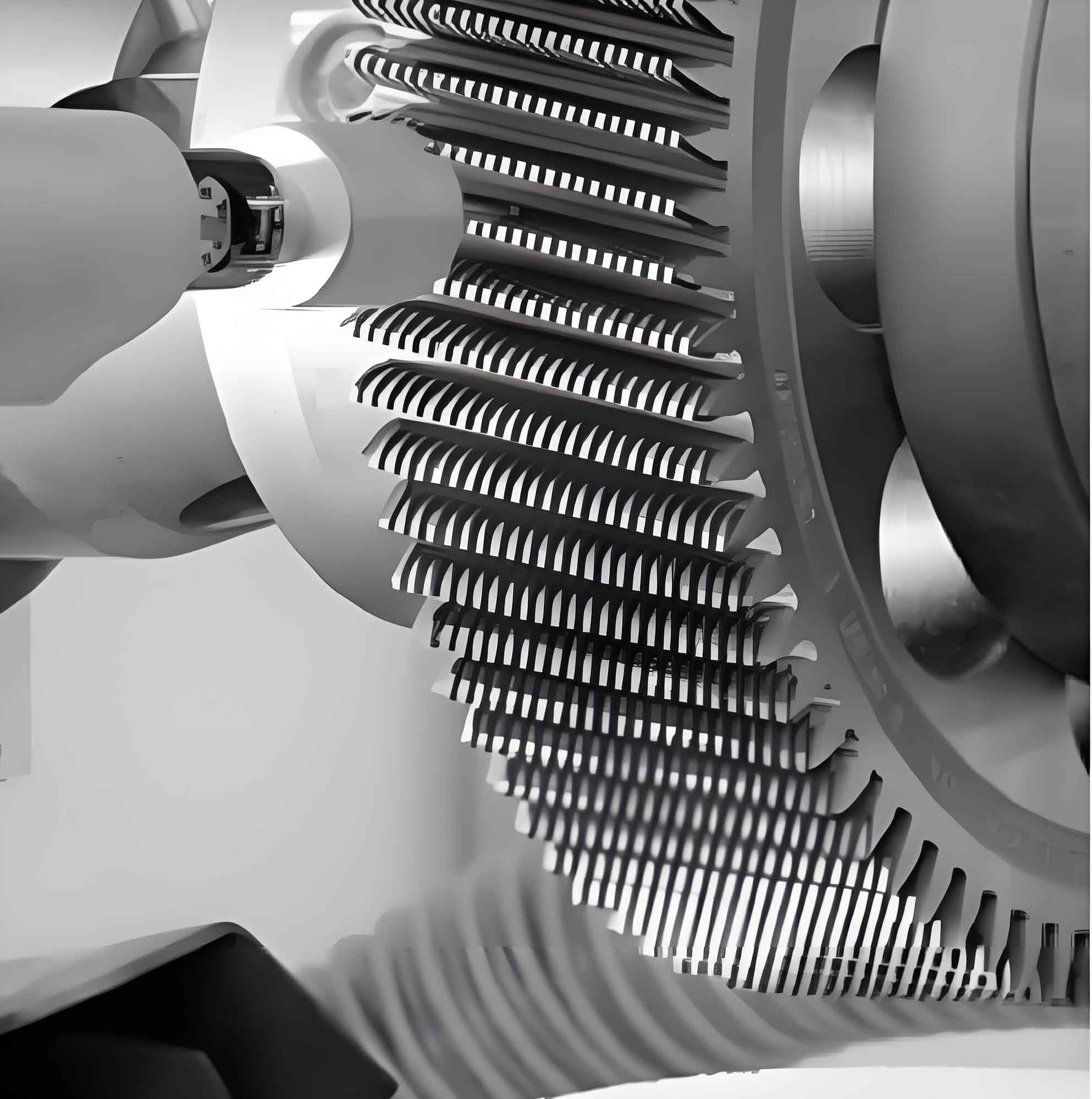
To address this, a systematic analysis is essential. The root cause often stems from multiple factors interacting during gear shaving. First, the hobbed undercut might be below the specified range due to tool manufacturing errors or wear. For example, if the hobbing tool produces an undercut of only 0.04 mm instead of the required 0.05–0.08 mm, it leaves minimal margin for shaving. Second, mismatched pressure angles between the hobbed and shaved gears can exacerbate the issue. In gear shaving, the pressure angle of the shaving tool influences the tooth contact pattern; if the shaving pressure angle is too small relative to the hobbed gear, it increases the material removal at the root. Third, excessive crowning—or tooth profile curvature—in the shaved gear can force the shaving tool to engage more deeply at the root to achieve full-profile contact. These factors collectively lead to over-shaving of the root region.
Let’s quantify these effects using mathematical models. The material removal during gear shaving is a function of several parameters, including the hobbed tooth thickness, shaving tool geometry, and machine settings. The nominal shaving allowance per side, denoted as $a_s$, is typically around 0.03 mm for precision gears. The corresponding change in the measurement over pins (M-value) can be expressed as:
$$ \Delta M = k \cdot \Delta s $$
where $\Delta M$ is the change in M-value, $\Delta s$ is the change in tooth thickness, and $k$ is a conversion factor dependent on the gear geometry. For a standard spur gear, $k$ approximates to 6, meaning a reduction of 0.01 mm in tooth thickness reduces the M-value by about 0.06 mm. This relationship is crucial when adjusting the hobbing-shaving allowance to control root engagement.
The pressure angle mismatch can be analyzed through the tooth profile deviation. Define $f_{H\alpha}$ as the profile slope deviation, which indicates pressure angle error. In gear shaving, if the hobbed gear has $f_{H\alpha} \approx 0$ (i.e., near-zero deviation), but the shaved gear targets $f_{H\alpha} = 15 \pm 3$ micrometers, a significant correction is required. However, if the actual shaving results in $f_{H\alpha}$接近 20 micrometers, it suggests excessive pressure angle correction, leading to root over-cut. The effective pressure angle difference $\Delta \alpha$ between hobbing and shaving can be estimated as:
$$ \Delta \alpha = \frac{f_{H\alpha,\text{shaved}} – f_{H\alpha,\text{hobbed}}}{R} $$
where $R$ is a reference radius. A larger $\Delta \alpha$ increases the shaving load at the root.
Crowning, denoted as $C_\alpha$, also plays a role. The crowning amount determines the curvature of the tooth profile along its height. Excessive crowning, such as 6–7 micrometers against a specification of $4 \pm 3$ micrometers, forces the shaving tool to remove more material at the root to maintain contact across the tooth flank. The relationship between crowning and root removal can be modeled as:
$$ \text{Root removal} \propto C_\alpha \cdot \tan(\phi) $$
where $\phi$ is the effective pressure angle during shaving. Thus, reducing crowning helps mitigate root over-cut.
Based on this analysis, I propose the following corrective measures, summarized in Table 1.
| Measure | Description | Target Parameter | Expected Impact |
|---|---|---|---|
| 1. Regrind Shaving Tool | Increase pressure angle of shaving tool to better match hobbed gear | $f_{H\alpha}$ reduced to ~7.5 µm | Decreased shaving allowance at root |
| 2. Adjust Crowning | Reduce tooth profile crowning to minimal levels | $C_\alpha$ reduced to 0–2 µm | Lower root engagement during shaving |
| 3. Optimize Hobbing-Shaving Allowance | Shift M-values: decrease hobbed M-value, increase shaved M-value | Tooth thickness reduction of 0.01 mm | Fine-tune root material removal |
| 4. Modify Helix Angle | Adjust machine setting for helix angle deviation ($f_{H\beta}$) | Symmetric root undercut | Improved tooth contact pattern |
The first measure involves regrinding the shaving tool to increase its pressure angle. In practice, after regrinding, the shaved gear’s $f_{H\alpha}$ should be around 7.5 micrometers, which deviates from the nominal specification but compensates for the hobbed gear’s near-zero deviation. This adjustment aligns the pressure angles, reducing the shaving force at the root. It’s critical to consider post-heat-treatment deformation; the final gear must meet all specifications after thermal processes. Therefore, iterative testing is necessary to validate this change.
The second measure focuses on crowning reduction. By minimizing $C_\alpha$ to 0–2 micrometers, the shaving tool engages more uniformly across the tooth height, lessening the root cut. Combined with pressure angle adjustment, this significantly alleviates root over-cut. The effect can be quantified using a shaving simulation model, where the total material removal $Q$ is given by:
$$ Q = \int_{root}^{tip} [a_s + \delta(\alpha, C_\alpha)] \, dh $$
where $\delta$ is a correction factor dependent on pressure angle and crowning, and $h$ is the tooth height. Reducing $C_\alpha$ decreases $\delta$, thus lowering $Q$ at the root.
After implementing these measures, the initial improvement in gear shaving results is noticeable. The root region begins to show relief, though minor step-like artifacts may persist. To eliminate these, further fine-tuning through hobbing-shaving allowance adjustment is required. As per the formula earlier, shifting the hobbed M-value downward by 0.05 mm and the shaved M-value upward by 0.01 mm reduces the tooth thickness allowance by approximately 0.01 mm. This micro-adjustment balances the shaving load, preserving the undercut.
For gears with asymmetric root undercut or residual crowning issues, modifying the helix angle deviation ($f_{H\beta}$) offers additional control. By tweaking the shaving machine’s $f_{H\beta}$ setting, one can subtly influence the pressure angle and crowning distribution across both tooth flanks. This is particularly useful for achieving symmetric undercut and optimal tooth contact. The relationship between $f_{H\beta}$ and root symmetry can be expressed as:
$$ \text{Root asymmetry} \approx \frac{\Delta f_{H\beta}}{L} $$
where $L$ is the face width. Adjusting $f_{H\beta}$ in small increments, say ±5 micrometers, allows for iterative optimization until the desired profile is attained.
To illustrate the parameter interactions, Table 2 provides a summary of key variables and their effects on gear shaving outcomes.
| Parameter | Symbol | Typical Range | Effect on Root Undercut |
|---|---|---|---|
| Hobbed Undercut | $U_h$ | 0.05–0.08 mm | Directly influences available material for shaving; lower values increase risk of over-cut |
| Shaving Pressure Angle | $\alpha_s$ | 15 ± 3 µm (as $f_{H\alpha}$) | Larger deviation from hobbed pressure angle increases root engagement |
| Tooth Profile Crowning | $C_\alpha$ | 4 ± 3 µm | Excessive crowning forces deeper root cut |
| Shaving Allowance | $a_s$ | 0.03 mm/side | Higher allowance exacerbates root removal; careful adjustment needed |
| Helix Angle Deviation | $f_{H\beta}$ | ±10 µm | Adjusts symmetry and contact pattern; minor changes affect root shape |
Implementing these adjustments requires a methodical approach. Start by evaluating the hobbed gear’s undercut via profilometry. If $U_h < 0.05$ mm, proceed to shaving tool regrinding. After regrinding, conduct a trial shaving run and measure the resulting tooth profile. Use the following formula to calculate the required M-value shift:
$$ \Delta M_{\text{total}} = \Delta M_{\text{hobbing}} + \Delta M_{\text{shaving}} = -0.05 \, \text{mm} + 0.01 \, \text{mm} = -0.04 \, \text{mm} $$
This translates to a net reduction in shaving allowance. Then, adjust $f_{H\beta}$ iteratively, monitoring the root undercut symmetry with each change. The goal is to achieve a smooth, consistent undercut of 0.02–0.04 mm, as verified by coordinate measuring machines (CMM).
In my application of these methods, the gear shaving process gradually improved. Initially, the root was completely shaved flat; after pressure angle and crowning adjustments, a slight undercut emerged. Further allowance optimization and helix angle tweaks yielded a symmetrical root relief within specification. The final tooth profile exhibited no steps, with $f_{H\alpha} \approx 10$ micrometers, $C_\alpha \approx 2$ micrometers, and undercut of 0.03 mm. Post-heat-treatment inspection confirmed all parameters were acceptable, ensuring gear strength and noise performance.
The interplay between hobbing and shaving is complex, but through systematic adjustment, one can overcome deficiencies like insufficient undercut. Key takeaways include: (1) always verify hobbed undercut before shaving, (2) use tool regrinding to align pressure angles, (3) minimize crowning to reduce root engagement, (4) fine-tune allowances via M-value shifts, and (5) exploit helix angle adjustments for symmetry. These steps, grounded in mathematical analysis, empower manufacturers to maintain quality in gear shaving even when input conditions are suboptimal.
Beyond immediate fixes, preventive strategies are vital. Regular monitoring of hobbing tool wear, coupled with statistical process control (SPC) for shaving parameters, can preempt issues. Implementing in-process gauging during gear shaving allows real-time feedback, enabling dynamic adjustments. Furthermore, advanced simulation software can model the shaving process, predicting root conditions based on input variables, thus reducing trial-and-error.
In conclusion, gear shaving is a delicate operation that demands precision and adaptability. When faced with insufficient hobbed undercut, a multi-pronged adjustment approach—encompassing tool geometry, allowance distribution, and machine settings—can rescue the process. By emphasizing the keyword gear shaving throughout, I reiterate its centrality in gear finishing. The methods described here, supported by formulas and tables, offer a robust framework for engineers striving to balance tooth profile accuracy with root integrity. As gear systems evolve towards higher loads and efficiencies, mastering such adjustments becomes ever more critical for reliable performance.
For further reading, I recommend consulting standard texts on gear design and manufacturing, such as “Gear Geometry and Applied Theory” by Faydor L. Litvin, or “Gear Handbook” by Darle W. Dudley. These resources provide deeper insights into the theoretical underpinnings of gear shaving and related processes.