
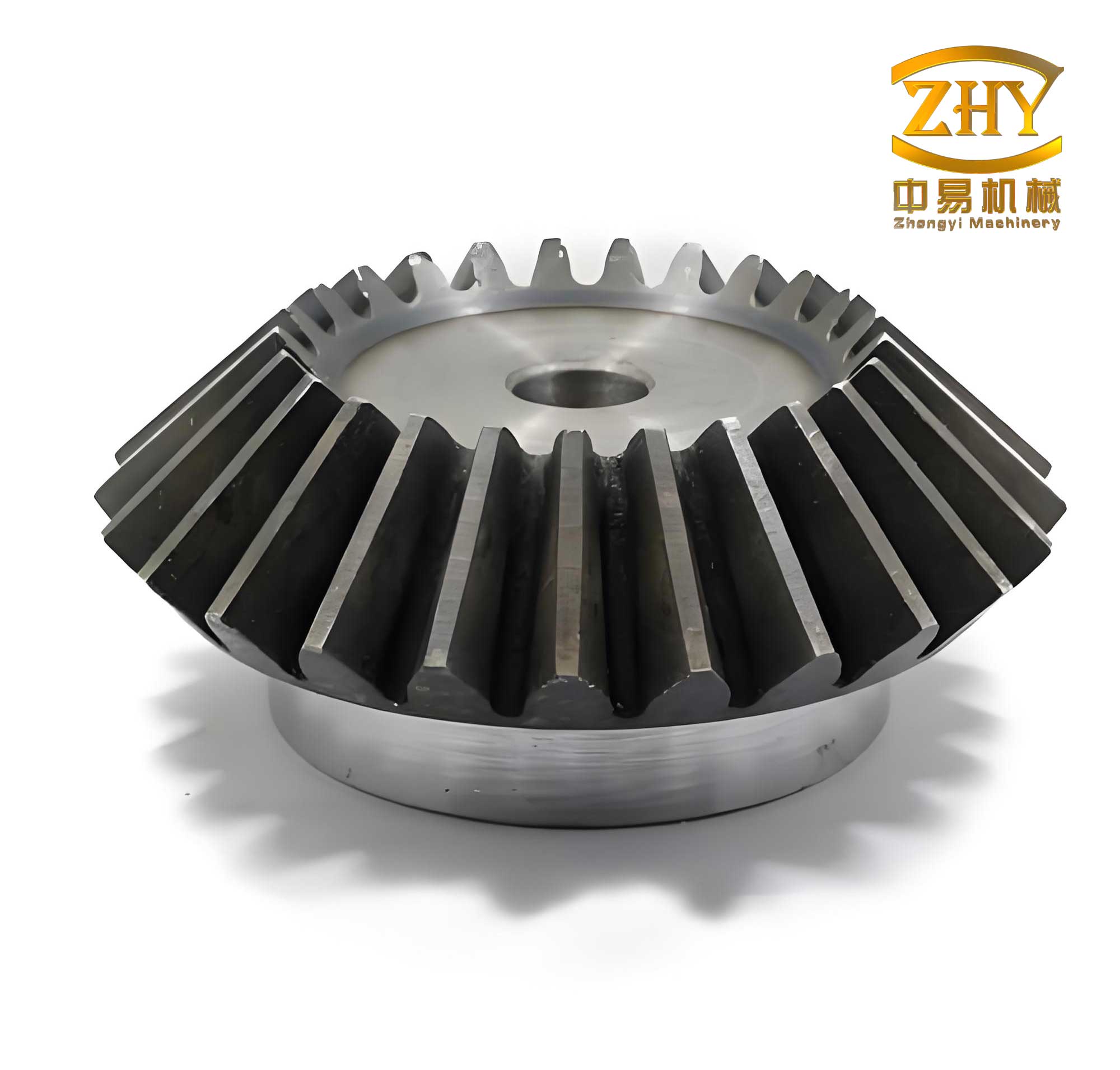
For an extended period, gear steel specifications in the industry were predominantly based on the 20CrMnTi grade, a material system inherited historically. While cost-effective and supported by mature processing technology, this grade has maintained a significant market share. However, the continuous evolution of the gear industry, especially for demanding applications, has imposed increasingly stringent requirements. Modern applications call for enhanced fatigue life, minimal heat treatment distortion, and higher strength. Consequently, there has been a marked shift towards the adoption of advanced steel series such as Cr-Mo, Cr-Ni-Mo, Mn-B, and Cr-Mn-Mo alloys. A prominent domestic manufacturer specializing in gear steel production faced a critical challenge: supplying material for the drive and driven bevel gears in heavy-duty trucks. The specifications demanded exceptionally high and consistent hardenability with a narrow band, extremely low distortion during carburizing heat treatment (circumferential deformation ≤ 0.1 mm), and superior fatigue endurance. To meet these rigorous demands for a bevel gear, a comprehensive development project was undertaken to engineer and produce the 22CrMoH2 grade. This involved meticulous optimization of the chemical composition and a holistic refinement of key processes throughout the steelmaking and rolling stages. The resulting product has been successfully validated by the end-user, fulfilling all technical agreement and performance requirements for the critical bevel gear application.
Product Design Philosophy and Key Challenges
The development of 22CrMoH2 steel was driven by the need to solve two interconnected core challenges inherent to manufacturing high-precision, durable bevel gears: controlling heat treatment distortion and maximizing fatigue life. The product design was therefore a balanced approach, integrating metallurgical principles with precise process engineering to address these factors simultaneously.
Strategy for Minimizing Heat Treatment Distortion
Distortion during the high-temperature carburizing and quenching process is a major concern for bevel gear accuracy. Research has consistently shown that fine-grained steels exhibit a significantly reduced tendency for distortion. In a fine-grained structure, the increased grain boundary area and stronger inter-granular linkages create greater resistance to the slip mechanisms that cause shape changes during phase transformations. Therefore, achieving and maintaining a fine austenite grain size during the prolonged exposure at the standard carburizing temperature of approximately 930 °C is paramount.
While aluminum nitride (AlN) precipitates offer some grain refinement, their solubility is relatively high at 930°C. Prolonged exposure at this temperature can lead to Ostwald ripening and coarsening of the austenite grains, meaning AlN alone is insufficient for stability. This is where microalloying with niobium (Nb) becomes critical. Niobium is a potent former of stable carbonitrides, Nb(C,N). These fine precipitates exert a powerful “pinning” force on austenite grain boundaries, effectively hindering their migration and grain growth even at very high temperatures. This phenomenon is described by the Zener pinning pressure ($P_z$):
$$ P_z = \frac{3 f_v \gamma}{2 r} $$
where $f_v$ is the volume fraction of precipitates, $\gamma$ is the grain boundary energy, and $r$ is the average precipitate radius. The effectiveness of Nb is highly dependent on its content. Studies indicate that an excessively high Nb addition (e.g., ~0.08%) can lead to a decrease in nucleation sites, causing the Nb(C,N) particles to coarsen and become sparsely distributed, thereby diminishing their pinning efficacy. An optimal Nb content around 0.04% has been found to produce a fine, dense dispersion of precipitates, yielding the most pronounced inhibition of grain growth for a bevel gear steel.
A second major contributor to distortion is solidification-related segregation, often manifesting as a “ghost line” or pattern in macro-etch tests. This segregation creates localized variations in chemical composition, which in turn lead to non-uniform transformation behavior and stress during quenching, causing warpage. The geometry and severity of this segregated pattern are crucial. Investigations have shown that when the segregated zone is small and symmetrical (approaching a square shape), the resulting distortion tends to be more uniform and predictable. Conversely, an asymmetrical or severe pattern leads to erratic and unacceptable distortion for a precision bevel gear.
To control this, the production process employed a large-diameter (600 mm) continuous cast round billet. The round cross-section promotes more uniform cooling during solidification, fostering a more symmetrical solidification pattern. Furthermore, a larger billet provides a high compression ratio during rolling, which helps to break down and homogenize the as-cast structure, reducing centerline porosity and the intensity of the segregation pattern. Electromagnetic stirring (EMS) parameters in the mold were carefully calibrated (e.g., 150 A, 2 Hz) to balance the need for a sound internal structure with minimizing the outward migration and broadening of the segregation zone.
Strategy for Enhancing Fatigue Life of the Bevel Gear
The fatigue performance of a bevel gear is influenced by a multitude of factors: surface and core microstructure, residual stress state, and most critically, material purity. Fatigue cracks frequently initiate at stress concentrators such as coarse non-metallic inclusions or microstructural defects. Therefore, the primary metallurgical goals for improving fatigue life are grain refinement and inclusion control.
The addition of 0.04% Nb, as discussed, is pivotal for grain refinement through the pinning mechanism. While combinations of Nb and Ti can have synergistic grain-refining effects, titanium was strictly limited in this design. Excessive Ti forms coarse, angular TiN inclusions during solidification, which act as potent stress raisers and nucleation sites for fatigue failure, negating any grain size benefit for the bevel gear.
The roles of chromium and molybdenum were strategically balanced. Molybdenum was controlled towards the upper specification limit, while chromium was kept at the lower-middle range. This design leverages several key advantages of Mo:
- It enhances the hardenability of both the case and the core, ensuring consistent hardening depth.
- It inhibits intergranular oxidation during carburizing.
- It refines grain size and reduces overheating sensitivity.
- It promotes the formation of finely dispersed, globular carbides during carburizing, as opposed to the detrimental network or needle-like carbides often associated with higher chromium levels. This morphology improves bending fatigue strength and wear resistance.
The paramount importance of steel cleanliness cannot be overstated. Research, such as that from Kobe Steel on high-purity bearing steels, demonstrates an exponential increase in rolling contact fatigue life (e.g., from $10^7$ to $10^8$ cycles) as the total oxygen (T.O) content is reduced from ~8 ppm to ~4.5 ppm. Furthermore, different inclusion types have varying degrees of harmfulness, with oxides generally being more detrimental than sulfides, and TiN being particularly severe. Consequently, the process was designed to aggressively minimize the contents of T.O, sulfur, and titanium.
It is critical to distinguish between the global inclusion population (indicated by T.O) and the presence of rare but catastrophic large inclusions. These macro-inclusions, often originating from slag entrapment or refractory erosion, are the primary initiators of fatigue failure in components like bevel gears. The process, therefore, incorporated multiple safeguards:
- Optimizing ladle furnace slag to minimize re-oxidation and facilitate inclusion removal.
- Implementing calm, protected teeming and casting to prevent slag entrainment in the tundish and mold.
- Using high-quality, stable refractories throughout the liquid steel handling path.
Chemical Composition Design and Process Implementation
The target chemical composition for 22CrMoH2 steel was established based on the aforementioned principles, with internal controls tighter than the standard协议 requirements to ensure consistent, high-end performance for the bevel gear.
| Element | Standard协议 Requirement (%) | Internal Control Target (%) | Rationale |
|---|---|---|---|
| C | 0.19 – 0.25 | 0.20 – 0.24 | Ensures adequate core strength and carburizing response. |
| Si | 0.17 – 0.37 | 0.23 – 0.27 | Solid solution strengthener; narrow range for consistency. |
| Mn | 0.60 – 1.00 | 0.80 – 0.98 | Enhances hardenability and strength. |
| P | ≤ 0.020 | ≤ 0.018 | Minimized to reduce segregation and embrittlement. |
| S | ≤ 0.025 | ≤ 0.008 | Drastically reduced to minimize MnS inclusions, improving fatigue life. |
| Cr | 0.90 – 1.25 | 0.92 – 1.00 | Controlled at mid-to-lower limit to balance hardenability with Mo and avoid adverse carbide networks. |
| Mo | 0.35 – 0.45 | 0.40 – 0.42 | Controlled at mid-to-upper limit for optimal grain refinement, hardenability, and carbide morphology. |
| Als | 0.012 – 0.020 | 0.012 – 0.020 | For deoxidation and forming fine AlN for grain control. |
| Nb | — | ~0.04 | Key addition for austenite grain refinement via Nb(C,N) pinning. |
| T.O (ppm) | ≤ 12 | ≤ 10 | Aggressive target for high cleanliness. |
| N, Ti (ppm) | ≤ 60 | Controlled low | Minimize TiN inclusions. |
The integrated manufacturing route was meticulously controlled:
Steelmaking Route: 80t BOF (with hot metal charging) → 70t Ladle Furnace (LF) Refining → VD Vacuum Degassing → Continuous Casting to Φ600 mm round billets.
Key Process Controls:
- Refining: Strict superheat control (20-28°C), deep vacuum treatment (<100 Pa for >15 min), and optimized slag practice to achieve low T.O and S.
- Casting: Use of Φ600mm round billets for symmetrical solidification. Precise control of secondary cooling and casting speed to minimize segregation. Calibrated Mold EMS (150A/2Hz).
- Rolling: Billets were reheated and rolled on a blooming mill followed by a finishing mill to produce 120mm round bars. A critical step was applying a high reduction in the initial rolling passes. This large deformation is effective in mechanically working and dispersing the segregated zone from the billet, effectively reducing its severity and visibility in the final product. The relationship between reduction and homogenization can be conceptualized as enhancing diffusion and breaking up segregation channels.
The final steps included controlled cooling, annealing, and rigorous inspection (ultrasonic testing, surface examination) to ensure quality for the demanding bevel gear application.
Quality Evaluation and Performance Results
The developed 22CrMoH2 steel was subjected to comprehensive testing to verify its conformance to the stringent targets for a bevel gear material.
Chemical Homogeneity and Cleanliness
Analysis across multiple heats confirmed excellent composition control and uniformity. The key cleanliness indicators met or exceeded the ambitious internal targets:
- Total Oxygen (T.O): 6.1 – 8.6 ppm
- Nitrogen: 52 – 63 ppm
- Sulfur: 0.013 – 0.015% (successfully held at very low level)
- Titanium: 35 – 43 ppm (tightly controlled to avoid TiN)
Carbon segregation was minimal, with a maximum variation (max-min) of only 0.02-0.04% across the diameter of the bar.
Hardenability
The Jominy end-quench test results demonstrated that the steel possesses the required high and consistent hardenability profile, crucial for achieving uniform case depth in a thick-section bevel gear.
| Heat Identity | J9 (HRC) | J15 (HRC) |
|---|---|---|
| Heat A | 45, 46 | 40, 39 |
| Heat B | 46, 46 | 39, 39 |
| Heat C | 45, 46 | 39, 40 |
| Heat D | 45, 46 | 41, 40 |
| Heat E | 45, 44 | 41, 39 |
| Heat F | 46, 45 | 41, 40 |
| 协议 Requirement | 43 – 48 | 36 – 41 |
Macrostructure and Microstructure
Macro-etch examination revealed a sound internal structure:
- General Porosity: 0.5 – 1.0 grade
- Center Porosity: 1.0 – 1.5 grade
- Pattern Segregation: 0 – 1.0 grade (This exceptionally low level confirms the effectiveness of the round billet and rolling strategy in minimizing this critical distortion factor for the bevel gear).
The prior austenite grain size was measured after simulating the high-temperature carburizing cycle. The steel exhibited a fine and uniform grain structure, with a grain size number of 7.5 – 8.5, directly attributable to the Nb microalloying design.
Non-Metallic Inclusions
The steel exhibited excellent cleanliness levels, with all inclusion types well-controlled at very low ratings, which is fundamental for achieving high fatigue performance in the final bevel gear.
| Inclusion Type | Thick/Thin | Rating (Grade) |
|---|---|---|
| A (Sulfides) | Thick | 0.5 – 1.0 |
| Thin | 1.0 – 1.5 | |
| B (Alumina) | Thick | 0 – 0.5 |
| Thin | 0 – 1.0 | |
| C (Silicates) | Thick | 0 – 0.5 |
| Thin | 0 – 1.0 | |
| D (Globular Oxides) | Thick | 0 – 0.5 |
| Thin | 0.5 – 1.0 | |
| DS (Single-type) | — | ~0.5 |
Final Component Performance: Bevel Gear Validation
Approximately 500 tons of the developed 22CrMoH2 steel were supplied for the production of drive and driven bevel gears. The ultimate validation came from the performance of these finished components:
- Heat Treatment Distortion: After the full carburizing and quenching process, the comprehensive合格 rate for circumferential deformation (meeting the ≤ 0.1 mm requirement) reached 92.55%. This high yield confirms the success of the grain refinement and segregation control strategies.
- Fatigue Life: The gears consistently achieved and exceeded the required fatigue endurance limits specified by the customer, validating the effectiveness of the cleanliness and microstructure optimization.
The relationship between material quality and component life can be summarized by models for fatigue limit ($\sigma_f$). A simplified approximation considering critical factors for a bevel gear is:
$$ \sigma_f \propto \frac{k_{HP}}{\sqrt{d_g}} \cdot f(Inc.) $$
where $d_g$ is the prior austenite grain diameter and $f(Inc.)$ is a function negatively impacted by the size and quantity of inclusions. By refining $d_g$ through Nb addition and minimizing $f(Inc.)$ through clean steelmaking, the developed 22CrMoH2 steel delivers a significantly enhanced $\sigma_f$, directly translating to longer-lasting bevel gears. The Goodman relation can be adapted to show the improved performance under mean stress ($\sigma_m$):
$$ \sigma_a = \sigma_f’ (2N_f)^b + \sigma_m \left(1 – \frac{\sigma_m}{\sigma_u}\right) $$
Where a higher material endurance limit $\sigma_f’$ allows for a greater allowable alternating stress $\sigma_a$ at a given life $N_f$, crucial for heavily loaded bevel gear applications. The successful development of 22CrMoH2 steel provides a robust material solution for high-performance bevel gears, balancing superior dimensional stability during heat treatment with exceptional fatigue resistance, setting a new benchmark for advanced gear steel manufacturing.