
In modern manufacturing, the demand for high-precision gear systems has driven significant research into efficient and accurate gear grinding methods. As a researcher focused on advanced machining processes, I have extensively investigated the application of universal CNC machining centers for face gear grinding. This approach leverages the flexibility of multi-axis systems to achieve complex gear profile grinding without the need for specialized hardware. Gear grinding is critical for achieving the required surface finish and dimensional accuracy in high-performance applications, but it often introduces challenges such as grinding cracks due to thermal and mechanical stresses. In this article, I will detail the principles, methodologies, and experimental validations of face gear grinding using disc wheels on five-axis CNC machining centers, emphasizing the mitigation of grinding cracks and the optimization of gear profile grinding processes.
The fundamental principle of face gear grinding involves simulating the meshing process between a face gear and a virtual generating gear, typically represented by a disc wheel. This method, known as gear profile grinding, relies on the relative motion between the grinding wheel and the gear blank to generate the precise tooth geometry. The disc wheel, whose axial cross-section matches the tooth profile of the virtual generating gear, rotates at high speed around its own axis to perform the cutting action. Simultaneously, the gear blank rotates around its axis, while the disc wheel undergoes a swinging motion around the virtual generating gear’s axis. This coordinated movement, governed by a fixed transmission ratio, ensures the accurate generation of the face gear tooth surface. The transmission ratio between the gear blank rotation (n₂) and the disc wheel swing (n_s) is given by the equation: $$ i_{2s} = \frac{n_2}{n_s} = \frac{z_s}{z_2} $$ where z_s and z_2 represent the number of teeth of the virtual generating gear and the face gear, respectively. This gear grinding process is essential for producing hard-faced gears with minimal deviations, but it requires careful control to prevent grinding cracks that can compromise gear integrity.
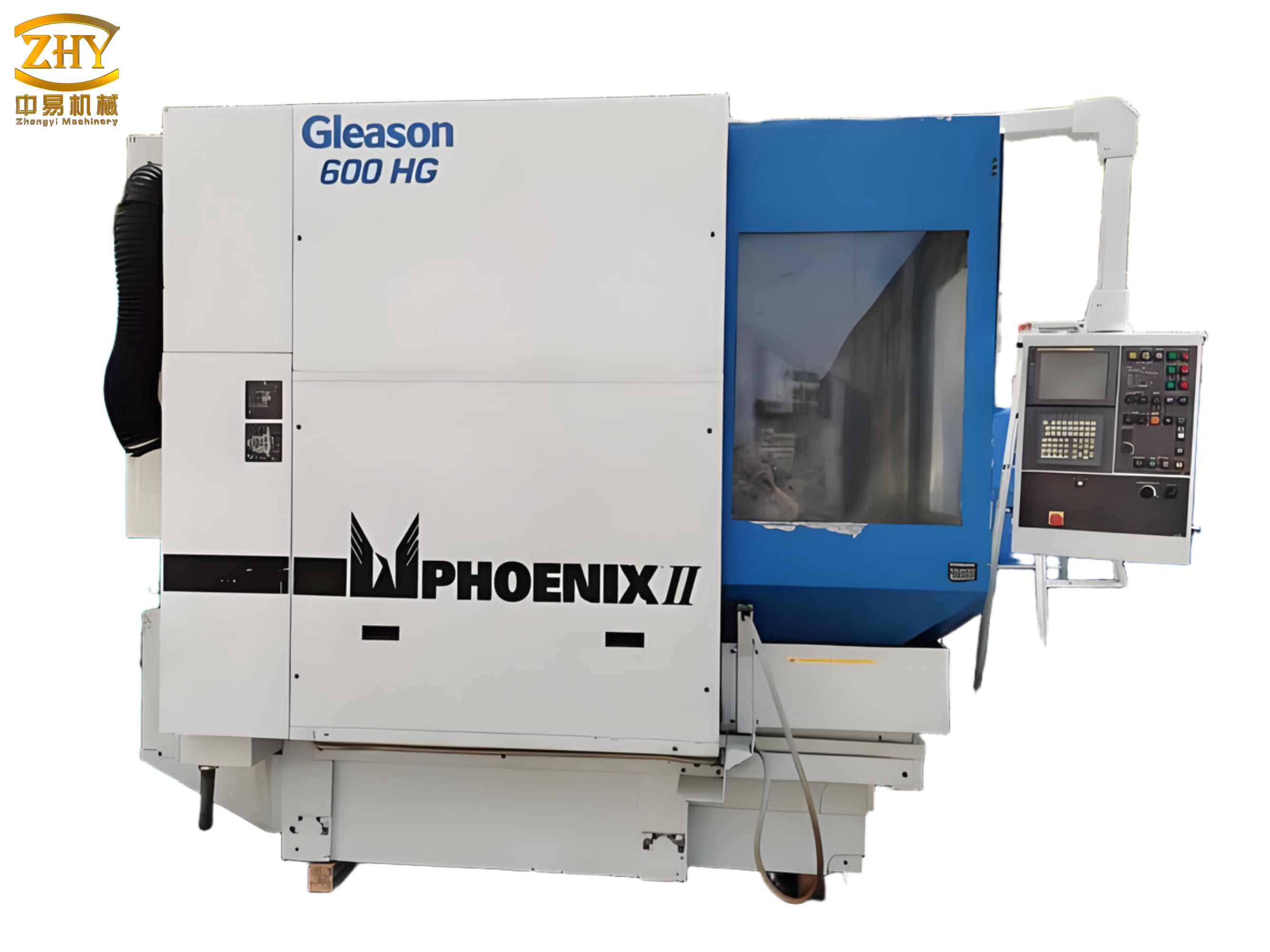
To implement this gear grinding technique on universal CNC machining centers, I analyzed three primary grinding schemes. The first scheme involves designing dedicated CNC grinding machines specifically for face gear grinding, which offers high precision and efficiency but incurs significant costs and development time. The second scheme modifies existing grinding machines by adding数控分度工作台s to facilitate the necessary motions, though this approach can lead to compatibility issues and complex adjustments. The third scheme, which I focus on, utilizes the inherent capabilities of universal five-axis CNC machining centers to achieve the required motions through equivalent kinematic transformations. This method avoids hardware modifications and leverages the machine’s versatility, making it ideal for gear profile grinding applications. The table below summarizes the key characteristics of these schemes:
| Grinding Scheme | Advantages | Disadvantages | Suitability for Gear Grinding |
|---|---|---|---|
| Dedicated CNC Grinding Machine | High precision and efficiency | High cost and long development cycle | Ideal for mass production |
| Modified Existing Grinding Machine | Reduced hardware requirements | Complex installation and compatibility issues | Suitable for specialized applications |
| Universal CNC Machining Center | Flexibility and no hardware changes | Complex programming required | Excellent for prototyping and small batches |
In the universal CNC machining center approach, the kinematic model involves five axes of motion: three linear axes (X, Y, Z) for the grinding wheel carriage and two rotational axes (B and C) for the worktable. The disc wheel’s high-speed rotation around its own axis serves as the primary cutting motion. The swinging motion of the disc wheel around the virtual generating gear’s axis is achieved through the coordinated movement of the grinding wheel carriage along the X, Y, and Z axes, combined with the rotation of the vertical worktable around the B-axis. The rotation of the gear blank is implemented via the horizontal worktable’s rotation around the C-axis. This five-axis联动 ensures the accurate simulation of the meshing process for gear profile grinding. The equivalent motion transformation between the grinding wheel carriage and the virtual generating gear is critical to avoid grinding cracks by maintaining optimal contact conditions. For a virtual generating gear rotation angle φ_s, the machine motion parameters are derived as follows: $$ \phi = \phi_s $$ $$ x = R \sqrt{2(1 – \cos \phi_s)} \times \sin \left( \gamma + \frac{\phi_s}{2} \right) $$ $$ z = R \sqrt{2(1 – \cos \phi_s)} \times \cos \left( \gamma + \frac{\phi_s}{2} \right) $$ where φ is the B-axis rotation angle, R is the distance from the virtual generating gear center O_s to the grinding wheel carriage rotation center O, γ is an intermediate calculation angle, and x and z are the coordinates of the grinding wheel carriage center. The angle γ is computed using: $$ \gamma = \arccos \left( \frac{E_w}{N} \right) $$ where E_w is the center distance between the disc wheel and the virtual generating gear, and N is the distance from the disc wheel center O_w to the B-axis. These equations form the basis for the数控插补运动 in gear grinding, ensuring precise tooth generation while minimizing the risk of grinding cracks through controlled motion paths.
The development of grinding cracks is a major concern in gear grinding processes, as they can lead to premature failure under load. In face gear grinding, thermal stresses from the grinding action and mechanical stresses from the wheel-workpiece interaction contribute to crack formation. To address this, I integrated cooling strategies and optimized grinding parameters into the CNC programming. For instance, the feed rate along the Y-axis for齿宽方向 grinding is adjusted based on the material properties and wheel characteristics. The table below outlines key parameters influencing grinding cracks in gear profile grinding:
| Parameter | Effect on Grinding Cracks | Optimal Range |
|---|---|---|
| Grinding Wheel Speed | High speeds increase thermal stress | 30-50 m/s |
| Feed Rate | High feeds raise mechanical stress | 0.1-0.5 mm/pass |
| Coolant Flow | Insufficient cooling promotes cracks | High-pressure mist or flood |
| Wheel Grain Size | Finer grains reduce crack initiation | 80-120 grit |
To validate the proposed gear grinding methodology, I conducted numerical simulations using VERICUT 7.0 software on a five-axis CNC machining center model. The simulation involved programming the kinematic transformations and grinding paths based on the derived equations. The virtual gear grinding process successfully generated the face gear tooth profile without geometric deviations, confirming the feasibility of the approach. The simulation also allowed for the analysis of stress distributions to predict and prevent grinding cracks. Following the simulation, practical grinding experiments were performed on a universal CNC machining center. The setup included a disc wheel with specifications matching the virtual generating gear, and a face gear blank made of hardened steel. The grinding process involved iterative passes along the tooth width, with real-time monitoring of temperatures and forces to mitigate grinding cracks. The experimental results demonstrated that the gear profile grinding achieved the desired accuracy, with surface roughness measurements below 0.8 μm and no visible cracks under microscopic inspection. This underscores the effectiveness of using universal CNC centers for precision gear grinding.
In conclusion, the integration of face gear grinding into universal CNC machining centers represents a significant advancement in gear manufacturing technology. By leveraging five-axis kinematics and precise motion control, this method enables efficient gear profile grinding while reducing the incidence of grinding cracks. The derived mathematical models and simulation tools provide a robust framework for implementing this approach in industrial settings. Future work will focus on optimizing grinding parameters for different materials and exploring adaptive control systems to further enhance quality in gear grinding applications.