
In my extensive experience within heavy industrial maintenance and advanced materials engineering, the premature failure of critical rotating components like gear shafts represents a significant and costly operational challenge. These components are the literal driving force behind countless processes in cement production, mining, power generation, and metallurgy. Subjected to immense torsional stresses, abrasive particulate matter, and often corrosive environments, the surfaces of gear shafts, particularly at bearing journals and gear meshing areas, are prone to severe wear, scoring, and material loss. Traditional repair methods often fall short, and complete replacement is prohibitively expensive and leads to extensive downtime. This reality has driven my research and practical focus towards advanced surface engineering solutions, specifically the application of supersonic thermal spraying (High-Velocity Oxygen Fuel, HVOF) with next-generation feedstock materials to restore and enhance the performance of worn gear shafts.
The core philosophy of this approach is not merely to patch a damaged surface, but to rebuild it with a material system superior to the original base metal. Among various coating materials, tungsten carbide-cobalt (WC-Co) cermets stand out due to their exceptional combination of hardness, fracture toughness, and wear resistance. The performance of a thermally sprayed WC-Co coating is intrinsically linked to the characteristics of the starting powder. Conventional micron-sized powders have served well, but they inherently limit the density, smoothness, and bond strength of the resulting coating. My work has therefore centered on utilizing ultrafine WC-Co composite powders, which offer the potential for coatings with dramatically improved microstructural homogeneity and mechanical properties. The challenge, of course, lies in successfully processing these fine powders through a thermal spray system and managing the phase stability of WC under the intense heat of the spray process. This document details the comprehensive methodology, from powder synthesis and preparation to coating deposition, characterization, and successful field application in repairing a large coal mill gear shaft.
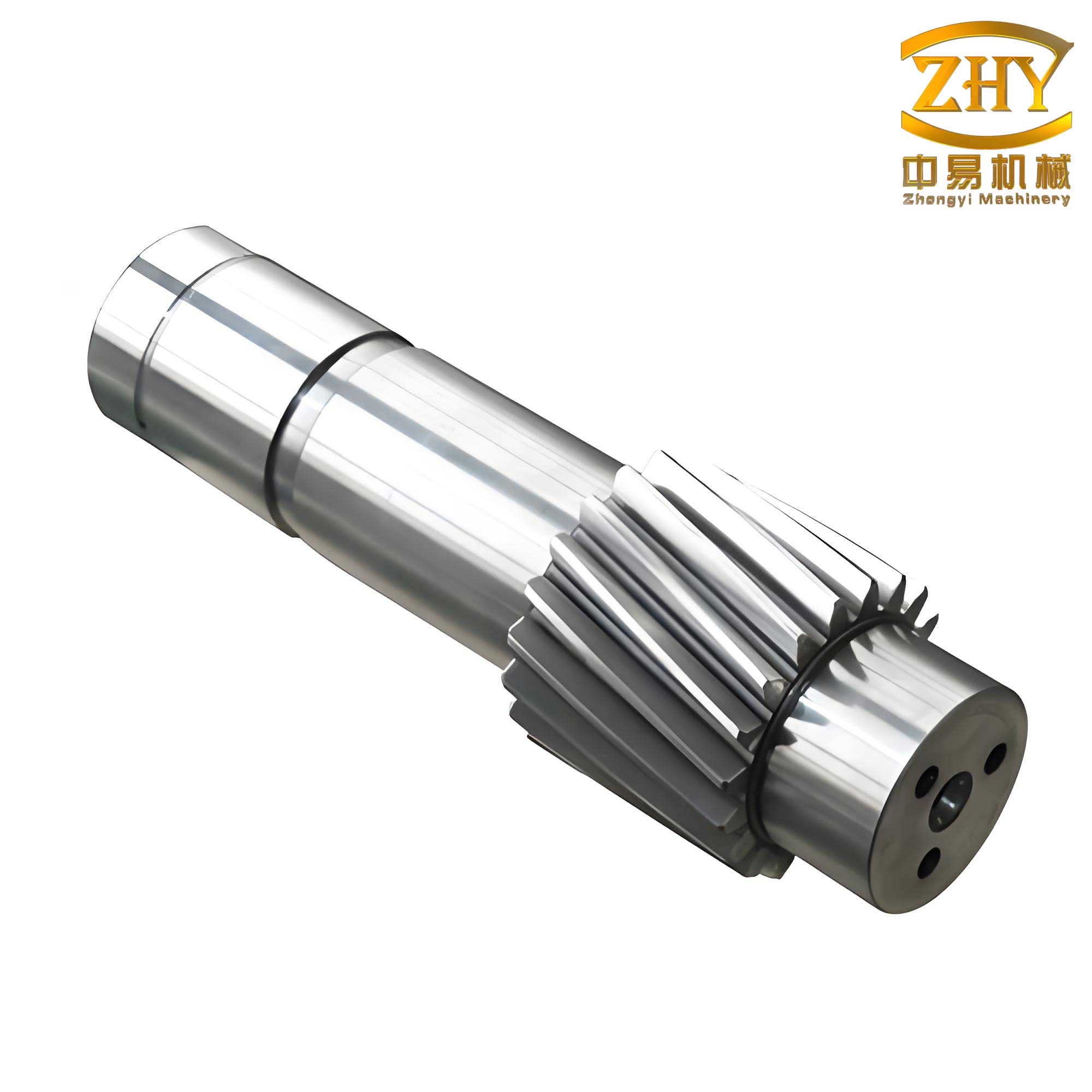
The Critical Role and Failure Modes of Industrial gear shafts
To appreciate the repair solution, one must first understand the component. A gear shaft is a sophisticated mechanical element that transmits power and torque from a driver (like an electric motor or turbine) to a driven machine (like a mill or compressor). It integrates bearing surfaces for rotational support and geared sections for torque transfer. In harsh environments like a coal grinding mill, the gear shaft is bombarded by fine, hard coal particles. Inadequate sealing or lubrication failure can allow these abrasives to ingress into bearing housings, leading to abrasive wear on the precision-machined journal surfaces. This wear manifests as scoring, grooving, and a loss of diameter, which in turn causes bearing misalignment, excessive vibration, heat generation, and ultimately, catastrophic seizure. The economic impact extends beyond the cost of the new gear shaft itself to include the monumental costs of disassembly, prolonged production stoppage, and lost revenue. Therefore, a repair technology must not only restore dimensions but also impart superior surface properties to prevent rapid recurrence of the failure.
Material Foundation: Ultrafine WC-Co Composite Powder
The efficacy of the HVOF repair process is fundamentally dictated by the quality of the feedstock powder. My approach utilizes WC-Co composite powder synthesized via an in-situ reaction process. This method involves the thermal processing of tungsten and cobalt oxide precursors, resulting in a powder where nano-scale WC grains are uniformly embedded within a Co binder matrix. The primary advantage is the ultrafine and homogeneous microstructure of the as-synthesized powder, with a typical average particle size on the order of 0.3 micrometers (300 nm). This ultrafine nature is the key to achieving a dense, pore-free coating structure after spraying.
The relationship between carbide size and coating properties can be conceptually framed. The hardness (H) and wear resistance often follow a Hall-Petch type relationship with the inverse square root of the carbide size (d), while toughness is influenced by the mean free path (λ) in the binder, which is related to the carbide size and volume fraction (VCo).
$$
H \approx H_0 + k_H \cdot d^{-1/2}
$$
$$
\lambda \propto \frac{d}{V_{Co}}
$$
Where \(H_0\) and \(k_H\) are material constants. An ultrafine carbide structure promotes higher hardness and allows for a favorable combination of strength and toughness when the binder phase is well-distributed.
Engineering the Feedstock: The Imperative of Spray Drying (Granulation)
While the ultrafine powder possesses ideal microstructural attributes, its physical form is unsuitable for thermal spray feeding. Particles at the sub-micron scale exhibit poor flowability due to high inter-particle friction and cohesive forces (e.g., van der Waals forces). Feeding such a powder directly into an HVOF gun would result in clogging, inconsistent feed rates, and ultimately, a failed coating process.
To overcome this, a spray drying (granulation) process is employed. The ultrafine WC-Co composite powder is mixed with a liquid carrier (often water or alcohol) and a temporary organic binder, such as Polyethylene Glycol (PEG), to form a stable slurry. This slurry is then atomized into fine droplets within a heated drying chamber. As the liquid rapidly evaporates, the solid particles are drawn together by capillary forces, forming spherical agglomerates held together by the binder. The process parameters—slurry solid loading, binder content, atomizer speed, and inlet temperature—are meticulously controlled to yield granules with the optimal characteristics for thermal spraying.
| Process Parameter | Typical Value / Description | Influence on Granule Properties | |
|---|---|---|---|
| Slurry Solid Loading | 40-60 wt.% | Higher loading increases production rate but can affect slurry viscosity and atomization. | |
| Binder (PEG) Content | 1-3 wt.% (of solids) | Provides green strength to granules; insufficient binder leads to fragile granules, excess can cause smoke during spraying. | |
| Atomizer Speed | ~15,000 – 25,000 RPM | Determines droplet size; higher speed produces smaller droplets and finer granules. | |
| Inlet Temperature | 180°C – 220°C | Drives evaporation rate; too high can cause crust formation, too low leads to incomplete drying. | |
| Resulting Granule Size | 20 – 50 μm | Ideal for free-flowing and efficient feeding in HVOF systems. | |
| Granule Morphology | Spherical, Dense Agglomerates | Ensures consistent aerodynamic behavior in the supersonic gas stream. |
This transformation is critical. It increases the effective particle size by nearly two orders of magnitude (from ~0.3 μm to ~30 μm) and imparts a spherical morphology. The resulting granulated powder exhibits excellent flowability, ensuring a steady, consistent feed into the heart of the HVOF torch, which is a prerequisite for depositing a uniform, high-quality coating on the damaged gear shaft.
The HVOF Deposition Process: Principles and Advantages for gear shaft Repair
High-Velocity Oxygen Fuel (HVOF) thermal spraying is the enabling technology that makes this repair strategy viable. The process involves combusting a fuel gas (e.g., propane, kerosene, hydrogen) with oxygen in a pressurized chamber. The hot, high-pressure gases are then accelerated to supersonic speeds through a de Laval (convergent-divergent) nozzle, creating a high-kinetic-energy jet. The granulated WC-Co powder is injected axially into this jet, where it is rapidly heated, accelerated, and propelled towards the prepared surface of the gear shaft.
The supremacy of HVOF for depositing carbide-based coatings like WC-Co, especially for critical gear shaft repairs, stems from its unique combination of thermal and kinetic energy transfer:
- High Particle Velocity (600-1000 m/s): The supersonic gas stream imparts tremendous kinetic energy to the powder particles. Upon impact with the gear shaft substrate, this kinetic energy is converted into intense plastic deformation and localized heating, forging a very dense coating with exceptional bond strength through mechanical interlocking and metallurgical bonding at the interface.
- Relatively Low Particle Temperature (~1500-2000°C): Compared to plasma spraying (>10,000°C), the HVOF flame temperature is significantly lower. This is a decisive advantage for WC-Co. Tungsten carbide is thermodynamically unstable at high temperatures in an oxidizing environment and can undergo severe decarburization:
$$ 2WC + O_2 \rightarrow W_2C + CO_2 $$
$$ 2WC \rightarrow W_2C + C $$
Further decomposition can lead to the formation of brittle, metallic tungsten phases (W) and complex eta phases (e.g., Co3W3C). The lower HVOF temperature, coupled with the extremely short particle residence time in the jet (on the order of milliseconds), dramatically minimizes these deleterious phase transformations, preserving the hard, tough WC phase in the final coating.
The bond strength (\(\sigma_b\)) can be related to particle impact parameters. A simplified model considers the kinetic energy (\(E_k\)) and thermal state of the particle at impact:
$$
E_k = \frac{1}{2} m_p v_p^2
$$
Where \(m_p\) is particle mass and \(v_p\) is particle velocity. A higher \(E_k\) promotes better flattening (splat formation) and intimate contact with the substrate and previously deposited layers, directly enhancing \(\sigma_b\) and coating density. The process parameters for repairing a gear shaft are finely tuned, as summarized below.
| Spray Parameter | Value / Setting | Functional Role |
|---|---|---|
| Fuel Gas | Propane (C3H8) | Combustible, provides controlled heat release. |
| Oxidizer | Oxygen (O2) | Supports combustion of fuel gas. |
| O2/Fuel Ratio | ~4.0 : 1.0 (volumetric) | Critical for achieving optimal flame temperature and velocity; affects particle heating. |
| Fuel Flow Rate | System-dependent (e.g., 50-80 SLPM*) | Controls total energy input to the system. |
| Spray Distance | 150 – 200 mm | Allows particles to fully accelerate and heat before impact; too short can overheat substrate, too long leads to excessive cooling. |
| Powder Feed Rate | 30 – 50 g/min | Balances deposition efficiency with proper in-flight particle heating; too high a rate results in unmelted particles. |
| Substrate Preparation | Grit-blasting with alumina, degreasing | Creates a clean, roughened surface to maximize mechanical anchoring of the coating. |
| *SLPM: Standard Liters Per Minute | ||
Coating Characterization: Microstructure, Phase Composition, and Mechanical Properties
Following the deposition of the WC-Co coating onto test specimens (typically made of 35SiMn steel, a common gear shaft material), a thorough characterization is conducted to validate the process and predict its performance in service.
Phase Analysis (XRD): X-ray Diffraction analysis reveals the critical influence of the HVOF process on phase stability. The granulated feedstock powder primarily shows sharp peaks for WC and Co. The HVOF coating spectrum, while dominated by WC, will show the presence of secondary phases like W2C and possibly small amounts of metallic W. The key metric is the relative intensity of these decarburization product peaks compared to the main WC peaks. A successful HVOF spray with ultrafine powder, as employed here, results in these secondary peaks being notably subdued, indicating that decarburization was effectively mitigated. This preservation of the WC phase is paramount for the coating’s hardness and wear resistance on the repaired gear shaft.
Microstructural Analysis (SEM): Scanning Electron Microscopy of the coating cross-section reveals several defining features crucial for gear shaft repair:
- Interface Integrity: A clean, well-bonded interface between the coating and the steel substrate is observed, with no evidence of delamination or large cracks. This indicates a strong mechanical bond, essential for withstanding the shear and compressive loads on a gear shaft.
- Coating Density: The microstructure is exceptionally dense, with minimal porosity (typically less than 2%). The individual “splats”—flattened particles—are intimately bonded. Fine, sub-micron pores may be present but are isolated and not interconnected.
- Carbide Distribution: The original ultrafine WC grains undergo some coarsening due to dissolution-reprecipitation in the molten cobalt binder during flight and impact. The resulting carbide particles, typically in the 1-3 μm range, are uniformly dispersed within the cobalt matrix. This homogeneous dispersion is key to uniform wear resistance across the entire coated surface of the gear shaft journal.
Mechanical and Tribological Properties: The ultimate validation lies in measuring the coating’s performance metrics. For a repaired gear shaft bearing surface, hardness and abrasive wear resistance are paramount.
- Microhardness: Vickers hardness (HV0.3) testing on the polished coating surface yields high values, typically in the range of 1050-1150 HV0.3. This is significantly harder than the base steel (~250-300 HV) and even harder than conventional hard chrome plating (~700 HV), a common but less environmentally friendly alternative for shaft repair.
- Abrasive Wear Resistance: A standardized dry sand/rubber wheel test (e.g., ASTM G65) is used to evaluate wear performance. The volume or mass loss of the WC-Co coating under a controlled abrasive load is measured and compared to a baseline, such as hard chrome plate. The results consistently show that the HVOF WC-Co coating exhibits wear rates that are a factor of 2 to 5 times lower than hard chrome. This translates directly into a dramatically extended service life for the repaired gear shaft.
The wear volume (V) loss often correlates with material properties and test parameters via a modified Archard’s equation. For abrasive wear, it can be expressed as:
$$
V = K_{ab} \cdot \frac{N \cdot L}{H}
$$
Where:
- \(V\) is the wear volume,
- \(K_{ab}\) is the abrasive wear coefficient (material-dependent),
- \(N\) is the normal load,
- \(L\) is the sliding distance,
- \(H\) is the material hardness.
The high hardness (H) of the WC-Co coating directly reduces the wear volume (V). Furthermore, the excellent fracture toughness of the WC-Co system results in a lower wear coefficient (\(K_{ab}\)) compared to brittle alternatives, as it resists crack propagation and grain pull-out during abrasion.
| Property | HVOF WC-Co Coating (Ultrafine Powder) | Conventional Hard Chrome Electroplate | Implication for gear shaft Service |
|---|---|---|---|
| Vickers Hardness (HV0.3) | 1050 – 1150 | 650 – 750 | Superior resistance to indentation and abrasive cutting. |
| Abrasive Wear Rate* | 1.0 (Baseline) | 2.5 – 5.0 | 2.5x to 5x longer life against abrasive particles like coal dust. |
| Coating/Substrate Bond Strength | >70 MPa (Mechanical + Metallurgical) | ~35-50 MPa (Metallurgical, can have hydrogen embrittlement) | Greater reliability under heavy torsional and bending loads. |
| Maximum Service Temperature | ~540°C (Oxidation limit of Co binder) | ~425°C (Risk of tempering and softening) | Better performance in high-temperature mill environments. |
| Environmental & Safety | Dry process, no hexavalent chromium | Wet process, uses toxic Cr(VI) compounds | HVOF is a more sustainable and safer manufacturing process. |
| *Relative wear rate; lower is better. HVOF WC-Co set as baseline 1.0. | |||
The Field Repair Protocol for a Coal Mill gear shaft
The transition from laboratory validation to field repair is a systematic engineering operation. The case of a large coal mill gear shaft with scored and worn bearing journals illustrates the complete procedure:
- Assessment & Dimensional Analysis: The worn gear shaft is removed and meticulously cleaned. Precise measurements are taken along the length of the damaged journals to map the extent of material loss and out-of-roundness.
- Surface Preparation: This is the most critical step for ensuring coating adhesion. The worn areas are machined or ground to create a uniform, slightly undersized geometry, ensuring sufficient space for the coating thickness (typically 0.25 to 0.50 mm per side). The surface is then grit-blasted using angular alumina grit to achieve a sharp, clean anchor profile (Sa > 5 μm). Immediately after blasting, the area is cleaned with compressed air and solvent to remove all dust and oil.
- Masking & Preheating: Adjacent areas not to be coated (e.g., gear teeth, undamaged sections) are masked with high-temperature tape or shields. The gear shaft is often lightly preheated (80-120°C) using a torch or induction heater to remove any residual moisture and reduce thermal shock during spraying.
- On-Site HVOF Deposition: The HVOF spray system is set up at the repair facility. Using the optimized parameters (as in Table 2), the technician applies the granulated WC-Co powder in multiple, controlled passes, rotating the gear shaft to ensure uniform coverage. The process is monitored for consistent gun trajectory, stand-off distance, and temperature to prevent overheating of the substrate, which could compromise the steel’s properties.
- Finishing &> Quality Control: After coating, the gear shaft is allowed to cool slowly. The as-sprayed coating is then precision ground and honed back to the original OEM drawing specifications for diameter, roundness, and surface finish (Ra < 0.4 μm is typical for a bearing journal). Dimensional checks and non-destructive testing (like magnetic particle inspection for cracks) are performed.
- Reassembly & Commissioning: The repaired gear shaft is reassembled with new bearings and seals. Upon commissioning, the machine typically shows reduced vibration and stable bearing temperatures, confirming the restoration of proper running clearance and alignment.
The success of this repair is quantified not just in immediate restart, but in extended operational life. Field reports from such repairs indicate that the HVOF-coated gear shafts consistently outlast the original component, often achieving service lives that are multiples of the original, with no recurrence of wear at the coated journals. The return on investment is substantial, considering the alternative cost of a new gear shaft, associated machining, and weeks of production loss.
Conclusion and Future Perspectives
The integration of advanced ultrafine WC-Co composite powders with the supersonic thermal spray (HVOF) process represents a paradigm shift in the repair and life-extension of high-value industrial components like gear shafts. This methodology successfully addresses the core challenges of abrasive wear and surface degradation by creating a metallurgically sound, dense, and exceptionally wear-resistant coating directly onto the damaged substrate. The technical advantages are clear: minimal decarburization of the hard phase, superior bond strength, and mechanical properties that surpass traditional repair techniques like electroplating.
From a practical standpoint, the ability to perform this repair on-site or in a specialized workshop without the need for full component replacement delivers immense economic value. It transforms a catastrophic failure requiring a long lead-time, expensive forging into a manageable, scheduled maintenance operation. For industries reliant on heavy machinery, this technology is a cornerstone of modern, cost-effective asset management and sustainable manufacturing practices.
Looking forward, research continues to push the boundaries. The exploration of even finer, nano-structured powders, alternative binder phases (like Co-Cr alloys or Ni-based binders for improved corrosion resistance), and hybrid processes that combine HVOF with laser re-melting for ultimate density are ongoing. Furthermore, the development of advanced in-process monitoring and robotic spray control will ensure even greater consistency and quality in the repair of critical, high-precision components like turbine gear shafts and marine propulsion gear shafts. The fundamental principle, however, remains: by engineering the surface, we can preserve and enhance the core, granting vital machinery like gear shafts a new and improved life far beyond its original design expectations.