
In the realm of power transmission, spur gears are among the most prevalent and fundamental components. Their simple geometry and ease of manufacturing make them a staple in countless industrial applications, from automotive systems to heavy machinery. However, the theoretical perfect meshing of ideal spur gears is often disrupted in real-world scenarios. Factors such as manufacturing inaccuracies, assembly errors, and elastic deformations under load can lead to edge contacts, stress concentrations, and sudden changes in meshing stiffness. These phenomena manifest as increased vibration, elevated noise levels, and accelerated fatigue failure, ultimately compromising the performance, reliability, and lifespan of the gear drive system.
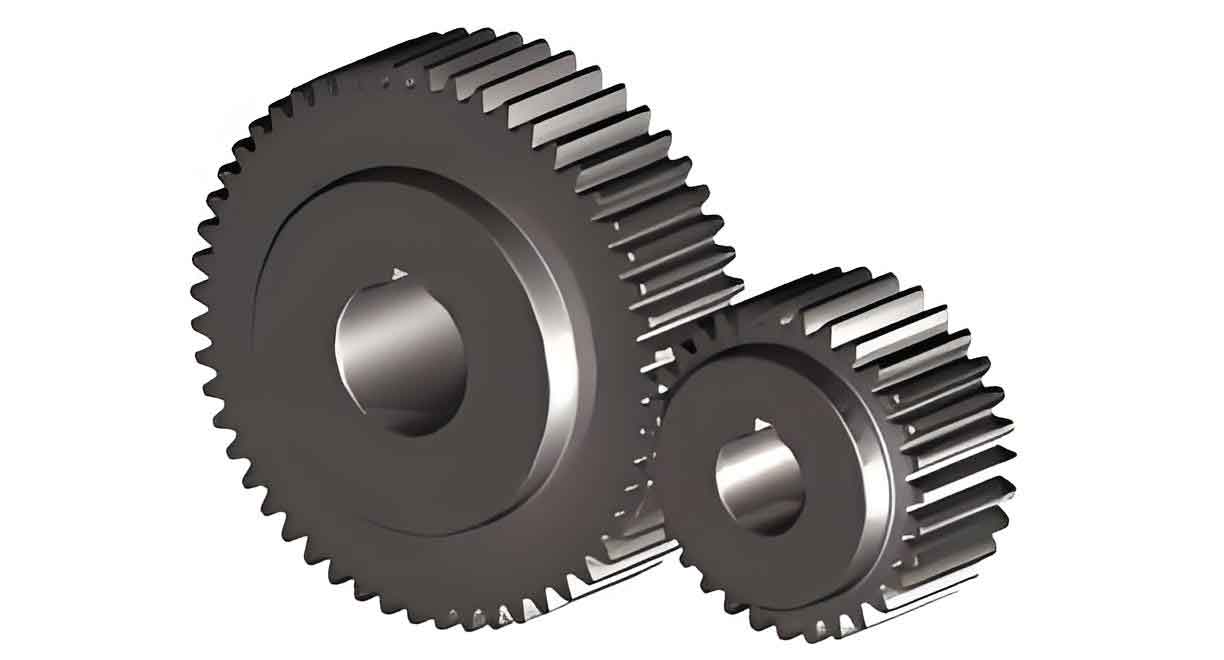
To mitigate these adverse effects, gear modification has been established as a critical design practice. The core principle involves intentionally and slightly deviating the tooth surface geometry from its theoretical, conjugate form. This proactive alteration aims to compensate for expected deformations and errors, ensuring a smoother load transition between mating teeth throughout the meshing cycle. Traditional modification strategies for spur gears typically focus on two principal directions: profile modification and lead modification. Profile modification alters the tooth shape in the cross-sectional plane perpendicular to the gear axis, often by removing a small amount of material near the tip and/or root of the tooth. Lead modification changes the tooth shape along its face width, parallel to the gear axis, commonly introducing a slight crown or taper. A combination of both, known as comprehensive or compound modification, is frequently employed to address multi-dimensional misalignments and deformations.
Conventional methods define these modifications using standard geometric functions. For profile modification, linear, parabolic, or circular arcs are common. For lead modification, linear or parabolic crowning is widely used. While effective, these traditional approaches possess inherent limitations. Firstly, the diversity of functions (linear, parabolic, circular, etc.) lacks a unified mathematical model, making it cumbersome for designers to switch between or optimize different modification types. Secondly, and more critically, these simple functions often fail to provide high-order continuity at the transition points—where the modified region meets the unmodified, active flank. For instance, a linear modification results in a discontinuity in the first derivative (slope), while a parabolic modification leads to a discontinuity in the second derivative (curvature). These discontinuities can themselves be sources of vibration excitation, undermining the very goal of the modification process.
To overcome these limitations, this work proposes a novel, generalized, and highly flexible methodology for the design of modified tooth surfaces for spur gears: the Double Spline Modification. This approach abandons the use of simple, predefined functions. Instead, it utilizes spline curves—specifically Bézier curves in this initial formulation—to define both the profile and the lead lines of the modified tooth surface. The complete three-dimensional tooth surface is then generated by sweeping the profile spline curve along the trajectory defined by the lead spline curve. This paradigm offers transformative advantages. It provides a universal geometric model, as traditional linear or parabolic modifications can be represented as specific cases of the spline definition. It introduces a significantly larger number of controllable design variables (the coordinates of spline control points), granting the designer unparalleled flexibility in sculpting the tooth surface to achieve optimal contact patterns under specific loading conditions. Most importantly, by employing spline curves of sufficient degree (e.g., cubic or quartic), it ensures C2 continuity (continuous second derivative) across the entire active tooth surface, eliminating detrimental geometric discontinuities. The following sections detail the mathematical formulation of this method, demonstrate its superiority over traditional compound modification through Finite Element Analysis (FEA), and validate its practical feasibility through actual manufacturing and measurement.
Mathematical Modeling of the Double Spline Modified Tooth Surface
The generation of a tooth surface, whether standard or modified, can be conceptually understood through the manufacturing process. For the case of form grinding, a grinding wheel with a specific cross-sectional profile moves relative to the gear blank along a defined path. The envelope of successive positions of the grinding wheel profile generates the tooth surface. Therefore, modifying the tooth surface equates to strategically altering either the grinding wheel’s profile, its path of motion, or both. The Double Spline Modification method precisely controls these two elements using spline curves.
1. Baseline: Standard Spur Gear Tooth Profile
To establish a reference, we first derive the coordinates of a standard, unmodified involute tooth flank. This is efficiently done using the gear generation principle via a rack cutter. The rack cutter profile consists of several segments: a straight-line tip, a tip fillet arc, and the straight-sided flank. The coordinates of a point on the gear tooth surface, denoted in a gear-fixed coordinate system \( S_g (x_g, y_g, z_g) \), are obtained by solving the meshing equation between the rack cutter and the gear. For a point on the involute portion of the flank, the surface equation \( \mathbf{r}_{CD}^g \) and its unit normal vector \( \mathbf{n}_{CD}^g \) can be expressed parametrically. Let \( l_3 \) be the parameter along the rack cutter flank. The surface point and normal are given by:
$$
\begin{aligned}
\mathbf{r}_{CD}^g(l_3) &= \begin{bmatrix}
l_3 \cos\varphi_3 + ( (l_3 – p/4)\cot\alpha + x )\sin\varphi_3 – r_{pg}(\varphi_3 \cos\varphi_3 – \sin\varphi_3) \\
-l_3 \sin\varphi_3 + ( (l_3 – p/4)\cot\alpha + x )\cos\varphi_3 + r_{pg}(\varphi_3 \sin\varphi_3 + \cos\varphi_3) \\
0
\end{bmatrix}, \\
\mathbf{n}_{CD}^g(l_3) &= \begin{bmatrix}
-\cos(\alpha + \varphi_3) \\
\sin(\alpha + \varphi_3) \\
0
\end{bmatrix}.
\end{aligned}
$$
Here, \( \alpha \) is the pressure angle, \( p \) is the circular pitch, \( x \) is the addendum modification coefficient, \( r_{pg} \) is the pitch circle radius, and \( \varphi_3 \) is the roll angle, a function of \( l_3 \). This standard profile serves as the foundation upon which the spline-based modification is applied.
2. Defining the Profile Spline Curve
The core idea is to define the modification amount (deviation from the standard profile) not by a single function like a parabola, but by a spline curve that offers piecewise control. The procedure is as follows:
- Sampling: A set of \( N_p \) sample points (e.g., \( N_p = 7 \)) is selected along the standard tooth profile’s height, from the root to the tip. Their positions are defined by their radial distance \( r_h \) from the gear axis.
- Offset Definition: A design offset value \( \Delta p_i \) is assigned to each sample point \( P_i \). This offset is applied along the local unit normal vector \( \mathbf{n}_{CD}^g \) of the standard profile at that point. For a standard modification, points near the root and pitch line might have zero offset, while points toward the tip have a positive offset (material removal).
- Spline Interpolation: A spline curve is used to interpolate or fit the relationship between the radial position \( r_h \) and the offset amount \( \Delta p \) for all points along the profile. This creates a continuous offset function \( \Delta p(r_h) \).
In this work, cubic Bézier curves are employed for their simplicity and sufficient continuity. A Bézier curve of degree \( n \) is defined by \( n+1 \) control points \( \mathbf{b}_j \):
$$
\mathbf{p}(t) = \sum_{j=0}^{n} \mathbf{b}_j B_{j,n}(t), \quad t \in [0, 1],
$$
where \( B_{j,n}(t) = \binom{n}{j} t^j (1-t)^{n-j} \) are the Bernstein basis polynomials. The matrix form for a cubic Bézier (n=3) is:
$$
\mathbf{p}(t) = \begin{bmatrix} \mathbf{b}_0 & \mathbf{b}_1 & \mathbf{b}_2 & \mathbf{b}_3 \end{bmatrix} \mathbf{M}_3 \begin{bmatrix} 1 \\ t \\ t^2 \\ t^3 \end{bmatrix}, \quad \mathbf{M}_3 = \begin{bmatrix}
1 & 0 & 0 & 0 \\
-3 & 3 & 0 & 0 \\
3 & -6 & 3 & 0 \\
-1 & 3 & -3 & 1
\end{bmatrix}.
$$
The profile is typically divided into two segments (e.g., from root to a “start of modification” point \( r_s \), and from \( r_s \) to the tip) to allow independent control. The control points for the offset spline are constructed using the \( (r_h, \Delta p) \) pairs of selected sample points. The resulting modified profile point \( \mathbf{C}_p \) is calculated from the standard point \( \mathbf{r}_{CD}^g \) as:
$$
\mathbf{C}_p(r_h) = \begin{bmatrix} x_p \\ y_p \\ 0 \end{bmatrix} = \begin{bmatrix} x_g \mp \Delta p(r_h) \cdot n_{CD,gx} \\ y_g – \Delta p(r_h) \cdot n_{CD,gy} \\ 0 \end{bmatrix},
$$
where \( (x_g, y_g) \) are coordinates from \( \mathbf{r}_{CD}^g \), \( (n_{CD,gx}, n_{CD,gy}) \) are components of \( \mathbf{n}_{CD}^g \), and the \( \mp \) sign corresponds to the left/right flank.
3. Defining the Lead Spline Curve
A conceptually identical process is applied along the face width direction (\( z_g \)-axis). The goal is to define a crowning or taper modification that varies smoothly along the tooth.
- Sampling: A set of \( N_l \) sample points (e.g., \( N_l = 7 \)) is selected along the face width, from one end (\( z_g=0 \)) to the other (\( z_g=F \), where \( F \) is the face width).
- Offset Definition: A design offset value \( \Delta l_j \) is assigned to each sample point \( Q_j \). This offset is applied along the \( y_g \)-axis (radially inwards/outwards).
- Spline Interpolation: A spline curve (again, cubic Bézier) interpolates the relationship between the axial position \( f \) (or \( z_g \)) and the lead offset amount \( \Delta l \), creating a continuous function \( \Delta l(f) \).
The modified lead line point \( \mathbf{C}_l \) is defined simply as:
$$
\mathbf{C}_l(f) = \begin{bmatrix} 0 \\ y_l \\ z_l \end{bmatrix} = \begin{bmatrix} 0 \\ \pm \Delta l(f) \\ f \end{bmatrix},
$$
where the \( \pm \) sign determines the direction of crowning.
| Sample Point | Radial Location \( r_h \) | Profile Offset \( \Delta p \) | Note |
|---|---|---|---|
| P1 | \( r_{h1} \) (near root) | \( \Delta p_1 \) (e.g., 0) | Defines start of modification zone. |
| P2 | \( r_{h2} \) | \( \Delta p_2 \) | Intermediate control point. |
| P3 | \( r_{h3} \) | \( \Delta p_3 \) | Intermediate control point. |
| P4 | \( r_{h4} = r_s \) | \( \Delta p_4 \) (e.g., 0) | Point corresponding to traditional modification start. |
| P5 | \( r_{h5} \) | \( \Delta p_5 \) | Key control point influencing curve shape. |
| P6 | \( r_{h6} \) | \( \Delta p_6 \) | Primary optimization variable. |
| P7 | \( r_{h7} \) (tip) | \( \Delta p_7 \) | Maximum profile modification amount. |
4. Constructing the 3D Tooth Surface
The complete double spline modified tooth surface \( \mathbf{r}(r_h, f) \) is generated by a sweep operation: the profile spline curve \( \mathbf{C}_p(r_h) \) is translated along the path defined by the lead spline curve \( \mathbf{C}_l(f) \). Since the profile modification is defined in the \( x_g y_g \)-plane and the lead modification in the \( y_g z_g \)-plane, and both are applied as offsets along \( y_g \), the resulting surface equation is elegantly additive in the \( y_g \)-coordinate:
$$
\mathbf{r}(r_h, f) = \begin{bmatrix} x_p(r_h) \\ y_p(r_h) + y_l(f) \\ z_l(f) \end{bmatrix} = \begin{bmatrix}
x_g(r_h) \mp \Delta p(r_h) \cdot n_{CD,gx}(r_h) \\
y_g(r_h) – \Delta p(r_h) \cdot n_{CD,gy}(r_h) \pm \Delta l(f) \\
f
\end{bmatrix}.
$$
This parametric equation defines every point on the modified flank of the spur gear. The surface is guaranteed to be smooth, with its continuity (C1, C2) dictated by the degree of the spline curves used. Using cubic Bézier segments ensures C2 continuity within each segment, a significant improvement over traditional methods.
Performance Evaluation: FEA Comparison with Traditional Modification
To substantiate the advantages of the double spline modification for spur gears, a comparative Finite Element Analysis (FEA) study was conducted. A representative spur gear pair was analyzed under load, comparing the proposed method against a well-established traditional compound modification—specifically, a combination of parabolic profile modification and parabolic lead crowning.
1. Gear Data and Modification Parameters
The basic geometry of the spur gear pair is summarized in Table 2. The traditional modification values were chosen based on standard design practices for the given load and size.
| Parameter | Pinion | Gear |
|---|---|---|
| Number of Teeth, \( z \) | 29 | 49 |
| Module, \( m_n \) (mm) | 3 | 3 |
| Pressure Angle, \( \alpha \) | 25° | 25° |
| Face Width, \( F \) (mm) | 20 | 20 |
| Traditional Modification (Max.) | 29.2 μm (Profile: 21.4 μm, Lead: 7.8 μm) | 29.2 μm (Profile: 21.4 μm, Lead: 7.8 μm) |
| Double Spline Control | Profile: \(\Delta p_4=0\) at \(r_s\), \(\Delta p_7=21.4 \mu m\). Lead: 7.8 μm crown. | Profile: \(\Delta p_4=0\) at \(r_s\), \(\Delta p_7=21.4 \mu m\). Lead: 7.8 μm crown. |
The key to the double spline design’s flexibility lies in the control points \( P5 \) and \( P6 \). For a direct comparison, the double spline model can be configured to exactly replicate the traditional parabolic profile by appropriately choosing \( \Delta p_5 \) and \( \Delta p_6 \). This configuration serves as the baseline for comparison (denoted as the “traditional equivalent” double spline model). The superiority of the method is then demonstrated by varying a single control point—specifically, the offset \( \Delta p_6 \) of point \( P6 \)—to explore designs that are inaccessible to the fixed parabolic function. Three cases were analyzed: one matching the parabola (\( \Delta p_6 = 9.5 \mu m \)), one with a smaller offset (\( \Delta p_6 = 5 \mu m \)), and one with a larger offset (\( \Delta p_6 = 15 \mu m \)).
2. Analysis of Results: Transmission Error and Mesh Stiffness
Static transmission error (STE) and mesh stiffness are primary indicators of the dynamic excitation potential of a gear pair. A smoother STE curve and a more constant mesh stiffness lead to lower vibration and noise.
Transmission Error: The FEA-calculated static transmission error curves for the four models are compared. The curve for the \( \Delta p_6 = 15 \mu m \) double spline design is markedly smoother and has a lower peak-to-peak amplitude than the traditional equivalent (\( \Delta p_6 = 9.5 \mu m \)) curve. The curve for \( \Delta p_6 = 5 \mu m \) shows a larger amplitude and less favorable shape. This demonstrates that by adjusting just one control variable (\( \Delta p_6 \)), a designer can achieve a superior load distribution that minimizes kinematic error fluctuations during the meshing cycle of the spur gears. Furthermore, a spectral analysis of the STE was performed. The amplitude of the dominant frequency components (1st and 2nd mesh harmonics) is significantly reduced for the optimized double spline design (\( \Delta p_6 = 15 \mu m \)) compared to the traditional design, as quantified in Table 3.
| Harmonic Order | Double Spline, \(\Delta p_6 = 5 \mu m\) (μm) | Double Spline, \(\Delta p_6 = 9.5 \mu m\) (Traditional Eq.) (μm) | Double Spline, \(\Delta p_6 = 15 \mu m\) (Optimized) (μm) |
|---|---|---|---|
| 1st (1x Mesh Freq.) | 0.926 | 0.451 | 0.336 |
| 2nd (2x Mesh Freq.) | 0.840 | 0.613 | 0.311 |
| 3rd | 0.255 | 0.270 | 0.227 |
Mesh Stiffness: The variation of the gear mesh stiffness over one complete meshing cycle was also extracted from the FEA results. The mesh stiffness curve for the optimized double spline design (\( \Delta p_6 = 15 \mu m \)) exhibits a smaller peak-to-peak variation and a more gradual transition compared to the curve for the traditional equivalent design. A more constant mesh stiffness directly reduces the oscillating force component that excites the gearbox structure, leading to lower vibration levels in spur gear transmissions.
These results conclusively show that the double spline modification method is not merely an alternative representation but a genuinely superior design tool. It subsumes traditional methods as a subset while providing a expanded design space. By leveraging additional control points, designers can fine-tune the tooth surface geometry of spur gears to achieve flatter transmission error curves, reduced STE harmonics, and smoother mesh stiffness variations—all contributing to enhanced dynamic performance.
Manufacturing Feasibility and Experimental Validation
A critical question for any novel gear design method is its practical manufacturability. To validate the double spline modification approach, a physical gear pair based on the optimized design parameters (\( \Delta p_6 = 15 \mu m \)) was manufactured. A modern CNC gear grinding machine was employed. The essential requirement for machining a double spline modified surface is the CNC’s ability to follow arbitrary tool paths and/or employ a dressing system that can create the corresponding tool profile. The proposed mathematical model provides a precise point cloud or a spline definition that can be directly imported into the machine’s control system or used to generate the dressing path for the grinding wheel.
The grinding process was successfully completed, producing the physical spur gears. To verify the accuracy of the manufactured tooth geometry against the designed double spline model, the gears were inspected on a precision gear measuring center. The inspection report focused on profile deviation (tooth form error). Key results are summarized in Table 4.
| Error Type | Pinion (μm) | Gear (μm) | Accuracy Grade (GB/T 10095.1) |
|---|---|---|---|
| Profile Slope Deviation (\( f_{H\alpha} \)) | 3.4 | 1.3 | |
| Total Profile Deviation (\( F_{\alpha} \)) | 5.0 | 2.9 | |
| Profile Form Deviation (\( f_{f\alpha} \)) | 3.3 | 2.5 | |
| Overall Assessment | Grade 4 / Grade 3 | ||
The measured errors are very small, with the gear achieving a Grade 3 precision level and the pinion achieving Grade 4. This high level of manufacturing accuracy confirms that the complex geometry defined by the double spline modification is perfectly feasible to produce with state-of-the-art CNC gear grinding technology. The measured tooth form closely matches the designed intent, thereby validating the entire chain from mathematical modeling to physical realization for high-performance spur gears.
Conclusion
This article has presented a comprehensive framework for the advanced design of spur gear tooth surfaces using a Double Spline Modification methodology. The method fundamentally rethinks gear modification by employing spline curves—universal, flexible, and high-order continuous geometric entities—to define both the tooth profile and lead line deviations. The associated mathematical model provides a unified description that encompasses traditional modification types as special cases while offering a vastly richer design space through numerous controllable parameters (spline control point offsets).
The finite element analysis comparison between the proposed double spline modification and a conventional parabolic compound modification for a pair of spur gears demonstrated clear and quantifiable advantages. By adjusting a single control point in the profile spline, a design was achieved that exhibited a smoother static transmission error curve with reduced peak-to-peak amplitude, significantly lower amplitudes of critical frequency components in the STE spectrum, and a more favorable, less variable mesh stiffness characteristic. These attributes are directly linked to lower dynamic excitation, reduced vibration, and quieter operation of spur gear transmissions.
Finally, the practical viability of designing and manufacturing such optimized tooth geometries was conclusively proven. A spur gear pair based on the optimized double spline design was successfully ground on a CNC machine and measured to high precision standards (Grade 3/4). This closes the loop from theoretical design to functional component.
In summary, the Double Spline Modification method represents a significant step forward in the design of high-performance spur gears. It moves beyond the constraints of simple geometric modifications, providing engineers with a powerful, flexible, and precise tool to tailor tooth surface geometry for optimal static and dynamic performance under specific application conditions. The method’s inherent continuity, flexibility, and proven manufacturability make it a compelling advanced technology for the next generation of quiet, efficient, and reliable gear drives.