
As a participant deeply engaged in the field of tribology, I had the privilege of attending the inaugural ceremony of the Shenyang Tribology Society, which was officially established at the City Science Hall. During this foundational event, we adopted the working rules of the Shenyang Mechanical Engineering Society’s Tribology Division and elected the first理事会 (council) of the society. Three specialized professional groups were formed: one focusing on fluid lubrication and the transformation process of friction states, another dedicated to wear mechanisms, wear resistance, friction reduction, drag reduction, and anti-wear processes, and the third covering lubricating materials and lubricating technology. Two committees — the Organization Committee and the Academic Committee — were established alongside a Technical Consulting Service Department. The event also hosted the first annual academic conference, where a large number of papers were presented, most of which originated from practical industrial applications and successfully addressed key production challenges, yielding measurable economic benefits. The conference was well attended, with many stimulating discussions.
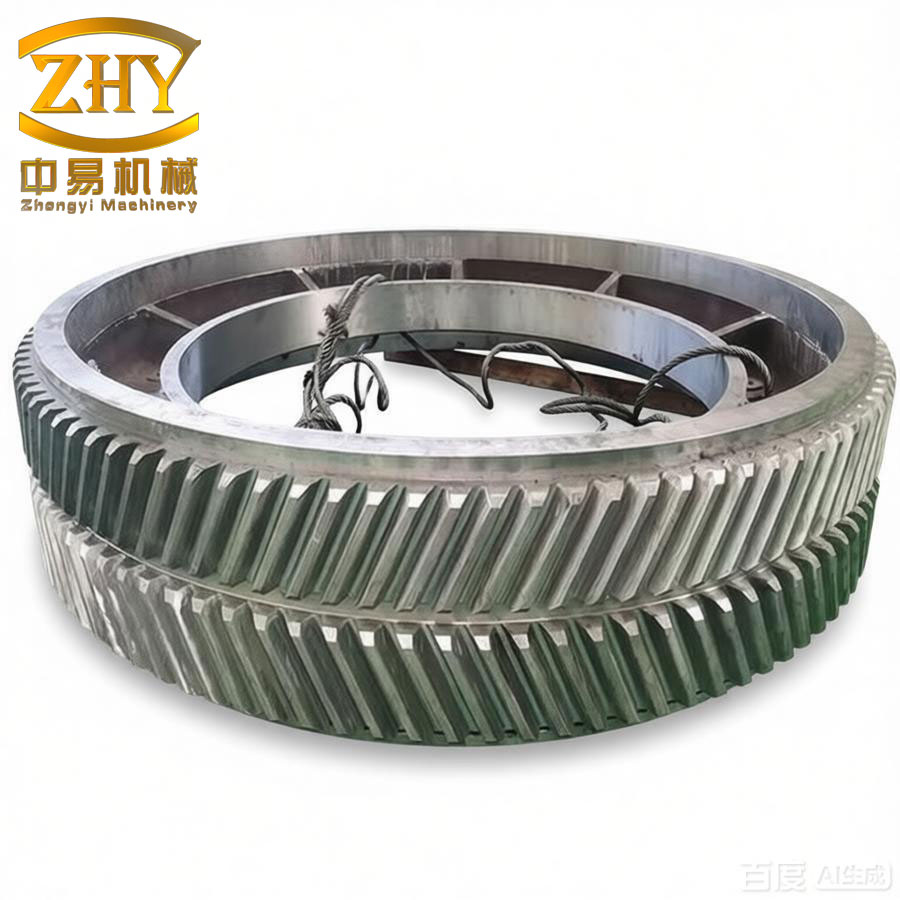
The achievements of this gathering highlighted the growing importance of tribology in modern machinery, especially for critical components such as herringbone gears, which are widely used in heavy-duty rolling mills. The complex geometry and high loading conditions of herringbone gears demand advanced lubrication and sealing solutions. Below, I summarize the key outcomes of the conference in a structured format.
| Item | Details |
|---|---|
| Society Name | Shenyang Tribology Society (affiliated with Shenyang Mechanical Engineering Society) |
| Date | Established in the spring of the year (exact date recorded) |
| Location | City Science Hall, Shenyang |
| Professional Groups Formed | ① Fluid Lubrication & Friction State Transformation; ② Wear Mechanisms, Wear Resistance, Anti-Wear Processes; ③ Lubricating Materials & Technology |
| Committees | Organization Committee; Academic Committee |
| Service Department | Technical Consulting Service |
| Papers Presented | Numerous, mostly applied research from production lines, including studies on herringbone gears lubrication |
| Economic Impact | Significant savings reported from solving leakage and wear issues |
In addition to the conference, I also participated in the second National Tribology Teacher Training Program, organized by the Chinese Mechanical Engineering Society’s Tribology Institute, which began on March 1st at Wuhan Institute of Technology. The program enrolled formal students selected from mechanical engineering societies across many provinces and cities, along with local auditors from the Wuhan area. Most participants were university instructors or research engineers specializing in tribology. The curriculum was comprehensive, covering:
- Surface morphology of metals
- Surface contact of metals
- Friction and wear theories
- Lubrication theory
- Lubricating materials
- Lubrication methods and systems for typical components, especially herringbone gears
- Metal wear test methods
Teaching methods included systematic lectures, on-site visits, and thematic discussions. The duration of the training was several days, during which we also exchanged experiences in tribology education, research, and enterprise management. The course content was rich and directly applicable to industrial problems such as the sealing of herringbone gears in rolling mills.
The following table summarizes the key topics and their relevance to herringbone gears.
| Topic | Relevance to Herringbone Gears | Key Equation / Principle |
|---|---|---|
| Surface Contact Mechanics | Contact pressure and deformation at gear tooth flanks | $$ p = \frac{2F_n}{\pi b L} \quad \text{(Hertzian contact)} $$ |
| Friction and Wear | Abrasive and adhesive wear in herringbone gears | $$ V = k \frac{F_n s}{H} \quad \text{(Archard’s wear law)} $$ |
| Lubrication Theory | Elastohydrodynamic lubrication (EHL) in gear contacts | $$ h_{\min} = 2.65 \frac{(\eta_0 u)^{0.7} \alpha^{0.54}}{E’^{0.03} w^{0.13}} $$ (Dowson-Higginson) |
| Lubricating Materials | Greases and oils for high-load gearboxes | Viscosity index, pressure-viscosity coefficient |
| Sealing Techniques | Preventing oil leakage from gearbox joints | Leakage rate: $$ Q = \frac{\pi d h^3 \Delta p}{12 \eta L} \quad \text{(annular seal)} $$ |
| Wear Test Methods | Pin-on-disc, four-ball tests for gear materials | Wear rate: $$ \dot{w} = \frac{\Delta m}{\rho s} $$ |
One of the most practical outcomes from the conference and training was a case study involving the sealing of the joint surface of a herringbone gear housing in a roughing mill train at a steel plant. The original sealing method using a commercial sealant (produced in Shenyang) had severe drawbacks: the sealant cured too quickly, and due to rushed installation, leakage became common. Between certain months of the year, the average oil leakage per shift reached a significant amount (measured in kilograms). This was not only a waste of lubricant but also a safety and environmental hazard.
After systematic investigation and process improvement, a new sealing procedure was developed, which completely solved the oil leakage problem. The technique used a combination of twisted asbestos packing and a high-quality sealant. The detailed steps are described below, and a diagram of the packing arrangement is shown in the accompanying figure.
The improved sealing method for the herringbone gears joint surface is as follows:
- Clean and wipe the joint surfaces thoroughly.
- Take three strands of single-strand asbestos rope and twist them together to form a sealing cord with a diameter of approximately a few millimeters.
- Lay two such cords on the joint surface at a specified spacing.
- For the first cord: apply a layer of sealing paste on the joint, place the cord, then apply another layer of sealing paste on top, with a thickness of roughly one to two millimeters.
- For the second cord: soak it thoroughly in white lead oil (hand-squeezed to remove excess), then lay it on the outer side of the first cord.
- Allow the assembly to sit for a few minutes until the sealing paste reaches a near-cured state.
- Finally, close the upper cover of the herringbone gears housing and tighten the bolts.
The sealing paste used was a commercial product (e.g., “Red Xiangjiang” sealant) known for its excellent adhesion and curing properties. The exact position of the cords is illustrated in the figure above; the first cord is placed closer to the inner oil chamber, while the second cord acts as a secondary barrier.
To quantify the improvement, I collected data on oil leakage before and after the process modification. The results are presented in the following table.
| Period | Average Leakage per Shift (kg) | Sealing Method |
|---|---|---|
| January – June (before improvement) | ~15 | Original commercial sealant (fast-curing) |
| After improvement (July onward) | 0 (negligible) | Twisted asbestos + sealant paste method |
The success of this method can be analyzed using a simple leakage model for a gasketed joint. Assuming the joint has a nominal gap height \(h\) under compression, the leakage rate \(Q\) for a Newtonian fluid can be approximated by:
$$ Q = \frac{\pi D h^3 \Delta p}{12 \eta L} $$
where \(D\) is the mean diameter of the seal (or equivalent perimeter), \(\Delta p\) is the pressure differential across the seal, \(\eta\) is the dynamic viscosity of the oil, and \(L\) is the sealing length (width of the joint). By using multiple cords and optimizing the compression, the effective gap \(h\) is reduced dramatically, leading to a cubic reduction in leakage. In practice, the new method reduced \(h\) to essentially zero, resulting in complete sealing.
Furthermore, the use of white lead oil in the second cord provides a self-healing property: if any micro-leakage occurs, the lead particles react with the oil to form a soap-like plug, further enhancing the seal reliability for herringbone gears.
The lessons from this case study have broader implications for the design and maintenance of herringbone gears in heavy industry. The geometry of herringbone gears — with their V-shaped teeth that cancel axial thrust — makes them ideal for high-torque applications, but the housing joints must withstand internal oil pressure and external contaminants. Proper sealing not only preserves lubricant but also prevents particle ingress that can accelerate wear.
To deepen the understanding, I derived a set of equations that describe the essential tribological performance of herringbone gears.
Geometric and Load Parameters of Herringbone Gears
A typical herringbone gear pair consists of two helical gears with opposite helix angles, forming a continuous tooth pattern. The total normal load \(F_n\) on the teeth can be expressed as:
$$ F_n = \frac{T}{r_b \cos \phi} $$
where \(T\) is the transmitted torque, \(r_b\) is the base circle radius, and \(\phi\) is the pressure angle. Because the axial forces cancel, the bearing load is reduced, but the contact stress remains high.
The maximum Hertzian contact pressure \(p_{\max}\) at the pitch point for a herringbone gear tooth is given by:
$$ p_{\max} = \sqrt{ \frac{ F_n E’ }{ 2 \pi R \rho } } $$
where \(E’\) is the equivalent Young’s modulus, \(R\) is the relative radius of curvature, and \(\rho\) is the length of the line of contact (which is longer for herringbone gears due to the double helix).
Under elastohydrodynamic lubrication (EHL), the minimum film thickness \(h_{\min}\) can be estimated using the Dowson-Higginson formula adapted for helical gears:
$$ h_{\min} = 2.65 \frac{ (\eta_0 u)^{0.7} \alpha^{0.54} }{ E’^{0.03} w^{0.13} } \left[ 1 + 0.1 \left( \frac{F_n}{b E’ R} \right)^{0.15} \right] $$
Here, \(\eta_0\) is the atmospheric viscosity, \(u\) is the entrainment velocity, \(\alpha\) is the pressure-viscosity coefficient, and \(w\) is the load per unit face width. For herringbone gears, the face width \(b\) is effectively doubled because both helices share the load, leading to a higher film thickness and better lubrication compared to single helical gears.
Wear in herringbone gears is often dominated by abrasive and adhesive mechanisms. The specific wear rate \(k\) (mm³/Nm) can be obtained from accelerated wear tests. For a gear pair operating under constant load and speed, the total wear depth \(\delta\) on the tooth flank after \(N\) cycles is:
$$ \delta = k \frac{F_n}{A} s $$
where \(A\) is the apparent contact area and \(s\) is the sliding distance per cycle. By monitoring wear in herringbone gears, one can schedule maintenance and replace the seal before leakage becomes critical.
To summarize the key performance indicators for the sealing and lubrication of herringbone gears, I present the following comprehensive table.
| Parameter | Symbol | Typical Range / Value | Equation / Remark |
|---|---|---|---|
| Transmitted torque | \(T\) | 10 – 500 kN·m | Depends on mill capacity |
| Normal load per tooth | \(F_n\) | 50 – 200 kN | Increases with torque |
| Hertzian contact pressure | \(p_{\max}\) | 1 – 2 GPa | High, requires EHL |
| Minimum film thickness | \(h_{\min}\) | 0.2 – 1.0 μm | Should be > surface roughness |
| Oil leakage rate (improved seal) | \(Q\) | < 0.01 kg/shift | $$ Q = \frac{\pi D h^3 \Delta p}{12 \eta L} $$ |
| Wear rate (steady state) | \(\dot{w}\) | 10⁻⁸ – 10⁻⁷ mm³/Nm | From Archard’s law |
| Sealant curing time | \(t_c\) | 5 – 15 minutes | Optimized to allow assembly |
| Asbestos cord compression | \(\epsilon\) | 20 – 40% | Reduces gap h |
The overall experience from the conference, training, and on-site improvement has reinforced my belief that tribology is an inherently practical science. The case of the herringbone gears in the roughing mill is a perfect example: a seemingly minor issue like a leaking joint can lead to substantial oil loss, increased maintenance costs, and even gear failure if lubricant starvation occurs. By applying fundamental principles — contact mechanics, fluid flow through narrow gaps, and material compatibility — we achieved a robust and cost-effective solution.
Moreover, the exchange of knowledge during the teacher training program helped me appreciate the importance of disseminating such practical techniques to future engineers. The curriculum emphasized not only theory (such as the EHL equations for herringbone gears) but also hands-on experiences like the sealing procedure I later implemented. I have since incorporated these methods into my own teaching and consulting work, always highlighting the critical role of herringbone gears in heavy machinery.
In conclusion, the formation of the Shenyang Tribology Society and the concurrent teacher training program marked a significant step forward for tribology in China. The immediate practical benefits were evident in the successful sealing of herringbone gear housings, but the long-term impact lies in the systematic approach to friction, wear, and lubrication that we have now institutionalized. I look forward to further developments, especially in the areas of advanced seal materials and online monitoring of herringbone gears.