
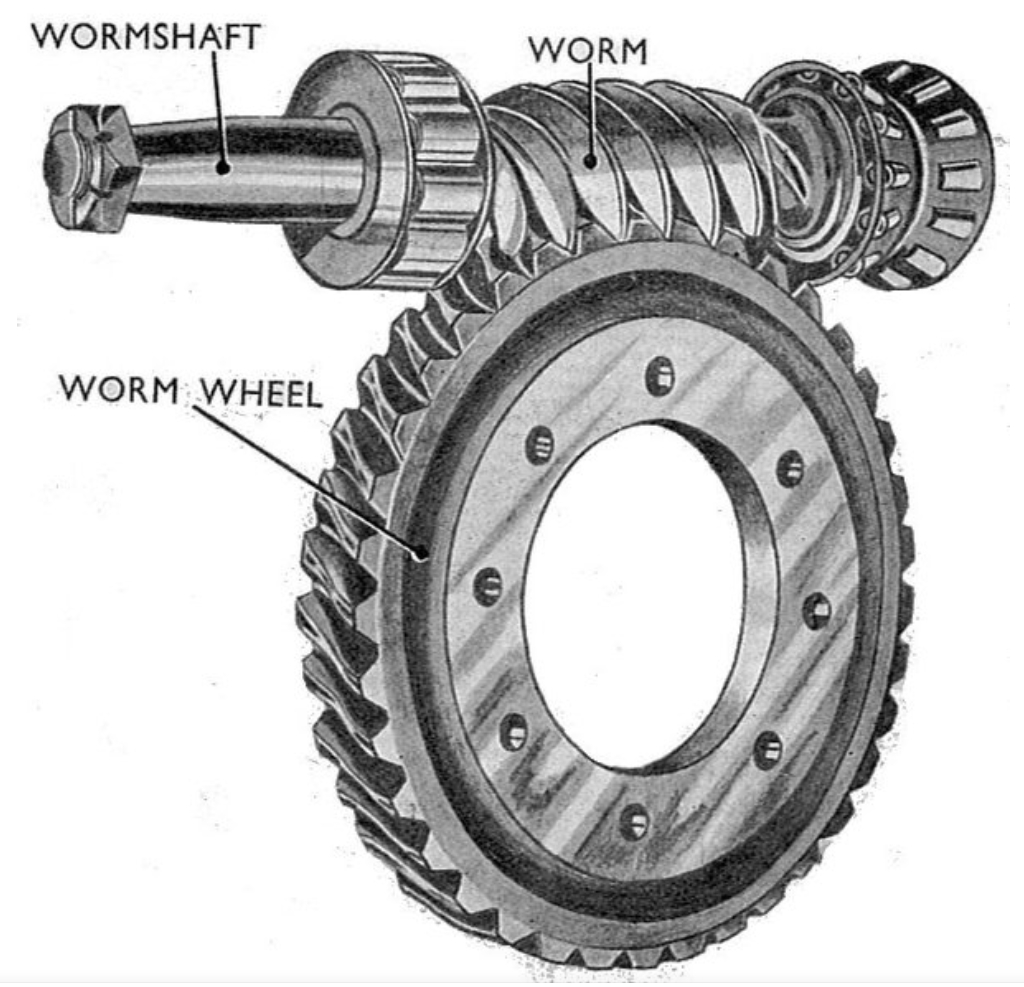
The worm gear drive is a fundamental mechanism in valve actuators, prized for its high reduction ratio, compact size, and self-locking capability in many configurations. The transmission worm, as the driving component, is critical to the overall performance, efficiency, and longevity of the system. For decades, the predominant method for manufacturing these worms has been cutting, typically followed by grinding to achieve the necessary accuracy and surface finish. However, cutting processes inherently interrupt the metal’s grain flow, can introduce residual stresses, and often require subsequent heat treatment which may induce micro-cracks, particularly at the sensitive root fillet, potentially compromising the component’s fatigue life.
In contrast, cold rolling is a chipless forming technology that plastically deforms the workpiece material under high pressure using hardened dies. This process offers significant advantages including superior surface finish, improved dimensional accuracy from the die, enhanced mechanical properties through work hardening, and unparalleled production efficiency. While extensively adopted for standard fasteners and threaded components, its application for precision power transmission elements like worms in a worm gear drive presents unique challenges and opportunities. This study investigates the feasibility and benefits of applying cold rolling technology to manufacture ZA-type transmission worms for valve actuators, comparing them comprehensively against their traditionally cut and ground counterparts.
Experimental Methodology: From Blank to Finished Worm
The research was conducted using a German PEE-WEE P60 two-roll cylindrical rolling machine, capable of handling diameters from 5 to 180 mm. The subject was a standard ZA-type worm from a valve actuator worm gear drive. The comparative study involved producing two sets of worms: one via conventional cutting and another via cold rolling.
1.1 Preparation of Test Specimens
1.1.1 Calculation of Cold Rolling Blank Diameter
Determining the optimal blank diameter (d₀) is paramount in cold rolling, as it directly affects tooth form fill, dimensional accuracy, and rolling forces. An undersized blank leads to incomplete teeth, while an oversized blank increases rolling force excessively and can damage the dies. The calculation is based on the principle of volume constancy in plastic deformation.
For a ZA worm profile, as illustrated in the schematic, the volume of material displaced above the pitch line (V_M) must equal the volume of the tooth space formed below the pitch line (V_N). By integrating the cross-sectional area along the lead, the blank radius r₀ can be solved. Let P be the lead, α the pressure angle complement, r₁ the pitch radius, r_a the tip radius, and r_f the root radius.
The differential volume element above the pitch line is:
$$ dV_M = \left[ \frac{P}{2} – 2(r – r_1) \cot\alpha \right] \cdot 2\pi r \cdot dr $$
Integrating from the blank radius (r₀) to the tip radius (r_a):
$$ V_M = \int_{r_0}^{r_a} \left[ \frac{P}{2} – 2(r – r_1) \cot\alpha \right] \cdot 2\pi r \cdot dr $$
The differential volume element below the pitch line is:
$$ dV_N = \left[ \frac{P}{2} – 2(r_1 – r) \cot\alpha \right] \cdot 2\pi r \cdot dr $$
Integrating from the root radius (r_f) to the blank radius (r₀):
$$ V_N = \int_{r_f}^{r_0} \left[ \frac{P}{2} – 2(r_1 – r) \cot\alpha \right] \cdot 2\pi r \cdot dr $$
Setting V_M = V_N and solving for r₀ yields the theoretical blank radius. A correction factor k, derived from empirical database experience, is applied to account for material springback and specific machine behavior:
$$ r_0 = k \sqrt{ \left( \frac{1}{2} + \frac{2}{P} r_1 \cot\alpha \right) r_a^2 + \left( \frac{1}{2} – \frac{2}{P} r_1 \cot\alpha \right) r_f^2 – \frac{4}{3P} (r_a^3 – r_f^3) \cot\alpha } $$
For the specific worm under study (module m=2 mm, pitch diameter d₁=22 mm), the calculated and corrected blank diameter was determined to be 24 mm.
| Worm Gear Drive Pair Parameters | Worm | Worm Wheel |
|---|---|---|
| Module (mm) | 2 | 2 |
| Number of Starts / Teeth | 1 | 39 |
| Pressure Angle (°) | 20 | 20 |
| Hand | Right | Right |
| Pitch Diameter (mm) | 22 | 78 |
| Center Distance (mm) | 50 | 50 |
1.1.2 Material Selection
Material ductility is crucial for successful cold rolling. A high elongation at break ensures good material flow without cracking. 40Cr alloy steel was selected for this study. Its composition and key mechanical properties are listed below. With an elongation (A) ≥ 9%, it is suitable for cold rolling single-start worms.
| Chemical Composition and Material Properties of 40Cr Steel | ||||
|---|---|---|---|---|
| C (%) | Si (%) | Mn (%) | Cr (%) | Fe |
| 0.37 – 0.44 | 0.17 – 0.37 | 0.50 – 0.80 | 0.80 – 1.10 | Balance |
| Mechanical Property (After Heat Treatment): Elongation A ≥ 9%, Reduction of Area Z ≥ 45% | ||||
1.1.3 Process Route Definition
Two distinct process flows were established for the comparative analysis. Both started from the same 40Cr bar stock.
- Conventional Cutting Process: Cutting-off → Rough Turning → Quenching & Tempering (to approx. 28-32 HRC) → Finish Turning → Worm Milling (Hobbing/Skiving) → High-Frequency Induction Hardening of tooth flanks → Finish Grinding.
- Cold Rolling Process: Cutting-off → Rough Turning → Quenching & Tempering (to same core hardness) → Finish Turning (to Φ24mm blank) → Cold Rolling → Straightening (to correct axis deflection).
The rolling was performed on the P60 machine with the parameters listed below. Post-rolling, a mechanical straightening operation was necessary to correct bending induced by the rolling forces on the slender worm shaft.
| Cold Rolling Process Parameters for Worm | |
|---|---|
| Rolling Force (kN) | 225 |
| Spindle Speed (rpm) | 36 |
| Feed per Revolution (mm/rev) | 0.1 |
| Rolling Time (s) | 40 |
1.2 Analysis and Testing Procedures
A comprehensive battery of tests was designed to evaluate and contrast the two worm types across three critical domains.
1.2.1 Dimensional Accuracy Measurement
A high-precision gear measuring center was used to assess key accuracy parameters defined by ISO standards: Radial Runout (Fr), Total Profile Deviation (Fα), Total Cumulative Pitch Deviation (Fp), and Single Flank Testing Deviation. Measurements were taken on three samples from each group and averaged.
1.2.2 Microstructural and Hardness Analysis
Metallographic samples were sectioned from the tooth area of both worm types, prepared (mounted, polished, etched), and examined under an optical microscope to observe grain flow and microstructure. Microhardness (HV0.2) traverses were performed from the surface to a depth of approximately 1 mm at the tooth tip, flank, and root to map the hardness distribution and work-hardened layer.
1.2.3 Worm Gear Drive Performance Testing
This involved two distinct tests:
- Transmission Efficiency Test: Conducted on a custom-built mechanical efficiency test rig. The worm was driven by a servo-motor at operational speed, and the mating worm wheel was loaded via a brake. Input torque (T₁) and output torque (T₂) were measured dynamically using torque sensors. The instantaneous mechanical efficiency (η) was calculated using the theoretical reduction ratio (i):
$$ \eta = \frac{T_2}{T_1 \cdot i} \times 100\% $$
- Full Assembly Life Test: Performed according to the demanding EN 15714-2:2009 standard for industrial valve actuators. Worm gear reducers were assembled with both types of worms and tested under two simulated service conditions on a rotary torque life test stand:
- On-Off Condition: 500 total hours, 20 starts/stops per hour, each cycle running for 80 seconds under a 36 N·m load.
- Modulating Condition: 2000 total hours, 600 starts/stops per hour, each cycle running for 1.5 seconds under a 36 N·m load. This represents a severe, high-cycle, low-amplitude wear scenario.
Experimental Results and Detailed Analysis
2.1 Comparative Analysis of Worm Dimensional Accuracy
The results of the geometric measurements are summarized in the table below. The data reveals a nuanced picture of the capabilities of each manufacturing process.
| Specimen | Dimensional Accuracy Parameters (µm) | |||
|---|---|---|---|---|
| Radial Runout (Fr) | Total Profile Dev. (Fα) | Total Pitch Dev. (Fp) | Single Flank Dev. | |
| Cut Sample 1 | 4.2 | 60.3 | 2.3 | 62.6 |
| Cut Sample 2 | 13.4 | 60.0 | 3.9 | 75.6 |
| Cut Sample 3 | 4.1 | 108.3 | 3.0 | 124.5 |
| Cut Average | 7.2 | 76.2 | 3.1 | 87.6 |
| Rolled Sample 1 | 125.0 | 19.4 | 72.1 | 75.5 |
| Rolled Sample 2 | 89.4 | 15.7 | 62.0 | 53.2 |
| Rolled Sample 3 | 107.9 | 15.5 | 32.8 | 68.5 |
| Rolled Average | 107.4 | 16.9 | 55.6 | 65.7 |
Analysis:
- Profile Accuracy (Fα): The cold-rolled worms exhibited dramatically superior tooth profile accuracy, with an average Fα of 16.9 µm compared to 76.2 µm for the cut & ground worms. This is a direct benefit of replicating the high-precision (better than IT5) form of the rolling dies onto the workpiece. In a worm gear drive, an accurate profile ensures optimal contact pattern and load distribution on the worm wheel.
- Radial Runout (Fr) and Pitch Deviation (Fp): The cut worms performed significantly better in these “axis-related” errors. The high values for the rolled worms (107.4 µm Fr, 55.6 µm Fp) are attributed to elastic deflection of the slender workpiece (L/D ratio ~9) during the rolling process, despite post-rolling straightening. This highlights a key challenge in cold rolling long, slender components. Solutions such as using a follow-rest support or optimizing the rolling force gradient could mitigate this.
- Single Flank Deviation: This composite error related to meshing behavior was slightly better for the rolled worms (65.7 µm vs. 87.6 µm), suggesting that the excellent profile accuracy may compensate to some degree for the axis errors in the functional meshing of the worm gear drive.
2.2 Microstructural and Surface Integrity Evaluation
2.2.1 Subsurface Microstructure
Metallographic examination revealed fundamental differences:
- Cut & Hardened Worm: The microstructure was discontinuous. The tooth tip and flanks showed a case-hardened layer of acicular martensite from induction hardening, transitioning to a tempered sorbitic core. The tooth root, often not fully hardened, remained as the core tempered sorbite, creating a potential weak point.
- Cold-Rolled Worm: The most striking feature was the continuous, unbroken fiber flow of the grain structure, following the contour of the tooth. The fibers were most densely packed and severely worked at the tooth root, then flowed upward along the flanks. This is a result of the massive plastic deformation during rolling, where material is displaced from the root area to form the tooth. This seamless grain flow significantly enhances resistance to crack initiation and propagation, particularly at the high-stress root region. Minor surface pits on the tooth crest indicated incomplete filling, suggesting further optimization of the blank diameter (k factor) is possible.
2.2.2 Surface Hardness Distribution
Microhardness traverses provided quantitative evidence of surface strengthening.
| Surface Microhardness (HV0.2) Comparison | ||
|---|---|---|
| Location | Cut & Hardened Worm | Cold-Rolled Worm |
| Tooth Tip | 568.8 – 675.3 (Hardened Case) | ~311.1 (Peak at 0.1mm depth) |
| Tooth Flank | Similar to Tip (Hardened Case) | ~336.9 (Peak at 0.1mm depth) |
| Tooth Root | 237.8 – 251.7 (Core Hardness) | ~333.5 (Peak at 0.1mm depth) |
| Hardened Layer Depth | Induction Hardened Case (~0.5-1mm) | Work-Hardened Layer (~0.6mm) |
Analysis: The cut worm shows high hardness only on the hardened tips and flanks, while the root remains at the softer core hardness (~245 HV0.2). Conversely, the cold-rolled worm exhibits a consistent work-hardened layer of about 0.6 mm over the entire tooth surface, including the root, with peak hardness values above 330 HV0.2. This represents a major advantage for the worm gear drive: the cold-rolled worm’s root strength and resistance to bending fatigue are significantly higher than the cut worm’s, as the root is no longer the weakest link. The work-hardening effect is a inherent, cost-free benefit of the rolling process.
2.3 Functional Performance of the Worm Gear Drive
2.3.1 Transmission Efficiency
The mechanical efficiency tests showed a clear trend. Under both clockwise and counter-clockwise rotation, the worm gear drive assembled with the cold-rolled worms consistently demonstrated higher transmission efficiency than the one with cut worms. The average efficiency improvement was approximately 2-4 percentage points across the tested load range. This gain is primarily attributed to the superior tooth profile accuracy (lower Fα) of the rolled worms, which reduces parasitic sliding friction and improves the mesh kinematics within the worm gear drive.
2.3.2 Service Life Endurance
The full-scale life testing yielded critical, condition-dependent results:
| Test Condition | Cut & Hardened Worm | Cold-Rolled Worm |
|---|---|---|
| On-Off (500h) | Passed. No abnormal noise or failure. | Passed. No abnormal noise or failure. |
| Modulating (2000h) | Passed. Completed the full 2000-hour test. | Failed at ~696h. Severe noise developed. Disassembly revealed significant pitting and wear on the worm tooth flanks. |
Analysis: This is a pivotal finding. For the on-off duty cycle, typical of many isolation valve applications, the cold-rolled worm (with only quenched & tempered core and work-hardened surface) performed equally well as the expensively cut, induction-hardened, and ground worm. This has major economic implications.
However, for the extremely severe modulating duty cycle, characterized by high-frequency, low-amplitude oscillations under load, the surface contact stress (σ_H) exceeded the permissible limit (σ_Hlim) for the work-hardened surface of the rolled worm (~337 HV). The industry-standard solution for such punishing worm gear drive applications is a through-hardened or deeply case-hardened worm with flank hardness typically exceeding 550 HV. The cold-rolled worm in its current state (no post-rolling heat treatment) cannot meet this requirement, leading to premature surface fatigue (pitting).
Discussion and Economic Implications
The study conclusively demonstrates that cold rolling is a highly viable and advantageous manufacturing process for transmission worms in valve actuator worm gear drives, particularly for on-off applications. The technical benefits are substantial: superior tooth profile accuracy, seamless grain flow for enhanced fatigue resistance, and a work-hardened surface that strengthens the critical tooth root area. These translate directly into a worm gear drive with higher transmission efficiency and potentially greater reliability against root-breakage failures.
The economic and production advantages are even more compelling, especially when considering the high-volume context of industrial component manufacturing. A comparative estimate for a batch of 500 worms illustrates the stark difference:
| Process Step | Estimated Time (min/pc) | Relative Cost Factor | Relative Lead Time (days) | |||
|---|---|---|---|---|---|---|
| Cutting | Rolling | Cutting | Rolling | Cutting | Rolling | |
| Material Prep & Turning | 51 | 51 | High | High | 14 | 14 |
| Tooth Generation | 15 | 1 | High | Low | 4 | 1 |
| Heat Treatment (HF Hardening) | 20 | 0 | Medium | 0 | 2 | 0 |
| Finish Grinding | 30 | 0 | High | 0 | 7 | 0 |
| Straightening | 0 | 2 | 0 | Very Low | 0 | 1 |
| Total (Approx.) | ~116 | ~54 | Very High | Low | ~27 | ~16 |
The cold rolling process eliminates the two most time-consuming and costly operations after tooth generation: high-frequency hardening and precision grinding. The rolling itself is orders of magnitude faster (1 minute vs. 15 minutes) for tooth forming. This results in a dramatic reduction in total production cost and lead time. For the high-volume production of actuators for on-off services, adopting cold rolling for the worm component of the worm gear drive offers a compelling competitive edge through superior part quality, reduced manufacturing cost, and faster time-to-market.
The challenge for modulating applications remains. Future research should explore the feasibility of applying a subsequent surface hardening treatment (like low-temperature nitriding or selective induction hardening) to cold-rolled worms. This hybrid approach could potentially yield a component with both the excellent microstructure and form accuracy from rolling, and the ultra-high surface hardness required for the most demanding worm gear drive cycles, opening the technology to an even wider field of application.