
The planetary roller screw assembly represents a highly efficient and robust mechanical component that converts rotary motion into precise linear motion, and vice versa. Its superior performance attributes, including exceptional load-carrying capacity, compact design, excellent environmental adaptability, and long operational life, have led to its widespread adoption in demanding sectors such as aerospace, high-precision machine tools, robotics, and heavy industrial machinery. At the core of its performance lies its unique load bearing characteristics, which encompass the mechanical analysis of force transmission among its components, axial deformation under load, distribution of contact forces across individual thread teeth, load sharing among the multiple rollers, and the associated phenomena of friction and wear. A deep understanding of these characteristics is not merely an academic exercise; it is the fundamental pathway to unveiling the mechanisms of load transfer, structural compliance, and failure modes during service. This knowledge forms the indispensable theoretical foundation for further enhancing the transmission accuracy, reliability, durability, and ultimately, the performance envelope of the planetary roller screw assembly.
This article provides a comprehensive review of the research progress concerning the load bearing characteristics of the planetary roller screw assembly. We begin by elucidating its fundamental structure and the underlying principles of load bearing. Subsequently, we delve into the specific research domains, summarizing and analyzing existing methodologies, models, and key findings. Finally, we offer perspectives on potential future research directions to address current gaps and meet the evolving demands of advanced applications.
Fundamental Structure and Load Bearing Principle
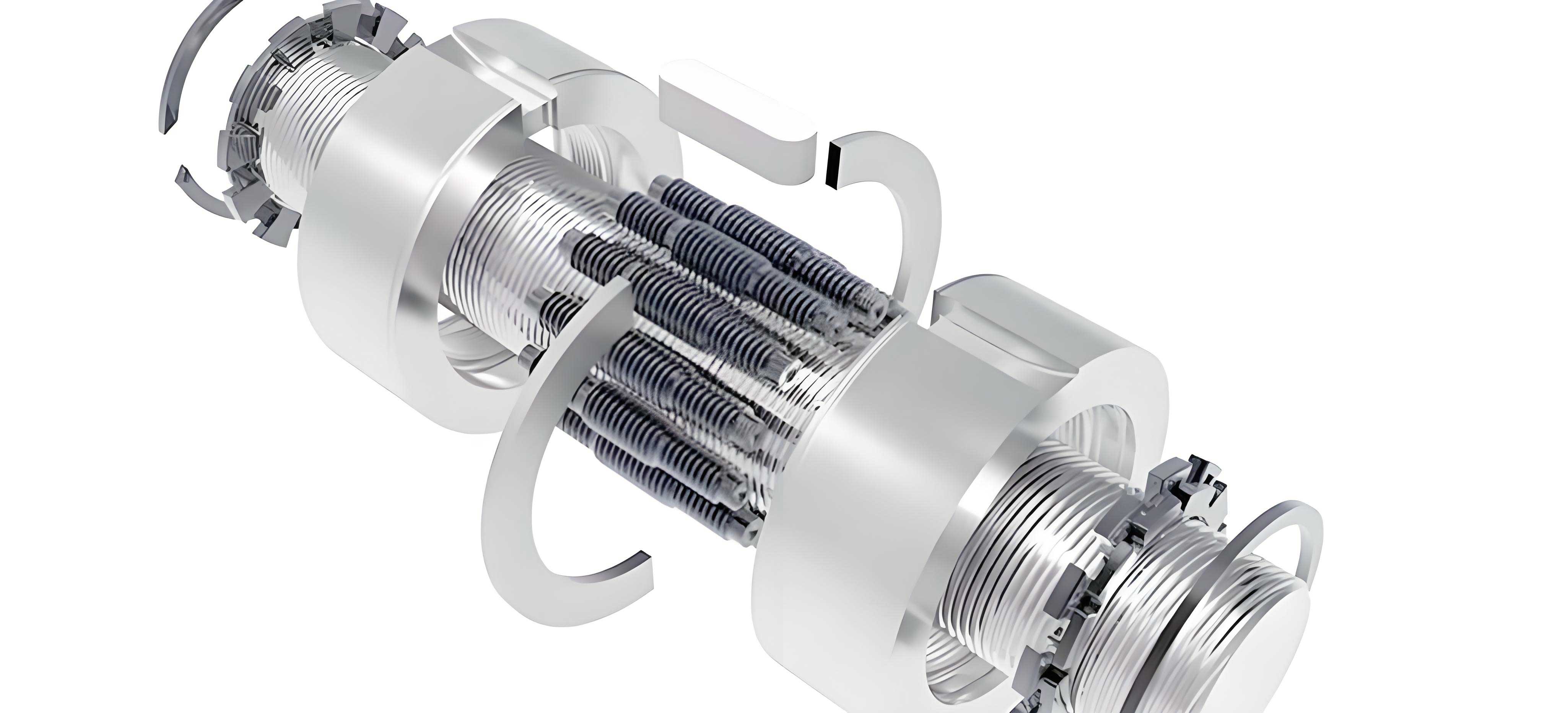
A standard planetary roller screw assembly comprises several key components: a central threaded screw (typically multi-start), a nut (also multi-start), a set of planetary rollers (usually single-start) arranged circumferentially around the screw, and two ring gears (or synchronizing gears) fixed at both ends of the nut. The rollers are retained and evenly spaced by cages. The thread profiles of the screw and nut are commonly trapezoidal, while the rollers feature a Gothic arch (or similar spherical) profile to ensure point contact and accommodate slight misalignments. The ring gears mesh with spur gears on the ends of each roller, enforcing a kinematic constraint that maintains the parallelism of the roller axes to the screw axis, preventing relative screwing motion between rollers and nut, and ensuring pure planetary motion.
The axial load applied to the nut (or screw) is transmitted through a network of threaded contacts. Each roller simultaneously engages with both the screw and the nut threads at discrete contact points along its helix. Consequently, the external axial load is distributed across multiple load paths: from the nut to all engaged rollers, and then from the rollers to the screw. This multi-contact, parallel load-path configuration is the primary reason for the high load capacity of the planetary roller screw assembly compared to ball screw assemblies. The load at each contact point generates contact stresses, induces elastic deformations in the threads and the shafts of the components, and causes frictional forces. The collective behavior of all these interactions defines the assembly’s load bearing characteristics.
Analysis of Contact Forces and Mechanics
The initial step in characterizing the load bearing behavior is the precise analysis of forces acting on the contacting elements. When the planetary roller screw assembly is under load, a normal contact force, denoted as $F_n$, develops at each thread engagement point between a roller and either the screw or the nut. This force acts normal to the contacting surfaces. Due to the geometry of the helical threads, this normal force can be resolved into three mutually perpendicular components: an axial component $F_a$, a radial component $F_r$, and a tangential component $F_t$.
Let $\lambda$ be the thread lead angle, $\beta$ the thread profile half-angle, and $\phi$ the contact angle measured in the plane normal to the thread helix. The force components on a roller engaged with the screw can be expressed as:
$$F_a = F_n \cos\phi \cos\lambda$$
$$F_t = F_n \cos\phi \sin\lambda$$
$$F_r = F_n \sin\phi$$
These equations highlight the dependency of force transmission on the fundamental geometric parameters of the planetary roller screw assembly. The axial component $F_a$ directly counteracts the external load. The tangential component $F_t$ contributes to the driving (or braking) torque. The radial component $F_r$ imposes a bending load on the roller and affects the load distribution on the supporting structure.
A critical aspect of the mechanics is the potential for sliding at the contact points. For efficient power transmission with minimal wear, pure rolling is desired. However, due to the helical geometry, a small amount of differential sliding is inevitable. The condition for the roller to transmit motion primarily through rolling, rather than gross sliding, relates the friction coefficient $\mu_n$ at the contact to the geometry. Analysis shows that pure rolling tendency is maintained when the pitch $P$ satisfies $P < \mu_n \pi d_r / \cos\phi$, where $d_r$ is the roller pitch diameter. This condition is typically met in well-designed planetary roller screw assemblies. Furthermore, the contact point on the roller-screw interface is spatially offset from the plane containing the screw and roller axes. This offset generates an overturning moment on the roller, which is primarily resisted by the meshing of the roller end gears with the ring gears. The load sharing among these ring gear teeth is an additional mechanical consideration for system integrity.
Axial Deformation and Stiffness Modeling
The axial deformation of a planetary roller screw assembly under load—defined as the relative axial displacement between the nut and the screw—is a key performance metric affecting positional accuracy and dynamic response. This total deformation $\delta_{total}$ is an aggregate of several elastic deformations:
$$\delta_{total} = \delta_{shaft} + \delta_{thread} + \delta_{contact}$$
where $\delta_{shaft}$ represents the axial compression/extension of the screw and nut shaft sections between load-bearing threads, $\delta_{thread}$ is the bending and shear deformation of the thread teeth themselves, and $\delta_{contact}$ is the local Hertzian elastic deformation at the contact ellipses.
Finite Element Analysis (FEA) studies have been employed to analyze this complex deformation. By modeling a sector of the assembly, results indicate that the contact deformation $\delta_{contact}$ often constitutes a significant portion of the total axial elasticity. Parametric studies via FEA suggest that axial stiffness generally increases with larger thread lead angles $\lambda$ and larger contact angles $\phi$.
Analytical models for stiffness have also been developed. The Direct Stiffness Method provides a systematic theoretical framework. In this approach, the overall axial stiffness $K_{axial}$ is derived by considering the series and parallel combinations of individual stiffness elements:
$$\frac{1}{K_{axial}} = \frac{1}{K_{screw\_shaft}} + \frac{1}{K_{nut\_shaft}} + \frac{1}{K_{thread\_parallel}} + \frac{1}{K_{contact\_parallel}}$$
The thread stiffness $K_{thread}$ for a single tooth is challenging to model accurately. One common approach models the thread tooth as an annular plate loaded by a concentrated force, but this may not fully capture the influence of the specific thread profile parameters of the planetary roller screw assembly. Preloading, achieved via a dual-nut configuration, is a standard technique to enhance axial stiffness. Preload eliminates internal clearance and places the threads in initial compression, resulting in a stiffer, more linear load-deformation relationship at the onset of external loading. The relationship between preload force $F_{pre}$ and the resulting improvement in system stiffness is a critical design consideration.
Load Distribution over Thread Teeth
Perhaps the most critical aspect of load bearing characteristics is the load distribution—how the total axial force is shared among the numerous engaged thread teeth on a single roller and across all rollers. Non-uniform distribution leads to stress concentrations, accelerated wear, reduced fatigue life, and potential premature failure of the most heavily loaded teeth.
Modeling this distribution is complex due to elastic interactions. The fundamental principle is based on compatibility of deformations and force equilibrium. When an axial load $F_{axial}$ is applied, the sum of axial components from all active contact points must equal this load. Simultaneously, the elastic approach (combined deformation of shafts, threads, and contacts) at each engaged tooth pair must be consistent with the geometric positions of the teeth and the overall deformation of the components.
Several analytical models have been proposed:
| Modeling Approach | Key Features | Advantages/Limitations |
|---|---|---|
| Discrete Spring Model | Represents screw, roller, and nut shafts as beam elements; each thread tooth pair as a combination of shear/bending (thread body) and nonlinear (Hertzian contact) springs. | Physically intuitive; can incorporate manufacturing errors and different installation conditions (screw tension/nut compression). |
| Direct Stiffness Method | Uses compliance matrices for shaft sections and contact points to solve for forces directly from overall displacement. | Systematic; good for analyzing influence of number of rollers and number of active threads per roller. |
| Equivalent Rectangular Element | Models the roller as a continuum of shear elements to approximate load transfer. | Simplified approach; suitable for preliminary design but may lack detail on individual tooth loads. |
| Finite Element Analysis (FEA) | Detailed 3D modeling of geometry and contacts, often using contact elements and nonlinear material properties. | Most accurate for specific geometries; computationally expensive; less convenient for parametric studies. |
A generic formulation based on deformation compatibility can be expressed as follows. For the i-th engaged tooth on a given roller, the total axial deformation approach $\Delta_i$ consists of:
$$\Delta_i = \delta_{screw\_shaft}(i) + \delta_{nut\_shaft}(i) + \delta_{thread\_screw}(i) + \delta_{thread\_nut}(i) + \delta_{contact\_screw}(i) + \delta_{contact\_nut}(i)$$
For all teeth on the same load path to be in contact, $\Delta_i$ must be equal to a common value $\Delta$, adjusted for any initial pitch errors. The thread and contact deformations are functions of the load on that tooth, $F_i$. The shaft deformations are functions of the cumulative load from all teeth preceding position $i$. This leads to a system of equations:
$$\mathbf{K} \cdot \mathbf{F} = \mathbf{\Delta} + \mathbf{e}$$
where $\mathbf{K}$ is a stiffness matrix incorporating all elastic effects, $\mathbf{F}$ is the vector of unknown tooth loads, $\mathbf{\Delta}$ is the uniform displacement vector, and $\mathbf{e}$ is a vector of pitch errors. Solving this system iteratively yields the load distribution.
Key findings from load distribution studies include:
- The distribution is inherently uneven, with the first few teeth at the load-entry side carrying a disproportionate share of the total load. This is primarily due to the cumulative axial compression of the screw and nut shafts.
- The load distributions on the screw-roller side and the nut-roller side are coupled and influence each other.
- Manufacturing errors, especially pitch deviations, significantly exacerbate uneven distribution.
To mitigate uneven load distribution, design strategies such as pitch matching (intentionally designing slightly different pitches for screw, roller, and nut to compensate for shaft deformations) or thread profile modification have been proposed as potential solutions for the planetary roller screw assembly.
Load Sharing Among Planetary Rollers
In addition to uneven distribution along a single roller, the total axial load may not be shared equally among the multiple planetary rollers. This load sharing is influenced by factors such as variations in roller diameter, pitch errors across different rollers, non-uniformity in ring gear meshing, and assembly misalignments. Unequal load sharing can lead to some rollers being underloaded (inefficient) while others are overloaded (high wear, risk of failure), and can also cause increased vibration and noise.
While research specifically quantifying load sharing among rollers in a planetary roller screw assembly is less prevalent than thread load distribution studies, the problem is analogous to load sharing in planetary gear trains. The load share factor $\gamma$ for the k-th roller can be defined as:
$$\gamma_k = \frac{F_{axial\_k}}{F_{axial\_total}/N}$$
where $F_{axial\_k}$ is the axial load carried by roller $k$, $F_{axial\_total}$ is the total external axial load, and $N$ is the number of rollers. An ideal, perfect system would have $\gamma_k = 1$ for all $k$.
The overall system of equations for a planetary roller screw assembly must be expanded to include equilibrium and compatibility across all $N$ rollers simultaneously. This introduces additional equations that account for the radial equilibrium of the nut and the torsional/bending constraints imposed by the ring gears. Analyzing this full system can reveal sensitivity to manufacturing tolerances and guide the design of tolerance specifications and potential compensation mechanisms, such as flexible ring gear supports or selected assembly techniques.
Friction, Wear, and Efficiency
The friction characteristics directly impact the driving torque requirement, heat generation, and transmission efficiency of the planetary roller screw assembly. The total friction torque $T_{friction}$ resisting motion arises from several sources:
- Elastic Hysteresis Loss: Energy loss due to the inelastic behavior of materials during Hertzian contact cycling.
- Differential Sliding Friction: Friction from the small but finite sliding components at the rolling contact points, governed by the kinematics and lubricant conditions.
- Spin Sliding Friction: Significant sliding caused by the rotation of the contact ellipse relative to the contacting bodies, especially prominent with high contact angles.
- Lubricant Viscous Drag: Resistance due to the shearing of the lubricant film in and around the contacts.
Models often calculate the friction force at each contact point based on local load and sliding velocity, then integrate contributions to find the total torque. The mechanical efficiency $\eta$ can then be estimated as:
$$\eta = \frac{T_{ideal}}{T_{ideal} + T_{friction}} = \frac{F_{axial} \cdot P}{2\pi (T_{drive})}$$
where $P$ is the lead (or pitch) and $T_{drive}$ is the required input torque.
Wear is a primary failure mode for the planetary roller screw assembly, manifesting as adhesive wear, abrasive wear, or fatigue pitting on the thread flanks. Experimental simulations using disc-on-ring setups have been used to mimic the rolling-sliding contact conditions. Key findings indicate that:
- Under dry or poorly lubricated conditions, even light loads can rapidly generate wear tracks and pitting due to micro-slip.
- With effective lubrication, the planetary roller screw assembly can sustain millions of cycles with minimal wear.
- The direction of material loss often aligns with the sliding direction within the contact ellipse.
Predictive wear models for the planetary roller screw assembly remain an area for development, often relying on Archard’s wear law or fatigue life models based on subsurface stress cycles (e.g., Ioannides-Harris theory) applied to the calculated load distribution.
Future Research Directions and Concluding Remarks
Significant progress has been made in understanding the load bearing characteristics of the planetary roller screw assembly. However, several avenues warrant further investigation to push the boundaries of its performance and reliability:
- Integrated System Stiffness Modeling: Future models should expand beyond the screw-nut-roller mesh to include the stiffness of bearings, housings, and mounts. The overall servo system stiffness, which dictates dynamic response and positioning accuracy, is a function of all these elements in series. Furthermore, the variable screw shaft length between the nut and support bearings as the nut travels should be incorporated into dynamic stiffness predictions.
- Advanced Load Distribution and Sharing Analysis: There is a need for more holistic models that simultaneously solve for intra-roller thread load distribution and inter-roller load sharing under the influence of realistic manufacturing errors (pitch, diameter, profile) and assembly misalignments. The development and validation of such models would enable true load-balancing design, guiding not only parameter optimization but also tolerance allocation and selective assembly strategies.
- Comprehensive Friction and Thermal Analysis: Friction torque models require experimental validation across a wide range of operating conditions (speed, load, temperature). Coupled thermal-mechanical models are needed to predict the temperature rise in a planetary roller screw assembly during high-duty cycles, as temperature affects lubricant viscosity, material properties, and preload, creating a feedback loop that influences stiffness and accuracy.
- Fatigue Life and Reliability Prediction: Integrating accurate load distribution models with advanced fatigue life theories (considering surface and subsurface failure modes) will allow for more reliable prediction of the L10 life of a planetary roller screw assembly. Probabilistic methods accounting for the statistical nature of material properties and manufacturing defects could further enhance reliability assessments.
- Experimental Characterization and Model Validation: There is a persistent need for sophisticated experimental setups capable of measuring internal load distribution, individual roller loads, and localized temperatures in an operating planetary roller screw assembly. Such data is crucial for validating and refining the increasingly complex analytical and numerical models.
In conclusion, the planetary roller screw assembly is a remarkably capable mechanical actuator whose potential is ultimately governed by its load bearing characteristics. Continued research into the intricate mechanics of force transmission, deformation, and friction will yield deeper insights, enabling the development of next-generation designs with higher precision, greater load capacity, longer service life, and optimized efficiency for the most challenging engineering applications.