
In the realm of mechanical engineering, the reliable and efficient operation of machinery hinges on the performance of its core components. Among these, gear shafts hold a position of critical importance. These components are not simple power conduits; they are sophisticated elements designed to transmit torque while simultaneously withstanding a complex amalgamation of bending moments, torsional stresses, and cyclical fatigue loads. Their failure can lead to catastrophic downtime, significant economic loss, and potential safety hazards. Therefore, the quest for extending the service life and enhancing the performance of gear shafts is a perennial focus of research and industrial practice. This study delves into the application of advanced surface engineering, specifically low-power plasma spraying, as a robust method for the repair and performance enhancement of worn or newly manufactured gear shafts. Throughout this investigation, the interplay between process parameters, coating microstructure, and final tribological properties is meticulously examined to establish a foundational understanding for optimizing the repair of these vital components.
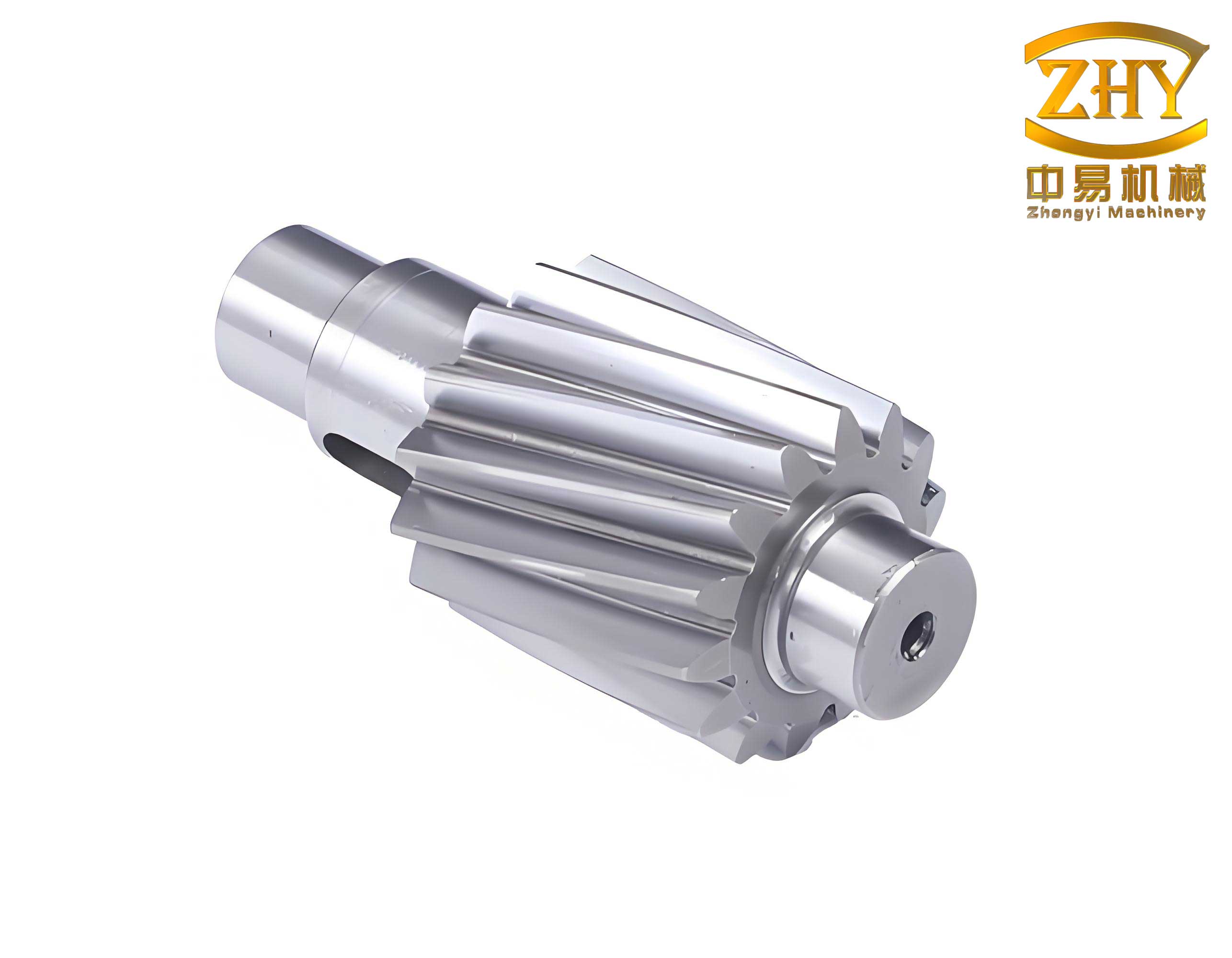
The common materials for gear shafts, such as 40Cr, 42CrMo, or 20CrMnTi steels, are typically subjected to quenching and tempering heat treatments to achieve a tempered sorbitic microstructure. This structure, a fine dispersion of carbides within a ferrite matrix, provides an excellent balance of strength, toughness, and fatigue resistance—a combination essential for the demanding role of gear shafts. However, even with optimal bulk material properties, the surface of a gear shaft remains the primary point of contact and is therefore the most susceptible to degradation. The predominant failure modes for gear shafts are surface-initiated, including abrasive wear from hard contaminant particles, adhesive wear under high-load sliding, contact fatigue (pitting and spalling), and fretting wear at interference fits. Traditional repair methods like welding can introduce significant heat-affected zones, distortion, and residual stresses, which may compromise the integrity of the gear shafts. This has spurred the adoption of thermal spray techniques, which can deposit thick, wear-resistant coatings with minimal thermal input to the substrate, preserving the core properties of the gear shafts.
Among thermal spray variants, plasma spraying stands out for its versatility and ability to process refractory materials. It involves creating a high-temperature plasma jet (exceeding 10,000 K) into which feedstock powder is injected, melted, accelerated, and propelled onto a prepared substrate. The resulting coating is built up from successive layers of flattened, solidified particles called “splats.” For wear resistance applications, tungsten carbide-cobalt (WC-Co) cermets are arguably the premier choice. The hard WC phase provides exceptional resistance to abrasion, while the metallic Co binder offers crucial toughness to withstand impact and fatigue. However, a significant challenge in plasma spraying WC-Co is the inherent decarburization of WC in the high-temperature plasma plume. This decomposition leads to the formation of brittle secondary phases like W2C and even amorphous or nanocrystalline ternary phases (CoxWyCz), which can detrimentally affect the coating’s hardness and fracture toughness, ultimately undermining the wear performance intended for the repaired gear shafts. This study specifically employs a low-power plasma spray protocol, a strategic choice aimed at mitigating excessive heating of the powder particles, thereby controlling phase decomposition and preserving the desirable WC phase in the coatings applied to the gear shafts.
1. Materials and Experimental Methodology
The substrate used in this investigation was a section of a commercially sourced gear shaft material, machined into cylindrical specimens of 30 mm in diameter and 15 mm in height. Prior to coating, the substrate surface was rigorously prepared to ensure optimal coating adhesion—a critical factor for the longevity of repaired gear shafts. The preparation sequence involved mechanical grinding, followed by ultrasonic cleaning in acetone and ethanol to remove any organic contaminants or oils, and finally drying in a warm air stream.
The feedstock material was a commercially available agglomerated and sintered WC-12wt%Co powder. The particle size distribution ranged from 10 to 70 μm. As shown in prior analyses, these spherical particles are themselves composite entities, consisting of fine, sub-micron WC grains uniformly distributed within a Co matrix. This powder morphology is favorable for consistent flowability during feeding into the plasma jet.
The core of the experiment was the plasma spray process. A custom-designed, low-power plasma spray system was utilized. The primary rationale for using lower power is to reduce the enthalpy transferred to the WC-Co particles, limiting their time at excessively high temperatures and thus suppressing decarburization. The key process parameters were held constant except for the variable under study: the plasma arc voltage. The parameters are summarized in the table below.
| Parameter | Value |
|---|---|
| Arc Current | 450 A |
| Primary Gas (Ar) Flow Rate | 15 L/min |
| Powder Feed Rate | 14 g/min |
| Spray Distance | 120 mm |
| Variable Parameter | Arc Voltage: 45, 50, 55, 60 V |
The coatings were deposited at four different voltage levels: 45 V, 50 V, 55 V, and 60 V. According to the basic principle of plasma physics, for a fixed current, an increase in arc voltage directly increases the arc power ($$P = I \times V$$) and enthalpy. This significantly alters the thermal and kinetic state of the in-flight particles, which in turn governs the coating microstructure.
A comprehensive suite of characterization techniques was employed to evaluate the coatings. The substrate microstructure was revealed using standard metallographic preparation and etching, observed via optical microscopy. The morphology of the powder and the cross-sectional microstructure of the coatings, including porosity and substrate-coating interface integrity, were examined using scanning electron microscopy (SEM). Phase composition was determined by X-ray diffraction (XRD) using Cu-Kα radiation. The critical performance metric—wear resistance—was evaluated using a ball-on-disk tribometer. A silicon nitride (Si3N4) ball with a 5 mm diameter was used as the counter-body. Tests were conducted under a normal load of 400 g (≈3.92 N), a rotational speed of 250 rpm, for a total duration of 180 minutes. The wear loss was quantified by measuring the mass loss of both the coated gear shaft sample and the Si34 ball using a high-precision microbalance. The average of five measurements was taken to ensure reliability. The wear rate, \( W \), can be conceptually defined by the Archard’s wear equation, though adapted for comparative analysis:
$$W \propto \frac{K \cdot L \cdot s}{H}$$
where \( K \) is the wear coefficient, \( L \) is the load, \( s \) is the sliding distance, and \( H \) is the hardness. Our comparative wear loss measurements effectively reflect changes in the effective wear coefficient of the coated gear shafts.
2. Results and Discussion: The Voltage-Dependent Evolution of Coating Characteristics
2.1. Substrate and Powder Characterization
Metallographic examination confirmed that the gear shaft substrate possessed a classic tempered sorbitic microstructure, with a very small fraction of free ferrite. This is consistent with a quenched and tempered (i.e., heat-treated) condition, providing the gear shafts with the necessary core mechanical properties of high strength and good toughness to withstand operational stresses.
The WC-12Co powder exhibited a spherical morphology conducive to smooth feeding. Higher magnification SEM analysis revealed the composite nature of each spherical granule: fine, angular WC crystals (typically below 2 μm) embedded within a continuous Co binder phase. This initial microstructure is crucial, as the spray process aims to retain as much of this desirable two-phase structure as possible upon deposition onto the gear shafts.
2.2. Cross-Sectional Morphology and Porosity
Analysis of the coating cross-sections revealed several key trends directly influenced by the spray voltage applied during the repair of the gear shafts.
- At 45 V: The coating exhibited a typical lamellar splat structure but with a noticeable presence of partially melted or unmelted WC-Co particles. These solid particles act as defects, creating shadow zones and preventing proper splat spreading, which leads to the formation of interlamellar pores and inter-splat voids. The cohesion between particles was relatively lower.
- At 50 V and 55 V: An increase in voltage led to a significant improvement in coating density. The particles attained a higher degree of melting and, more importantly, a higher velocity upon impact. This enhanced kinetic energy promotes better flattening of the molten droplets, more intimate contact between adjacent splats, and a reduction in porosity. The interface between the coating and the gear shaft substrate appeared dense and well-bonded, with no evidence of delamination or large cracks.
- At 60 V: While the coating remained fairly dense, the highest voltage condition introduced the risk of excessive heating. The improved melting further reduced unmelted particles, but the trade-off with phase stability becomes more pronounced, as discussed in the next section.
The porosity, \( \Pi \), is a critical quality metric for thermal spray coatings on gear shafts, affecting mechanical strength, corrosion resistance, and wear behavior. It can be qualitatively assessed from micrographs or quantified using image analysis. The trend observed can be summarized as a decrease in apparent porosity with increasing voltage up to a point, governed by improved particle melting and spreading. However, this is not a monolithic relationship, as other defect types (like microcracks from thermal stresses) may evolve differently.
| Spray Voltage (V) | Particle State | Splat Spreading | Inter-splat Bonding | Apparent Porosity |
|---|---|---|---|---|
| 45 | Partially melted, unmelted particles present | Moderate | Fair | Relatively High |
| 50 | Well-melted | Good | Good | Low |
| 55 | Fully melted | Very Good | Very Good | Very Low |
| 60 | Over-melted (risk) | Excellent | Excellent | Very Low |
2.3. Phase Composition and Decarburization Analysis
The XRD patterns provided definitive evidence of the phase transformations occurring during the plasma spray process and their dependence on voltage. All coatings, regardless of voltage, contained phases originating from the decomposition of the initial WC and Co.
- Primary Phases Detected: WC, W2C, and complex cobalt-tungsten-carbide phases (denoted as CoxWyCz, which can include crystalline phases like Co3W3C or Co6W6C and amorphous/nanocrystalline regions).
- Voltage Dependence: A clear trend was observed. At the lowest voltage (45 V), the diffraction peaks corresponding to the original WC phase were relatively more intense compared to those of W2C. As the spray voltage increased to 50 V, 55 V, and 60 V, the relative intensity of the W2C peaks increased markedly, while that of WC diminished. This is direct proof of enhanced decarburization at higher plasma energies.
The decarburization reaction can be fundamentally described as:
$$ 2WC \rightarrow W_2C + C $$
The liberated carbon may dissolve into the Co binder, form amorphous carbon, or be lost to the atmosphere. The driving force for this reaction is the temperature and time at temperature experienced by the powder particle. Higher arc voltage increases the plasma enthalpy and temperature, providing more thermal energy to drive this detrimental reaction forward. The formation of W2C and ternary phases is critical because W2C, while hard, is more brittle than WC. Excessive amounts can make the coating on the gear shafts prone to brittle fracture under mechanical or tribological loading, negating the benefits of the hard phase.
The degree of decarburization, \( \alpha \), can be semi-quantitatively expressed as the ratio of the integrated intensity of the major W2C peak to the sum of the major WC and W2C peaks:
$$ \alpha \approx \frac{I_{W_2C}}{I_{WC} + I_{W_2C}} $$
Our XRD data suggests that \( \alpha \) is a monotonically increasing function of the spray voltage \( V \) for the gear shaft coatings, at least within the tested range.
2.4. Tribological Performance: The Search for an Optimum
The wear test results revealed a non-linear, optimum relationship between spray voltage and the wear resistance of the coatings deposited on the gear shafts. The mass loss data for both the coating and the Si3N4 counter-ball is summarized below.
| Spray Voltage (V) | Coating Mass Loss (mg) | Si3N4 Ball Mass Loss (mg) | Wear Ratio (Coating/Ball) | Relative Wear Resistance* |
|---|---|---|---|---|
| 45 | 6.8 | 0.87 | ~7.8 | Good |
| 50 | 6.3 | 1.5 | ~4.2 | Best |
| 55 | 8.6 | 1.3 | ~6.6 | Moderate |
| 60 | 44.2 | 0.88 | ~50.2 | Poor |
*Qualitative assessment based on coating mass loss and overall wear ratio.
The performance can be interpreted through the interplay of the two main coating characteristics discussed earlier: density/porosity and phase composition.
- 45 V Coating: While it retained more of the desirable WC phase (low decarburization), its higher porosity and the presence of unmelted particles acted as weak points. Under sliding contact, these defects can lead to micro-crack initiation, particle pull-out, and accelerated wear, resulting in a moderate wear loss.
- 50 V Coating – The Optimum: This condition struck an ideal balance. The increased voltage sufficiently improved particle melting and velocity to produce a dense, low-porosity coating with excellent inter-splat bonding on the gear shaft. Simultaneously, the decarburization, while present, was not severe enough to generate a critical volume of brittle W2C that would compromise cohesion. Consequently, this coating exhibited the lowest mass loss and a favorable wear ratio, indicating that it wore the counter-ball more effectively than it was itself worn—a sign of a hard, tough surface.
- 55 V Coating: Further densification occurred, but the increased decarburization began to show its detrimental effect. The higher content of brittle phases likely reduced the coating’s fracture toughness, making it more susceptible to microfragmentation during wear, leading to a higher wear loss than the 50 V coating.
- 60 V Coating – Severe Degradation: The wear performance deteriorated dramatically. The extremely high mass loss indicates catastrophic wear, likely due to severe embrittlement from extensive phase decomposition. The coating, while possibly very dense, was rich in brittle W2C and complex carbides, leading to large-scale spallation and delamination under the applied tribological stress, completely undermining its protective function for the gear shaft.
SEM analysis of the wear track on the best-performing (50 V) coating revealed a surface characterized by shallow ploughing grooves and fine, polished regions. There was no evidence of large-scale coating delamination or deep, brittle fracture pits. This morphology is consistent with a mild abrasive wear mechanism, where the hard, well-bonded coating phases effectively resist penetration and material removal by the Si3N4 counter-body. This directly correlates with its superior wear resistance.
The overall wear performance, \( P_w \), of the sprayed gear shafts can thus be modeled as a function of two competing factors: a beneficial function of density \( f(\rho) \) and a detrimental function of decarburization \( g(\alpha) \). A simplistic representation could be:
$$ P_w \approx \frac{f(\rho)}{g(\alpha)} = \frac{k_1 \cdot \rho^n}{k_2 \cdot \alpha^m} $$
where \( k_1, k_2, n, m \) are constants. The optimum spray voltage of 50 V empirically represents the maximum of this function for the given system.
3. Conclusions and Future Perspectives for Gear Shaft Repair
This investigation successfully demonstrates the feasibility and critical parameter sensitivity of using low-power plasma spraying to deposit high-performance WC-Co coatings for the repair and enhancement of gear shafts. The findings underscore that the process is not merely about applying a hard layer but about engineering a complex microstructure through precise control of thermal and kinetic input.
- The microstructure of typical alloy steel gear shafts is tempered sorbite, providing a strong and tough substrate for coating adhesion.
- Spray arc voltage is a dominant parameter controlling the trade-off between coating densification and undesirable phase decomposition. As voltage increases from 45 V to 60 V:
- Coating density improves due to better particle melting and splat spreading.
- Simultaneously, decarburization intensifies, increasing the relative content of brittle W2C and CoxWyCz phases at the expense of the primary WC phase.
- An optimum exists within this trade-off. For the specific low-power system and parameters used, a spray voltage of 50 V yielded the most wear-resistant coating on the gear shafts. This optimum condition produced a coating with sufficiently low porosity and a phase composition that had not undergone severe detrimental transformation, resulting in the best combination of hardness and cohesive strength.
- Deviating from this optimum, especially towards higher voltages (e.g., 60 V), leads to severe embrittlement and catastrophic wear failure, despite potentially high density, rendering the coating ineffective for protecting the gear shafts.
The implications for repairing gear shafts are significant. The study provides a clear guideline: maximizing power input to eliminate porosity is a flawed strategy for WC-Co coatings. A balanced, moderate-energy approach is essential to preserve the phase integrity of the carbide. Future work should expand on this foundation. Research could explore:
– The role of other parameters like primary/secondary gas mixtures (e.g., adding H2 or He), which influence plasma thermal conductivity and particle heating.
– The use of alternative feedstock powders, such as nanostructured WC-Co, WC-CoCr, or even cemented carbide powders with grain growth inhibitors, which may offer better phase stability.
– Advanced characterization of the mechanical properties (hardness, fracture toughness, bond strength) to build quantitative property-process relationships.
– Performance testing under conditions more closely simulating actual gear shaft operation, including rolling-contact fatigue and lubricated wear.
The pursuit of such knowledge is vital for advancing from a repair methodology to a reliable, predictive surface engineering solution, ensuring the extended service life and enhanced performance of these indispensable mechanical components in countless industrial applications.