
In my extensive experience with manufacturing gears for small agricultural machinery, I have consistently encountered the challenge of heat treatment defects, particularly deformation in splined holes after carburizing and quenching processes. These heat treatment defects manifest as shrinkage of the internal spline, leading to failure in gauge approval and significant degradation in gear precision, often reducing accuracy by 3–4 grades. This article aims to comprehensively analyze the root causes of these heat treatment defects from multiple perspectives—design, material selection, machining, and thermal processing—and propose effective control and remedial strategies. Through first-hand investigations and experimental data, I will delve into the mechanisms behind deformation, utilizing tables and formulas to summarize key findings, all while emphasizing the recurring theme of heat treatment defects as a critical quality impediment.
The phenomenon of splined hole deformation is not merely a surface anomaly but a profound consequence of interplaying factors during gear production. Heat treatment defects like this arise from residual stresses, microstructural transformations, and thermal gradients, which collectively distort the dimensional integrity of components. In this analysis, I will explore how material composition, geometric design, machining stresses, pre-heat treatment conditioning, and specific carburizing-quenching parameters contribute to these heat treatment defects. By understanding these elements, manufacturers can implement targeted measures to mitigate distortion, thereby enhancing product reliability and performance in demanding agricultural applications.
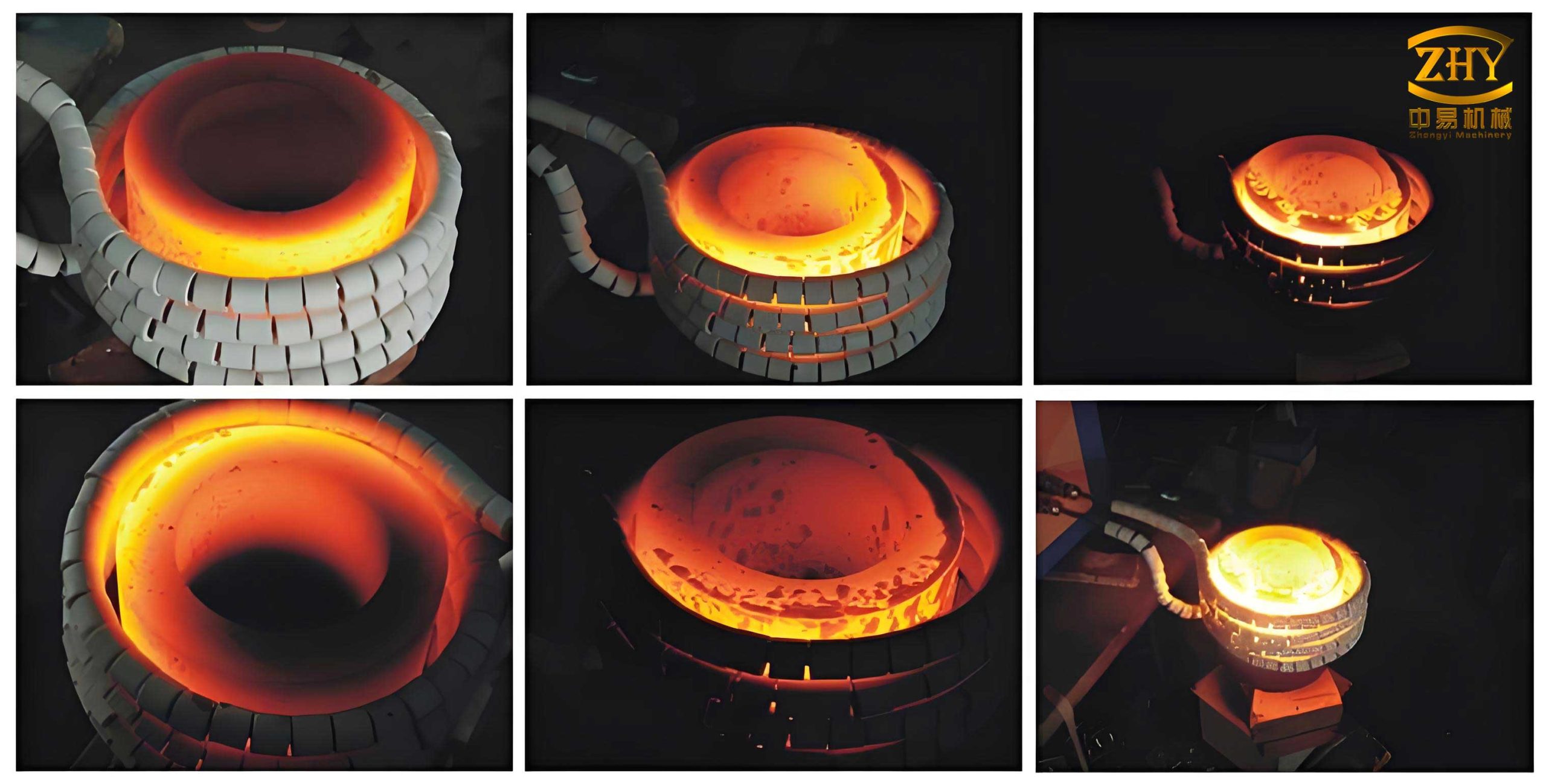
To begin, let’s consider the fundamental role of material selection in precipitating heat treatment defects. In gears made from low-alloy carburizing steels such as 20CrMnTi, the carbon content variability directly influences core hardness after quenching. Higher carbon levels promote martensitic transformation with increased volumetric expansion, leading to greater organizational stresses. My experimental observations, summarized in Table 1, reveal a strong correlation between core hardness and splined hole shrinkage. As core hardness exceeds 40 HRC, deformation escalates markedly, underscoring how material inhomogeneity fuels heat treatment defects. The carbon content fluctuation of 0.07% in such steels exacerbates this issue, whereas advanced alloys with tighter control (e.g., ±0.05%) demonstrate reduced distortion. This highlights the necessity of specifying steels with lower, more consistent carbon ranges (e.g., 0.15–0.20%) to curb these heat treatment defects.
| Sample No. | Splined Hole Shrinkage (μm) | Core Hardness (HRC) |
|---|---|---|
| 1 | -30 | 41 |
| 2 | -100 | 44 |
| 3 | -20 | 38 |
| 4 | -10 | 36 |
| 5 | -50 | 41 |
| 6 | -80 | 42 |
| 7 | -40 | 41 |
| 8 | -70 | 43 |
The data in Table 1 can be modeled using a linear approximation to quantify the impact of core hardness on deformation. Let $Δd$ represent the shrinkage in micrometers, and $H$ denote the core hardness in HRC. A simple regression yields:
$$ Δd = k \cdot (H – H_0) $$
where $k$ is a proportionality constant (negative for shrinkage), and $H_0$ is a threshold hardness below which deformation is minimal. For instance, from the table, $k ≈ -20 \, \mu\text{m}/\text{HRC}$ for $H > 38 \, \text{HRC}$, illustrating how each unit increase in hardness amplifies heat treatment defects. This formula underscores the sensitivity of deformation to material properties, a key aspect of heat treatment defects management.
Moving to design influences, asymmetrical gear geometries—such as non-uniform wall thickness around splined holes—create differential cooling rates during quenching, thereby inducing thermal stresses that manifest as heat treatment defects. I have observed that tapered or bell-shaped deformations often stem from disparate section moduli. To mitigate this, designs should prioritize symmetry and avoid abrupt transitions. The stress concentration factor $K_t$ for such features can be estimated using:
$$ K_t = 1 + \frac{\sqrt{r}}{t} $$
where $r$ is the radius of curvature and $t$ is the thickness. Higher $K_t$ values exacerbate residual stresses, fostering heat treatment defects. By optimizing these parameters, designers can reduce susceptibility to distortion, aligning with broader strategies to combat heat treatment defects.
Machining practices also play a pivotal role in pre-conditioning gears for heat treatment defects. During spline broaching, excessive cutting speeds or dull tools introduce significant elastic stresses into the workpiece. When these stresses are later relieved during heating, they synergize with thermal effects to amplify deformation. Moreover, misalignment due to uneven基准面 or debris can cause off-center broaching, leading to dimensional inaccuracies that exacerbate heat treatment defects. I recommend controlling broaching parameters: for example, maintaining speeds below 5 m/min and ensuring tool sharpness to minimize residual stresses. The induced stress $σ_m$ from machining can be approximated by:
$$ σ_m = C \cdot v^α \cdot f^β $$
where $v$ is cutting speed, $f$ is feed rate, and $C$, $α$, $β$ are material-dependent constants. Lowering $v$ and $f$ reduces $σ_m$, thereby curtailing one源头 of heat treatment defects.
Pre-heat treatment, particularly normalizing, sets the microstructure stage for subsequent processes. Inadequate normalizing—be it through overheating, insufficient soaking, or rapid cooling—can lead to coarse grains, non-equilibrium phases like bainite, and inherited irregularities that predispose gears to heat treatment defects. For 20CrMnTi steel, my trials indicate that a normalizing temperature of 900±10°C, held for 3 hours, followed by controlled cooling to achieve a hardness of ~180 HB, optimizes grain refinement and stress relief. The kinetics of grain growth during normalizing can be described by the Beck equation:
$$ D^n – D_0^n = K t \exp\left(-\frac{Q}{RT}\right) $$
where $D$ is grain size, $D_0$ is initial size, $n$ is a time exponent, $K$ is a constant, $Q$ is activation energy, $R$ is gas constant, $T$ is temperature, and $t$ is time. Properly tuning these variables minimizes abnormal grain growth, a precursor to heat treatment defects.
Now, let’s delve into the heart of heat treatment defects: carburizing and quenching parameters. My experiments systematically varied these factors to assess their impact on splined hole deformation, as summarized in Table 2. This table consolidates data from multiple trials, highlighting how temperature choices influence gauge pass rates and average shrinkage—a direct measure of heat treatment defects severity.
| Carburizing Temperature (°C) | Quenching Temperature (°C) | Gauge Pass Rate (%) | Average Shrinkage (μm) |
|---|---|---|---|
| 880 ± 10 | 840 ± 10 | 83 | -60 to -100 |
| 860 ± 10 | 840 ± 10 | 90 | -40 to -80 |
| 860 ± 10 | 820 ± 10 | 98 | -10 to -30 |
| 860 ± 10 | 800 ± 10 | 100 | 0 to -20 |
The data unequivocally shows that lower quenching temperatures drastically reduce shrinkage, a key insight for controlling heat treatment defects. However, excessively low temperatures risk forming non-martensitic structures, compromising surface hardness. Thus, a balance must be struck. The quenching stress $σ_q$ can be modeled using the following expression, which incorporates thermal and transformational components:
$$ σ_q = E \alpha \Delta T + \frac{\Delta V}{V} \cdot K_m $$
Here, $E$ is Young’s modulus, $\alpha$ is thermal expansion coefficient, $\Delta T$ is the temperature drop during quenching, $\Delta V/V$ is the volumetric strain from martensitic transformation, and $K_m$ is a material constant. Minimizing $\Delta T$ by lowering quench temperatures reduces $σ_q$, thereby alleviating heat treatment defects. This formula encapsulates the dual nature of quenching-induced stresses that drive heat treatment defects.
Furthermore, furnace loading and fixturing are critical yet often overlooked aspects. I conducted comparative tests on thin-walled gears, quenching some with mandrels inserted into splined holes and others without. The results, presented in Table 3, demonstrate that mandrels significantly curb shrinkage by slowing cooling rates at the inner surface, promoting coarser martensite or non-martensitic phases with lower specific volume changes. This simple intervention is a potent tool against heat treatment defects.
| Quenching Condition | Deformation Shrinkage (μm) Across Samples | |||||||
|---|---|---|---|---|---|---|---|---|
| With Mandrel | 0 | -10 | -10 | -20 | 0 | -20 | -10 | 0 |
| Without Mandrel | -40 | -70 | -60 | -50 | -80 | -70 | -30 | -40 |
The cooling rate differential with a mandrel can be approximated by Fourier’s law of heat conduction. For a cylindrical geometry, the temperature gradient $\frac{\partial T}{\partial r}$ is reduced, leading to milder thermal stresses. This principle is vital for mitigating heat treatment defects in hollow components.
Building on these analyses, I propose a holistic control strategy to preempt heat treatment defects. First, material selection should favor steels with carbon content at the lower end of specifications (e.g., 0.17–0.20% for 20CrMnTi) to keep core hardness below 40 HRC. Second, machining must account for anticipated deformation by incorporating allowances; for instance, enlarging splined hole diameters by 10–25 μm prior to heat treatment compensates for shrinkage. Third, normalizing should be rigorously controlled to achieve a homogeneous, fine-grained structure with hardness around 180 HB. Fourth, carburizing should be conducted at 860±10°C, followed by quenching at 800–820°C for thin-walled gears, coupled with mandrel fixturing to ensure uniform cooling. These steps collectively address the multifaceted origins of heat treatment defects.
Despite best efforts, some heat treatment defects may persist, necessitating remedial measures. I have successfully applied two methods: acid washing and cold extrusion. Acid washing involves immersing deformed gears in a 15% sulfuric acid solution to selectively etch the splined surface, enlarging it slightly. The reaction kinetics follow:
$$ \text{Fe} + H_2SO_4 \rightarrow FeSO_4 + H_2 $$
with a removal rate dependent on concentration and time. After acid washing, immediate alkaline rinsing neutralizes residual acid, preventing corrosion. This process is effective for minor shrinkage (up to 20 μm) and is a straightforward fix for heat treatment defects. Alternatively, cold extrusion using a broach under high pressure (e.g., 100 tons) can mechanically expand the hole. The force required $F_{ext}$ can be estimated as:
$$ F_{ext} = A \cdot σ_y \cdot \ln\left(\frac{d_f}{d_i}\right) $$
where $A$ is cross-sectional area, $σ_y$ is yield strength, $d_i$ and $d_f$ are initial and final diameters. This method is suitable for correcting distortions due to burrs or slight contractions, restoring gaugeability without compromising gear integrity—a practical solution for heat treatment defects.
In conclusion, heat treatment defects in gear splined holes are a complex interplay of material, design, machining, and thermal factors. Through my analysis, I have identified key contributors: carbon content variability, asymmetrical geometries, machining stresses, suboptimal normalizing, and improper carburizing-quenching parameters. These heat treatment defects can be controlled by adopting low-carbon steels, symmetric designs, careful machining, precise normalizing, and low-temperature quenching with mandrels. When heat treatment defects occur, acid washing and cold extrusion offer viable remedies. Ultimately, a integrated approach across the manufacturing chain is essential to minimize these heat treatment defects, ensuring high-quality gears for agricultural machinery. This comprehensive understanding not only addresses immediate production issues but also advances broader efforts to combat heat treatment defects in precision components.
To further elucidate the mechanisms, consider the total deformation $Δ_{total}$ as a superposition of contributions from various stages:
$$ Δ_{total} = Δ_{material} + Δ_{design} + Δ_{machining} + Δ_{preHT} + Δ_{quench} $$
Each term can be quantified using empirical models akin to those discussed. For instance, $Δ_{quench}$ relates to quenching stress via Hooke’s law: $Δ_{quench} = \frac{σ_q L}{E}$, where $L$ is characteristic length. By dissecting deformation this way, manufacturers can pinpoint dominant factors in heat treatment defects and apply targeted corrections.
In practice, I recommend continuous monitoring through statistical process control (SPC) to track parameters like core hardness and shrinkage, enabling early detection of heat treatment defects. Implementing these strategies has proven effective in my work, reducing rejection rates and enhancing gear performance. As agricultural machinery evolves toward higher efficiencies, mastering the control of heat treatment defects will remain paramount, driving innovation in materials and processes.