
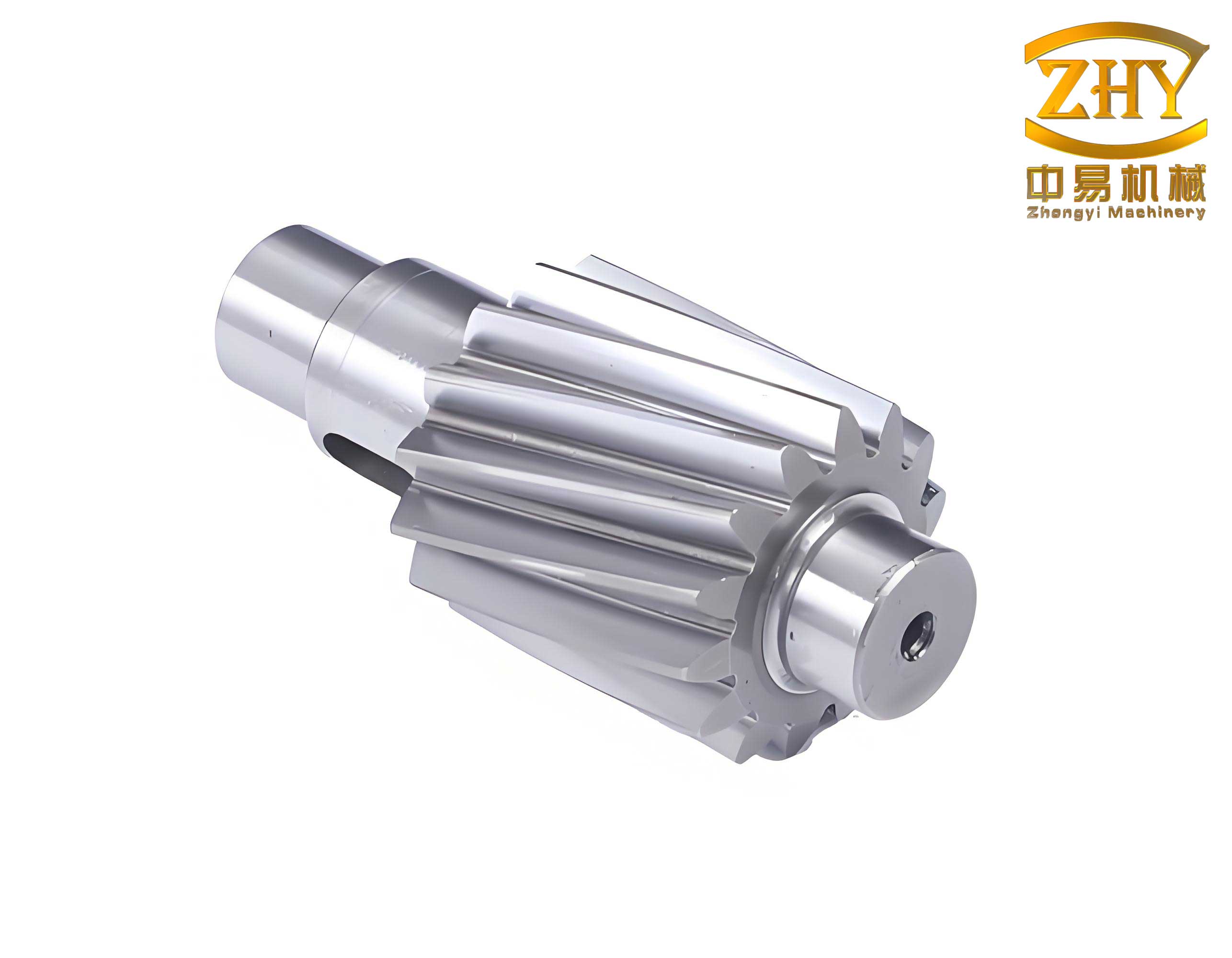
Gear shafts are fundamental power transmission components in countless mechanical systems, from automotive drivetrains to industrial machinery. Their reliable operation is paramount, as catastrophic failure often leads to significant downtime, economic loss, and potential safety hazards. The following treatise presents a comprehensive, first-person investigation into the premature fracture of a specific type of gear shaft, detailing a rigorous analytical methodology, expanding upon the root cause findings with deeper material science principles, and formulating robust, generalized preventive strategies. This analysis underscores the critical interplay between material processing, microstructural integrity, and final component performance for the gear shaft.
1. Introduction and Background of the Gear Shaft Failure
The subject components were case-hardened gear shafts manufactured from a low-alloy steel, specifically 20CrMnTi (a Chinese grade analogous to AISI 8620 with Ti addition). The intended manufacturing sequence was: Forging → Normalizing → Rough Machining → Carburizing, Quenching → Low-Temperature Tempering → Hot-Spot Straightening → Finish Grinding → Assembly with an interference-fit sleeve. After approximately one year of service, multiple gear shafts fractured at a consistent location: the interface between the end face of the 45 carbon steel sleeve and the shaft body. This precise and repeated failure mode pointed decisively towards a systemic flaw in the manufacturing or material state rather than a random overload event. The primary goal of this analysis is to reconstruct the failure mechanism from first principles, linking observed material conditions to the resultant mechanical behavior of the gear shaft.
2. Comprehensive Analytical Methodology
A multi-faceted investigative protocol was employed to deconstruct the failure sequence. The philosophy is to move from macro-scale observations to micro-scale characteristics, systematically eliminating potential causes.
2.1 Macrofractography
The initial examination of the fracture surface is crucial. The macroscopic morphology revealed classic fatigue features: well-defined beach marks (clam shells) radiating from a single, distinct initiation site. The final fast fracture zone constituted only about 10% of the total cross-sectional area, a key indicator of high-cycle fatigue under relatively low nominal bending stresses. The relationship between stress amplitude ($\sigma_a$), number of cycles to failure ($N_f$), and the material’s endurance limit ($\sigma_e’$) is central to this failure mode, often described by the Basquin equation:
$$\sigma_a = \sigma_f’ (2N_f)^b$$
where $\sigma_f’$ is the fatigue strength coefficient and $b$ is the fatigue strength exponent (Basquin exponent). A small fast fracture zone implies a stress amplitude ($\sigma_a$) only marginally above the effective endurance limit of the material in its flawed state.
2.2 Microfractography (Scanning Electron Microscopy – SEM)
Higher magnification SEM analysis of the fracture origin and propagation zones was conducted. The initiation site itself was free from obvious macro-defects like large inclusions or machining grooves. The nearby propagation region exhibited extremely fine, closely spaced fatigue striations. The average striation spacing ($\Delta s$) can be related to the crack growth rate ($da/dN$) per cycle and, via fracture mechanics, to the cyclic stress intensity factor range ($\Delta K$):
$$\frac{da}{dN} = C (\Delta K)^m$$
Here, $C$ and $m$ are material constants. Measured spacings of less than 0.5 µm confirmed the low-stress, high-cycle nature of the failure, consistent with the macro observation.
2.3 Chemical Composition Verification
Spectrographic analysis was performed to ensure the base material conformed to specifications. The results are summarized in Table 1. All element concentrations were within the standard limits for 20CrMnTi steel, ruling out gross compositional error as a root cause for the gear shaft fracture.
| Element | C | Si | Mn | P | S | Cr | Ti |
|---|---|---|---|---|---|---|---|
| Measured Value | 0.20 | 0.29 | 1.00 | 0.016 | 0.018 | 1.11 | 0.06 |
| Standard Range | 0.17-0.23 | 0.17-0.37 | 0.80-1.10 | ≤0.035 | ≤0.035 | 1.00-1.30 | 0.04-0.10 |
2.4 Microstructural and Metallurgical Examination
This phase forms the core of the physical evidence. Samples were sectioned longitudinally and transversely through the fracture origin.
Non-Metallic Inclusions: The steel’s cleanliness was assessed per standard charts. The ratings, presented in Table 2, indicated a moderate level of fine silicate (B-type) and globular oxide (D-type) inclusions. While not severe enough to be the sole cause, such inclusions can act as stress concentrators and facilitate crack initiation under conducive conditions.
| Inclusion Type | A (Sulfide) | B (Aluminate) | C (Silicate) | D (Globular Oxide) |
|---|---|---|---|---|
| Thin Series | 0 | 1.5 | 0 | 1.0 |
| Thick Series | 0 | 0 | 0 | 0 |
Metallography at the Fracture Origin: Examination of the crack initiation site revealed a startling anomaly. The microstructure consisted of acicular (needle-like) martensite and a significant volume of retained austenite. This structure is characteristic of as-quenched, high-carbon case material that has not undergone adequate tempering. In contrast, the surface microstructure away from the origin showed properly tempered martensite with minimal retained austenite.
Macro-etching with nital revealed the physical manifestation of this anomaly: a distinct, circular light-etching patch approximately 15 mm in diameter on the gear shaft surface at the origin. This patch correlated perfectly with the “hot-spot” used during the straightening operation. The oxy-acetylene flame locally re-austenitized the surface, and the subsequent rapid air-cooling (a quenching event) formed a hard, untempered martensitic zone—a “quench spot.”
Core Microstructure and Hardness Profile: A microhardness traverse was performed from the case to the core. The results are critical and are plotted in Table 3.
| Distance from Surface (mm) | Vickers Hardness (HV0.5) | Approx. HRC |
|---|---|---|
| 0.05 (Origin) | 810 | 64.5 |
| 0.05 (Normal area) | 700 | 60.0 |
| 0.2 | 650 | 58.0 |
| 0.5 | 550 | 52.5 |
| 0.763 (Case Depth @ 550 HV) | 550 | 52.5 |
| Core ( >2 mm) | ~255 | ~25.5 |
The case depth of 0.763 mm was within specification. However, the core hardness of approximately 25.5 HRC was severely below the specified range of 30-42 HRC. Metallography of the core confirmed a “underheated” or inadequate quench structure: a mixture of bainite, martensite, and approximately 5% proeutectoid ferrite. The prior austenite grain size was 7.5 ASTM with localized mixed grain size.
3. Integrated Failure Mechanism Analysis
The failure of the gear shaft is a consequence of two synergistic metallurgical deficiencies, one localized and one global, acting under service bending loads.
3.1 Primary Cause: The Untempered “Quench Spot” as a Fatigue Nucleation Site
The hot-spot straightening operation inadvertently created a localized area of extreme brittleness and high residual stress. The thermal cycle can be modeled. The surface temperature ($T_s$) must exceed the austenitization temperature ($A_{c3}$, ~850°C for this steel). Upon flame removal, cooling occurs primarily by conduction into the cold bulk of the gear shaft and convection/radiation to air. This rapid cooling ($\frac{dT}{dt}$) exceeds the critical cooling rate for martensite formation in this high-carbon (from carburizing) surface layer.
The resulting microstructure is untempered martensite (UM) with high carbon in solid solution. The hardness of UM ($H_{UM}$) can be empirically related to carbon content (C%):
$$H_{UM}(HV) \approx 1667C\% – 926C\%^2 + 150$$
For a typical case carbon of 0.8%, this calculates to ~800 HV, matching our measured 810 HV. This structure possesses very high strength but negligible ductility and toughness. Furthermore, the volumetric expansion associated with the martensitic transformation ($\Delta V/V \approx 0.04 \times C\%$) is constrained by the surrounding cold metal, generating high residual tensile stresses ($\sigma_{res}$) at the surface of the spot. The combination is lethal:
$$ \text{Fatigue Nucleation Susceptibility} \propto \frac{\sigma_{res} \times \text{Brittleness}}{\text{Toughness}} $$
The untempered martensite zone, with its inherent micro-cracks and high stress concentration, served as a perfect, pre-existing flaw from which the fatigue crack could initiate under even modest cyclic bending stresses applied to the gear shaft.
3.2 Contributing Cause: Deficient Core Strength Accelerating Crack Propagation
While the quench spot initiated the crack, the sub-standard core microstructure facilitated its rapid growth. The presence of free ferrite in the core indicates the temperature during the final quenching (after carburizing) was below $A_{c3}$ for the core’s lower carbon composition, or the quenching medium/agitation was insufficient.
The core’s yield strength ($\sigma_{y,core}$) is drastically reduced by the soft ferrite phase. Using a simple rule of mixtures for the composite core structure (Ferrite + Bainite + Martensite), the effective strength is lower than a fully martensitic core. The stress intensity factor ($K_I$) at the tip of a crack propagating from the hardened case into the core is a function of the applied stress ($\sigma$), crack length ($a$), and geometry factor ($Y$):
$$K_I = Y \sigma \sqrt{\pi a}$$
The fracture toughness ($K_{IC}$) of the material dictates the critical crack length for unstable fracture. A lower core hardness and strength directly correlate with a lower fracture toughness. Therefore, once the fatigue crack propagated through the brittle case and entered the weak core, the effective $K_{IC}$ of the gear shaft material was reduced, allowing the crack to reach the critical size for final fracture more quickly. The core acted as an ineffective barrier to crack advancement.
4. Generalized Preventive Measures and Process Optimization
Based on this root-cause analysis, corrective actions must address both the immediate processing flaw and the systemic heat treatment issue. The following measures are recommended for the production of reliable gear shafts.
4.1 Heat Treatment Process Optimization
The goal is to eliminate the underheated core structure. This requires ensuring the core of the gear shaft fully austenitizes and transforms to martensite (or a strong lower bainite) upon quenching.
- Increase Quench Temperature or Time: The core austenitization temperature must be carefully determined based on its exact chemical composition (which varies from the surface). A slight increase in the final quench heating temperature, or a lengthening of the soak time, ensures dissolution of ferrite-forming elements (like Cr) and homogenization. The time-temperature-austenitization (TTA) diagram for the specific steel grade should be consulted.
- Quenchant Agitation and Selection: Ensuring adequate and uniform agitation of the quenchant (likely oil) is crucial to achieve the required cooling rate throughout the cross-section of the gear shaft. Computational Fluid Dynamics (CFD) simulation of the quenching process can identify dead zones.
The target is a core microstructure of fine, low-carbon martensite with hardness >30 HRC, providing a tough, high-strength substrate.
4.2 Modification of Straightening and Post-Straightening Procedure
Hot-spot straightening is a risky operation for case-hardened components. If unavoidable, a strict protocol must be followed:
- Immediate and Full Tempering: Any gear shaft subjected to hot-spot straightening must undergo an immediate, dedicated tempering cycle. This cycle should heat the entire component to a temperature sufficient to temper the high-carbon martensite in the spot (e.g., 180-200°C for 2 hours). The tempering kinetics are described by the Hollomon-Jaffe parameter:
$$P = T(k + \log t)$$
where $T$ is temperature in Kelvin, $t$ is time in hours, and $k$ is a constant (~20 for steel). This treatment decomposes retained austenite, reduces the carbon supersaturation in martensite (forming tempered martensite), and most critically, relieves the harmful quenching stresses. The resulting hardness should drop to the specified case hardness range (58-62 HRC). - Alternative Straightening Methods: Investigate “cold” straightening methods using controlled presses with appropriate tooling before the final temper, or even “warm” straightening at sub-critical temperatures that do not cause re-austenitization.
4.3 Design and Manufacturing Detail Enhancement
The geometric stress concentration at the sleeve/gear shaft interface exacerbated the situation.
- Fillet Radius Introduction: Changing the sleeve end from a sharp chamfer to a generous fillet radius ($r$) reduces the theoretical stress concentration factor ($K_t$). For a shaft in bending with a shoulder fillet, $K_t$ can be approximated by Peterson’s equations and is highly sensitive to $r/d$, where $d$ is the shaft diameter. Increasing $r$ from nearly 0 (chamfer) to a measurable value (e.g., 1-2 mm) can reduce $K_t$ significantly, lowering the nominal stress ($\sigma_{nom}$) at the critical location:
$$\sigma_{max} = K_t \cdot \sigma_{nom}$$ - Non-Destructive Testing (NDT): Implement 100% non-destructive inspection of straightening areas. Magnetic Particle Inspection (MPI) or advanced eddy current testing can be calibrated to detect the magnetic and conductivity anomalies associated with an untempered martensitic spot on a gear shaft.
5. Conclusion
The fracture of the subject gear shafts was a direct result of a localized, untempered high-hardness zone created by a post-heat-treatment straightening operation, acting in concert with a globally deficient, low-strength core microstructure. The quench spot provided a brittle, high-stress nucleation site for fatigue, while the weak core offered diminished resistance to crack propagation. This failure highlights a critical principle in manufacturing high-integrity components: every thermal process, including corrective ones like straightening, must be treated as an integral part of the overall heat treatment cycle with controlled parameters and necessary subsequent steps (like tempering). By implementing the triad of corrections—optimizing the core quench, mandating post-straightening tempering, and reducing geometric stress concentrations—the underlying systemic risks are mitigated. Subsequent production batches of the gear shaft manufactured under these refined protocols have successfully eliminated the occurrence of this failure mode, validating the analytical conclusions and preventive framework established herein.