
In modern mechanical transmission systems, gears play a critical role in transmitting power and rotation, making them indispensable components in various industrial applications. To meet performance requirements, achieving high gear accuracy is essential for ensuring reliable and efficient power transmission. Hardened gear grinding, particularly gear profile grinding, is a key finishing process for carburized and quenched gears, offering benefits such as smooth operation, reduced noise, and extended service life, especially under heavy loads and high-power conditions. However, during the gear grinding process, interference issues can arise, leading to significant problems including wheel damage, workpiece scrap, machine tool collisions, and even safety hazards due to flying fragments. In our experience, these challenges are particularly pronounced in helical gear shafts used in mining reducer applications, where design constraints like limited relief grooves exacerbate the risk of grinding wheel contact with adjacent shaft shoulders. This article delves into the analysis, calculation, and resolution of such interference problems in gear grinding, emphasizing the importance of precise calculations and preventive measures to avoid grinding cracks and ensure optimal gear quality.
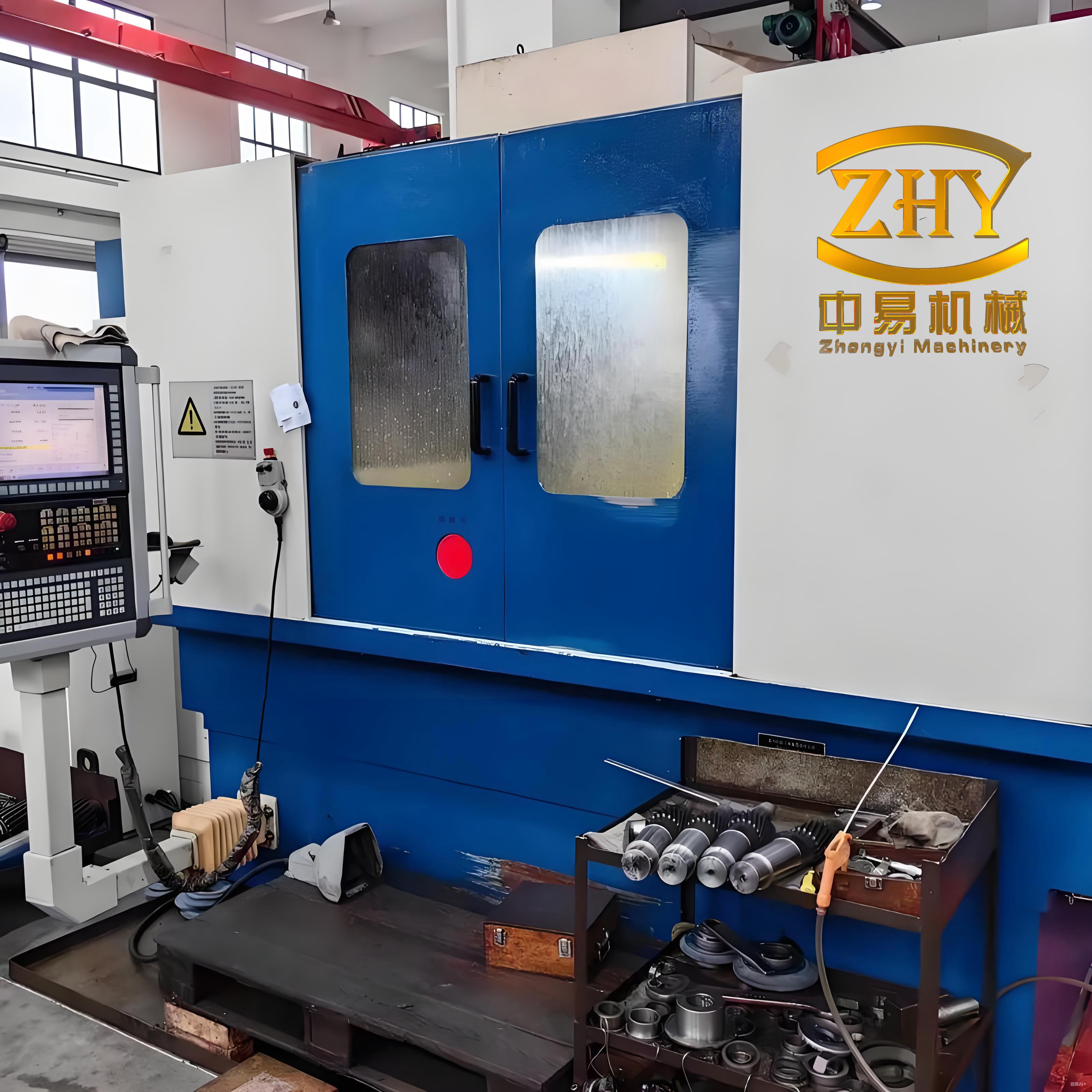
Gear grinding is a sophisticated process that involves the removal of material from hardened gear teeth to achieve the desired profile and surface finish. In gear profile grinding, the grinding wheel is shaped to match the gear tooth form, allowing for high-precision modifications. However, if not properly managed, the process can induce grinding cracks, which are micro-fractures on the tooth surface due to excessive thermal stress or mechanical interference. These cracks can compromise gear integrity and lead to premature failure. Therefore, a thorough understanding of the grinding parameters, including wheel size, feed rates, and cooling strategies, is crucial. In our operations, we utilize advanced grinding machines, such as the Höfler RAPID 800, to perform gear grinding on hardened helical gear shafts with a target accuracy of grade 5. The process typically follows a sequence of hobbing, carburizing, quenching, and finally, gear grinding, which is critical for correcting distortions from heat treatment and achieving the required surface roughness of Ra 0.8 μm.
One of the primary considerations in gear grinding is the selection of an appropriate grinding wheel size. A larger wheel diameter can enhance grinding efficiency by allowing higher material removal rates, but it also increases the risk of interference with the workpiece or machine components. Conversely, a smaller wheel might avoid interference but could lead to longer cycle times and potential issues with wheel wear. To address this, we have developed a relationship for determining the safe grinding wheel diameter, denoted as Dx, based on the normal module mn of the gear. This relationship accounts for the gear geometry, including the addendum and dedendum heights, and ensures that the wheel does not collide with the shaft during the grinding process. The formula for Dx is derived as follows:
$$Dx = D_{\text{min}} + 2H$$
where H represents the total tooth depth, calculated as the sum of the addendum ha and dedendum hf. For standard gears, this can be expressed in terms of the normal module mn, the addendum coefficient ha*, and the clearance coefficient c*:
$$H = h_a + h_f = m_n (h_a^* + c^*)$$
Thus, the safe wheel diameter becomes:
$$Dx = D_{\text{min}} + 2m_n (h_a^* + c^*)$$
In our applications, mn ranges from 1 mm to 35 mm, and Dmin is typically 230 mm, as specified in the grinding machine guidelines. Only when the grinding wheel diameter is greater than or equal to Dx can we consider it a safe size for gear grinding without risking interference. This calculation is vital for preventing incidents where the wheel might impact the shaft, leading to wheel breakage or machine damage. Moreover, using an undersized wheel can exacerbate the formation of grinding cracks due to inadequate heat dissipation, highlighting the interplay between wheel selection and process stability.
| Flange or Wheel Head Diameter (mm) | Grinding Wheel Diameter (mm) | |
|---|---|---|
| D_max | D_min | |
| 206 | 400 (new wheel) | 230 |
In addition to wheel size, the helical angle β of the gear shaft significantly influences the grinding process. For helical gears, the spiral angle typically ranges from 8° to 20° to balance axial forces on bearings. During gear grinding, the entry and exit points of the grinding wheel along the tooth width B must be carefully considered to avoid interference. Our practical measurements have shown that as β increases, the overtravel distance x at the entry and exit points also increases. This overtravel is essential for ensuring that the wheel can fully engage and disengage without colliding with the shaft shoulders. For instance, when β ≤ 20°, a minimum x value of 20 mm is required to complete the grinding process successfully. If the gear design includes tooth end modifications, such as chamfers or crowns, this x value must be increased accordingly. For spur gears, the interference risk is lower, and an x value of at least 7 mm is sufficient for safe wheel retraction. These values are critical in process planning to prevent grinding cracks and ensure consistent gear profile grinding quality.
The grinding process generates substantial heat due to friction between the wheel and the gear tooth surface. Without adequate cooling, this can lead to thermal damage, including grinding cracks and surface burns. Therefore, the use of grinding oil is essential for冲洗, cooling, and lubrication. It helps dissipate heat, reduce the risk of thermal cracks, and flush away debris. However, the cooling system itself can introduce interference risks, particularly with the fixed copper oil tubes adjacent to the grinding wheel. During the entry phase of gear grinding, these tubes may collide with the machine’s tailstock if not properly positioned. Through extensive analysis, we have established that a minimum distance A of 175 mm between the grinding wheel’s central axis and the gear shaft (or center of the tailstock) is necessary to avoid such interference. This ensures that the wheel can approach the workpiece safely without contacting the oil tubes or tailstock, thereby protecting the machine and maintaining process integrity.
Similarly, during the exit phase, the distance L from the lower end of the tooth width to the shaft end must be sufficient to allow the wheel to retract without hitting machine components like the lower tailstock or clamping devices. Based on our validation in grinding operations, an L value of at least 210 mm is recommended when using a wheel diameter Dx of 260 mm. This accounts for factors such as shaft diameter, clamp size, and wheel dimensions, and it often necessitates the inclusion of a process extension that can be machined off after grinding. The following table summarizes the key parameters for avoiding interference in gear grinding, incorporating data from various gear configurations and grinding trials.
| Parameter | Description | Minimum Value (mm) | Notes |
|---|---|---|---|
| x (Overtravel) | Entry/exit overtravel for helical gears (β ≤ 20°) | 20 | Increase if tooth ends are modified |
| x (Overtravel) | Exit overtravel for spur gears | 7 | Sufficient for safe retraction |
| A (Distance) | Wheel axis to shaft center distance | 175 | Prevents oil tube and tailstock interference |
| L (Shaft End Distance) | Tooth end to shaft end distance | 210 | Ensures safe wheel exit; may require process extension |
To further illustrate the relationship between helical angle and overtravel, we can model the overtravel x as a function of β and the tooth width B. For helical gears, the lead of the helix influences the wheel path, and the overtravel can be approximated using the following equation:
$$x = B \cdot \tan(\beta) + C$$
where C is a constant accounting for machine-specific factors and safety margins. For β values up to 20°, this simplifies to x ≥ 20 mm, as previously noted. This formula helps in preemptive calculations during process planning, reducing the likelihood of interference-induced grinding cracks. Additionally, in gear profile grinding, the wheel’s profile must be meticulously dressed to match the gear tooth form, and any deviation can lead to inaccuracies or increased stress concentrations. Regular dressing using diamond tools is essential, but it must be done within the safe wheel diameter limits to avoid damaging the dressing equipment.
When interference issues are identified, several solutions can be implemented to mitigate risks. If the gear shaft design cannot be altered, the first approach involves recalculating the interference using the methods described and, if possible, reducing the tooth width B or modifying the shoulder dimensions without compromising gear meshing. This requires a careful balance between design constraints and grinding feasibility. For instance, in cases where process oversights occur, such as in repair scenarios or for existing shafts with interference problems, welding an additional process extension to the shaft end has proven effective. This extension serves as a temporary fixture for clamping and grinding, after which it is removed. The procedure involves aligning the gear shaft, turning the extension to a suitable diameter, creating center holes, and performing the gear grinding operation before machining off the extension. This method not only resolves interference but also protects the machine from collisions, thereby preserving accuracy and reducing the incidence of grinding cracks.
Another critical aspect is the optimization of grinding parameters to minimize thermal effects. High grinding speeds and feeds can increase productivity but also raise the risk of thermal damage. Therefore, controlling the specific grinding energy and using effective coolants are paramount. The heat generation during gear grinding can be modeled using the following equation for specific energy u:
$$u = \frac{F_t \cdot v_c}{b \cdot h \cdot v_w}$$
where Ft is the tangential grinding force, vc is the wheel speed, b is the width of cut, h is the depth of cut, and vw is the workpiece speed. By keeping u within optimal ranges, we can reduce the thermal load and prevent grinding cracks. Moreover, the choice of grinding oil viscosity and flow rate affects cooling efficiency; higher flow rates enhance heat removal but must be balanced against potential interference with machine components.
In summary, the analysis and resolution of interference in gear grinding are essential for achieving high-quality gears in industrial applications. Through rigorous calculation of grinding wheel sizes, overtravel distances, and machine clearances, we can prevent costly failures and enhance process reliability. The integration of gear profile grinding techniques further ensures precision and consistency, while proactive measures against grinding cracks safeguard gear longevity. By applying these principles, manufacturers can improve grinding efficiency, reduce wheel consumption, and minimize auxiliary costs, ultimately contributing to the production of durable and efficient transmission systems. This holistic approach not only addresses immediate interference challenges but also fosters a deeper understanding of the interplay between design, process, and equipment in advanced gear manufacturing.
Furthermore, the prevention of grinding cracks requires a multidisciplinary approach, combining material science, thermal management, and mechanical engineering. For example, post-grinding inspections using non-destructive testing methods, such as magnetic particle inspection or eddy current testing, can detect surface cracks early, allowing for corrective actions. Additionally, advancements in grinding wheel technology, such as the use of CBN (cubic boron nitride) wheels, offer superior wear resistance and thermal stability, reducing the propensity for crack formation. In our practice, we have observed that optimizing the dressing frequency and using tailored wheel specifications can extend wheel life and maintain grinding accuracy over longer periods.
To encapsulate the key points, the following table provides a comprehensive overview of the factors influencing gear grinding interference and their mitigation strategies, emphasizing the role of gear profile grinding in achieving high-precision outcomes.
| Factor | Influence on Interference | Mitigation Strategy | Impact on Grinding Cracks |
|---|---|---|---|
| Grinding Wheel Diameter | Larger wheels increase interference risk but improve efficiency | Use safe diameter Dx based on module mn | Reduces thermal stress and crack risk |
| Helical Angle β | Higher β increases overtravel x requirements | Ensure x ≥ 20 mm for β ≤ 20° | Prevents mechanical cracks from collisions |
| Tooth Width B | Wider teeth may require larger overtravel | Adjust B or use process extensions | Minimizes localized heating and cracks |
| Cooling System | Oil tubes can cause interference if mispositioned | Maintain distance A ≥ 175 mm | Enhances cooling, reduces thermal cracks |
| Machine Geometry | Tailstock and clamps limit wheel movement | Ensure L ≥ 210 mm for safe exit | Prevents impact-induced cracks |
| Grinding Parameters | High speeds/feeds increase heat and crack risk | Optimize specific energy and coolant flow | Controls thermal damage and crack formation |
In conclusion, the successful implementation of gear grinding processes hinges on a detailed understanding of potential interference issues and their solutions. By leveraging mathematical models, empirical data, and practical adjustments, we can overcome the challenges associated with hardened helical gear shafts. This not only enhances the quality and reliability of the gears but also contributes to safer and more efficient manufacturing operations. As technology evolves, continuous improvement in gear profile grinding methods will further reduce the incidence of grinding cracks and interference, paving the way for next-generation transmission systems.