
In the development and testing of mechanical transmission systems, spur gears are fundamental components responsible for power transfer. As a research team engaged in gearbox design and failure analysis, we encountered a case of surface contact fatigue spalling in spur gear pairs during reliability testing of a new closed gearbox. This article details our investigation into the failure mechanism, combining theoretical calculations, finite element analysis, metallographic examination, and hardness testing. Our goal is to provide a comprehensive methodology for diagnosing and addressing surface fatigue failures in spur gears, which are critical for ensuring the longevity and reliability of gear-driven systems.
Spur gears, due to their simple design and efficiency, are widely used in various industrial applications. However, under repetitive loading, they are susceptible to surface fatigue failures such as pitting and spalling. These failures can lead to increased noise, vibration, and eventual system breakdown. Understanding the root causes through analytical and experimental means is essential for improving gear design and manufacturing processes.
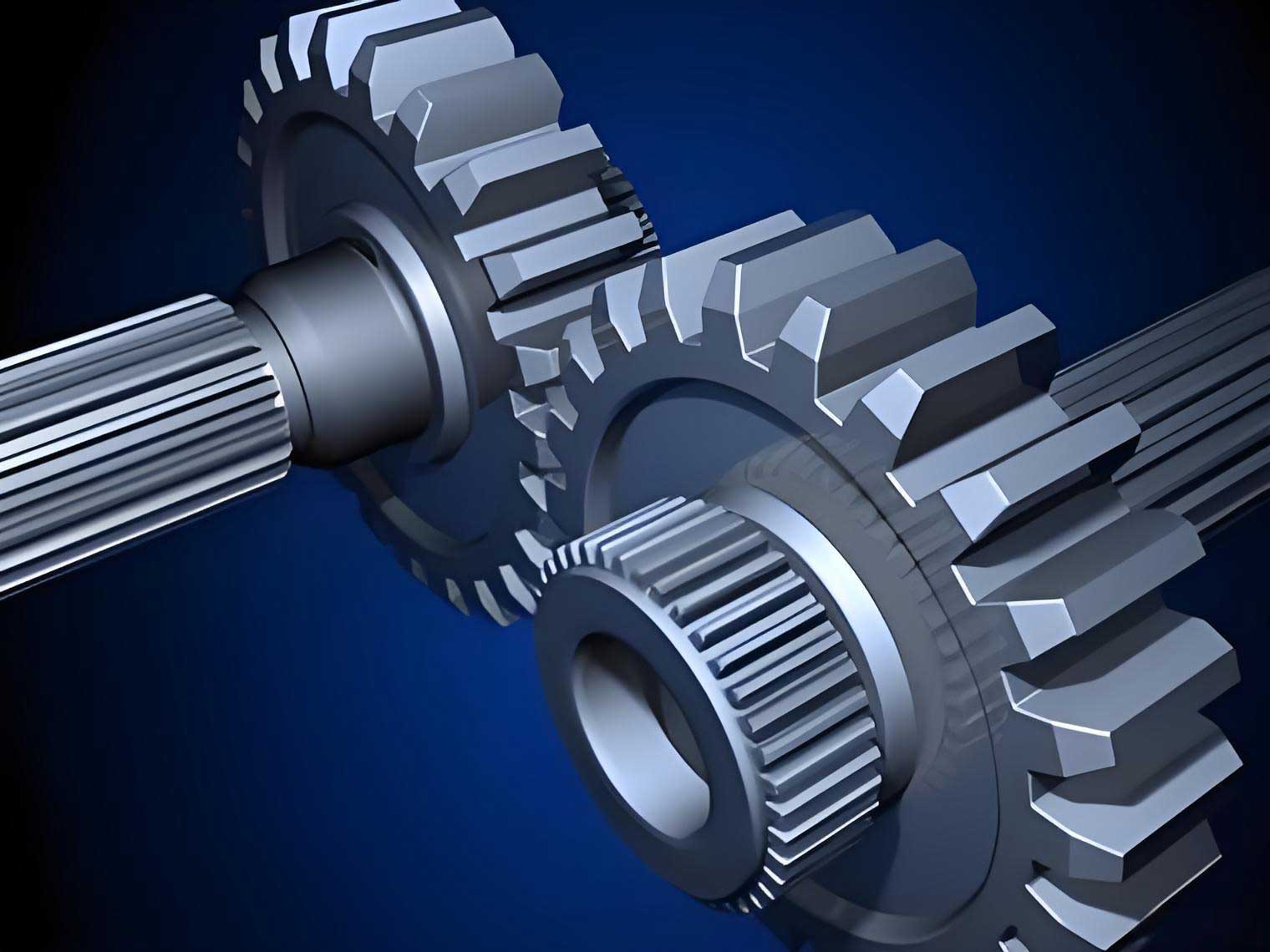
The failure occurred in a 5-speed closed gearbox during bench testing at 64 hours of operation. Abnormal noise and elevated oil temperature were observed. Upon disassembly, visual inspection revealed surface fatigue damage on both the main shaft and countershaft spur gears for the 4th gear pair. The main shaft spur gears exhibited flake-like spalls near the pitch line, with depths of approximately 0.2 to 0.4 mm and widths of 2 to 4 mm, characteristic of shallow subsurface fatigue spalling. The countershaft spur gears showed multiple pitting spots with depths less than 0.1 mm and diameters under 1 mm, indicative of initial pitting fatigue. This prompted a detailed analysis to determine the underlying causes and propose corrective measures.
To systematically analyze the failure, we first examined the structural and performance parameters of the spur gear pair. The gears were made of low-alloy carburizing steel 20CrMoH, known for good machinability and fatigue resistance. After heat treatment, the surface hardness was specified between 54 HRC and 62 HRC, with a carburized layer depth of 0.3 to 0.7 mm. The gearbox’s maximum output torque was 58 N·m. Key geometric parameters and calculated forces are summarized in Table 1.
| Parameter | Value |
|---|---|
| Module, m (mm) | 2.5 |
| Pressure Angle, α (°) | 20.00 |
| Number of Teeth on Main Shaft Gear, Z1 | 26 |
| Number of Teeth on Countershaft Gear, Z2 | 25 |
| Transmission Ratio, i | 0.962 |
| Pitch Diameter of Main Shaft Gear, d1 (mm) | 65.0 |
| Pitch Diameter of Countershaft Gear, d2 (mm) | 62.5 |
| Center Distance, a (mm) | 63.75 |
| Addendum, ha (mm) | 2.500 |
| Dedendum, hf (mm) | 3.125 |
| Whole Depth, h (mm) | 5.625 |
| Tangential Force on Main Shaft Gear, Ft1 (N) | 1785 |
| Tangential Force on Countershaft Gear, Ft2 (N) | 1856 |
Theoretical analysis of spur gears often begins with contact stress evaluation, as surface fatigue is primarily driven by repeated Hertzian contact. For spur gears, the contact can be approximated by two parallel cylinders at the pitch point. The maximum contact stress, σ_Hmax, is calculated using standardized formulas that account for gear geometry, material properties, and operational factors. The fundamental equation for contact stress in spur gears is:
$$ \sigma_{Hmax} = Z_H \cdot Z_E \cdot Z_{\epsilon\beta} \cdot \sqrt{ \frac{F_t}{b \cdot d_{min}} \cdot \frac{u+1}{u} \cdot K_A \cdot K_V \cdot K_{H\beta} \cdot K_{H\alpha} } $$
where:
- \(Z_H\) is the zone factor, considering tooth geometry and shift coefficients.
- \(Z_E\) is the elasticity factor, dependent on material properties (Young’s modulus and Poisson’s ratio).
- \(Z_{\epsilon\beta}\) is the contact ratio factor.
- \(F_t\) is the tangential force on the pitch circle.
- \(b\) is the face width.
- \(d_{min}\) is the smaller pitch diameter.
- \(u\) is the gear ratio.
- \(K_A\), \(K_V\), \(K_{H\beta}\), and \(K_{H\alpha}\) are application, dynamic, and load distribution factors.
For our spur gear pair, we used the following values: \(Z_H = 2.26\) (based on a total profile shift coefficient of 0.8), \(Z_E = 189.8 \text{ MPa}^{1/2}\) (for steel with E = 206 GPa and ν = 0.3), \(Z_{\epsilon\beta} = 0.8\), \(F_t = 1856 \text{ N}\) (the larger value), \(b = 20 \text{ mm}\), \(d_{min} = 62.5 \text{ mm}\), \(u = 0.962\), \(K_A = 1.1\) (uniform driving, slight shock), \(K_V = 1.1\) (based on pitch line velocity and accuracy), \(K_{H\beta} = 1\), and \(K_{H\alpha} = 1\) (assuming good contact). Substituting these into the equation yields:
$$ \sigma_{Hmax} = 2.26 \times 189.8 \times 0.8 \times \sqrt{ \frac{1856}{20 \times 62.5} \times \frac{0.962+1}{0.962} \times 1.1 \times 1.1 \times 1 \times 1 } \approx 626.3 \text{ MPa} $$
The allowable contact stress, σ_HP, is determined by material endurance limits and safety factors:
$$ \sigma_{HP} = \frac{\sigma_{Hlim} \cdot Z_{NT} \cdot Z_L \cdot Z_V \cdot Z_R \cdot Z_W \cdot Z_X}{S_{Hlim}} $$
where:
- \(\sigma_{Hlim}\) is the contact fatigue limit stress (1242 MPa as provided).
- \(Z_{NT}\) is the life factor (1.15 for the required cycles).
- \(Z_L\), \(Z_V\), \(Z_R\) are lubricant, velocity, and roughness factors (0.96, 0.95, 0.9 respectively).
- \(Z_W\) is the work hardening factor (1 for similar hardness).
- \(Z_X\) is the size factor (1).
- \(S_{Hlim}\) is the safety factor (1.3 for case-hardened gears).
Thus,
$$ \sigma_{HP} = \frac{1242 \times 1.15 \times 0.96 \times 0.95 \times 0.9 \times 1 \times 1}{1.3} \approx 902 \text{ MPa} $$
Since σ_Hmax (626.3 MPa) is less than σ_HP (902 MPa), the design theoretically meets normal load requirements. However, the actual failure suggests other contributing factors.
To delve deeper, we analyzed subsurface stress distributions. Under pure rolling contact, the orthogonal shear stress τ_0 and 45° shear stress τ_45 play crucial roles in fatigue initiation. For two cylinders in contact, the stress field beneath the surface is characterized by:
$$ \tau_{45,max} = 0.3 \sigma_{Hmax} $$
occurring at a depth of 0.786b’, where b’ is the half-width of the contact band. The orthogonal shear stress τ_0 varies symmetrically, with a maximum amplitude of 0.5σ_Hmax at depth 0.5b’. For spur gears, pitting initiation often relates to τ_0 exceeding the material’s shear yield strength τ_K. With a material tensile strength σ_b = 1079 MPa, τ_K ≈ 0.5σ_b = 539.5 MPa. Our calculated τ_0 = 0.25σ_Hmax = 156.6 MPa is well below τ_K, indicating that under ideal conditions, subsurface-initiated pitting should not occur. This discrepancy pointed us toward surface quality and hardness variations.
We complemented the analytical approach with finite element analysis (FEA) using ANSYS. A 3D model of the spur gear pair was created, meshed with tetrahedral elements, and subjected to a torque of 58 N·m. The contact stress distribution showed maximum values near the gear ends due to edge effects, with a peak of approximately 530 MPa, lower than the analytical result due to simplified assumptions in the FEA model (e.g., neglecting dynamic factors). This further confirmed that the design stress levels were within acceptable limits. The FEA results for spur gears often highlight stress concentrations that analytical methods may overlook, emphasizing the need for comprehensive evaluation.
Given the theoretical adequacy, we shifted to experimental investigation. Metallographic examination of the failed main shaft spur gears under a microscope revealed shallow spalls with cracks originating below the surface. The spall morphology showed one side at a 45° angle to the surface and the other nearly perpendicular, typical of shallow spalling caused by subsurface plastic deformation and crack propagation. This failure mode is common in spur gears with inadequate surface hardness or carburized layer depth, where cyclic shear stresses induce microcracks that grow to the surface.
Hardness testing was conducted on both spur gears using a Rockwell hardness tester. Measurements at various depths from the surface are presented in Table 2.
| Depth (mm) | Hardness (HRC) – Main Shaft Spur Gear | Hardness (HRC) – Countershaft Spur Gear | Core Hardness (HRC) |
|---|---|---|---|
| 0.1 | 60.1 | 61.9 | 42 |
| 0.2 | 59.7 | 61.1 | 42 |
| 0.3 | 58.9 | 59.7 | 42 |
| 0.4 | 58.0 | 60.6 | 42 |
| 0.5 | 54.7 | 54.9 | 42 |
| 0.6 | 52.3 | 52.5 | 42 |
| 0.7 | 49.8 | 50.3 | 42 |
| 0.8 | 47.7 | 47.2 | 42 |
| 0.9 | 46.9 | 45.4 | 42 |
| 1.0 | 45.8 | 44.2 | 42 |
The data showed that the main shaft spur gear had lower surface hardness (60.1 HRC at 0.1 mm) compared to the countershaft spur gear (61.9 HRC at 0.1 mm). Both gears exhibited a sharp hardness drop beyond 0.4 mm depth, indicating insufficient carburized layer depth. This hardness gradient likely reduced the resistance to subsurface shear stresses, initiating fatigue in the main shaft spur gears first. Once spalling occurred on the main shaft, the uneven surface contact promoted stress concentrations on the countershaft spur gears, leading to pitting. Thus, the root causes were identified as non-uniform surface hardness, inadequate carburizing depth, and potential surface roughness from manufacturing.
Based on this analysis, we implemented several improvements for the spur gears. First, the carburized layer depth was increased from 0.3-0.7 mm to 0.5-0.8 mm to ensure a more gradual hardness transition. Second, the manufacturing process was changed from shaving before heat treatment to grinding after heat treatment, enhancing surface finish and geometric accuracy. Third, surface hardness was raised, requiring HRC ≥ 61.5 at 0.1 mm depth, and shot peening was added to induce compressive residual stresses, improving fatigue resistance. These measures aimed to address the specific weaknesses observed in the failed spur gears.
New spur gears were produced according to these specifications. The carburized depth measured 0.66 mm, and surface hardness reached 67.5 HRC at the immediate surface. Hardness profiles of the improved spur gears are shown in Table 3.
| Depth (mm) | Hardness (HRC) – Main Shaft Spur Gear | Hardness (HRC) – Countershaft Spur Gear | Core Hardness (HRC) |
|---|---|---|---|
| 0.1 | 62.9 | 62.6 | 42 |
| 0.2 | 62.8 | 62.3 | 42 |
| 0.3 | 61.7 | 61.7 | 42 |
| 0.4 | 60.1 | 60.1 | 42 |
| 0.5 | 56.7 | 54.9 | 42 |
| 0.6 | 53.9 | 52.5 | 42 |
| 0.7 | 50.3 | 50.1 | 42 |
| 0.8 | 47.9 | 47.2 | 42 |
| 0.9 | 46.7 | 45.9 | 42 |
| 1.0 | 45.9 | 44.9 | 42 |
The improved spur gears showed higher and more uniform hardness in the critical subsurface region. Two gearboxes were assembled with these new spur gears and subjected to the same reliability test for 120 hours each. Both operated smoothly without abnormal noise, temperature rise, or power loss. Post-test disassembly revealed no signs of surface fatigue on any spur gears, validating the effectiveness of our improvements.
In conclusion, our investigation into the surface fatigue failure of spur gear pairs demonstrated the importance of integrating theoretical calculations with experimental diagnostics. While analytical and FEA methods confirmed design adequacy for normal loads, metallography and hardness testing uncovered material and processing deficiencies. The key issues were insufficient carburized depth and lower surface hardness in the main shaft spur gears, leading to shallow spalling and subsequent pitting. By enhancing heat treatment parameters and manufacturing processes, we successfully eliminated the failure. This case underscores that for spur gears, even minor deviations in surface properties can precipitate fatigue under cyclic loading. Our methodology—combining stress analysis, finite element simulation, metallographic inspection, and hardness evaluation—provides a robust framework for analyzing and mitigating surface faults in spur gears. Future work could explore advanced coatings or non-destructive testing techniques for in-situ monitoring of spur gear health. Ultimately, a holistic approach to design, manufacturing, and validation is essential for reliable spur gear performance in demanding applications.
Throughout this study, we emphasized the role of spur gears in transmission systems and the need for rigorous quality control. The repeated mention of spur gears in our analysis highlights their susceptibility to surface fatigue and the critical need for precise engineering. By sharing these insights, we aim to contribute to the broader knowledge base on gear failure mechanisms and spur gear optimization, aiding engineers in developing more durable and efficient mechanical systems.